Marxist Professor Gets a Lesson in History | David Friedman
18 Feb 2021 Leave a comment
in applied price theory, applied welfare economics, Austrian economics, comparative institutional analysis, constitutional political economy, David Friedman, development economics, economic history, growth disasters, growth miracles, law and economics, liberalism, libertarianism, Marxist economics, Milton Friedman, property rights
Lost on @oxfam @Greenpeace @AOC @BernieSanders
16 Feb 2021 Leave a comment
in applied price theory, comparative institutional analysis, development economics, economic history, economics of bureaucracy, energy economics, environmental economics, global warming, growth disasters, income redistribution, Marxist economics, Public Choice, rentseeking Tags: climate alarmists, The Great Enrichment

Biden’s climate ‘fix’ is fantastically expensive and perfectly useless-Bjorn Lomborg
15 Feb 2021 Leave a comment
The End of Roman Britain II
14 Feb 2021 Leave a comment

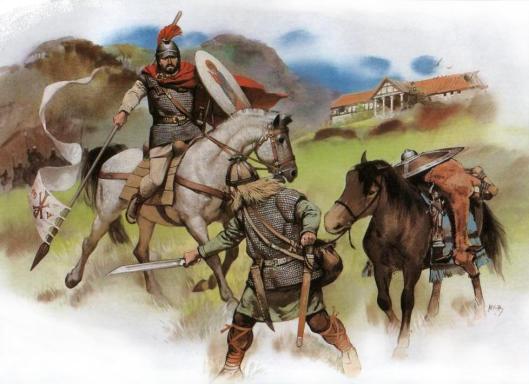
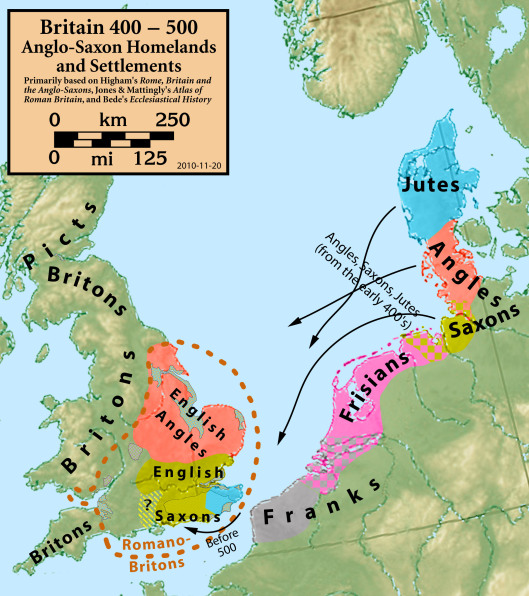

Yet Saxon raids continued. The Yorkshire signal stations came under attack at least twice, Huntcliff and Goldborough being savagely destroyed. Hadrian’s Wall ceased to function as an effective barrier. Forts remained in use but each may have organized its own defence. The soldiers had always been paid in coinage sent from Rome that then filtered through the population as goods were bought outside the forts. Coins from Roman mints began to cease after about AD 402. This cessation of money being sent from Rome or from the mints may have been because transporting coinage may have become too difficult and risky when crossing Gaul. Cash was also required elsewhere in the empire and Stilicho may just have stopped payments, believing it was a waste to send coinage to Britain. Local mints did not supply coins either because of the lack of good metal or because of difficulties in production. Whatever…
View original post 1,938 more words
The Non-Relationship Between Welfare Spending and Poverty Reduction in the Western World
14 Feb 2021 Leave a comment

Last September, I shared some very encouraging data showing how extreme poverty dramatically has declined in the developing world.
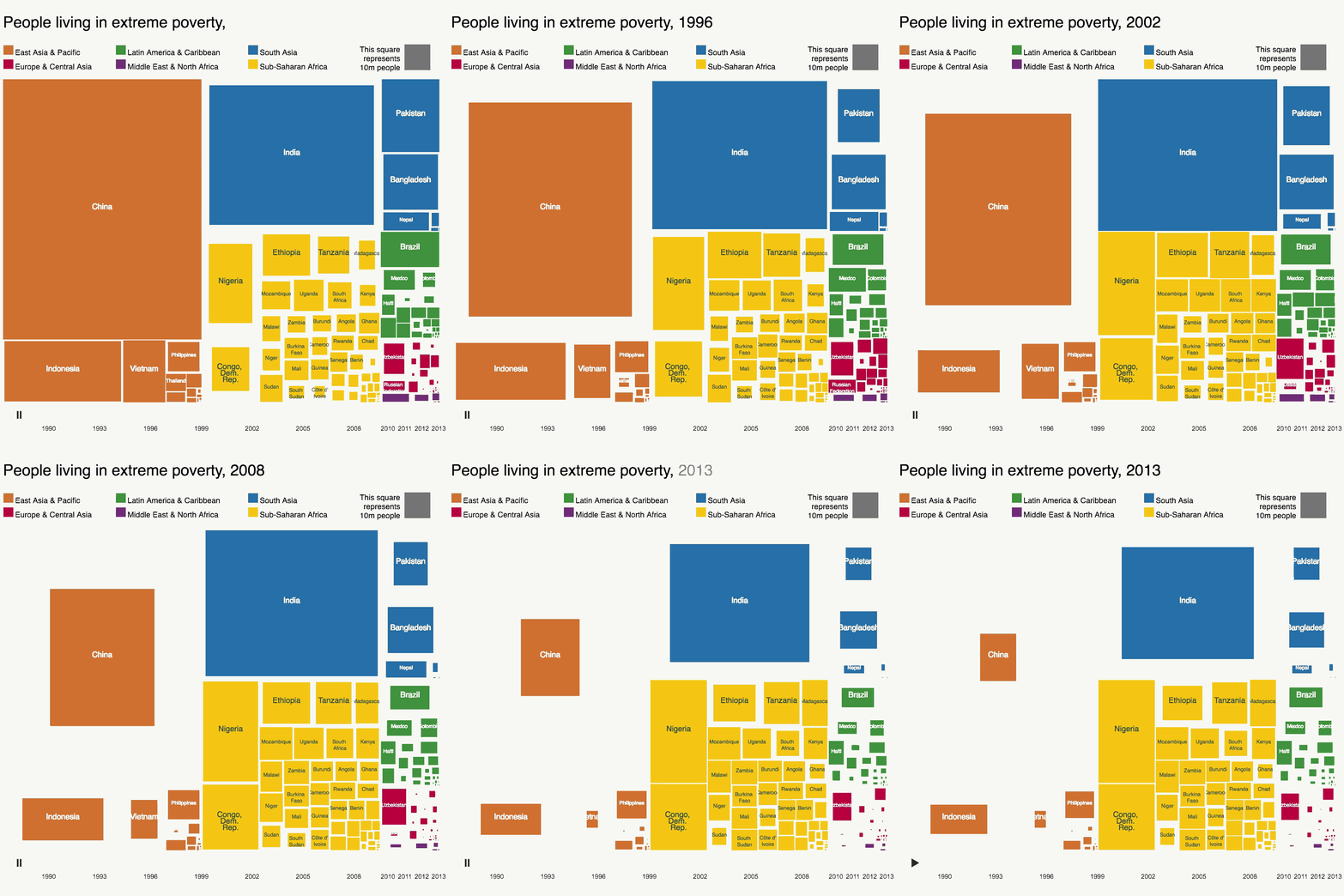 And I noted that this progress happened during a time when the “Washington Consensus” was resulting in “neoliberal” policies (meaning “classical liberal“) in those nations (confirmed by data from Economic Freedom of the World).
In other words, pro-market policies were the recipe for poverty reduction, not foreign aid or big government.
Sadly, the Washington Consensus has been supplanted. Bureaucracies such as the International Monetary Fund, the United Nations, and the Organization for Economic Cooperation and Development are now pushing a statist agenda based on the bizarre theory that higher taxes and more spending somehow produce prosperity.
To add insult to injury, some people now want to rewrite history and argue that free markets don’t deserve credit for the poverty reduction that already has occurred.
Esteban…
View original post 451 more words
Mirror, Mirror, on the Wall, Which Nation Has the Biggest Welfare State of All?
14 Feb 2021 Leave a comment
When I think about social welfare spending, I mostly worry about recipients getting trapped in dependency.
But I also feel sorry for taxpayers, who are bearing ever-higher costs to finance redistribution programs.
Today’s column won’t focus on those issues. Instead, we’re going to utilize new OECD data to compare the size of the welfare states in developed nations.
We’ll start with the big picture. Here it total redistribution spending, measured as a share of economic output, for selected countries that are members of the Organization for Economic Cooperation and Development.
Nobody will be surprised, I assume, to see that France, Finland, Belgium, Denmark, and Italy have the biggest welfare states.
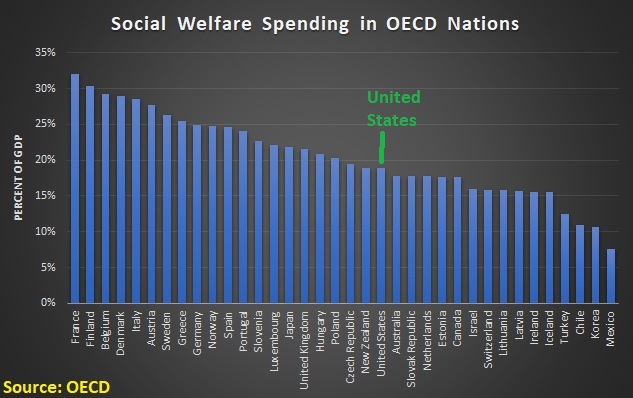
The United States is in the middle of the pack. American taxpayers might be surprised to learn, though, that they finance a bigger welfare state than the ones that exist in Canada, Iceland, and the Netherlands.
The overall numbers…
View original post 490 more words
Part IV: Poverty Is a Problem, Not Inequality
14 Feb 2021 Leave a comment
My series on poverty and inequality (see here, here, and here) focuses on why we should try to help the poor rather than hurt the rich.
We’ll continue with that theme in Part IV, which begins with this video by Russ Roberts of Stanford University’s Hoover Institution.
Russ makes some great points throughout the video about the importance of creating the conditions for upward mobility.
Here are some of the main takeaways.
- The rich are getting richer and the poor are getting richer as well.
- Cronyism is bad, especially when it winds up subsidizing the rich.
- We should focus on reducing poverty rather than fixating on inequality.
Regarding that final point, my favorite part is when he said that, “Focusing on inequality as something inherently bad can blind us to the problems of poverty. Inequality and poverty aren’t the same thing. …I’m much more…
View original post 211 more words
David Friedman, “Legal Systems Very Different from Ours” at the Slate Star Codex Online Meetup
14 Feb 2021 Leave a comment
in applied price theory, applied welfare economics, Austrian economics, comparative institutional analysis, constitutional political economy, David Friedman, defence economics, economic history, economics of bureaucracy, economics of crime, economics of regulation, history of economic thought, law and economics, property rights, Public Choice, public economics
The World’s Most Economically Illiterate Statement
13 Feb 2021 Leave a comment
Back in 2014, I shared two videos, one narrated by Prof. Don Boudreaux and the other narrated by Prof. Deirdre McCloskey, making the point that grinding poverty and material deprivation were the norm for most of human history. It wasn’t until capitalism emerged a few hundred years ago that we made the jump from agricultural poverty to industrial prosperity.
I know at least one person who didn’t watch those videos.
Congresswoman Ayanna Pressley isn’t as well known as other members the “The Squad,” especially Alexandria Ocasio-Cortez and Ilhan Omar (jointly featured in this bit of satire), but she deserves some sort of recognition for being totally clueless about economics and history. Indeed, she may even deserve some sort of prize for uttering the year’s most economically illiterate sentence.
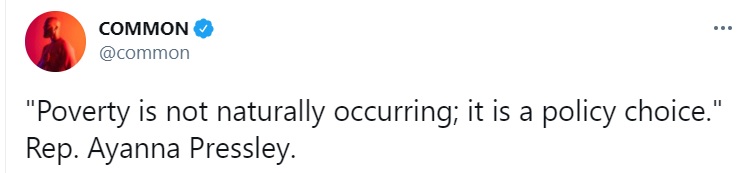
The two aforementioned videos illustrate why her statement is nonsensical, but let’s share some updated numbers to…
View original post 224 more words
Banquet of Consequences: Time to Force Wind & Solar Worshippers to Rely Exclusively on Sunshine & Breezes
13 Feb 2021 Leave a comment


Anyone railing against nuclear, coal or gas-fired power hasn’t been forced to rely exclusively on hopelessly unreliable wind and solar. The anti-fossil fuel crowd are, of course, hypocritical and the anti-CO2/anti-nuclear mob are the most hypocritical of all.
For those claiming they’re quite happy to do without coal and gas, wait till one of their loved ones lands in ICU, then tell them that the machines will only go “bing”, when either the sun’s at its zenith in a cloudless sky and/or the wind is blowing just right, and wait for the howls of protest and indignation.
The production and consumption of electricity is, after all, a “here and now”, kind of thing. A megawatt when we don’t need it, is simply a waste but, sometimes, a kilowatt makes all the difference. It’s time to spend some time hanging around in an ICU, if you still think otherwise.
Ross McKittrick…
View original post 778 more words
Book Review: “Young and Damned and Fair: The Life and Tragedy of Catherine Howard at the Court of Henry VIII” by Gareth Russell
13 Feb 2021 Leave a comment

 Divorced, beheaded, died. Divorced, beheaded, survived. For those who study Tudor history, we have heard this unimaginative rhyme to refer to the wives of Henry VIII for the longest time. We all know the stories of the queens, especially Anne Boleyn, but the fifth wife and the second one to be beheaded tend to be cast aside for some of the more intriguing tales. Her name was Catherine Howard, Henry’s youngest bride. Her story is full of rumors and myths, just like her cousin Anne Boleyn. Most know of her romantic dalliances that, in the end, led to her demise, but what was her reign like as queen? What was the court of Henry VIII like during his fifth marriage as his health was failing? In Gareth Russell’s brilliant biography, “Young and Damned and Fair: The Life and Tragedy of Catherine Howard at the Court of Henry VIII”, he dives…
View original post 459 more words
Japanese Bombing of Darwin
13 Feb 2021 Leave a comment
On February 19, 1942, the war-crowded northern Australian harbor of Port Darwin was struck by 198 Japanese bombers. This coordinated land and naval-based air strike surprised the ill-prepared defenders and devastated the port and the shipping concentrated within its harbor. Arriving in two waves, the forty-five minute attack sank eight ships, ran four aground, and severely damaged another eleven. More than 240 people were killed, mostly aboard the ships. Two more ships were destroyed as the planes transited home. They also struck the nearby Royal Australian Air Force (RAAF) base, destroying all the aircraft on the ground and downing all but one of the Australian fighters in the air. A follow-up raid finished off the base and inflicted so much wanton destruction that its military personnel fled to the south in panic. Total Japanese losses were only two aircraft. Darwin and its surrounding area endured more than a dozen air…
View original post 960 more words


Recent Comments