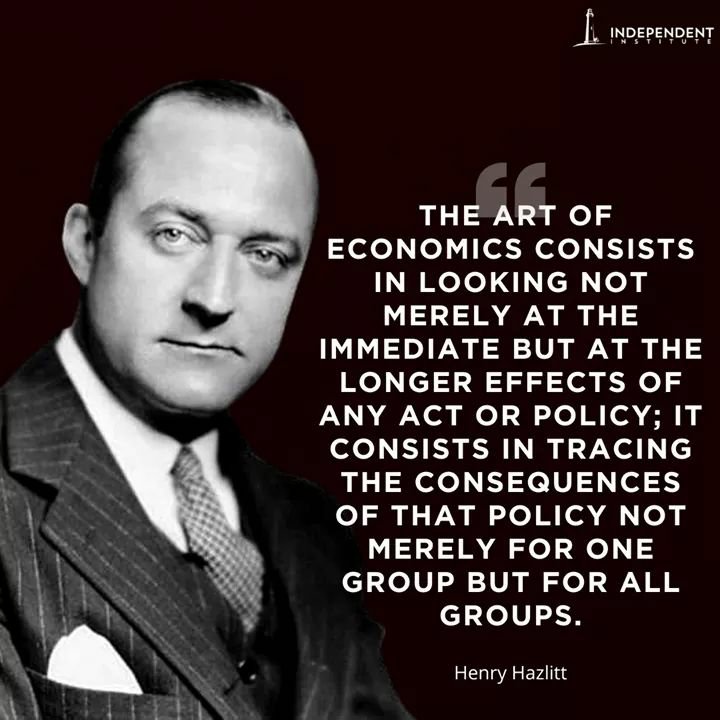
Economics in one lesson
22 Jan 2021 Leave a comment
in applied price theory, applied welfare economics, comparative institutional analysis, economics of bureaucracy, economics of regulation, history of economic thought, law and economics, property rights, Public Choice, public economics
The Royal Navy and the Convoy WWI Part I
21 Jan 2021 Leave a comment


Sinking of the Linda Blanche out of Liverpool by Willy Stöwer
But by August 1916, when the greater part of the High Seas Fleet was ready fix sea again, nothing had occurred on either side that made a decisive battle more likely to take place. This was confirmed when, with a somewhat hollow show of bravado, Scheer ventured to demonstrate to the world that ‘the enemy must be on the watch for attacks by our Fleet’. On 19 August the High Seas Fleet with eighteen dreadnoughts and its only two serviceable battle-cruisers came out with the intention of effecting the aborted pre-Jutland raid on Sunderland in association with U-boat traps.
Again, Room 40 did not let down Jellicoe who was again at sea to meet Scheer before he had left harbour himself, this time well covered by scouting Zeppelins. The two Fleets were never in serious risk of making contact…
View original post 3,156 more words
Rivka Weill: We the British People Rule: From 1832 to the Present
21 Jan 2021 Leave a comment

 To anyone who accepts Britain’s parliamentary sovereignty, Brexit should not make sense. How could a nation committed to parliamentary rule find itself bound by a consultative referendum’s result? And after the majority of Parliament had repeatedly opposed Brexit!
In “From Earl Grey to Boris Johnson: Brexit and the Anglo-American Constitutional Model,” I reveal that Brexit does not shatter longstanding grand British constitutional traditions and violate parliamentary sovereignty, because Britain has, in fact, been operating under a popular sovereignty model since 1832. This model requires the People’s, and not just Parliament’s, consent as prerequisite for constitutional change. It demonstrates that Brexit is an organic outcome of Britain’s historical commitment to the People’s will.
Before 1832, the Lords indirectly controlled the House of Commons’ composition. They opposed the Great Reform Act’s adoption to preserve this control but lost the battle. From that point on, British constitutional history splits into three…
View original post 1,167 more words
The UK government should still be cutting corporation tax, not raising it
20 Jan 2021 Leave a comment

Corporation tax hikes are apparently back on the agenda for the March Budget, with the Financial Timessuggesting that the Chancellor believes it would be fair to ask businesses for more after taxpayer support during pandemic. This argument might score a few points with focus groups and play well on social media, but it is still poor economics.
For a start, there is no immediate need for tax rises of any kind. The UK economy has held up better than expected over the last few months and the early rollout of the Covid vaccines should contribute to a strong recovery from the third nationwide lockdown. This in turn will do far more good for the public finances than any fiddling with tax rates.
Government borrowing will fall sharply as the economy rebounds. In the meantime, the increase in debt is cheap and easy to finance, and the financial markets…
View original post 945 more words
The Plantagenets: Henry VI, Edward IV, & The War of the Roses (1422-1483)
19 Jan 2021 Leave a comment

Among the most charitable observers of English history, Henry VI has been judged a gentle and pious king who was sadly unfit for the kingship of England, however even a cursory reading of history shows Henry to be nothing other than a failure: a feeble-minded simpleton and a weakling who was physically incapable of carrying out even the most elementary duties of his station. He was certainly not a great military leader like his father, Henry V, and his legacy was forever stained by the loss of English imperial lands in France. Henry’s reign was also egregiously marred by widespread popular unrest and growing factionalism at his court, all of which culminated in the destructive civil war later known as “The War of the Roses.”
Henry was a deeply pious man; well-educated, gentle, and infirm. He was tall, slender, and something of a religious scholar -he founded Eton College and…
View original post 2,626 more words
Nonviolent Civil Resistance works: let’s spread the word!
19 Jan 2021 Leave a comment

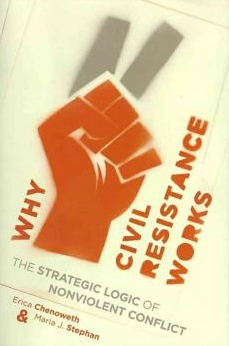 In 2011, Erica Chenowethand Maria Stephanpublished a groundbreaking study on civil resistance, Why Civil Resistance Works, the strategic logic of nonviolent conflict.While the prevailing view is that the most effective means of waging political struggle entails violence, they found that civil resistance campaigns were more than twice as successful in achieving their objectives than violent campaigns. They examined 323 nonviolent and violent campaigns between 1900-2006, involving more than 1,000 people, and that related to a country’s secession, overthrow of a dictatorship or removal of a foreign occupation. They also explore four case studies: Iran, Burma, the Philippines, and the Palestinian Territories.
Another interesting outcome of their study is that the governments of countries where the peaceful resistance took place were far more likely to become or remain stable democracies afterward. The book won several prizes including the 2012 Woodrow Wilson Foundation Award for best book published in…
View original post 365 more words
Germany: A change to overhang provision in MMP?
19 Jan 2021 Leave a comment

Is Germany about to revoke or modify its provision on “overhang” seats? Evidently there has been a Constitutional Court finding today against the current practice, ((I vaguely recall someone might have mentioned this case in another thread here.)) and there is now a debate about how to respond.
All I know at this point is a not-very-detailed story from The Montreal Gazette that Rob Richie of The Center for Voting and Democracy sent me. (Thanks, Rob!) Here are some excerpts, with the usual journalese about “complex” electoral systems.
Germany’s highest court declared the country’s complex electoral law unconstitutional Wednesday and ordered for it to be overhauled before the next general election…
The current voting system was passed only last year by Chancellor Angela Merkel’s governing coalition in an attempt to satisfy previous criticism by the Federal constitutional Court.
…the constitutional court again criticized that parties which win more seats than…
View original post 237 more words
Why has the UK economy been among the worst hit by Covid?
19 Jan 2021 Leave a comment
According to the latest official data, the UK has seen a much larger fall in GDP during the pandemic than almost any country in Europe. The worst hit economies are actually Greece and Spain. But the UK appears to have suffered much more than France, Germany, Italy, or Sweden. This needs some explaining.
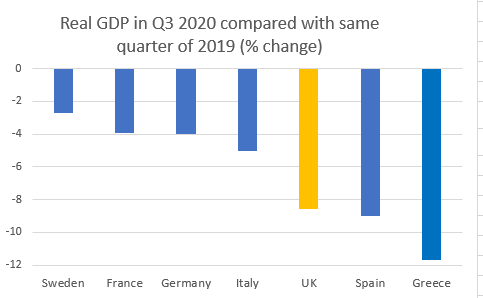
Let’s deal first with differences in how GDP is measured – and especially the impact of the pandemic on the output of the public sector. I first blogged about this back in August and David Smith was kind enough to quote me at the time. Mike Haynes was also one of the first to explore these issues and continues to do excellent work here. More recently, Ed Conway has picked up on this too.
In short, UK statisticians have put a lot more effort into estimating how much activity actually took place in sectors such as public…
View original post 599 more words
He’s bellicose, vulgar and – what else? – oh, yes, he won’t be attending the inauguration of Joe Biden
19 Jan 2021 Leave a comment

Donald Trump’s awful presidency expires at midday on Wednesday [US time] when Air Force One will have deposited him in Florida. He retreats to his Mar-a-Lago resort and Joseph R Biden Junior takes command of the White House.
Trump’s has been an unpleasant presidency, brought about largely by his own bellicosity, vulgarity and occupation of a different universe while being unable or unwilling to accept advice from all but a rapidly dwindling circle of friends and advisers.
From Day One he argued he would be defeated at the next election only by a rigged ballot with fraudulent voting. This has been a constant from his swearing-in to his departure – and secured the support of at least 60% of Republican voters.
By last Friday, the White House was nearly empty. This week only the ghosts and a couple of stalwarts remain.
View original post 565 more words
Carwyn Jones: Is Dicey dicey?
18 Jan 2021 Leave a comment

For nearly a hundred and fifty years, parliamentary sovereignty or supremacy (the terms are used interchangeably) has been taken as immutable and unchanging by the UK Parliament and the courts. As devolution has developed, the concept deserves greater examination to see whether the concept is as sound as it has been supposed.
There is nothing in statute law that defines parliamentary sovereignty. Indeed, before the late Victorian era it had never been expressly advocated in any context. The only mention of anything close to a declaration of sovereignty can be found in the words of the Earl of Shaftesbury who said, in 1689:
The Parliament of England is the supreme and absolute power, which gives life and motion to the English Government
(Bradley in Jowell et al (eds.) (The Changing Constitution, 6th Edition Oxford University Press)
There could of course be much debate about what this phraseactuallymeans. So soon…
View original post 1,804 more words
TAXPAYER LARGESSE?
18 Jan 2021 Leave a comment


The Kingsgate Hotel Autolodge in Paihia is located on a prime site facing Marsden Road, 20 meters from she sea, slap in the middle of any number of motels and apartment buildings and only 100 meters from the wharf and main shopping precinct. It has 113 rooms and markets itself as family friendly boasting a restaurant and bar and large outdoor pool area. Go to their website right now and their cheapest room on offer is priced at $170.
I have it on very good authority that the Hotel has signed a sweetheart deal with MSD to house the homeless. The deal reportedly is for one wing of the Hotel and runs through to 31 March 2021 unless renewed. Whenever the contract is terminated MSD is required to completely refurbish the rooms before handing them back to management.
Not sure that regular paying guests will see this as overly desirable…
View original post 87 more words

The hybrid House of Commons: the problems of government control
17 Jan 2021 Leave a comment


For much of last year, the government resisted MPs’ calls for full reinstatement of virtual participation in House of Commons proceedings. In this post, Daniel Gover and Lisa James review the development of the ‘hybrid Commons’. They argue that full virtual participation, including remote voting, must now be reinstated, and that recent events reveal broader problems of government control over the Commons agenda.
Last spring, the House of Commons adapted quickly and successfully to the challenges presented by COVID-19. The so-called ‘hybrid Commons’ – combining in-person proceedings with simultaneous virtual participation – was one of the first responses of its type globally, and widely praised. But within weeks, the government unilaterally abandoned the virtual element, provoking anger amongst backbench MPs and violating the core parliamentary principle of the equality of all members. It was only on 30 December – well over six months later – that virtual participation in…
View original post 1,606 more words
Soviet Jokes About Living Under Oppression
17 Jan 2021 Leave a comment


The Soviet people lived under a regime where private life, ideas and opinions were banished from public expression by state media. Now the USA has state media rivaling the USSR, only difference is ambiguity whether the media runs the state or vice-versa as in Soviet days. In any case, Russians and others under that regime voiced their resistance by sharing jokes at the expense of the autocrats. Wikipedia provides some instructive examples for Americans in the days ahead.
A judge walks out of his chambers laughing his head off. A colleague approaches him and asks why he is laughing. “I just heard the funniest joke in the world!”
“Well, go ahead, tell me!” says the other judge.
“I can’t – I just gave someone ten years for it!”
Q: “Who built the White Sea Canal?”
A: “The left bank was built by those who told the jokes, and the right…
View original post 579 more words


Recent Comments