TO START A WAR: HOW THE BUSH ADMINISTRATION TOOK AMERICA INTO IRAQ by Robert Draper

szfreiberger's avatarDoc's Books

Donald Rumsfeld and Dick Cheney. Photo is in the Public Domain.

(Secretary of Defence Donald Rumsfeld and Vice President Dick Cheney)

In reassessing the results of the Iraq War one thing is clear, the United States made a terrible error invading Saddam Hussein’s kingdom in 2003.  If one looks objectively at the current state of the Middle East one can honestly conclude that the ultimate victor was Iran.  Iraq was a state that was held together by an authoritarian regime that dealt with Sunnis, Shiites, and Kurds.  Once the war brought “shock and awe,” or devastation the country split apart into civil war eventually allowing Iran to ally with Shiite forces and influence its government, fostered the rise of the Islamic State (ISIS), contributed to the Syrian civil war, reinforced Turkey’s goal of destroying the Kurds, and diminished the American presence and reputation in the region.  One could argue that looking back after fifteen years that the mess that was created…

View original post 1,629 more words

THE ZHIVAGO AFFAIR: THE KREMLIN, THE CIA, AND THE BATTLE FOR A FORBIDDEN BOOK by Peter Finn and Petra Couvee

szfreiberger's avatarDoc's Books

I remember years ago when I saw David Lean’s film “Dr. Zhivago,” leaving the theater with the name Lara rebounding in my psyche.  This led me to read the novel that just floored me.  Now so many years later I have read Peter Finn and Petra Couvee’s monograph THE ZHIVAGO AFFAIR: THE KREMLIN, THE CIA, AND THE BATTLE OVER A FORBIDDEN BOOK that choreographs Boris Pasternak’s journey from poetry to fiction, the Kremlin’s attempt to prevent its dissemination within and outside the Soviet Union, and the role of the CIA in trying to weaponize the novel as a vehicle in the Cold War.  The book itself appears professionally researched but there are a number of gaps, i.e., Pasternak’s experience during World War II is covered in a page or two, among others.  Overall, the book is well conceived, but I believe the authors could have done more with the topic.

View original post 856 more words

How Can the New York Times Write about the Failure of Venezuela and not Mention Socialism?

Dan Mitchell's avatarInternational Liberty

Every so often, I’ll grouse about media sloppiness/media bias, most often from the Washington Post or New York Times, but also from other outlets(Reuters, Time, ABC, the Associated Press, etc).

Let’s add to the collection today by perusing an interesting – but frustrating – article in the New York Times about Venezuela’s near-decimated oil industry.

Authored by Sheyla Urdaneta, Anatoly Kurmanaev and , it provides a thorough description of how the energy sector in oil-rich Venezuela has collapsed.

For the first time in a century, there are no rigs searching for oil in Venezuela. Wells that once tapped the world’s largest crude reserves are abandoned… Refineries that once processed oil for export are rusting hulks… Fuel shortages have brought the country to a standstill. At gas stations, lines go on for miles. …The country that a decade ago was the…

View original post 682 more words

Starting to read Schumpeter

Sebastian Benthall's avatarDigifesto

I’ve started reading Schumpeter’s Capitalism, Socialism, and Democracy (1942).

Joseph Schumpeter ekonomialaria.jpg
It’s Schumpeter.

Why? Because of the Big Tech anti-trust hearings. I’ve heard that:

(a) U.S. anti-trust policy is based on a theory of monopoly pricing which is not bearing out with todays Big Tech monopolies,

(b) possibly those monopolies are justified on the basis of Schumpeterian “creative destruction” competition, wherein one monopoly gets upended by another in sequence, rather than having many firms competing all at once on the market,

(c) one of the major shots taken at Amazon in the hearings is that it would acquire companies that it saw as a threat, indicating a strategic understanding of Schumpeterian competition on the part of e.g. Bezos, and also how one can maintain a monopolistic position despite that competition,

(d) this idea of capitalism and entrepreneurship seems both fundamentally correct, still somehow formally undertheorized, and tractable with some of the simulation…

View original post 542 more words

Doudna and Charpentier win Chemistry Nobel for CRISPR/Cas9 method of gene editing

whyevolutionistrue's avatarWhy Evolution Is True

This year’s Nobel Prize in Chemistry was long anticipated, for the CRISPR/Cas9 system of gene editing was a tremendous accomplishment in biology and chemistry. It promises a lot, including curing human genetic disease (see the first five posts here). Remember, Nobel Prizes in science are designed to reward those who made discoveries potentially helping humanity, not those who just made general scientific advances.

A prize for developing the editing system was, then, almost inevitable. The only question was “who would get it?”, since several people contributed to the work that led to CRISPR/Cas9.  It turns out that the Prize—in Chemistry—went to the two frontrunners, Jennifer Doudna of UC Berekeley and Emmanuelle Charpentier at the Max Planck Institute for Infection Biology in Berlin.  Other serious contenders were George Church of Harvard, Virginijus Šikšnys at the Vilnius University of Biotechnology, Francisco Mojica of the University of Alicante, and Feng…

View original post 980 more words

Sweating It: Renewable Energy Crisis Means Australians Can’t Run Air-Conditioners During Heatwaves

stopthesethings's avatarSTOP THESE THINGS

Wind & solar ‘powered’ South Australians pioneered sweating in the dark.

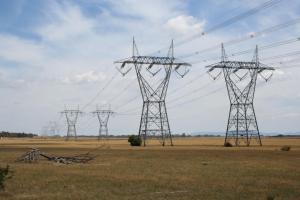
Once upon a time Australians enjoyed reliable and affordable power, but that was before heavily subsidised and chaotically intermittent wind and solar entered the scene.

Over the last few summers, Australians have been treated to power rationing and load shedding, as well as the odd mass blackout. These events have an uncanny correlation with dead calm days/nights and sunset that coincides with bursts of warm weather and rising mercury.

Summer heatwaves are part and parcel of Australian life.

Over the last four or five decades, though, an increasing number of Australians have enjoyed the benefit of reverse cycle air-conditioning, warming homes in winter and taking the ferocity out of their often-blistering summers.

Now Australians are being told to turn off their air conditioners and/or to leave home and go back to work in order to keep the grid from…

View original post 521 more words

America’s Largest Fire

gjihad's avatarGreen Jihad

This week is the anniversary of the Great Fire of 1910 that burned in Idaho and Montana and was nearly as large as all the fires in the US combined so far this year.

PHOTO CREDIT: Wallace, Idaho after the Big Blowup By National Photo Company – U.S. Library of Congress Prints &; Photographs Online Catalog, Public Domain, https://commons.wikimedia.org/w/index.php?curid=6989498

View original post

Image

Why are North and South India so different on gender?

Amol Agrawal's avatarMostly Economics

Alice Evans in this piece (HT: MR blog):

Everyone knows that Southern and Northern India are very different in culture, language, and socio-economic development. But the most dramatic regional disparity may be in gender relations.

Southern and North-eastern women are more likely to

Education, paid work, and age are all associated with greater economic and physical autonomy. But even if a woman completes secondary school, she is less likely to choose her husband if she lives in the North.

View original post

Social Credit – too timid by far this time

Michael Reddell's avatarcroaking cassandra

Social Credit ideas have a long history in New Zealand.  The originator, Major Douglas, even visited New Zealand in 1934 and testified to a parliamentary committee.  The ideas influenced Labour in particular in the 1930s, and some who later played very prominent roles in National.  We got our very own political party – the Social Credit Political League – in 1954 and from time to time Social Credit did very well in the polls (and under FPP even managed four MPs at the different times from the 1960s to the 1980s).  I recall a time –  perhaps 1980 –  when Social Credit briefly polled ahead of Labour.  There had been an entire Royal Commission in the 1950s, mostly intended to debunk them, but  they weren’t deterred –  as a young economist at the Reserve Bank, a fair amount of my time was spent responding to letters, to us or the…

View original post 2,172 more words

What is ecological economics’ BIRTH CREDITs? What does BIRTH CREDIT mean?

Hydrogen Hyperbole: Debunking Overblown Claims That Hydrogen Can Save Intermittent Wind & Solar

stopthesethings's avatarSTOP THESE THINGS

Renewable energy rent seekers claim converting useless, unpredictable and unreliable wind and solar power into hydrogen gas is a cinch. Sure, the notion of turning useless electricity into something that can be used as and when consumers need it – rather than something that depends on the whims of mother nature – makes sense – at a conceptual level.

But that’s the point when the reality carriage detaches from the dream caboose.

If converting chaotic wind and solar into hydrogen gas was as cheap and easy as its proponents suggest, then market forces would have brought the process into being, years ago. However, rent seekers pushing the hydrogen line are already putting their hands out for government ‘assistance’ – so get set for yet another crony capitalist playground, where massive and endless subsidies are the endgame.

Like every other country suffering from the wind and solar obsession, Australia’s Federal government…

View original post 1,381 more words

The barbarity of the medieval criminal law: petty treason and the murders of Sir Thomas Murdak and John Cotell

Simon Payling's avatarThe History of Parliament

In today’s blog Dr Simon Payling, senior research fellow in our Commons 1461-1504 project, once again turns his attention to crime and punishment in the medieval period. In the 14th century, the criminal law system may have worked slowly, but it was particularly harsh to those convicted of ‘petty treason’…

In the first months of 1316 there was a notable series of deaths in the knightly family of Gayton.In the space of four days in January the head of the family, Sir Philip, a former Warwickshire MP, and his son and heir, Theobald, died at their manor of ‘le Grave’ in that county, and it may be that the two men were victims of some infectious disease.Disease, however, was emphatically not the explanation for the third of the deaths. The heirs to the Gayton estates were Theobald’s two sisters, both married, the elder of the two, Juliana, to Sir…

View original post 940 more words

Aside

And so another term passes and nothing changes for the better

Michael Reddell's avatarcroaking cassandra

A couple of years ago I had my arm twisted and agreed to write a chapter for a new book on New Zealand public policy being edited by a couple of Victoria University academics. My chapter was to be on the economy, and although the general tone of the book was to be rather upbeat, about the public policy and governance frontiers New Zealand had marked out, there wasn’t very much to be upbeat about in the longer-term New Zealand economic story. And so I wasn’t.

The published book finally turned up in the mail last week and I’ve started reading it (there might be a post later about some of the other chapters). In my chapter (a slightly longer version of which is here) I’d highlighted the continuing relative decline in New Zealand’s economic performance. I’d forgotten that I’d ended the chapter this way (emphasis added)

Looking ahead…

View original post 2,277 more words

There’s nothing new about the concept of end of life choice

poonzteam5443's avatarPoint of Order

This post was written by David Barber, media adviser and newsletter editor for the End of Life Choice Society

There is nothing new about the concept of a doctor helping to hasten the end of somebody who is already dying to spare further pain and suffering.

It is not some fanciful New Age idea, as some seem to think in the lead-up to this month’s referendum on the End of Life Choice Act.

Euthanasia (the word translates as “good death” in Greek) was practised in Ancient Greece and Rome, where writers and philosophers reported that good emperors prayed for a dignified and pain-free farewell.

After becoming the first country to allow women to vote, in 1893, New Zealand developed a trailblazing reputation for social reform, but has fallen behind in legalising medical assistance to die, which is seen by advocates as the last human right denied citizens – the…

View original post 518 more words

Image

The Great Inflation, 1965–1982

Previous Older Entries Next Newer Entries

Vincent Geloso

Econ Prof at George Mason University, Economic Historian, Québécois

Bassett, Brash & Hide

Celebrating humanity's flourishing through the spread of capitalism and the rule of law

Truth on the Market

Scholarly commentary on law, economics, and more

The Undercover Historian

Beatrice Cherrier's blog

Matua Kahurangi

Celebrating humanity's flourishing through the spread of capitalism and the rule of law

Temple of Sociology

Celebrating humanity's flourishing through the spread of capitalism and the rule of law

Velvet Glove, Iron Fist

Celebrating humanity's flourishing through the spread of capitalism and the rule of law

Why Evolution Is True

Why Evolution is True is a blog written by Jerry Coyne, centered on evolution and biology but also dealing with diverse topics like politics, culture, and cats.

Down to Earth Kiwi

Celebrating humanity's flourishing through the spread of capitalism and the rule of law

NoTricksZone

Celebrating humanity's flourishing through the spread of capitalism and the rule of law

Homepaddock

A rural perspective with a blue tint by Ele Ludemann

Kiwiblog

DPF's Kiwiblog - Fomenting Happy Mischief since 2003

The Dangerous Economist

Celebrating humanity's flourishing through the spread of capitalism and the rule of law

Watts Up With That?

The world's most viewed site on global warming and climate change

The Logical Place

Tim Harding's writings on rationality, informal logic and skepticism

Doc's Books

A window into Doc Freiberger's library

The Risk-Monger

Let's examine hard decisions!

Uneasy Money

Commentary on monetary policy in the spirit of R. G. Hawtrey

Barrie Saunders

Thoughts on public policy and the media

Liberty Scott

Celebrating humanity's flourishing through the spread of capitalism and the rule of law

Point of Order

Politics and the economy

James Bowden's Blog

A blog (primarily) on Canadian and Commonwealth political history and institutions

Science Matters

Reading between the lines, and underneath the hype.

Peter Winsley

Economics, and such stuff as dreams are made on

A Venerable Puzzle

"The British constitution has always been puzzling, and always will be." --Queen Elizabeth II

The Antiplanner

Celebrating humanity's flourishing through the spread of capitalism and the rule of law

Bet On It

Celebrating humanity's flourishing through the spread of capitalism and the rule of law

History of Sorts

WORLD WAR II, MUSIC, HISTORY, HOLOCAUST

Roger Pielke Jr.

Undisciplined scholar, recovering academic

Offsetting Behaviour

Celebrating humanity's flourishing through the spread of capitalism and the rule of law

JONATHAN TURLEY

Res ipsa loquitur - The thing itself speaks

Conversable Economist

In Hume’s spirit, I will attempt to serve as an ambassador from my world of economics, and help in “finding topics of conversation fit for the entertainment of rational creatures.”

The Victorian Commons

Researching the House of Commons, 1832-1868

The History of Parliament

Articles and research from the History of Parliament Trust

Books & Boots

Reflections on books and art

Legal History Miscellany

Posts on the History of Law, Crime, and Justice

Sex, Drugs and Economics

Celebrating humanity's flourishing through the spread of capitalism and the rule of law

European Royal History

Exploring the Monarchs of Europe

Tallbloke's Talkshop

Cutting edge science you can dice with

Marginal REVOLUTION

Small Steps Toward A Much Better World

NOT A LOT OF PEOPLE KNOW THAT

“We do not believe any group of men adequate enough or wise enough to operate without scrutiny or without criticism. We know that the only way to avoid error is to detect it, that the only way to detect it is to be free to inquire. We know that in secrecy error undetected will flourish and subvert”. - J Robert Oppenheimer.

STOP THESE THINGS

The truth about the great wind power fraud - we're not here to debate the wind industry, we're here to destroy it.

Lindsay Mitchell

Celebrating humanity's flourishing through the spread of capitalism and the rule of law

Alt-M

Celebrating humanity's flourishing through the spread of capitalism and the rule of law

croaking cassandra

Economics, public policy, monetary policy, financial regulation, with a New Zealand perspective

The Grumpy Economist

Celebrating humanity's flourishing through the spread of capitalism and the rule of law