Property Rights: Keynote – Richard Epstein
22 Sep 2020 Leave a comment
in applied price theory, comparative institutional analysis, constitutional political economy, economic history, environmental economics, law and economics, property rights, public economics, Richard Epstein
Leah Trueblood: ‘Following the Science:’ a Legal and Democratic Challenge
21 Sep 2020 Leave a comment

 During a pandemic, it seems like a good idea for politicians to ‘follow the science.’ But what does this actually mean? The claim that the Government is ‘following the science’ is in many respects laudable, but is it also a convenient way to avoid or limit accountability? Due to a lack of transparency, it is unclear whether and to what extent substantive decisions are being made by scientists, or if this is just a politically helpful turn of phrase. A recent Institute for Government reportDecision Making in a Crisis: First Responses to the Coronavirus Pandemic potentially provides some insight into this question. The report says that when deciding whether to lockdown the country in March, the Government looked to science for ‘answers’ for what to do, rather than as part of a range of inputs into a decision-making process. Is the Government delegating decisions for which, under statute, it…
View original post 1,928 more words
Productivity, and politicians who no longer care
21 Sep 2020 Leave a comment

I was reminded again the other day both how (absolutely) poor even advanced countries were not that long ago, but also how (relatively) rich New Zealand was. I was reading a fascinating book on Ireland’s (rather shameful) history in World War Two and stumbled across a snippet suggesting that “there were nearly 170000 licensed radio sets in Ireland on outbreak of war”, in a country of almost three million people. On digging around a bit, I found that in New Zealand, then with 1.6 million people, we’d had 317509 licensed radio sets in 1939 (then, apparently, third highest in the world per capita). The licence fees in the two countries appear to have been very similar.
The standard compilation of historical estimates of per capita GDP – that of Angus Maddison – is consistent with my radio anecdote. In 1938/39 GDP per capita in New Zealand was more than twice…
View original post 2,110 more words
September 19/20, 1486: Birth of Arthur, Prince of Wales.
21 Sep 2020 Leave a comment

Arthur Tudor (September 19/20 1486 – April 2, 1502) was Prince of Wales, Earl of Chester and Duke of Cornwall. As the eldest son and heir apparent of Henry VII of England, Arthur was viewed by contemporaries as the great hope of the newly established House of Tudor. His mother, Elizabeth of York, was the daughter of Edward IV, and his birth cemented the union between the House of Tudor and the House of York.
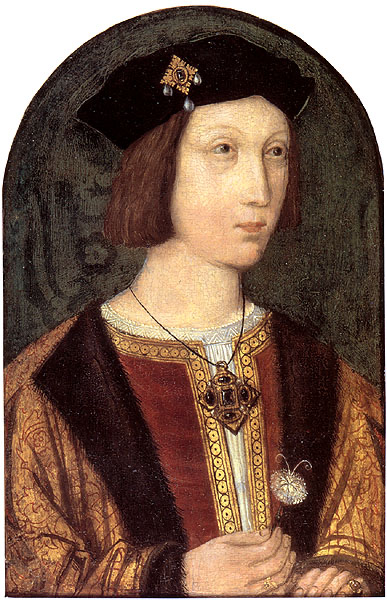
Henry VII became King of England upon defeating Richard III at the Battle of Bosworth Field in 1485. In an effort to strengthen the Tudor claim to the throne, Henry had royal genealogists trace his lineage back to the ancient British rulers and decided on naming his firstborn son after the legendary King Arthur.
On this occasion, Camelot was identified as present-day Winchester, and his wife, Elizabeth of York, was sent to Saint Swithun’s Priory (today…
View original post 614 more words
Brilliance squared
20 Sep 2020 Leave a comment

Stephen Fry and Steven Pinker are two of the people I admire the most, for their erudition, extreme levels and variety of learning, and willingness to discuss their ideas. Having them both on stage at the same time, one interviewing the other (on the subject of Pinker’s last book, Enlightenment Now), is almost too much, but here they are:
(I did, for some reason, receive an invitation to this event, and would have gone there despite timing and expense if at all possible, but it was oversubscribed before I could clink the link. So thank whomever for Youtube, I say. It can be used to spread enlightenment, too.)
Gender Recognition Certificates
20 Sep 2020 Leave a comment

As activists in the trans community work to remove the “onerous” burdens placed on the community to legally “transition” I became curious about the legal cases in this area. Far from excessive gatekeeping the act is explicitly designed to be “permissive”. Has this permissiveness gone too far? It seems there is a low bar to be, legally, redefined as a woman. If you are not convinced have a scroll through my blogs. If you don’t want to take my word for it, fine, I would not believe me either! In every piece I link to the legal records. You can bypass my commentary and go straight to the Transcript
In brief no surgery, attempted rape convictions, being incarcerated for paedophilia are no bar to claiming “womanhood”! Remember that when someone tells you they “live as a woman”. Interrogate that phrase. Its ubiquitous and meaningless. Can I, a white…
View original post 1,657 more words
Ships Ahoy! Giant Diesel-Fuelled Ship Engines ‘Solution’ For Australia’s Renewable Energy Crisis
20 Sep 2020 Leave a comment

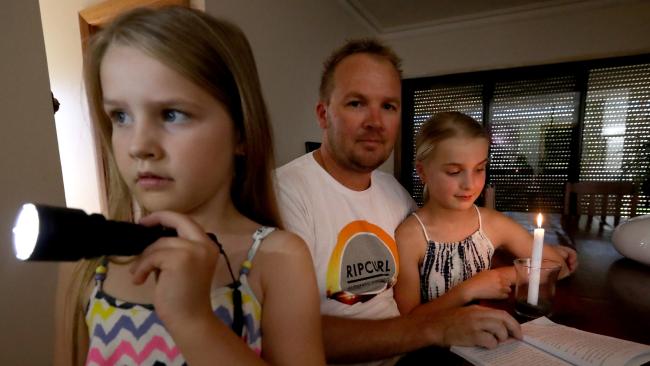 Wind and solar ‘powered’ South Australians already know the drill.
Australia’s obsession with chaotically intermittent wind and solar has left it with a power pricing and supply calamity. It’s a disaster that was as predictable, as it was avoidable.
To date, the Federal Liberal/National Coalition’s feeble attempts to resolve it provide a study in practised inertia, mixed with a series of pointless Band-Aid ‘solutions’.
Last week, the PM, Scott Morrison announced a raft of policy initiatives aimed at purportedly unlocking Australia’s gas reserves (locked up by recalcitrant State Premiers) and using that gas to fuel new power plants.
Terry McCrann takes a look at the causes and consequences of the PM’s latest energy policy debacle.
Power grab would leave us all in the dark
The Australian
Terry McCrann
18 September 2020
Chairman — sorry, premier — Dan might have to go and go right now as overlord of Victoria, the…
View original post 1,515 more words
Arrows and armour
20 Sep 2020 Leave a comment
B. H. Liddell Hart: History of the Second World War.


One of my enduring frustrations with books about WWII is poor mapping and relatively little focus on operational strategy. One reason for this, I have now found, is that Liddell Hart wrote the definitive book on the war in 1971, and every book since then either will have to concentrate on more details (such as Anthony Beevor’s books on Berlin and Stalingrad) or take a more “themed” approach (such as John Keegan’s WWII).
The book is cold-blooded and argumentative – with a focus on maneuver (nicely mapped) and evolving tactics. Liddell Hart spends more time on tank battles (in particular Rommel‘s campaigns in North Africa) than strictly necessary, and frequently introduces footnotes about his own role, pointing out how he had written critically about various weaknesses in British and US defenses long before anyone else. Then…
View original post 210 more words
John McWhorter talks to Sam Harris
20 Sep 2020 Leave a comment

It’s supposed to be my day off, so I’ll save the braining for other days. But here’s a nice listen if you have an hour to spare.
If you click on the screenshot below, you’ll get to hear an hour and eleven minutes of linguist and writer John McWhorter chatting with Sam Harris on Harris’s podcast “Making Sense.” McWhorter’s topic is, as the title indicates, “The New Religion of Anti-Racism,” which I believe is the subject of his next book. You don’t get to listen to the entire conversation (I’m not sure how long the whole thing is) unless you subscribe to Sam’s podcast series.
Here are Sam’s notes on the podcast:
In this episode of the podcast, Sam Harris speaks with John McWhorter about race, racism, and “anti-racism” in America.
They discuss:
- how conceptions of racism have changed
- the ubiquitous threat of being branded a “racist”
- the contradictions within…
View original post 289 more words
RAGE by Bob Woodward
20 Sep 2020 Leave a comment


Donald Trump has made an inordinate number of mistakes since assuming the presidency, however one of his most egregious was agreeing to an eighteen hour over nine session interview with author Bob Woodward. The Washington Post investigative reporter had previously written a chronicle of Trump’s first two years in office entitled, FEAR which was not very flattering toward the president. Trump, a firm believer in his own powers of persuasion was out of his league assuming if he developed a personal relationship with Woodward that his new book would praise the president and be an asset in the current presidential campaign. The result has been Woodward’s latest work, RAGE which was once again even less flattering toward Mr. Trump.
Woodward’s effort is somewhat ironic in that his reporting during the Watergate crisis of the early 1970s helped remove Richard M. Nixon from office. Now, almost fifty years later Woodward has…
View original post 1,886 more words
The authority that regulates security in pubs and clubs says “who needs rules?” when it comes to women’s privacy
20 Sep 2020 Leave a comment

Single sex services are about rules. Ambiguity about whether someone has permission to be in a space where someone else is undressing is a recipe for trouble. With clear rules everyone can be treated with respect and kept safe.
Rules and policies provide three levels of protection:
- People are more likely to comply without intervention if rules are clear, avoiding disputes and antagonism.
- If there is a dispute or a difficult situation, applying a clear policy allows everyone to be treated with dignity. Policies can consider in advance how to deal with sensitive situations, in order to avoid argument, upset and uncertainty .
- Clear rules and policies are critical for effective training of frontline staff to ensure that they are equipped to treat people fairly and with dignity, avoid putting themselves in compromised positions where they might be accused of harassment or assault, and are protected from assault or harassment themselves.
View original post 1,146 more words
winter book forum 2018, part 2: what do people actually get out of college?
20 Sep 2020 Leave a comment

This Winter, we are discussing Bryan Caplan’s The Case Against Education. The main issue: We invest a ton in education and it seems to do good. But is that because schooling acts as a filter or because schooling gives your concrete skills or better ways of thinking? If education is mostly a filter (the signalling model), we should probably cut back on education a lot.
In this post, I’ll discuss the types of evidence that Caplan reviews. His book is empirical in that the strength of the argument relies on what other researchers have found. A short blog post does not do justice to this work. For example, he asks – how much do people learn in college? How much do people use specific skills (like algebra) in the workplace? Is there any evidence that learning is transferable – that people acquire “critical thinking?” Each of these topics commands…
View original post 328 more words
Hans Rosling in memoriam
19 Sep 2020 Leave a comment
Hans Rosling died from cancer this morning.
Not much to say, really. Or, maybe, so much to say. I met him in Oslo once, I had seen his video and suggested him for the annual “big” conference for movers and shakers in Oslo. He came and wowed everyone. Simple as that.
Here is another one (this one in Swedish) where he just shuts down a rather snooty and ill prepared newsshow host by saying, essentially, “this is not a matter of opinion, this is a matter of statistics and facts. I am right and you are wrong.”
What a man.
Steven Pinker on the decline of violence
19 Sep 2020 Leave a comment
Steven Pinker, just out with a new book (The Better Angels of Our Nature: Why Violence Has Declined), gives a talk outlining how rates of violence are falling in the world, and the causes of this. Excellent, highly recommended, and available for free in high resolution:
Progress is actually progress. Hans Rosling would agree.
Update March 30, 2012: I really should clean up my notes and add to this post, but this review by Peter Singer sums it all up nicely, so I won’t bother. But it is worth a read, 800 pages and all.
Survival of Monarchies: England Part III
19 Sep 2020 Leave a comment
The Glorious Revolution of 1688 was when Parliament became supreme and limited the power of the Crown. Although the Glorious Revolution did limit the powers of the monarch it would take a few hundred years until the monarchy became the constitutional and symbolized figurehead monarchy we see today. It has been this gradual limiting of the powers of the crown that has allowed the British monarchy to survive, and thrive, to this very day.
The Revolution resolved the struggle between Crown and Parliament and it also helped settle the religious struggles within the country. Basically at its heart it was a revolution that deposed King James II-VII of England and Scotland. In 1679 Parliament wanted to exclude James from the succession due to his Catholicism. To be Catholic in a Protestant England at that time was troublesome even if you were the king. During his reign James did not do…
View original post 806 more words


Recent Comments