Survival of Monarchies: England, Part II

liamfoley63's avatarEuropean Royal History

James VI, King of Scots came to the English throne in 1603 and he had been on the Scottish throne since 1567, a few months after his birth. As stated last week, often a strong monarch was able to gain control of Parliament and even rule without them. However, was the problems James had with Parliament due to him being a weak monarch or was the showdown between Crown and Parliament inevitable? My personal theory is that the two would eventually come into conflict. Society is always in a flux of growth and change and as has happened in all monarchies eventually the people rise up and desire a say in government.

For centuries the Crown held the majority of power and although the Tudor monarchs only used the Parliament to stamp its approval on what the king or queen desires, usually it had to do with raising taxes, Parliament…

View original post 615 more words

Pinker’s well-filled slate

Espen's avatarApplied Abstractions

41-lxeaqn7l-_sx248_bo1204203200_Steve Pinker‘s The Blank Slate: The Modern Denial of Human Nature is a wonderful book, not only for its wide reach and deep discussion, but also for the lively and opinionated language. Like The Economist, Pinker writes objectively with a view – though he clearly has an a opinion, well thought out and researched, in the nature-vs-nurture debate, he is careful to examine evidence and give the other side its due. Not that there is much.

Articulated, polemic and with more than a whiff of exasperated sarcasm, Steven Pinker attacks three misconceptions in modern culture: The Blank Slate, the idea that nurture, not nature, is the main shaping force behind human behavior; The Noble Savage, that the badness of the modern condition comes from the modern conditions – and things were somehow better before we got modern technology and transportation; and the Ghost in the Machine

View original post 2,582 more words

Imperial Japanese Army Legacy 1920-45

MSW's avatarWeapons and Warfare

On August 16, 1945, Maj. Sugi Shigeru led about 100 young soldiers from the army’s air signal training school in Ibaraki prefecture to Tokyo in order to protect the emperor from the imminent allied occupation. The Guard Division, which was responsible for defending the palace, shooed them away, but the group congregated at Ueno Park, eventually occupying the art museum. More arrivals from the school swelled their numbers to around 400 armed and emotional young men. Sugi ignored senior officers’ orders to disband, and the next day Maj. Ishihara Sadakichi, a Guard Division officer and friend of Sugi’s, was sent to convince him to leave. While the two were talking, a second lieutenant assigned to the training school walked up and shot Ishihara to death. Sugi in turn shot and killed the lieutenant. The murders broke the spell of an imperial rescue mission, and the disillusioned troops drifted away. That…

View original post 3,954 more words

10 of The Most Counter-Intuitive Psychology Findings Ever Published

Psychology’s 10 Greatest Case Studies – Digested

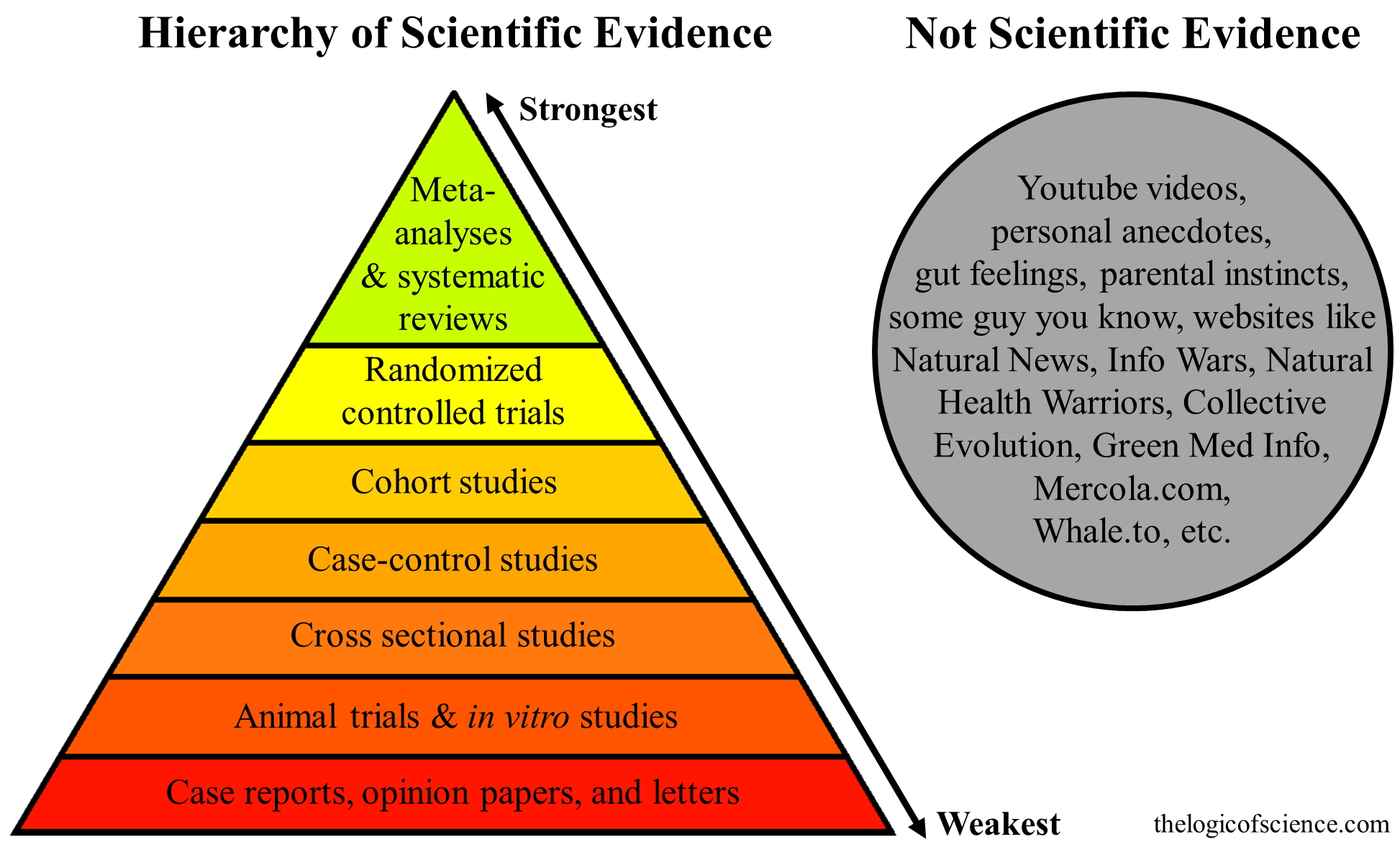
The hierarchy of evidence: Is the study’s design robust?

Fallacy Man's avatarThe Logic of Science

hierarchy of scientific evidence, randomized controlled study, case, cohort, research designPeople are extraordinarily prone to confirmation biases. We have a strong tendency to latch onto anything that supports our position and blindly ignore anything that doesn’t. This is especially true when it comes to scientific topics. People love to think that science is on their side, and they often use scientific papers to bolster their position. Citing scientific literature can, of course, be a very good thing. In fact, I frequently insist that we have to rely on the peer-reviewed literature for scientific matters. The problem is that not all scientific papers are of a high quality. Shoddy research does sometimes get published, and we’ve reached a point in history where there is so much research being published that if you look hard enough, you can find at least one paper in support of almost any position that you can imagine. Therefore, we must always be cautious about eagerly accepting…

View original post 4,780 more words

Most scientific studies are wrong, but that doesn’t mean what you think it means

Fallacy Man's avatarThe Logic of Science

When faced with scientific studies that disagree with them, many people are prone to claim that they don’t have to accept those studies because most scientific studies are actually wrong. They generally try to support this claim by either citing the work of John P. A. Ioannidis (especially his paper titled, “Why most published research findings are false”) or by quoting Dr. Richard Horton who said,

“The case against science is straightforward: much of the scientific literature, perhaps half, may simply be untrue. Afflicted by studies with small sample sizes, tiny effects, invalid exploratory analyses, and flagrant conflicts of interest, together with an obsession for pursuing fashionable trends of dubious importance, science has taken a turn towards darkness.”

To the anti-scientist, these are “get out of jail free” cards that let them dismiss any study that they don’t like. In reality, of course, those who oppose science…

View original post 3,803 more words

A question of confidence? The Constitution Committee’s view on the Fixed-term Parliaments Act 2011

The Constitution Unit's avatarThe Constitution Unit Blog

Nine years after the passage of the Fixed-term Parliaments Act, both government and opposition have expressed a desire to repeal it, following two general elections: one brought about about using the provisions of the Act and another by circumventing them. The Constitution Committee has produced a report setting out what any replacement legislation needs to address. Its Chair, Baroness Taylor, discusses the Committee’s conclusions below.

On its introduction in 2011, the Fixed-term Parliaments Act (FTPA) was heralded by the then Deputy Prime Minister, Nick Clegg, as a ‘constitutional innovation’ that would no longer allow the timing of general elections to be a ‘plaything of Governments’. Nine years on, it is safe to say that the FTPA has not had the effect that he and others envisaged. The FTPA has been stress-tested and found wanting by political parties and commentators alike.

The FTPA sets the length of parliaments at five…

View original post 1,352 more words

German Failure to Develop a Four-Engine Bomber

MSW's avatarWeapons and Warfare

“Amerika” bomber Amerika Bomber: A group of Me 264 aircraft getting ready to take off.

The answer lies with Germany’s theory of war in general. Everyone knew that Germany could not sustain a long-drawn-out war like WWI. Blitzkrieg, to use a simple term, was developed to achieve quick victories of the kind that were essential to Germany’s success. As a result, the sole purpose of the Luftwaffe was to directly support the ground troops in getting that victory through direct intervention on the battlefield.

In general, the twin engine bombers (Do17, Ju88, etc.) were to function in an interdiction role, disrupting supplies and the flow of reinforcements directly behind the battlefield. Strategic bombing, the only use for four-engined bombers, was a waste of time if the war was only going to last weeks or months. If Germany needed strategic bombing, then she had already lost.

A very decent four-engine plane…

View original post 1,617 more words

NOT MUCH TO ADD

Gravedodger's avatarNo Minister

Reproduced, a FaceBook post that ended with a “Please share”.

Over the weekend I had a phone call from a mate who lives in urban Auckland and he wanted to have a yarn about the new Green Party Agricultural Policy, that to his mind seemed logical, fair and reasonable, almost an exciting step forward, but he wanted to see the policy through the lens of a farmer as well.

I have been reflecting on his question regarding the launching of the Green Party Agricultural “Policy” trying to quantify the feeling of hopelessness that I and many farmers feel.

So let’s unpack this a bit. How our business works is we have a farm income, that is the culmination of all the stock we sell and the grain and seed crops that we grow and sell to processors as it eventually makes its way to your local Supermarket.

Out of…

View original post 618 more words

Image

Decolonizing evolution (and Darwin) was inevitable

whyevolutionistrue's avatarWhy Evolution Is True

When I said that “Darwin was next” in the line of statue-removal, renaming, and accusations of racism, I wasn’t kidding. Darwin was an abolitionist, but he did evince some white superiority in his writings and letters, calling blacks “savages” and “barbarians” (I lecture on this). It’s only a matter of time before that bigoted paternalism, ubiquitous in 19th-century England, would bring Darwin down.

It’s starting:

Dr. Schierenbeck is a plant geneticist, taxonomist, and evolutionist at California State University, Chico.

I looked up “decolonization” on Wikipedia and found this:

Decolonization (American English) or decolonisation (British English) is the undoing of colonialism, the latter being the process whereby a nation establishes and maintains its…

View original post 418 more words

Will Darwin be canceled?

whyevolutionistrue's avatarWhy Evolution Is True

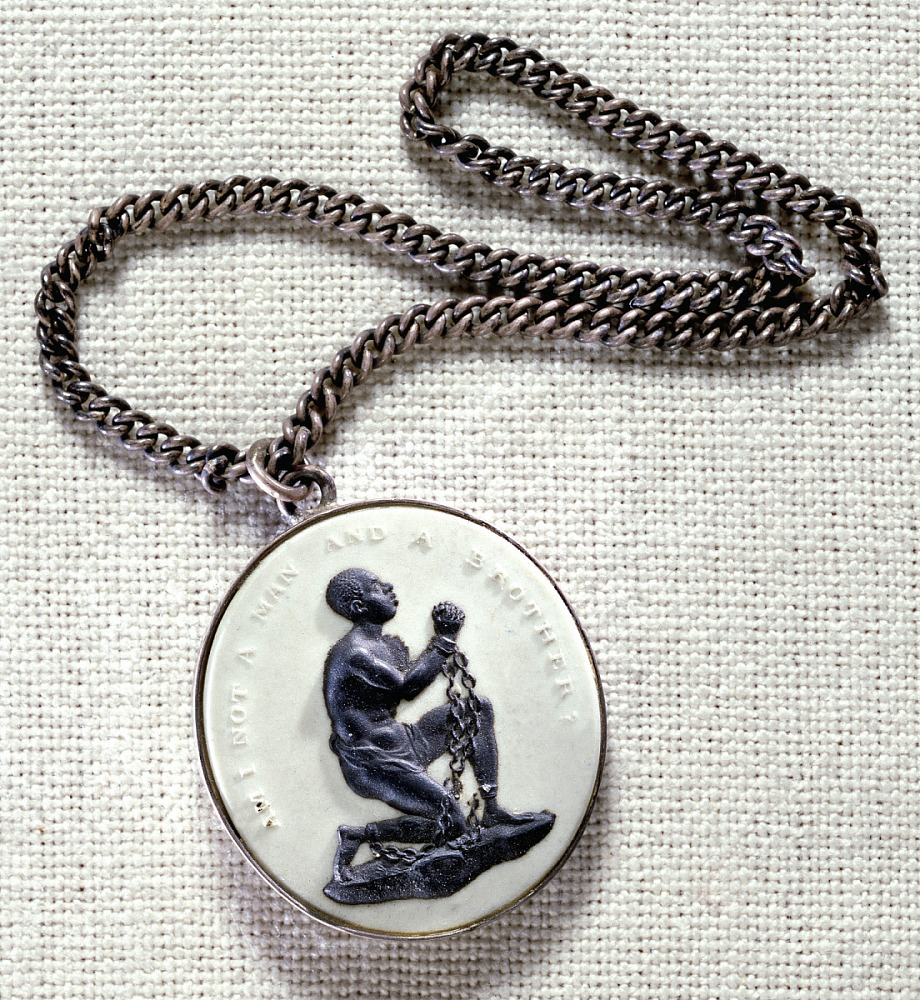
Given the scientific and political luminaries who have fallen under the axe, it’s not beyond possibility that Charles Darwin himself may undergo a “reevaluation,” with people discovering what we already knew: Darwin, like many people of the mid-19th century, had some bigoted views of whites (i.e., Brits) as a superior race. Yet Darwin never did anything but write a bit about it in The Voyage of theBeagle and The Descent of Man, and was, to boot, an ardent abolitionist along with his wife’s family, the Wedgewoods. Josiah Wedgewood, Darwin’s grandfather (and also his wife Emma’s), designed this ceramic medallion that was popular among abolitionists as early as 1787. That may be enough to save Charles but, as we know, one misstep can cancel you for keeps. And Darwin made more than one—according to today’s lights.

“Am I not a man and a brother?”

It’s thus possible that Darwin…

View original post 1,263 more words

A tale of two demand elasticities by Bryan Caplan

Image

My Paper Schumpeterian Enigmas Is Now Available on SSRN

David Glasner's avatarUneasy Money

I have just posted a paper I started writing in 2007 after reading Thomas McCraw’s excellent biography of Joseph Schumpeter, Prophet of Innovation. The paper, almost entirely written in 2007, lay unfinished until a few months ago, when I finally figured out how to conclude the paper. I greatly benefited from the comments and encouragement of David Laidler, R. G. Lipsey and Geoff Harcourt in its final stages.

The paper can be accessed or downloaded here.

Here is the abstract:

Drawing on McCraw’s (2007) biography, this paper assesses the character of Joseph Schumpeter. After a biographical summary of Schumpeter’s life and career as an economist, the paper considers a thread of deliberate posturing and pretense in Schumpeter’s grandiose ambitions and claims about himself. It also takes account of his ambiguous political and moral stance in both his personal, public and scholarly lives, in particular his tenure as finance minister…

View original post 178 more words

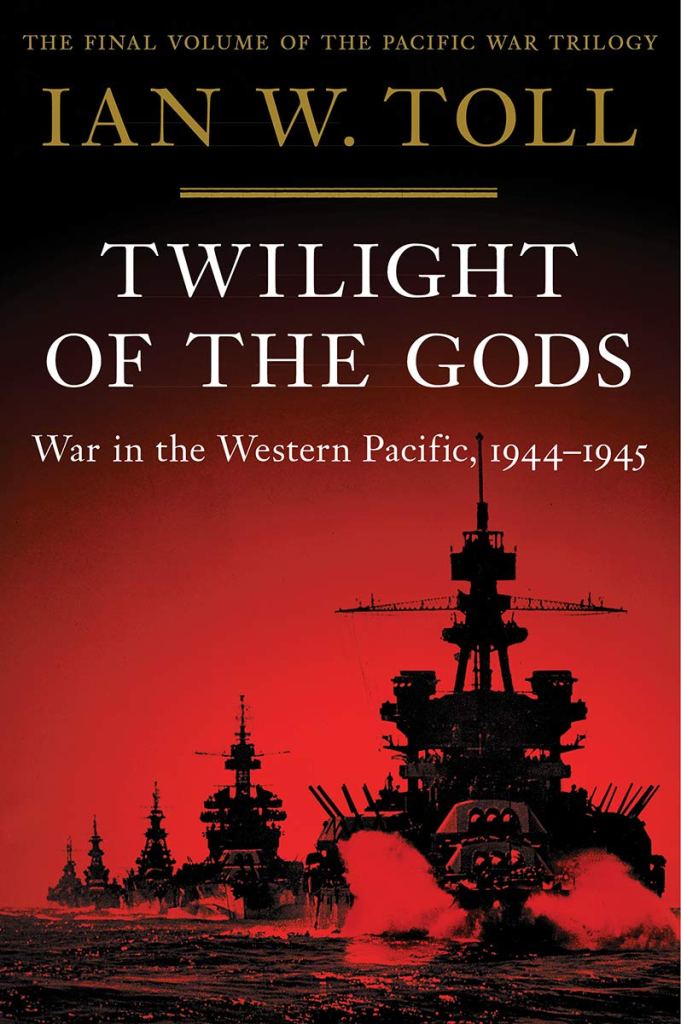
Book Review: ‘Twilight of the Gods: The War in the Western Pacific, 1944-1945’

Alex Diaz-Granados's avatarA Certain Point of View, Too

(C) 2020 W.W. Norton & Company

★★★★★

On September 1, New York-based (and wholly-owned by its employees) publisher W.W. Norton & Company published Twilight of the Gods: The War in the Western Pacific, 1944-1945, the concluding volume of Ian W, Toll’s Pacific War Trilogy, thus completing the story begun in Pacific Crucible: War at Sea in the Pacific (2011)and The Conquering Tide: War in the Pacific Islands, 1942-1944 (2015). In a narrative that covers the last year of the war in the Pacific Theater from the aftermath of the Battle of the Philippine Sea in the late summer of 1944 to the invasion of Okinawa and the dropping of two atomic bombs on Hiroshima and Nagasaki in early August of 1945, Twilight of the Gods puts the capstone on the first major history of the Pacific War since Samuel Eliot Morrison’s 16 volume history…

View original post 2,231 more words

Previous Older Entries Next Newer Entries

Arin’s Substack

Celebrating humanity's flourishing through the spread of capitalism and the rule of law

David Andolfatto

Celebrating humanity's flourishing through the spread of capitalism and the rule of law

Monetary Non-Neutrality

Celebrating humanity's flourishing through the spread of capitalism and the rule of law

Reason Magazine

Celebrating humanity's flourishing through the spread of capitalism and the rule of law

Coyote Blog

Celebrating humanity's flourishing through the spread of capitalism and the rule of law

Thoughts from the North

Celebrating humanity's flourishing through the spread of capitalism and the rule of law

Fardels Bear

A History of the Alt-Right

Vincent Geloso

Econ Prof at George Mason University, Economic Historian, Québécois

Bassett, Brash & Hide

Celebrating humanity's flourishing through the spread of capitalism and the rule of law

Truth on the Market

Scholarly commentary on law, economics, and more

The Undercover Historian

Beatrice Cherrier's blog

Matua Kahurangi

Celebrating humanity's flourishing through the spread of capitalism and the rule of law

Temple of Sociology

Celebrating humanity's flourishing through the spread of capitalism and the rule of law

Velvet Glove, Iron Fist

Celebrating humanity's flourishing through the spread of capitalism and the rule of law

Why Evolution Is True

Why Evolution is True is a blog written by Jerry Coyne, centered on evolution and biology but also dealing with diverse topics like politics, culture, and cats.

NoTricksZone

Celebrating humanity's flourishing through the spread of capitalism and the rule of law

Homepaddock

A rural perspective with a blue tint by Ele Ludemann

Kiwiblog

DPF's Kiwiblog - Fomenting Happy Mischief since 2003

The Dangerous Economist

Celebrating humanity's flourishing through the spread of capitalism and the rule of law

Watts Up With That?

The world's most viewed site on global warming and climate change

The Logical Place

Tim Harding's writings on rationality, informal logic and skepticism

Doc's Books

A window into Doc Freiberger's library

The Risk-Monger

Let's examine hard decisions!

Uneasy Money

Commentary on monetary policy in the spirit of R. G. Hawtrey

Barrie Saunders

Thoughts on public policy and the media

Liberty Scott

Celebrating humanity's flourishing through the spread of capitalism and the rule of law

Point of Order

Politics and the economy

James Bowden's Blog

A blog (primarily) on Canadian and Commonwealth political history and institutions

Science Matters

Reading between the lines, and underneath the hype.

Peter Winsley

Economics, and such stuff as dreams are made on

A Venerable Puzzle

"The British constitution has always been puzzling, and always will be." --Queen Elizabeth II

The Antiplanner

Celebrating humanity's flourishing through the spread of capitalism and the rule of law

Bet On It

Celebrating humanity's flourishing through the spread of capitalism and the rule of law

History of Sorts

WORLD WAR II, MUSIC, HISTORY, HOLOCAUST

Roger Pielke Jr.

Undisciplined scholar, recovering academic

Offsetting Behaviour

Celebrating humanity's flourishing through the spread of capitalism and the rule of law

JONATHAN TURLEY

Res ipsa loquitur - The thing itself speaks

Conversable Economist

In Hume’s spirit, I will attempt to serve as an ambassador from my world of economics, and help in “finding topics of conversation fit for the entertainment of rational creatures.”

The Victorian Commons

Researching the House of Commons, 1832-1868

The History of Parliament

Articles and research from the History of Parliament Trust

Books & Boots

Reflections on books and art

Legal History Miscellany

Posts on the History of Law, Crime, and Justice

Sex, Drugs and Economics

Celebrating humanity's flourishing through the spread of capitalism and the rule of law

European Royal History

Exploring the Monarchs of Europe

Tallbloke's Talkshop

Cutting edge science you can dice with

Marginal REVOLUTION

Small Steps Toward A Much Better World