Massive Shetland wind farm plan runs into peatland protest
10 Aug 2020 Leave a comment

 Shetland peat bog [image credit: Shetland Times]
There’s over £1 billion at stake here, as construction is about to start and a subsea cable project costing more than £600m has been approved, if the project goes ahead. It would be the UK’s largest onshore wind farm in terms of annual electricity output.
– – –
OVER 20 people from across the isles have signed a petition expressing concern that Shetland Islands Council’s (SIC) recognition of a global climate emergency has not taken into account current evidence on the carbon value of peatland, reports Shetland News.
The petitioners say that since the original approval was given to the Viking Energy wind farm from the Scottish Government in 2012 “much of the science has fundamentally changed and we now indisputably recognise peatland as a store of carbon equal to or greater than that of rainforest”.
The petition seeks that the…
View original post 205 more words
The Right to Openly Discuss Ideas Must Be Defended
10 Aug 2020 Leave a comment

The title of the YouTube clip is from the little sign that this lone man held up during a protest in London. Behold Western Civilisation in 2017.
You absolutely need to watch this exercise in mob mentality: and it’s only a little longer than Two Minutes of Hate.
You can read the background to this event from an article the guy wrote himself on Medium.com. He’s an artist and the “Anti-Fascist” protests were around an art gallery, as described in this report from the Hackney Gazette.
And of course since then things have only got worse.
- The recent firing of a New York Times editor, James Bennet, at the behest of his staff. They were angered by him allowing a Republican Senator, Tom Cotton, to write an OpEd advocating sending in Federal troops to deal with the riots.

- The departure of Bari Weiss from the NYT
View original post 1,369 more words
Fossil fuels becoming ‘socially challenged’, says BP boss
10 Aug 2020 Leave a comment
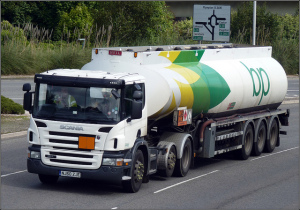
The greenblob marches on, regardless of the real climate. Message to BP boss: water vapour is by far the major so-called greenhouse gas, carbon dioxide is a minor sidekick. Ergo you are merely playing games.
– – –
The chief executive of BP says he understands why people view the industry as “bad” and that fossil fuels are becoming the subject of social challenge, reports Aol.
Bernard Looney, who took on the role at the oil and gas giant in February, said the industry had “a challenge… with trust” but BP was determined to be a net zero carbon company by 2050.
View original post 89 more words
Two Italian girls who played quarantine tennis meet and play with their idol, Roger Federer
10 Aug 2020 Leave a comment

When I posted this video on Twitter, showing two Italian girls who were huge fans of Roger Federer, and also played “quarantine tennis” between rooftops before they met him, I got pushback that it was a fake video: a commercial proposition for advertising Barilla pasta (Federer does promote the company). But I still think this is genuine: the girls have no idea that they’re going to meet Federer. I doubt that the company would have made the whole thing up as a bit of acting. And even if it’s semi-commercial, it’s still heartwarming.
Here’s the YouTube description:
During the lockdown, Carola and Vittoria, two teenagers from Finale Ligure, in Italy, found a creative way to play a ‘socially distanced’ tennis match: each standing on her own roof. Roger Federer and Barilla saw their video and decided to surprise the girls right in their home in Finale Ligure. Here, Roger Federer…
View original post 45 more words
How bad is covid really? (A Swedish doctor’s POV)
10 Aug 2020 Leave a comment

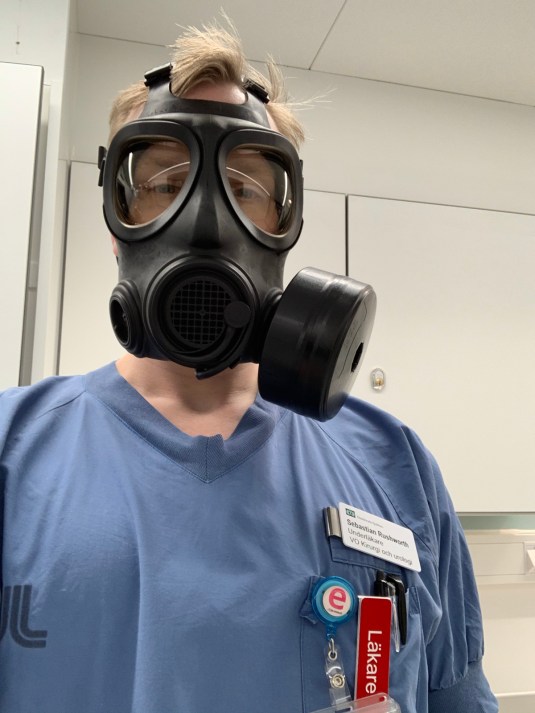
This is a reblog of the post at Sebastian Rushworth M.D. Health and medical information grounded in science. Excerpts in italics with my bolds.
Ok, I want to preface this article by stating that it is entirely anecdotal and based on my experience working as a doctor in the emergency room of one of the big hospitals in Stockholm, Sweden, and of living as a citizen in Sweden. As many people know, Sweden is perhaps the country that has taken the most relaxed attitude of any towards the covid pandemic. Unlike other countries, Sweden never went in to complete lockdown. Non-essential businesses have remained open, people have continued to go to cafés and restaurants, children have remained in school, and very few people have bothered with face masks in public.
Covid hit Stockholm like a storm in mid-March. One day I was seeing people with appendicitis and kidney…
View original post 1,166 more words
MORE FROM STEVE ELERS
10 Aug 2020 Leave a comment

Steve Elers, a Massey (maori) academic writes brilliantly.
What’s important about his comments is that although represented as a maverick, they give a voice to the sane silent majority.
Here’s a recent Steve piece published in the Manawatu Guardian.
View original post 601 more words
August 9, 1830: Accession of Louis-Philippe as the King of the French.
10 Aug 2020 Leave a comment

Louis-Philippe I (October 6, 1773 – August 26, 1850) was King of the French from 1830 to 1848 and the last king of France.
Louis-Philippe was born in the Palais Royal, the residence of the Orléans family in Paris, to Louis Philippe II, Duke of Chartres (Duke of Orléans, upon the death of his father Louis Philippe I), and Louise Marie Adélaïde de Bourbon. As a member of the reigning House of Bourbon, he was a Prince of the Blood, which entitled him the use of the style “Serene Highness”. His mother was an extremely wealthy heiress who was descended from Louis XIV of France through a legitimized line.

Louis Philippe was the eldest of three sons and a daughter, Antoine-Philippe, Duke of Montpensier, Françoise d’Orléans (died shortly after her birth) Adélaïde d’Orléans, and Louis-Charles, Count of Beaujolais a family that was to have erratic fortunes from the beginning of…
View original post 793 more words
Tulane University cancels book event because book is on the KKK—portraying it in a horrible light
10 Aug 2020 Leave a comment
Well, we have another cancellation by the Woke Left.
A new book by Edward Ball came out on August 4 (click screenshot below) about the author’s investigation of an ancestor who was a member of the Ku Klux Klan right after the Civil War. Highly praised, it apparently paints a sad and devastating picture of how white supremacy had a resurgence in New Orleans after the Civil War, when blacks gained equal rights in Louisiana.
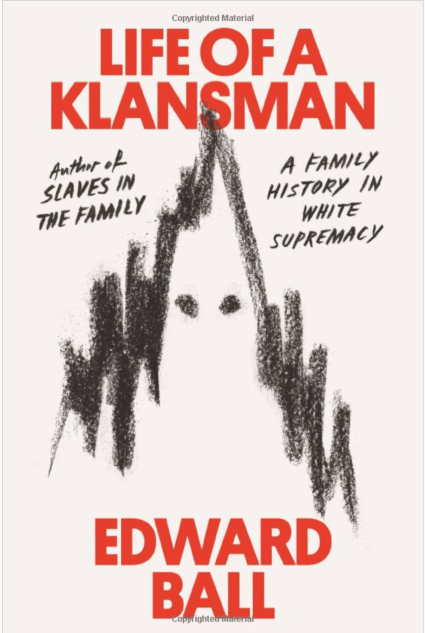
Here’s a precise and some of the praise for the book on its Amazon site (click on screenshot above; their emphasis):
One of The New York Times‘ thirteen books to watch for in August | One of The Washington Post‘s ten books to read in August | A Literary Hub best book of the summer| One of Kirkus Reviews’ sixteen best books to read in August
Life of a Klansman tells the story…
View original post 1,728 more words
Question of the Week: Why Aren’t Libertarians More Persuasive?
10 Aug 2020 Leave a comment

A month ago, I answered a question about reconciling the absence of libertarian societies with the supposed superiority of libertarian principles.
I gave an uncharacteristically optimistic response, arguing that the world in many ways has become more free thanks to libertarian policies (or, to be more accurate, a decline in statism).
This led to several follow-up questions, mostly premised on the notion that I must be smoking crack to think government has become less of a burden. My defense would be that the world is more free than it was 40 years ago, but probably less free than it was 10 years ago, so it depends on your benchmark. And I definitely agree that the world is trending toward less freedom (with these charts being a very sobering example).
But the question that caught my eye, and makes for a good follow-up, comes from a reader in Missouri: “Why…
View original post 588 more words
Facts aren’t political (or religious)
10 Aug 2020 1 Comment

 On this blog/Facebook page, I try very hard to stick to scientific facts and avoid discussing politics. Nevertheless, I am frequently accused of being political, even when I am simply reporting a fact. For example, I often post facts about climate change, such as the fact that 2014, 2015, and 2016 all set new records for the warmest year (on average), and when I do that, I nearly always receive comments accusing me of “liberal propaganda” or “pushing a liberal agenda,” but that’s not how facts work. It is demonstrably true that all of those years were the warmest on record, and politics has absolutely nothing to do with it. In other words, facts are inherently not political. They are simply statements of reality. To be clear, facts can, of course, be used to make political arguments and to try to persuade people of a particular political position, but the…
View original post 1,445 more words
Barking Mad: Australia’s Ludicrous Plan To Send Subsidised Solar Power 3,350KM From Darwin to Singapore
09 Aug 2020 Leave a comment


Australia’s energy policy is a joke, but a plan to send subsidised solar power to Singapore proves lunatics really have taken over the asylum.
The Morrison Federal government has given major project status to a 500KW undersea cable to run from Darwin to Singapore over a distance of at least 3,350 km.
The cost of the cable alone will be staggering. Then, considering the fact that solar panels deliver power around 25% of the time (on average), the cost of any electricity that occasionally makes landfall in Singapore will be positively astronomical.
STT nearly choked on our porridge when we learnt that the notionally conservative Liberal/National Coalition was backing yet another massively subsidised renewable energy white elephant. Michael Darby must have suffered the same near-death experience. Here he is, suitably outraged about an outrageous waste of taxpayers’ money.
Flogging Unreliable Energy By Extension Cord To Singapore Looks Like An Outrageous…
View original post 2,560 more words
Classic Film Review: Richard Harris, and his makeup, are “Cromwell”
09 Aug 2020 1 Comment
I believe Harris forgot he had a Rolls-Royce in storage somewhere during his drinking days

“Cromwell” came out in 1970, a late entry in a formidable run of stately British period pieces.
It’s inferior to “Anne of a Thousand Days,” “Becket,” “A Man for All Seasons” and even the somewhat stagebound “The Lion in Winter.” But it’s got realistic English Civil War battles, glorious Puritan/Cavalier era costumes, an abridged and bastardized piece of British history and Richard Harris and Alec Guinness, so it’s worth a go if you haven’t seen it.
Harris plays the gentleman-farmer Cromwell, about to emigrate to America where his fellow Puritans have set up shop, when he’s goaded into returning to Parliament to show the imperious, constitution-flouting Charles I (Guinness) that “the people” are in charge of the purse strings, and thus the country.
The high-handed Charles needs money, and only the Parliament — which he dissolved years before — can raise it. And with Cromwell and his fellow puritans like…
View original post 654 more words
COVID1984 : No More Recorded Influenza Cases In Australia
09 Aug 2020 Leave a comment

 COVID1984 – get TRUMP – November 3rd
“Of all tyrannies a tyranny sincerely
exercised for the good of its victims
may be the most oppressive.”
– C. S. Lewis
“The whole aim of practical politics is to keep the populace alarmed
(and hence clamorous to be led to safety)
by menacing it with an endless series of hobgoblins,
all of them imaginary.”
– H.L. Mencken
***
MUST READ analysis, by a concerned citizen (aka voter), of what’s really going on in the Orwellian world of COVID-19 and the politics of statistics.
via Cairns News :
No more recorded influenza cases in Australia
Letter to the Editor
Government lies, damn lies and statistics
Victorian Population – 6,359,000
- COVID tests conducted – 1,633,900
- COVID cases – 11,557
- Positive cases to Victorian population – 0.18%
- Positive Case to Test Conducted Percentage – 0.70%
- COVID Deaths…
View original post 992 more words


Recent Comments