
Where @Greens @NZGreens @AOC @BernieSanders trip-up
09 Aug 2020 Leave a comment
in applied price theory, applied welfare economics, comparative institutional analysis, constitutional political economy, development economics, economic history, growth disasters, income redistribution, Marxist economics, politics - Australia, politics - New Zealand, politics - USA, Public Choice, public economics, rentseeking Tags: The fatal conceit
Andrew Sullivan’s latest lucubrations
09 Aug 2020 Leave a comment

Andrew Sullivan’s site is still free, but will shortly go to a fee scheme whereby you can pay $50 a year for full access (I’ve already subscribed). The format is still a weekly tripartite column, but with additions like his famous “The View from My Window” contest, in which readers have to guess exactly where a reader’s photo was taken. There’s also selected feedback from readers, which Andrew answers.
This week’s column (click on screenshot below) has a section on diversity, one on the possibility of a rebuilt Republican Party, and a small “1620 project” piece, in which Sullivan extols the Pilgrims’ arrival in America and, sadly, has gone back to extolling religion as well. I’ll concentrate on the diversity bit, but here’s an excerpt from his “1620 project” piece (the name, of course, is mocking the NYT’s “1619 Project”):
The [Mayflower] Compact was a way to keep the company…
View original post 1,759 more words
Government’s ‘pitiful’ planning reforms ‘will cost Britain decades in fighting climate change’
09 Aug 2020 Leave a comment
“First they came for the bird names. . .” Woke craziness creeps into bird taxonomy
09 Aug 2020 Leave a comment
The latest gambit of Woke politics is to trawl back through everyone’s history, and, if you find something unsavory, that person must be canceled. Now sometimes this is okay, as when statues are taken down that honored Confederates, particularly postbellum statues meant to solidify the established system of segregation. (I’d prefer, however, that those statues be left in place with a prominent caveat.)
But when you do that with scientific names, it causes a problem. Sometimes a “problematic” person is part of a species’ name, either the common name like Audubon’s shearwater (Puffinus lherminieri), or both the common name and the Latin binomial, like these birds: Audubon’s warbler (Setophaga auduboni), Townsend’s warbler (Setophaga townsendi), Hammond’s flycatcher (Empidonax hammondii) , and McCown’s longspur (Rhynchophanes mccownii). These names confer instant communication between birders and other biologists, and the Latin binomials are entrenched…
View original post 1,016 more words
Burying The Truth: No Sensible Environmentalist Supports Filthy Wind & Solar
08 Aug 2020 1 Comment


Even after 30 years and endless subsidies, no country is powering itself exclusively with the wind and solar; no country ever will.
But that doesn’t stop our political betters berating us, should we ever beg the question about the purported logic of throwing endless $trillions at something that’s already proven to be an abject failure.
Whatever your views on climate change (the apparently existential threat formerly known as ‘global warming’), the idea that trying to run modern, civil societies on sunshine and breezes might somehow prevent it is, of course, a complete nonsense.
One environmentalist who called it out, loud and early, was Michael Shellenberger. As a long-time advocate for reliable, affordable and safe nuclear energy, and critic of intermittent renewables – calling wind and solar worse than useless – Michael combines common sense, logic and reason, in an era when those attributes have become scarce commodities.
Shellenberger delivered…
View original post 1,172 more words
The Non-Partisan Movement We Need: Anti-Authoritarianism
08 Aug 2020 Leave a comment

Political/ideological debates have a lot of moving parts, and there are a lot of timely issues to address. Given the marginal impact of anything we do in this sphere (e.g. voting, sharing a blog post on Twitter, or being a solitary voter in a vast sea of the entire 6200 people in this country), it’s only natural that we have to economize on information and argument and that results. We can’t help but deplete the intellectual commons.
What are some low cost ways to improve the quality?
- Value Intellectual humility.
- Devalue the sort of behavior that makes things worse.
It bears repeating: value intellectual humility. It’s not easy. I’m as drawn the confident claims as you are. I’ve got a lot of smart people in my bubble and when they boldly declare something, I tend to believe them. But the “I honestly don’t know” posts deserve more attention…
View original post 288 more words
Gee, Julie Ann – you had us thinking one city would be hogging half the investment earmarked for cycleways
08 Aug 2020 Leave a comment

Latest from the Beehive –
It looked (at first blush) like Christchurch would gobble up around half the money earmarked by the government for projects to get us on our bikes.
Julie Anne Genter, Associate Minister of Transport and a Green with a fondness for two-wheeled, pedal-driven transport, today banged out two press statements.
One of these, headed Green light for Te Awa River Ride in $220m nationwide cycleways investment, triggered the Point of Order Trough Monitor.
We quickly established that just a few of those $220 million are actually being invested in the Te Awa Ride.
The second statement was headed Six major ‘shovel-ready’ cycleways funded in Christchurch.
No figure was mentioned in the heading, but big bucks were bandied in the text of the statement.
Genter advised that six major cycle routes will be completed in Christchurch thanks to funding from the Government’s investment in shovel-ready infrastructure…
View original post 1,111 more words
The High Costs And Low Benefits Of Electric Vehicles
07 Aug 2020 Leave a comment

 By Duggan Flanakin ~
The rush to decarbonize every nation in the world in one or maybe two decades reflects the “I want it all NOW!” philosophy imbued through modern education systems. Current and recent former students – and their teachers – demand a perfect world (since they can envision one) and exhibit zero patience (hence the nationwide riots in the U.S.).
 Hopefully the mad stampede to destroy the West’s ability to use fossil fuels at all will be sidelined by harsh realities of economics, logistics, and resource availability (including a hoped for reticence to rely on child slave labor to satisfy their blood lust). Yet the United Kingdom, formerly a bastion of sanity, has mandated, as part of its drive toward an all-electric society, the installation of electric vehicle charging stations in every home by 2030 and that all new cars and vans be hydrogen or electric vehicles (and…
View original post 912 more words
75 years ago to the day…
07 Aug 2020 Leave a comment

August 6, 1945, 8:15:17 seconds, a solitary bomb was released from a single B-29 over Hiroshima…
[Lyrics: Peart; music: Lee, Lifeson]
Imagine a time
When it all began
In the dying days of a war
A weapon that would settle the score
Whoever found it first
Would be sure to do their worst
They always had before…Imagine a man
Where it all began
A scientist pacing the floor
In each nation, always eager to explore
To build the best big stick
To turn the winning trick
But this was something more…[CHORUS:] The Big Bang took and shook the world
Shot down the Rising Sun
The end was begun
It would hit everyone
When the chain reaction was done
The big shots try to hold it back
Fools try to wish it away
The hopeful depend on a world without end
Whatever the hopeless may sayImagine…
View original post 338 more words
August 6, 1806. Dissolution of the Holy Roman Empire.
07 Aug 2020 Leave a comment

The dissolution of the Holy Roman Empire occurred de facto on August 6, 1806, when Emperor Franz II abdicated his Imperial title and released all imperial states and officials from their oaths and obligations to the empire. Although the abdication was considered legal, the dissolution of the imperial bonds was not and several states refused to recognise the end of the empire at the time.
Although today is the date the empire was dissolved, in many ways it was a mere formality as the empire had been deteriorating since the Treaty of Westphalia in 1648 that ended the Thirty Years War. The treaty gave the numerous states within the empire autonomy, ending the empire in all but name. The Swiss Confederation, which had already established quasi-independence in 1499, as well as the Northern Netherlands, also left the Empire at this juncture. The Habsburg Emperors then began to focus on consolidating…
View original post 815 more words
Campaign granted permission for judicial review of £27 billion UK roads programme
06 Aug 2020 Leave a comment

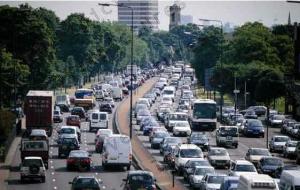
Once more the courts are asked to intervene in UK transport policy on the grounds of ‘climate change objectives’ and other supposed issues, while the roads get ever more overcrowded.
– – –
Transport Action Network (TAN) has been granted permission for judicial review of the Transport Secretary Grant Shapps’ decision to go ahead with the £27 billion roads programme (Roads Investment Strategy 2 or RIS2), reports Ekklesia.
Mrs Justice Lieven gave the go ahead for the review, saying that TAN’s case that Mr Shapps had not properly considered the impact of the multi-billion pound roads-building scheme on climate change objectives, including the carbon budgets under the Climate Change Act 2008 and the Paris Agreement, was arguable.
The Judge also declared the case to be “significant” which means it will be fast-tracked and should be heard at the High Court by early November.
View original post 201 more words
A revolting pocket borough: Morpeth in the late eighteenth century
06 Aug 2020 Leave a comment

In our latest Georgian Lords blog, in keeping with our general focus for the month on the county of Northumberland, Dr Charles Littleton considers the case of the pocket borough of Morpeth and its uneasy relations with the earls of Carlisle.
The Northumbrian borough of Morpeth had returned representatives to Parliament since 1553. From 1601 the Howards of Naworth were lords of the manor, and in 1661 Charles Howard was created earl of Carlisle. He and his descendants controlled Morpeth so thoroughly that in the mid-eighteenth century the selection of MPs was considered to be ‘totally in Lord Carlisle’. Morpeth would appear to be a textbook example of a ‘pocket borough’. However even this personal fiefdom needed careful management, and on occasion the townsmen could resist the earls’ domination.

The franchise lay in those admitted to the freedom of the borough. This provided the earls with a means to control…
View original post 915 more words
NYTimes commentary offers up that hoary 1960 debate myth
06 Aug 2020 Leave a comment

To say that prominent media myths, those dubious tall tales about the media and the exploits of journalists, are immune from debunking is to confirm a truism.
 Shield him from debates?
Some media-centric tall tales are just too good to die away.
These include the heroic trope that two young, dogged reporters for the Washington Post brought down Richard Nixon’s corrupt presidency in the Watergate scandal. They include the notion that a pessimistic, on-air assessment by anchorman Walter Cronkite about the Vietnam War in 1968turned American public opinion against the conflict.
And they include the exaggerated narrative of the first presidential debate in 1960 between Nixon and John F. Kennedy, that the former “won” the debate among radio listeners but, because he perspired noticeably and looked wan, “lost” among television viewers.
The myth of viewer-listener disagreement was thoroughly and impressively demolished 33 years ago and yet it…
View original post 1,163 more words
THE FIGHTERS: AMERICANS IN COMBAT IN AFGHANISTAN AND IRAQ by C.J. Chivers
06 Aug 2020 Leave a comment


(US soldiers fighting in Afghanistan)
Recently, C. J. Chivers appeared on Book TV/C-SPAN and describes how he went about writing his new book, THE FIGHTERS: AMERICANS IN COMBAT IN AFGHANISTAN AND IRAQ. After 9/11 the US military mission was to root out and defeat the Taliban and al-Qaeda in Afghanistan. Chivers, a New York Times investigative correspondent argues that the mission was accomplished in a few weeks, but after seventeen years, we as a nation still find ourselves supporting the governments in Kabul and Baghdad with thousands of troops. During those seventeen years over 2.7 million soldiers fought in Afghanistan and Iraq with over 3,000 deaths and 10,000 wounded. Based on our present circumstances in both countries it is important to understand the experiences of American forces and gain insights into their lives before, during, and after their service. Chivers engages this task and the result is a powerful…
View original post 1,088 more words


Recent Comments