Feminist Epistemology: An Exposé

Michael Ezra's avatarUnder the Ocular Tree

On March 23, 2017, I gave a talk to the philosophy society at Birkbeck College, University of London on feminist epistemology.  My talk was mainly about the feminist theory of domination and power as outlined by Catharine MacKinnon.  While I did not read my talk, had I read it, what I would have said would have been what is on the PDF below.

Ezra – Feminist Epistemology – An Expose – Talk – Birkbeck 170323

View original post

UK government may give drivers £6,000 to switch to electric cars 

oldbrew's avatarTallbloke's Talkshop

Not the latest model
Obviously bribery is thought to be the only way, short of coercion, to appeal to reluctant drivers who see clearly enough the various disadvantages and high cost of EVs they were never asked if they wanted to buy. Under cover of the virus situation they plan to pour more public money down their ideological drain to appease the greenblob.
– – –
It has been reported that Boris Johnson is considering launching a car scrappage scheme to boost the automotive industry, says The Shropshire Star.

Motoring and environmental groups have welcomed the prospect of a new car scrappage scheme encouraging motorists to switch to electric vehicles.

The AA described it as “fantastic” while Greenpeace said it would be “moving in the right direction”.

View original post 188 more words

Dismantling (or defunding) police departments

Can an app be designed to stop woke phones dialing 911?

whyevolutionistrue's avatarWhy Evolution Is True

One of the misguided goals of the recent protests ignited by the murder of George Floyd are the calls not just for “defunding” police departments, but to abolish them entirely. Now it’s often not clear what “defunding” means, but sometimes protestors conceive of it as diverting money from the police force to social programs.

In the disturbing video below, Jacob Frey, the impossibly young mayor of Minneapolis (he’s 38), is asked by a protest leader if he’ll commit to defunding/dismantling the city’s police department. When he says he can’t commit to that, he was booed and driven away (this despite his promises to make “deep structural reforms” in the police department and admission that the city’s police culture was imbued with systemic racism). This is what happens when you try to compromise with wokeness. There is no compromise, and perhaps a mayor can’t commit to stuff like that with a…

View original post 1,488 more words

Now is the time for the Government to make the bold decision to do less

julianhjessop's avatarPlain-speaking Economics

Rishi Sunak is having a relatively good crisis. The Chancellor and his team certainly deserve plenty of credit for the way the Treasury has shielded the large majority of businesses and jobs during an unprecedented slump in economic activity. But this task has been made easier by the broad consensus on the appropriate policies and by the seemingly unlimited amounts of public money that the Government has been willing to spend. Now, the context is changing.

In particular, the focus of economic policy is shifting towards supporting the recovery as the lockdown is lifted. This is likely to open up tensions between those who think the best way to revive the economy is for the Government to spend and borrow even more – which seems to be the political instinct of some at No.10 – and the Treasury’s traditional caution.

We appear to be getting a taste of this already…

View original post 627 more words

Life of George I, King of Great Britain and Elector of Hanover. Part II.

liamfoley63's avatarEuropean Royal History

Part II

Though George has his mistress Sophia-Dorothea had her own romance with the Swedish Count Philip-Christoph von Königsmarck. Threatened with the scandal of an elopement, the Hanoverian court, including George’s brothers and mother, urged the lovers to desist, but to no avail. According to diplomatic sources from Hanover’s enemies, in July 1694 the Swedish count was killed, possibly with George’s connivance, and his body thrown into the river Leine weighted with stones.

E3C69034-FEA0-479D-B850-4F76A9861DC3
George I of Great Britain

The murder was claimed to have been committed by four of Ernst-August’s courtiers, one of whom, Don Nicolò Montalbano, was paid the enormous sum of 150,000 thalers, about one hundred times the annual salary of the highest-paid minister. Later rumours supposed that Königsmarck was hacked to pieces and buried beneath the Hanover palace floorboards. However, sources in Hanover itself, including Sophia, denied any knowledge of Königsmarck’s whereabouts.

George’s marriage to Sophia-Dorothea was…

View original post 463 more words

The South Sea Bubble 300 Years On

ehs1926's avatarThe Long Run

by William Quinn (Queen’s University, Belfast)

A special issue on the Tricentenary of the South Sea Bubble was published on The Economic History Review as open access, and it is available at this link

The South Sea Bubble, a Scene in 'Change Alley in 1720 1847, exhibited 1847 by Edward Matthew Ward 1816-1879 Edward Matthew Ward (1847) The South Sea Bubble, a Scene in ‘Change Alley in 1720. Available at Tate Gallery

In 1720, the British Parliament approved a proposal from the South Sea Company to manage the government’s outstanding debt. The Company agreed to issue shares, some of which would be bought using government annuities rather than cash. The Company would then pay the government a reduced rate of interest on these annuities. The government’s debt burden would be reduced, and in exchange, the Company believed it had gained the opportunity to establish itself as a competitor to the Bank of England (Kleer, 2012).

Superficially, the scheme didn’t make much sense. How would the public be convinced to…

View original post 824 more words

MAGNIFICO: THE BRILLIANT LIFE AND VIOLENT TIMES OF LORENZO DE’ MEDICI by Miles J. Unger

szfreiberger's avatarDoc's Books

Lorenzo de Medici.jpg

For the last few nights, my wife and I have binged Netflix’s Medici series.*  It brought me back to Garrett Mattingly’s classic, RENAISSANCE DIPLOMACY which argued that the relationship and machinations between Italian city-states was a microcosm of the 20th century in terms of actions resulting in numerous wars and plots.  It piqued my interest in one of the most important figures of the Renaissance, Lorenzo de’ Medici the subject of Miles J. Unger’s superb biography,  MAGNIFICO: THE BRILLIANT LIFE AND VIOLENT TIMES OF LORENZO DE’ MEDICI which argues that the Florentine leader was able to navigate the Italian city-states and Papal states surviving Papal, domestic Florentine, and other external plots by a Pope, a king, and a duke by employing his charm and diplomatic skill augmented by the occasional use of violence to preside over Florence, a city-state that supported and exhibited artistic brilliance in addition to the…

View original post 981 more words

Good Evidence? A 2013 Panel Discussion

rogerpielkejr's avatarRoger Pielke Jr.

A reader shared this with me (thanks MP), I was unaware that it was online. From 7 years ago …

Recording of a debate held at the Institute of Physics, 4th Feb 2013. Co-organised by Science Policy Research Unit, University of Sussex and the UCL’s department of Science & Technology Studies.

Policymakers often talk up the importance of evidence-based policy, with increasing calls for randomised controlled trials (RCTs) as the best way of testing whether particular interventions work. But finding and applying evidence in policy is anything but straightforard. Evidence alone rarely wins complex political arguments. Often this merely shifts the locus of debate to what counts as evidence.

Speakers: Roger Pielke Jr, Professor of Environmental Studies, University of Colorado at Boulder; Richard Horton, Editor of The Lancet; Georgina Mace, Professor of Biodiversity and Ecosystems, University College London; Jonathan Breckon, Alliance for Useful Evidence.

Chair: James Wilsdon, Professor in…

View original post 7 more words

Wind keeping the system “nicely balanced”: does more wind power means better air and cleaner electricity?

trustyetverify's avatarTrust, yet verify

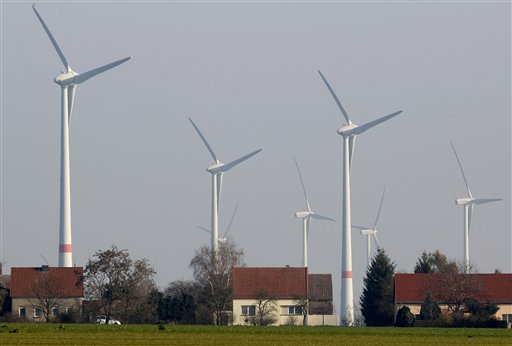
Let’s continue with the open letter from the energy company Eneco (see previous post), in which its CEO complains that his company “felt obliged” to shut down some of their windmills despite it was windy. It is framed as the result of the “inflexibility” of nuclear power that pushes wind aside and, most importantly for this post, as a choice for better air and cleaner electricity (translated from Dutch, my emphasis):

Renewable energy could provide half of our consumption. In itself this is a good prospect: better air and cleaner electricity from wind & sun. We should all be pleased with that.

The framing in the open letter made me wonder how much wind power was curtailed exactly? Also, assuming that nuclear power would get turned down a notch during the lockdown, how much cleaner would electricity production then get?

View original post 829 more words

June 7, 1660: Birth of George I, King of Great Britain and Elector of Hanover.

liamfoley63's avatarEuropean Royal History

George I (George-Louis; German: Georg-Ludwig; May 28/June7, 1660 – June 11, 1727) was King of Great Britain and Ireland from 1 August 1714 and ruler of the Duchy and Electorate of Brunswick-Lüneburg (Hanover) in the Holy Roman Empire from 23 January 1698 until his death in 1727. He was the first British monarch of the House of Hanover. Under the old Julian Calendar (OS for Old Style) George I was born May 28 1660. When the Julian Calendar was replaced by the Gregorian Calendar (NS for New Style) his birthday was recognized as being June 7, 1660.

E3C69034-FEA0-479D-B850-4F76A9861DC3
George I, King of Great Britain and Ireland, Imperial Elector of Hanover and of Brunswick-Lüneburg.

George was born in the city of Hanover in the Duchy of Brunswick-Lüneburg in the Holy Roman Empire. He was the eldest son of Ernst-August, Duke of Brunswick-Lüneburg and his wife, Sophia of the Palatinate of the Rhine…

View original post 632 more words

Climate scientists praise global warming ‘hiatus’ science boost 

oldbrew's avatarTallbloke's Talkshop


So when global temperatures failed to behave as models expected due to inevitable but hard to predict natural variation, they were forced to re-think – or just think? The GWPF concludes, at the risk of stating the obvious: ‘The lesson of the hiatus is that we do not understand internal climatic variability as much as many think we do, and our predictive power is less than many believe.’
– – –
Researchers from the Universities of Princeton, California, Tokyo, Kyushu and the Scripps Institution of Oceanography, say the recent hiatus in global temperature increase has led to a surge in climate science.

The global effort to understand the global warming hiatus they say has led to increased understanding of some of the key metrics of global climate change such as global temperature and ice-cover.

Searching for an answer to the hiatus, they say, meant that the scientific community grappled…

View original post 232 more words

Planet Saving Power: Nuclear Power Cleanest & Safest Form of Energy on Earth

stopthesethings's avatarSTOP THESE THINGS

The fact that very few climate warriors are out there seriously promoting nuclear power, speaks volumes about what’s really driving them. If CO2 really was about to destroy the planet, these characters would be talking about nothing else but nuclear power, and how to deliver it to all and sundry.

Instead, for reasons that escape the logical and rational, we’re told that the only way forward is backwards: ie a life dependent upon the time of day and the weather.

Of course, if anyone wants hot showers and cold beer, wind and solar haven’t a hope of delivering them on cue.

Climate alarmists railing about carbon dioxide gas and not talking about nuclear power generation, can’t be taken seriously. Nuclear power is the only stand-alone power generation source that does not emit carbon dioxide gas during the process.

When the argument eventually turns to the obvious merits of nuclear power…

View original post 1,282 more words

Matilda: The greatest king England never had

MSW's avatarWeapons and Warfare

A queen wearing armour and holding a sword is fighting helmeted men carrying shields

By Catherine Hanley

The Empress Matilda, daughter of Henry I of England and his chosen heir to the throne, seemed ideally qualified to succeed him.

When Henry I died in 1135, he left the English crown to his eldest legitimate child: an intelligent, well-educated, multilingual adult who had years of international political and governmental experience. It should have been the easiest succession imaginable, but it wasn’t – because Henry’s heir was not a son but his daughter, Empress Matilda.

Matilda led a remarkable and well-travelled life even by the standards of 12th-century royalty. Shipped overseas to marry the Emperor when she was just eight years old, she adapted to the unfamiliar environment, learned several languages, absorbed the politics of the Empire, and was crowned twice. By the time she was 16 she was so capable that…

View original post 929 more words

The incredible MiG-25…

MSW's avatarWeapons and Warfare

With its extensive borders – territorial, maritime and arctic – the Soviet Union had always needed to pay particular attention to its air defence. In the late 1950s a new lightweight turbojet, the R15-300, offered the potential to develop a fundamentally new type of interceptor. The Mikoyan-Gurevich (MiG) design bureau took up the challenge and the project was designated E-155.

Powered by a combination of jet and rocket engines, the machine aircraft promised dazzling performance. It could intercept targets flying at 2,500mph (4,000km/h) at 18-30 miles (30- 50km) high more than 100 miles away. Armament was to include K-9 air-to-air missiles (AAMs), with plans to replace them with the more advanced K-155s.

By 1960 this hypersonic dream was abandoned and efforts were concentrated on the S-155 weapon system, comprising a rethought E-155P interceptor, armed with two K-9 all-aspect AAMs and Kh-155 rockets.

The E-155`s tactical radius enabled its use beyond…

View original post 1,358 more words

War Elephants in the Roman Army

MSW's avatarWeapons and Warfare

It is often assumed that the Romans realized the danger of using war elephants as early as their wars with Pyrrhus of Epirus and never employed them in their army. But this is not the case. The Romans first met with war elephants at Heraclea in 280 BC; much of their defeat was on account of Pyrrhus’s elephants. Yet after the battle they scornfully called them ‘Lucanian cows’ (after the district of Lucania where they had first faced elephants). The next year, at Asculum, the Romans brought out carts with hooks and torches against Pyrrhus’s elephants, but the idea failed to work, and again they were defeated because of elephants. In 255 BC the Carthaginians dealt them such a crippling blow, also with the help of elephants, that the Romans chose not to engage the Carthaginians and stay within fortress walls for another several years. It may seem strange that…

View original post 997 more words

Previous Older Entries Next Newer Entries

Thoughts from the North

Celebrating humanity's flourishing through the spread of capitalism and the rule of law

Fardels Bear

A History of the Alt-Right

Vincent Geloso

Econ Prof at George Mason University, Economic Historian, Québécois

Bassett, Brash & Hide

Celebrating humanity's flourishing through the spread of capitalism and the rule of law

Truth on the Market

Scholarly commentary on law, economics, and more

The Undercover Historian

Beatrice Cherrier's blog

Matua Kahurangi

Celebrating humanity's flourishing through the spread of capitalism and the rule of law

Temple of Sociology

Celebrating humanity's flourishing through the spread of capitalism and the rule of law

Velvet Glove, Iron Fist

Celebrating humanity's flourishing through the spread of capitalism and the rule of law

Why Evolution Is True

Why Evolution is True is a blog written by Jerry Coyne, centered on evolution and biology but also dealing with diverse topics like politics, culture, and cats.

NoTricksZone

Celebrating humanity's flourishing through the spread of capitalism and the rule of law

Homepaddock

A rural perspective with a blue tint by Ele Ludemann

Kiwiblog

DPF's Kiwiblog - Fomenting Happy Mischief since 2003

The Dangerous Economist

Celebrating humanity's flourishing through the spread of capitalism and the rule of law

Watts Up With That?

The world's most viewed site on global warming and climate change

The Logical Place

Tim Harding's writings on rationality, informal logic and skepticism

Doc's Books

A window into Doc Freiberger's library

The Risk-Monger

Let's examine hard decisions!

Uneasy Money

Commentary on monetary policy in the spirit of R. G. Hawtrey

Barrie Saunders

Thoughts on public policy and the media

Liberty Scott

Celebrating humanity's flourishing through the spread of capitalism and the rule of law

Point of Order

Politics and the economy

James Bowden's Blog

A blog (primarily) on Canadian and Commonwealth political history and institutions

Science Matters

Reading between the lines, and underneath the hype.

Peter Winsley

Economics, and such stuff as dreams are made on

A Venerable Puzzle

"The British constitution has always been puzzling, and always will be." --Queen Elizabeth II

The Antiplanner

Celebrating humanity's flourishing through the spread of capitalism and the rule of law

Bet On It

Celebrating humanity's flourishing through the spread of capitalism and the rule of law

History of Sorts

WORLD WAR II, MUSIC, HISTORY, HOLOCAUST

Roger Pielke Jr.

Undisciplined scholar, recovering academic

Offsetting Behaviour

Celebrating humanity's flourishing through the spread of capitalism and the rule of law

JONATHAN TURLEY

Res ipsa loquitur - The thing itself speaks

Conversable Economist

In Hume’s spirit, I will attempt to serve as an ambassador from my world of economics, and help in “finding topics of conversation fit for the entertainment of rational creatures.”

The Victorian Commons

Researching the House of Commons, 1832-1868

The History of Parliament

Articles and research from the History of Parliament Trust

Books & Boots

Reflections on books and art

Legal History Miscellany

Posts on the History of Law, Crime, and Justice

Sex, Drugs and Economics

Celebrating humanity's flourishing through the spread of capitalism and the rule of law

European Royal History

Exploring the Monarchs of Europe

Tallbloke's Talkshop

Cutting edge science you can dice with

Marginal REVOLUTION

Small Steps Toward A Much Better World

NOT A LOT OF PEOPLE KNOW THAT

“We do not believe any group of men adequate enough or wise enough to operate without scrutiny or without criticism. We know that the only way to avoid error is to detect it, that the only way to detect it is to be free to inquire. We know that in secrecy error undetected will flourish and subvert”. - J Robert Oppenheimer.

STOP THESE THINGS

The truth about the great wind power fraud - we're not here to debate the wind industry, we're here to destroy it.

Lindsay Mitchell

Celebrating humanity's flourishing through the spread of capitalism and the rule of law

Alt-M

Celebrating humanity's flourishing through the spread of capitalism and the rule of law