Hide & Seek: Media Keep Burying Mike Moore’s Planet of the Humans & Bloggers Keeps Digging It Up

stopthesethings's avatarSTOP THESE THINGS

Mike Moore’s Planet of the Humans has incensed renewable energy rent seekers, climate cultists and the mainstream media, alike. Its narrative – that subsidised renewable energy is just a playground for crony capitalists and the greatest economic and environmental fraud of all time – doesn’t sit well with the tribe who would have us believe we’re all on the brink of an ‘inevitable transition’ to running on nothing but sunshine and breezes.

However, if you haven’t already taken the opportunity to see it, trying to do so is like a perpetual game of hide and seek.

STT first covered it here: Blood & Gore: Mike Moore’s ‘Planet of The Humans’ Unmasks The Power & Money Behind Renewables Scam

The film had its debut on YouTube about six weeks ago, and while available on that platform clocked up over 8 million views.

Thereafter – As JoNova details below – those with skin…

View original post 1,123 more words

How JP Morgan’s history is connected to epidemic/pandemic..

Amol Agrawal's avatarMostly Economics

Museum of American Finance runs a superb publication named Financial History. It is published three times an year.

The recent issue (Spring 2020) focuses on what else but pandemics. It has an article by Maura Ferguson and Sarah Poole titled Dirty Water. The article tracks a long winding history of epidemics in NY with JP Morgan Chase Bank.

The story narrates the history of this firm named Manhattan Company which was established to clean water of NY City.

View original post 844 more words

The Pearl Harbor attack was imperfect

MSW's avatarWeapons and Warfare

6916795-pearl-harbor-attack

bshiprow

pearl_harbor_attack_map

During the pre-war years, the Japanese Navy had painstakingly prepared its fleet for one particular strategy: a “decisive battle” to be held in its home waters, after the US fleet had been whittled down by aircraft and submarines during its long transit from Pearl Harbor into Japanese waters. The fleet was designed for this task, where fuel endurance and habitability and (in some cases) ships’ stability was sacrificed for speed and firepower. Logistics ships, tenders, repair ships, and developed forward support bases were unneeded in this strategy. Bases were to receive only minimal development, enough to support long-range reconnaissance and bombing aircraft and a sacrificial garrison. They were only speed bumps in the path of the American fleet and likely to be lost to the Americans’ advance. Fleet auxiliaries were not needed, because the most intense combat was expected to occur near the Japanese homeland in one cataclysmic decisive battle.

View original post 1,860 more words

No, WaPo, Nixon never ‘touted a secret plan to end war in Vietnam’

W. Joseph Campbell's avatarMedia Myth Alert

The hoarymedia myth about Richard Nixon’s “secret plan” to end the war in Vietnam is circulating anew, and being presented as if genuine.

The tale was invoked yesterday in a Washington Postessay that argued societal rifts and recent civil disorders in contemporary America don’t match those of 1968. “America is polarized today — but not like in 1968,” the essay said. “Today’s polarization is tidy by comparison.”

Maybe. But it’s not a far-fetched assessment. The essay stumbles, though, in claiming without attribution or qualification that Nixon’s “secret plan” was a “tantalizing” pledge that figured significantly in his run for the White House 52 years ago.

The Post presented the claim in this convoluted manner:

Won without a ‘secret plan’

“Besides law and order, he touted a secret plan to end the war in Vietnam. Later, we learned that the plan was secret because it didn’t…

View original post 844 more words

The trebuchet

MSW's avatarWeapons and Warfare

duyjujy

bgdfbfd

Recent reconstructions and computer simulations reveal the operating principles of the most powerful weapon of its time.

by Paul E. Chevedden, Les Eigenbrod, Vernard Foley and Werner Soedel

Centuries before the development of effective cannons, huge artillery pieces were demolishing castle walls with projectiles the weight of an upright piano. The trebuchet, invented in China between the fifth and third centuries B.C.E., reached the Mediterranean by the sixth century C.E. It displaced other forms of artillery and held its own until well after the coming of gunpowder. The trebuchet was instrumental in the rapid expansion of both the Islamic and the Mongol empires. It also played a part in the transmission of the Black Death, the epidemic of plague that swept Eurasia and North Africa during the 14th century. Along the way it seems to have influenced both the development of clockwork and theoretical analyses of motion.

The trebuchet succeeded…

View original post 2,242 more words

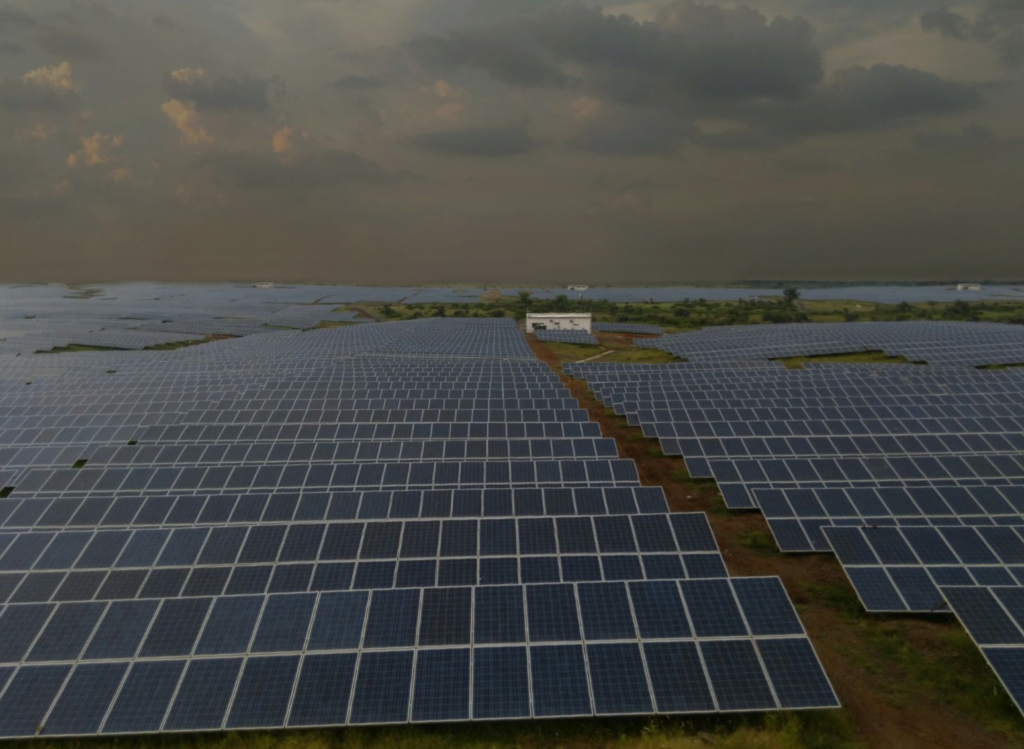
History Repeats: Taxpayers Fork Out Another $Billion on Another Giant Solar White Elephant

stopthesethings's avatarSTOP THESE THINGS

One giant white elephant deserves another…

When Crescent Dunes, the world’s biggest solar-thermal power plant went bankrupt, US taxpayers were left to pick up the tab, with their liability running into hundreds of $millions.

South Australians (victims of their government’s obsession with chaotically intermittent wind and solar) can count themselves lucky that they didn’t end up with a carbon copy of the Crescent Dunes debacle.

Back in August 2017, STT reported on efforts by the Weatherill Labor government to build a solar-thermal plant at Port Augusta with the ‘help’ of the characters behind Crescent Dunes. It was designed with a trivial 150 MW (notional) capacity, but came with an absolutely staggering $1.2bn pricetag: South Australia: Sublime One Day, Ridiculous the Next – Premier Set to Squander $1.2bn on Solar-Thermal Boondoggle

Fortunately for South Australians that big, shiny white elephant never did get off the ground and Jay Weatherill’s Labor government…

View original post 654 more words

Tom Hickey: The weakening of parliamentary immunity by the Irish Supreme Court

UKCLA's avatarUK Constitutional Law Association

In 2019, the Irish Supreme Court decided two cases concerning speech in parliament. The same seven judges sat in each case. The seven agreed in each case: Frank Clarke, the chief justice, wrote a single judgment for the Court each time.

The applicant won in the first case, decided in late February. The Supreme Court granted a declaration of unlawfulness sought by Angela Kerins against a parliamentary committee on foot of that committee’s unfair interrogation of her on matters relating to her leadership of a publicly-funded charity. In ruling as it did, the Supreme Court overturned a Divisional High Court ruling that Kerins’ claims were non-justiciable. The Divisional Court had interpreted the Article 15 provisions in light of the early modern English laws to which they owe their provenance. “For upwards of four centuries,” Kelly P said, “it has been recognised in common law jurisdictions throughout the world that the…

View original post 2,921 more words

The COVID-19 pandemic is causing a crisis in the UK universities (UK univs resemble leveraged and overexposed banks!)

Amol Agrawal's avatarMostly Economics

Prof Peter Dolton of Sussex University says UK universities have relied increasingly on Chinese students. This model has broken down now.
In a way the UK universities have become like some banks/FIs who have concentrated their balance sheet to one kind of asset:

In this column, I suggest that the present financial problems of universities are rooted in their growing reliance of UK universities on the huge growth in overseas students coming to the UK for higher education. This growth has been more or less exclusively from China.  Figure 1 shows how the numbers of new students arriving in the UK over the years 2006 to 2019 has changed.  The numbers coming from nearly all countries other than China has remained approximately constant.  But the numbers coming from China have risen from 25,000 in 2006 to approaching 90,000 by 2019. This over-reliance on recruiting Chinese students has meant that the UK HE…

View original post 598 more words

If We Want Better Policing, Eliminate Qualified Immunity

Dan Mitchell's avatarInternational Liberty

Yesterday’s column focused on how police unions protect the bad apples who misbehave and therefore cause some people to resent law enforcement, especially in the minority community.

Curtailing the role of those unions would be an important step to create better bonds between the police and the citizenry.

Today’s column will explain the need to repeal or substantially curtail the doctrine of “qualified immunity,” which was created by courts to protect cops who trample on people’s rights.

It’s not a complete answer, just as fixing the union problem isn’t a complete answer. But getting rid of the doctrine at least will give citizens the opportunity to bring lawsuits when cops disregard their civil liberties. This tweet is a good summary for those who don’t have time to dig into the topic.

But hopefully you do have time to investigate this issue.

Here are excerpts from four articles about problems with…

View original post 1,000 more words

COVID19 update, June 1, 2020: Sweden’s “road alone” and elderly care; avoiding lockdowns in a new flare-up; not even Stanford immune from cuts and layoffs

Nitay Arbel (a.k.a. New Class Traitor)'s avatarSpin, strangeness, and charm


(1) Sweden’s Sonderweg (“special road”, idiomatically, “going its own way”) is the subject of heated debate pro and con.

At first sight, per capita mortality is an order of magnitude higher than in adjacent countries with similar ethnic profile, climate, and sociology. (Sweden does, however, have a higher percentage of 1st-generation immigrants than Norway, Denmark, and Finland — see below.)

At second sight, however, it turned out that Swedish morbidity and especially mortality is disproportionately concentrated in two populations: elderly in care homes (over 70%) and 1st-generation immigrants. Mortality among native Swedes from young to independent elderly, is actually not that elevated compared to the neighbors. 

On the gripping hand, while the Swedes may have avoided the economic ruination of a full lockdown and may be closer to herd immunity now should a second wave arrive, there are costs to this epidemic for everyone (the travel…

View original post 1,316 more words

Fall of Saigon

MSW's avatarWeapons and Warfare

WESTERN OUTSKIRTS OF SAIGON

“WHAT IS THIS?” Nguyen Sinh Tuan said, raising his Leica M3 camera and focusing on Nguyen Duc Cui as he sat on the ground, massaging the leather of the brown oxford shoes that he had carried in his pack since the day he had made the blood-bound promise to his dying friend.

“I thought you had no film,” Cui said, smiling as Tuan released the shutter.

“I had no more film for photographs of darkness,” the photographer said. “They wanted pictures of that battle, and all that my lens could see was blackness and streaks of light. I had no film for that. However, I do have this roll of film to photograph today, Liberation Day!”

“It has not yet ended,” Cui said. “We still have ARVN entrenched here at Hoc Mon.”

“In a few hours,” Tuan said and snapped another photograph, “their President Minh will…

View original post 1,580 more words

Are equity markets underestimating climate risks?

The analysis would have a bit more credibility if it included an announcement that the staff pension fund was shorting the market, the entire hundred percent of their retirement savings was back in their judgement

Amol Agrawal's avatarMostly Economics

IMF in Global Financial Stability Report (Apr-2020) has a chapter on equity markets underestimating climate change risks:

The projected increase in the frequency and severity of disasters due to climate change is a potential threat to financial stability. Equity markets are a key segment of the global financial system, provide a data-rich environment, and are sensitive to long-term risks, making them fertile ground for investigating how projected future physical risk affects financial markets and institutions.

Looking back over the past 50 years shows a generally modest impact of large disasters on equity markets, bank stocks, and non–life insurance stocks, although country characteristics matter. Higher insurance penetration and greater sovereign financial strength have helped dampen the adverse effects of large disasters on equity markets and financial institutions.

While projections of climatic variables and their economic impact are subject to a high degree of uncertainty, aggregate equity valuations as of 2019 do…

View original post 288 more words

Aleardo Zaghellini

Equality Act Was unusual in that it wrote down in detail all the single sex exceptions. Laws written in earlier times just took it as read that males couldn’t get into female spaces especially for girls

Maya Forstater's avatarsingle sex spaces

Aleardo Zanghellini is a Professor of Law and Social Theory at Reading University. He recently published an article in the Sage Open Journal on Philosophical Problems With the Gender-Critical Feminist Argument Against Trans Inclusion.

He does not define what he means by “trans inclusion”. But over the course of the article it becomes clear he does not mean general inclusion in employment, housing, healthcare, or in public life. Specifically he means inclusion of people who identify as trans in single sex services provided for members of the opposite sex: ““[t]oilets, changing rooms, girls’ youth organisations, hostels, and prisons” and so on.

The article is largely an extended diatribe targeting the public philosophy of Professor Kathleen Stock. Zanghelli also criticises ‘gender critical’ thinkers in general for publishing primarily on sites such as The Conversation and Medium. These platforms he says “offer us both the opportunity and the temptation to…

View original post 660 more words

How culture explains our weak response to the coronavirus

Max Beilby's avatarDarwinian Business

The sneakiness of the novel coronavirus virus has wreaked havoc worldwide.

Not only have countries been forced to adopt emergency measures never seen in living memory, the outbreak has decimated the global economy and claimed hundreds of thousands of lives.

Although the coronavirus is a global pandemic, it’s striking how the pathogen’s destruction has varied across regions.

Whilst East Asia has largely got a grip on the virus, Europe is still reeling. The United Kingdom recently pipped Italy to take Europe’s highest death toll, with a tally that dwarfs all but a handful of nations. The United States has established itself as the world’s coronavirus leader— although not in the way President Trump would want us to believe. And Brazil appears to be the new epicentre of the pandemic, with growing fears that their healthcare system will not survive the oncoming onslaught.

This all begs the question: why…

View original post 1,789 more words

COVID19 update, May 31, 2020: which patients benefit most from Remdesivir; asymptomatic infection rate; the post-lockdown economy; miscellaneous updates

Nitay Arbel (a.k.a. New Class Traitor)'s avatarSpin, strangeness, and charm

(1) Dr. Seheult discusses remdesivir for different categories of patients, and suggests that the drug is most beneficial (in terms of quicker recovery) for patients sick enough to require oxygen, but not so sick as to require mechanical ventilation or ECMOs (“heart-lung machines”). In this latter group, the virus has already done so much damage that remdesivir amounts to “closing the barn door after the horses have fled”, while mild cases will resolve on their own.

The conventional division of patients is (averaged across age groups):

  • 80% self-limiting, self-resolving disease
  • 15% get more severely ill
  • 5% critically ill

So it would be the 15% where the drug can make most of the difference, probably by keeping patients from moving into the 5% critical group.

(2) Dr. John Campbell’s video looks at the asymptomatic infection rate, which he frustratingly places “between 5% and 80%”, and briefly highlights different studies that arrive…

View original post 266 more words

Previous Older Entries Next Newer Entries

Thoughts from the North

Celebrating humanity's flourishing through the spread of capitalism and the rule of law

Fardels Bear

A History of the Alt-Right

Vincent Geloso

Econ Prof at George Mason University, Economic Historian, Québécois

Bassett, Brash & Hide

Celebrating humanity's flourishing through the spread of capitalism and the rule of law

Truth on the Market

Scholarly commentary on law, economics, and more

The Undercover Historian

Beatrice Cherrier's blog

Matua Kahurangi

Celebrating humanity's flourishing through the spread of capitalism and the rule of law

Temple of Sociology

Celebrating humanity's flourishing through the spread of capitalism and the rule of law

Velvet Glove, Iron Fist

Celebrating humanity's flourishing through the spread of capitalism and the rule of law

Why Evolution Is True

Why Evolution is True is a blog written by Jerry Coyne, centered on evolution and biology but also dealing with diverse topics like politics, culture, and cats.

NoTricksZone

Celebrating humanity's flourishing through the spread of capitalism and the rule of law

Homepaddock

A rural perspective with a blue tint by Ele Ludemann

Kiwiblog

DPF's Kiwiblog - Fomenting Happy Mischief since 2003

The Dangerous Economist

Celebrating humanity's flourishing through the spread of capitalism and the rule of law

Watts Up With That?

The world's most viewed site on global warming and climate change

The Logical Place

Tim Harding's writings on rationality, informal logic and skepticism

Doc's Books

A window into Doc Freiberger's library

The Risk-Monger

Let's examine hard decisions!

Uneasy Money

Commentary on monetary policy in the spirit of R. G. Hawtrey

Barrie Saunders

Thoughts on public policy and the media

Liberty Scott

Celebrating humanity's flourishing through the spread of capitalism and the rule of law

Point of Order

Politics and the economy

James Bowden's Blog

A blog (primarily) on Canadian and Commonwealth political history and institutions

Science Matters

Reading between the lines, and underneath the hype.

Peter Winsley

Economics, and such stuff as dreams are made on

A Venerable Puzzle

"The British constitution has always been puzzling, and always will be." --Queen Elizabeth II

The Antiplanner

Celebrating humanity's flourishing through the spread of capitalism and the rule of law

Bet On It

Celebrating humanity's flourishing through the spread of capitalism and the rule of law

History of Sorts

WORLD WAR II, MUSIC, HISTORY, HOLOCAUST

Roger Pielke Jr.

Undisciplined scholar, recovering academic

Offsetting Behaviour

Celebrating humanity's flourishing through the spread of capitalism and the rule of law

JONATHAN TURLEY

Res ipsa loquitur - The thing itself speaks

Conversable Economist

In Hume’s spirit, I will attempt to serve as an ambassador from my world of economics, and help in “finding topics of conversation fit for the entertainment of rational creatures.”

The Victorian Commons

Researching the House of Commons, 1832-1868

The History of Parliament

Articles and research from the History of Parliament Trust

Books & Boots

Reflections on books and art

Legal History Miscellany

Posts on the History of Law, Crime, and Justice

Sex, Drugs and Economics

Celebrating humanity's flourishing through the spread of capitalism and the rule of law

European Royal History

Exploring the Monarchs of Europe

Tallbloke's Talkshop

Cutting edge science you can dice with

Marginal REVOLUTION

Small Steps Toward A Much Better World

NOT A LOT OF PEOPLE KNOW THAT

“We do not believe any group of men adequate enough or wise enough to operate without scrutiny or without criticism. We know that the only way to avoid error is to detect it, that the only way to detect it is to be free to inquire. We know that in secrecy error undetected will flourish and subvert”. - J Robert Oppenheimer.

STOP THESE THINGS

The truth about the great wind power fraud - we're not here to debate the wind industry, we're here to destroy it.

Lindsay Mitchell

Celebrating humanity's flourishing through the spread of capitalism and the rule of law

Alt-M

Celebrating humanity's flourishing through the spread of capitalism and the rule of law