
Mass spectrometry is essential for research in climate science.
View original post 1,874 more words
Celebrating humanity's flourishing through the spread of capitalism and the rule of law
17 Jun 2020 Leave a comment
Mass spectrometry is essential for research in climate science.
View original post 1,874 more words
17 Jun 2020 Leave a comment
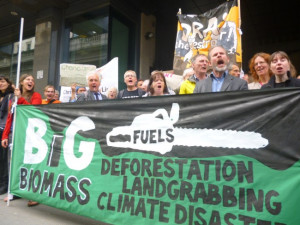
What use is it? That would be the obvious one, when better alternatives not requiring ludicrously high subsidies are readily available.
– – –
A new report from climate change think tank Ember reveals the cost of burning wood for power, with energy billpayers committed to subsidies of more than £13 billion, including £10bn at Drax power station alone.
In addition to the direct subsidy, we estimate biomass generators are receiving carbon tax breaks of £333 million a year.
The UK has now left the EU, and there’s an opportunity to reassess carbon pricing – including in the design of the UK emissions trading system.
In this research, we demonstrate why the UK should abandon the carbon tax break afforded to large power stations burning biomass (mostly wood in the form of pellets or chips).
View original post 100 more words
17 Jun 2020 Leave a comment
On 5 June 1820 Caroline of Brunswick returned to England to take her place as Queen Consort to George IV. But the breakdown in the couple’s relationship would become a matter of parliamentary and national importance. This blog from Dr Philip Salmon, editor of our Commons 1832-68 project, explores the impact of the Queen Caroline Affair on British politics.
Two hundred years ago the Prince Regent succeeded to the throne as George IV. His wife Caroline had been living abroad since their separation in 1814 and the new king wanted the Tory government to pass legislation giving him a divorce. Caroline’s unexpected return to England on 5 June to claim her place as Queen Consort, and the government’s failed attempt to prosecute her for adultery in the House of Lords, triggered one of the most significant political crises of the early 19th century. The unprecedented nationwide popular movement…
View original post 1,161 more words
17 Jun 2020 Leave a comment



The B-29 Superfortress was the most effective bomber flown by any nation in World War II and was the world’s first nuclear-delivery-capable aircraft. It was in service from 1944 until 1954 as a long-range/very-heavy bomber in combat in World War II and the Korean War. The F-13/RB-29 variants served as long-range reconnaissance aircraft from 1944 to 1956.
By the end of World War II, the USAAF had almost 1,500 B-29s in the western Pacific area. B-29s dropped the only atomic bombs used in combat, on the Japanese cities of Hiroshima and Nagasaki, in August 1945.
The B-29 was developed for the USAAF as a long-range strategic bomber. It was a four-engine, streamlined aircraft with three pressurized compartments for the flight crew. The Norden bombsight and the AN/APQ-7 Eagle bomb-navigation radar were installed.
Standard defensive armament consisted of eight to ten .50-caliber machine guns in four remote-control turrets, the top forward…
View original post 1,508 more words
16 Jun 2020 Leave a comment

The longest campaign of history’s most horrendous war was over. Although convoys and Coastal Command patrols continued for several weeks after VE Day, the danger was past. It had been one of the worst dangers Britain had ever faced with Churchill describing the U-boat menace as his greatest fear. He summarized the campaign:
The Battle of the Atlantic was the dominating factor all through the war. Never for one moment could we forget that everything happening elsewhere, on land, on sea, or in the air, depended ultimately on its outcome, and amid all other cares we viewed its changing fortunes day by day with hope or apprehension.
In contrast to Churchill’s assessment, American historian Blair asserts that ‘Contrary to the accepted wisdom or mythology, U-boats never even came close at any time to cutting the vital North Atlantic lifeline to the British Isles’. Such an assessment can be made only…
View original post 1,463 more words
16 Jun 2020 Leave a comment
That is perhaps the hardest part of being an anthropologist. [The hunter-gatherers I was studying] sensed my weakness and would sell me all kinds of baby animals with descriptions of what they would do to them otherwise. I used to take them far into the desert and release them, they would track them, and bring them back to me for sale again!
I have a chapter coming out on animal ethics and evolutionary psychology for the third volume of the SAGE Handbook of Evolutionary Psychology edited by Todd Shackelford. This volume on applications of evolutionary psychology will cover a wide range of topics that are rarely tackled from this perspective, like artificial intelligence, climate change, dangerous driving behavior, incarceration, meditation and cyberwarfare.
Animal Ethics and Evolutionary Psychology (read the whole chapter here) attempts to untangle some of the evolutionary reasons why have such inconsistent attitudes towards animals. Below I quote parts of the chapter- for full references, check out the original.
View original post 2,709 more words
16 Jun 2020 Leave a comment
Who went to war in his place?
Ahead of Tuesday’sVirtual IHRParliaments, Politics and People seminar, we hear from Mark Frankel, a PhD candidate at the University of Birmingham. He will be responding to your questions about his research on Thomas Edmund Harvey on Zoom between 5:15 p.m. and 6:30 p.m. on 23 June 2020. Details on how to join the discussion are available here or by contacting mspychal@histparl.ac.uk
This blog is based on Mark’s full-length seminar paper, ‘T. Edmund Harvey, politician of conscience’, which is available here. Alternatively you can listen to Mark reading his paper, either by downloading the MP3 (right click ‘save link as’) or streaming the audio from the player below:
T.Edmund Harvey (1875–1955) is a distinctive figure in the political history of…
View original post 1,169 more words
16 Jun 2020 Leave a comment
Most of you have probably heard that HBO Max has decided to temporarily pull the famous movie “Gone With the Wind” from its streaming services, later to replace it with a version that has an explanatory introduction by University of Chicago Cinema and Media studies professor Jacqueline Stewart.
This New York Times article gives the details:
When I first saw this movie as a teenager, its racism was palpable: not only was slavery whitewashed, so to speak, with the slaves depicted as the usual “happy darkies” of that era, but the two black supporting actors, Butterfly McQueen and Hattie McDaniel (the latter winning an Oscar for her role) seemed to me stereotypical blacks as depicted in that era (1939), shown as groveling, happy-go-lucky, slow-witted toadies, though I have to admit that McDaniel had a bit of nuance in her role. (Another example is Stepin Fetchit, who starred with…
View original post 730 more words
16 Jun 2020 Leave a comment
Many people are increasingly worried about the slow pace of school reopening in the UK. The focus has mainly been on the harms done to the welfare of children and their families. But there are also rising concerns about the wider impact on the economy. This blog summarises both the social and economic issues, and suggests some ballpark figures for the economic costs.
For most children, and their parents, the novelty of home schooling has long since worn off. On top of the deficit in formal education and structured routine, children are missing their friends and all the social and sporting activities that are part and parcel of normal school life. This is adding to worries about mental health and food insecurity. Many parents, especially working mothers, are having to take on an even larger burden and step in as teachers too.
What’s more, there is now a…
View original post 1,224 more words
15 Jun 2020 Leave a comment
Author JK Rowling has caused a sensation by defining women as biological females. She recently tweeted “‘People who menstruate.’ I’m sure there used to be a word for those people. Someone help me out. Wumben? Wimpund? Woomud?” In response to belligerent and threatening reactions, she has responded in detail on her website, in a piece simply called “J.K. Rowling writes about her reasons for speaking out on sex and gender issues” 10 June 2020.
She says: “When you throw open the doors of bathrooms and changing rooms to any man who believes or feels he’s a woman… then you open the door to any and all men who wish to come inside. That is the simple truth.”
She also challenges the “argument of many current trans activists” that “if you don’t let a gender dysphoric teenager transition, they will kill themselves”. She quotes comments from psychiatrist Marcus Evans, a former…
View original post 1,416 more words
15 Jun 2020 Leave a comment

Wind power outfits still claim their turbines run on the smell of an oily rag and last for 25 years or more, needing little more than a hug from time to time.
However, the operations and maintenance cost of these things, as reported by Australia’s Infigen, is around $25 per MWh (hardly the zero marginal cost claimed by wind cultists!). And, as we’ll detail a little later in this post, wind turbines are unlikely to have an economic lifespan beyond 10 years.
But first this, from Energy Wire (a renewable energy propaganda site) – indicating that the only thing that keeps them running is an endless stream of taxpayers’ money.
DOE lab: Turbine power plunges when tax credits go away
Energy Wire
David Laconangelo
21 May 2020
Wind farms often produce less power when they age past the 10-year mark because the loss of federal tax credits halts maintenance –…
View original post 1,744 more words
15 Jun 2020 Leave a comment
Busy workday, so just some quick updates:
(1) (hat tip: Masgramondou): Are Technica: “Just 10-20% of cases are behind 80% of transmission”
Benjamin Cowling, a Hong Kong-based epidemiologist and biostatistics expert, agrees. Cowling and colleagues recently studied transmission in Hong Kong, finding superspreading events drove local transmission. In a recent op-ed, he and a colleague argue that public health policies aimed at stopping the pandemic should focus on stopping superspreading.
“The epidemic’s growth can be controlled with tactics far less disruptive, socially and economically, than the extended lockdowns or other extreme forms of social distancing that much of the world has experienced over the past few months,” the researchers wrote
In an email to Ars, Cowling fleshed out this idea a bit, noting that “measures that specifically target superspreading are those that reduce or prevent large gatherings of people,” such as those to reduce the density of…
View original post 688 more words
15 Jun 2020 Leave a comment
Although John McWhorter, a professor of English and linguistics at Columbia University, is also a contributing editor at The Atlantic, his new essay on police violence was not published there. Rather, it’s in Quillette. Given that in length, style, and quality (it’s very well written and makes cogent points) it would be suitable for The Atlantic, I’m guessing that he didn’t even try to publish it there. That’s because it makes an argument that is politically uncongenial to The Atlantic and to much of the Left: that perhaps the claim that black men get shot by police at a rate higher than their frequency in the population is not a function of police racism, but of a greater frequency of interactions between blacks and police due to a higher crime rate in black communities.
This idea is heterodox, contrarian, and is suitable for Quillette. But no mainstream…
View original post 1,451 more words
Celebrating humanity's flourishing through the spread of capitalism and the rule of law
Celebrating humanity's flourishing through the spread of capitalism and the rule of law
Celebrating humanity's flourishing through the spread of capitalism and the rule of law
Celebrating humanity's flourishing through the spread of capitalism and the rule of law
Celebrating humanity's flourishing through the spread of capitalism and the rule of law
Celebrating humanity's flourishing through the spread of capitalism and the rule of law
Celebrating humanity's flourishing through the spread of capitalism and the rule of law
A History of the Alt-Right
Econ Prof at George Mason University, Economic Historian, Québécois
Celebrating humanity's flourishing through the spread of capitalism and the rule of law
Scholarly commentary on law, economics, and more
Beatrice Cherrier's blog
Celebrating humanity's flourishing through the spread of capitalism and the rule of law
Celebrating humanity's flourishing through the spread of capitalism and the rule of law
Celebrating humanity's flourishing through the spread of capitalism and the rule of law
Why Evolution is True is a blog written by Jerry Coyne, centered on evolution and biology but also dealing with diverse topics like politics, culture, and cats.
Celebrating humanity's flourishing through the spread of capitalism and the rule of law
A rural perspective with a blue tint by Ele Ludemann
DPF's Kiwiblog - Fomenting Happy Mischief since 2003
Celebrating humanity's flourishing through the spread of capitalism and the rule of law
The world's most viewed site on global warming and climate change
Tim Harding's writings on rationality, informal logic and skepticism
A window into Doc Freiberger's library
Let's examine hard decisions!
Commentary on monetary policy in the spirit of R. G. Hawtrey
Thoughts on public policy and the media
Celebrating humanity's flourishing through the spread of capitalism and the rule of law
Politics and the economy
A blog (primarily) on Canadian and Commonwealth political history and institutions
Reading between the lines, and underneath the hype.
Economics, and such stuff as dreams are made on
"The British constitution has always been puzzling, and always will be." --Queen Elizabeth II
Celebrating humanity's flourishing through the spread of capitalism and the rule of law
Celebrating humanity's flourishing through the spread of capitalism and the rule of law
WORLD WAR II, MUSIC, HISTORY, HOLOCAUST
Undisciplined scholar, recovering academic
Celebrating humanity's flourishing through the spread of capitalism and the rule of law
Res ipsa loquitur - The thing itself speaks
In Hume’s spirit, I will attempt to serve as an ambassador from my world of economics, and help in “finding topics of conversation fit for the entertainment of rational creatures.”
Researching the House of Commons, 1832-1868
Articles and research from the History of Parliament Trust
Reflections on books and art
Posts on the History of Law, Crime, and Justice
Celebrating humanity's flourishing through the spread of capitalism and the rule of law
Exploring the Monarchs of Europe
Cutting edge science you can dice with


Recent Comments