The Franco-Prussian War by Sir Michael Howard (1961)
23 May 2020 Leave a comment
Distinguished military historian Sir Michael Eliot Howard, OM, CH, CBE, MC, FBA published his definitive history of the Franco-Prussian War in 1961. In the foreword he apologises for adding to the enormous literature on the subject. This is ironic since nowadays it’s quite hard to find books about this conflict, compared with, say, the endless flood of books about the two world wars. While many of the other texts he refers to seem to have disappeared, his has emerged as the best one-volume history, even fifty years after publication.
Howard sets the tone on page 57:
Thus by a tragic combination of ill-luck, stupidity and ignorance France blundered into war with the greatest military power that Europe had yet seen, in a bad cause, with her army unready and without allies.
Background Otto von Bismarck, Prime Minister of Prussia, engineered wars with Denmark (1864) and Austria (1866) in order to unify…
View original post 1,041 more words
A Line In The Sand: Britain, France and the Struggle That Shaped the Middle East by James Barr
22 May 2020 Leave a comment
I had no idea the French were behaving so tyrannically’ (Winston Churchill, when informed how the French were planning to rig the supposedly ‘free’ elections to be held in Syria in 1943, quoted page 249)
One should kill the British wherever one finds them. They are pathological liars and that is how they have ruled the whole world. (French policeman chatting with a released Jewish terrorist, quoted on page 342)
This is a really shocking book about the long-running rivalry between the British and French in the Middle East from the outbreak of the First World War through to Britain’s ignominious withdrawal from Palestine in 1947. It makes you really despise, and even hate, the French for their corruption, cowardice, brutality and pomposity.
The book’s last part is a detailed account of Jewish terrorist campaigns against the British, not only in Palestine but in London, where…
View original post 8,144 more words
Unequal Pay: For Women Only – Part Two (There really is a Part One.)
22 May 2020 Leave a comment
Editor’s note: this old essay by Dr Delacroix might be worth reading in tandem with this article. It’s titled “Sasquatch and Liberal Academe.”
I agreed in Part One of this essay that there may be a small average pay difference of five percentage points between employed American women and men. It’s possible that even after you take into account all the facts mentioned before, lower education, less seniority, lesser presence in well paid industries, women, on the average, earn 95 cents on men’s one dollar. (That’s also on the average.) I agreed that this may be evidence of discrimination against women in the work place. But is it the obvious explanation? Is it the only explanation? Is it even credible at all?
There is a reason this is an essay for women only. I want to help you evoke forbidden topics, topics never or rarely approached in the social sciences…
View original post 2,019 more words
The Fast German Submarines versus Allied Escorts
22 May 2020 Leave a comment

The next generation – U2502, a Type XXI with a smaller Type XXIII alongside. They would have been a formidable threat but unreliability delayed their entry into service.
German efforts to bring fast submarines into the Battle of the Atlantic. None of these newer boats was operational in the battle but it is worth considering what might have happened. The development is a fine example of the adage, ‘Requirements pull, technology pushes.’
The initial push came from Professor Hellmuth Walter, who, from about 1933, put forward a number of proposals for fast submarines using very concentrated hydrogen peroxide as the oxidant for the burning of fuel oil while submerged. This combination could be used either in a diesel engine, recycling the exhaust gases, or in a turbine. Walter wanted peroxide with a concentration of 80 per cent, when the strongest solution available was 45 per cent. This problem was overcome…
View original post 1,111 more words
The dirty history of soap
22 May 2020 Leave a comment
Judith Radner, a scholar who researches material culture looks at the dirty history of soap.
Soap is an essential part of our life. In modern day, it is a part of our daily hygiene routine. We use it everyday to bathe, wash hands and so on. Now, in time of COVID-19, it has become a life-saver, helping us to mitigate the risk of infection. But what do we know about the history of soap? When and where did soap originate? How did it evolve into its modern form? How did it become a part of our daily life?
The Economic Consequences of Expanding Pay-as-You-Go Social Security Systems
22 May 2020 Leave a comment
Despite the fact that Social Security is an ever-increasing fiscal burden with a 75-year cash-flow deficit of nearly $45 trillion, many politicians in Washington have been trying to buy votes
with proposals to expand the program (Barack Obama, Hillary Clinton, Bernie Sanders, Elizabeth Warren, etc).
A new working paper from the European Central Bank gives us some insights on what will happen if they succeed.
Authored by Daniel Baksa, Zsuzsa Munkacsi, and Carolin Nerlich, the study look at the long-run impact of related policies in Europe, using Germany and Slovakia as examples.
Here’s their description of the study.
In view of the adverse macroeconomic and fiscal implications of ageing, many European countries have implemented significant pension reforms… More recently, however, the reform progress has stalled, and despite an unchanged demographic outlook,
several European countries reversed, or plan to do so, parts of their previously adopted…
View original post 971 more words
Eugenics and the Academy in Britain: Confronting Historical Amnesia at the LSE
22 May 2020 Leave a comment
Guest Post by Shikha Dilawri
Recent calls to decolonise universities have engendered thoughtful interrogation of the colonial legacies of these institutions and reflection on how to address their material effects today. Taking its cue from these initiatives – including the recent inquiry into UCL’s role in legitimising eugenics – as part of the effort to encourage practices of decolonising at the LSE, this piece seeks to explore the entangled relationship between the LSE and the eugenics movement during the early 20th century. This examination, which draws in part on archival material from the LSE library, takes as it starting point Beatrice and Sidney Webb, prominent members of the Fabian Society and celebrated founders of the LSE, to illuminate the school’s complicity in advancing an unjust racial hierarchy. In exploring how the Webbs, as well as subsequent figures and initiatives in which they were involved during the early years of…
View original post 2,896 more words
Lori Loughlin and Massimo Giannulli finally plead guilty in “Admissiongate”
22 May 2020 Leave a comment
oughlin and Giannulli are the 23rd and 24th parents to plead guilty in this case; the most famous was actor Felicity Huffman, who also pleaded guilty from the outset and served 11 days.
After insisting for months that they were not guilty of bribing their daughters’ way into the University of Southern California by presenting fake resumes as athletes, actor Lori Laughlin and her husband, fashion designer Massimo Giannulli, have pleaded guilty to conspiracy charges. The details are in the article below from CNN (click on screenshot). The upshot: both of the privileged and wealthy parents are going to jail, though not for that long.
An excerpt:
Loughlin, 55, and Giannulli, 56, had been accused of paying $500,000 to get their two daughters into the University of Southern California as fake crew team recruits. They had pleaded not guilty for more than a year and moved to dismiss charges as recently as two weeks ago.
As part of the plea agreement, Loughlin will be sentenced to two months in prison and Giannulli will be sentenced to five months in prison, subject to the…
View original post 602 more words
May 21, 1527: Birth of Felipe II, King of Spain, Portugal, Naples and Sicily.
22 May 2020 Leave a comment
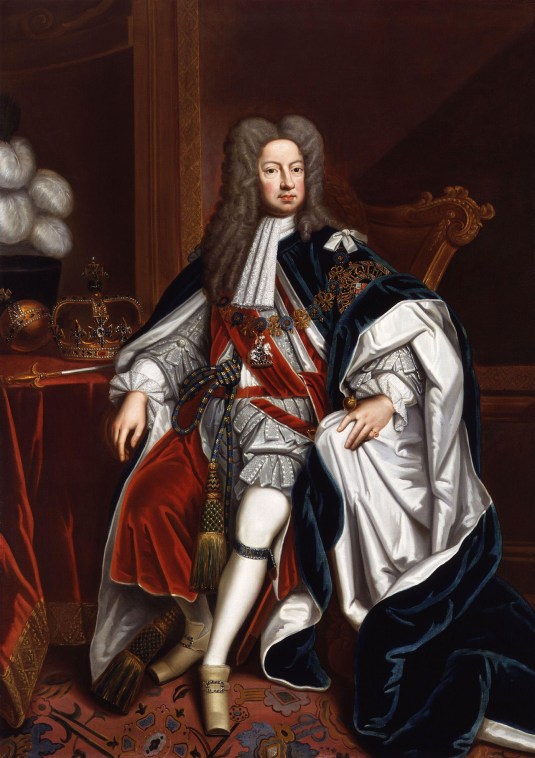
Felipe II (May 21, 1527 – September 13, 1598) was King of Spain (1556–98), King of Portugal (1581–98, as Filipe I), King of Naples and Sicily (both from 1554), and jure uxoris King of England and Ireland (during his marriage to Queen Mary I from 1554 to 1558). He was also Duke of Milan, and from 1555, lord of the Seventeen Provinces of the Netherlands. As a member of the Austrian Habsburg Family, Felipe II was also an Archduke of Austria.

Filipe II, King of Spain, Portugal, Naples and Sicily.
The son of Holy Roman Emperor Charles V (King Carlos I of the Spanish kingdoms) and Infanta Isabella of Portugal, Felipe was called Felipe el Prudente (“Philip the Prudent”) in the Spanish kingdoms; his empire included territories on every continent then known to Europeans, including his namesake the Philippines. During his reign, the Spanish kingdoms reached the height of their…
View original post 1,164 more words
Free To Choose in Under 2 Minutes Episode 2 – The Tyranny of Control
22 May 2020 Leave a comment
in Adam Smith, applied price theory, applied welfare economics, comparative institutional analysis, constitutional political economy, development economics, economic history, economics of religion, entrepreneurship, growth disasters, growth miracles, income redistribution, industrial organisation, international economics, labour economics, labour supply, law and economics, Milton Friedman, property rights, Public Choice, public economics, rentseeking, survivor principle, television Tags: capitalism and freedom, India, Japan
Snow Job: Giant Pumped Hydro Scheme Set to Destroy Australia’s Favourite National Park
22 May 2020 Leave a comment
Future generations will wonder why this one destroyed the planet, while claiming to save it, using completely useless industrial wind turbines and solar panels.
Whether it’s dumping hundreds of thousands of toxic solar panels and windmill blades into landfill, or the toxic lakes in China where the rare earths are processed that make them, the so-called ‘green’ energy revolution is anything but.
Touted by ex-PM Malcom Turnbull and his hapless sidekick, Josh Frydenberg as the Nation’s mega-battery, the heavily-hyped Snowy 2.0 pumped hydro scheme (shelved in the 1970s because it was uneconomic then) has been heralded as the saviour for the Australian wind industry.
The line goes something like this: if we use 3 MWh of wind power to pump water through 27 km of tunnels, over an elevation of 900m, later, when power consumers actually need it, Snowy Hydro could return 2 MWh to the grid.
Never mind…
View original post 1,317 more words
SNOWFALL Will Signal The Death Of The Global Warming Movement
21 May 2020 Leave a comment
BREAKING : ‘A Very Rare And Exciting Event’ To The Rescue | Climatism
SNOWFALL will become “A very rare and exciting event…
Children just aren’t going to know what snow is.”
Dr David Viner – Senior scientist, climatic research unit (CRU)
“Winters with strong frosts and lots of snow
like we had 20 years ago will no longer exist at our latitudes.”
– Professor Mojib Latif (2000)
“Good bye winter. Never again snow?” – Spiegel (2000)
“Milder winter temperatures will decrease heavy snowstorms” – IPCC (2001)
“End of Snow?” – NYTimes (2014)
***
WE all associate snowstorms with cold weather. But, the effects of snow on our climate and weather last long after the storm has passed. Due to snows reflective properties, its presence or absence influences patterns of heating and cooling over Earth’s surface more than any other single land surface feature.
CLIMATE models from the 1970s have consistently predicted…
View original post 4,114 more words
OMV Taranaki wins consents (but with robust conditions) to take vital step for NZ’s energy industry
21 May 2020 Leave a comment
Oil and gas company OMV Taranaki has won consents to undertake the drilling of up to 10 exploration and appraisal wells, as well as the associated discharges, within its petroleum exploration permit in the Maui Field in the Taranaki Basin.
This is seen as a vital step for the energy industry in NZ, because reserves of oil and gas could run out within 11 years at present rates of consumption. And with the economy under the whip, any extension of those reserves would come as a welcome fillip.
OMV will be aiming to build on its success in the last drilling season with its wildcat well Toutouwai-1, 50km off the Taranaki coast, penetrating several layers of hydrocarbons. Because of the Covid-19 pandemic it had to withdraw from further work proving up the Toutouwai discovery.
View original post 403 more words
Free To Choose in Under 2 Minutes Episode 1 – The Power of the Market
21 May 2020 Leave a comment
in applied price theory, applied welfare economics, comparative institutional analysis, constitutional political economy, development economics, economic history, economics of regulation, entrepreneurship, financial economics, growth miracles, history of economic thought, industrial organisation, international economics, labour economics, labour supply, law and economics, Milton Friedman, occupational choice, poverty and inequality, property rights, Public Choice, public economics, survivor principle, television Tags: capitalism and freedom


Recent Comments