
I’ve been working for some time on a review of the first full-length text based on Modern Monetary Policy, Macroeconomics by William Mitchell, Randall Wray and Martin Watts. A near-final draft is over the fold
View original post 1,751 more words
Celebrating humanity's flourishing through the spread of capitalism and the rule of law
01 Jun 2020 Leave a comment
I’ve been working for some time on a review of the first full-length text based on Modern Monetary Policy, Macroeconomics by William Mitchell, Randall Wray and Martin Watts. A near-final draft is over the fold
View original post 1,751 more words
01 Jun 2020 Leave a comment
Let me state at the outset that I am not equating what the police did to George Floyd with the violence of the rioters responding to his murder. Looting, burning, and breaking into stores is not as horrible as murder, and of course most of the protestors against Floyd’s murder were peaceful. But violent protest is also unconscionable. And so I’ll call out both the cops and the rioters, but am not trying to say there’s a moral equivalence—not at all. But I don’t think there is any excuse for rioting.
What the Minneapolis police did to George Floyd, with one kneeling on his neck while he was prone for a full eight minutes and 46 seconds (two minutes after Floyd became unresponsive), suffocating him to death, while three cops stood by, is unconscionable. The cop who knelt on his neck has been rightly indicted for third-degree murder. The other…
View original post 1,250 more words
31 May 2020 Leave a comment
 Credit: Wikipedia
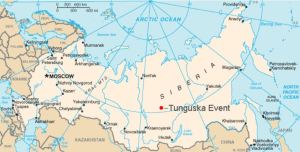
Time for another Tunguska meteor theory.
– – –
When a meteor zooms toward Earth at 45,000 mph with the strength 10-15 megatons of TNT—185 times more energy than the Hiroshima atomic bomb—it could possibly take out the entire planet, says Syfy.
If something like that doesn’t scream total annihilation, it’s hard to say what does, except this time it just missed.
Scorched earth and flattened trees were all that was left of the mysterious object after it passed dangerously close to the Tunguska region of Siberia in 1908.
Theories have ranged from a black hole colliding with Earth to a clash of matter and antimatter to an alien spaceship crash-landing. An eyewitness even swore the sky was being ripped in two. But why no crater? No debris?
View original post 278 more words
31 May 2020 Leave a comment

The coronavirus is a once in a generation event that has required an almost unprecedented response from government at all levels, from Westminster to West Lothian. Akash Paun argues that it has raised five crucial questions about the politics of devolution at a time when efficient and effective intergovernmental relations are crucial.
Coronavirus has hit all parts of the UK and has required a comprehensive response by government at all levels – central, devolved and local. The crisis has raised (at least!) five big questions about devolution, intergovernmental relations and the politics of the Union:
View original post 2,144 more words
31 May 2020 Leave a comment

Whatever policies are directed at recovering from the coronavirus lockdown, without reliable and affordable power Australia’s energy hungry businesses are doomed. With rocketing power prices, and an intermittent supply, mineral processors and manufacturers are terminal, and have been for years.
Politicians and academic boffins have been giving lip service to improving Australia’s “resilience” and “self-sufficiency”, resulting in the renaissance of Australian manufacturing and industry.
With Australian businesses suffering among world’s highest power prices (thanks to its obsession with intermittent wind and solar, South Australian households and businesses suffer the highest prices in the world), the rebirth of manufacturing and industry sounds like so much wishful thinking.
International supply chains may have ground to a halt and the orderly flow of goods to market disrupted, but, before too long China will regain its primacy as the world’s manufacturing powerhouse. Two factors are responsible for China’s dominance in that domain: a…
View original post 2,467 more words
31 May 2020 Leave a comment
Reader Charles Sawicki contacted me with two links to articles about the 1918 “Spanish Flu” pandemic that killed 5 million people worldwide (the first victim was actually in Kansas), and the similarities between those times and ours. In particular, the two articles below and the photos sent by Charles, deal with the mandatory wearing of face masks in the early pandemic, decreed by several cities and states. Then, like now, there were strong opponents of mask wearing. (One person was even shot for not wearing one.) Here’s Charles’s note:
There are interesting similarities between the Spanish flu and our present situation. For example, San Francisco required masks and had an anti-masking league form to resist mask wearing. People were arrested for not wearing masks and as we have seen today, violence sometimes resulted. The same sort of hand washing was recommended as well as some crazy preventative measures. It seems…
View original post 350 more words
31 May 2020 Leave a comment
Henry VIII was betrothed to Jane on May 20, 1536, just one day after Anne Boleyn’s execution. They were married at the Palace of Whitehall, Whitehall, London, in the Queen’s closet by Bishop Gardiner on May 30, 1536
Jane Seymour (c. 1508 – October 24, 1537) was Queen of England and Ireland from 1536 to 1537 as the third wife of King Henry VIII. She succeeded Anne Boleyn as queen consort following the latter’s execution on May 19, 1536. She died of postnatal complications less than two weeks after the birth of her only child, a son who became King Edward VI. She was the only wife of the King to receive a queen’s funeral, and his only consort to be buried beside him in St George’s Chapel, Windsor Castle.

Jane Seymour
Jane, the daughter of Sir John Seymour and Margery Wentworth was most likely born at Wulfhall, Wiltshire, although West Bower Manor in Somerset has also been suggested. Her birth date is not recorded; various accounts use anywhere from 1504 to 1509, but it is generally estimated as occurring in or around 1508.
Through her maternal grandfather, she…
View original post 1,049 more words
31 May 2020 Leave a comment
The cabin of the plane was obstructed by two tons of lithium-ion batteries and cooling equipment, with little room for passengers. It certainly wasn’t a cabin setup that would make any sense commercially
31 May 2020 Leave a comment
The Chinese novelist Fang Fang has lived most of her life in Wuhan, going back to the days before the Cultural Revolution. Until her retirement, she used to be the provincial chair of the Chinese Writers Association.
(Wuhan, the capital of Hubei province, was originally three separate cities named Wuchang, Hankou and Hanyang, all lying on the confluence of the Han and Yangtze rivers.)
When it became clear that an epidemic was breaking out, she started writing diary entries and posting them on Chinese social media. They quickly acquired a following in the millions, despite furious attempts of online censors to airbrush them away. By the time the lockdowns on Wuhan were lifted, the combined diary
Now translations in both English and German have come out. I read the English translation, which is available on Amazon. The rating is dragged down by a number of 1-star reviews posted by obvious “50-Cent Army”…
View original post 1,217 more words
31 May 2020 Leave a comment
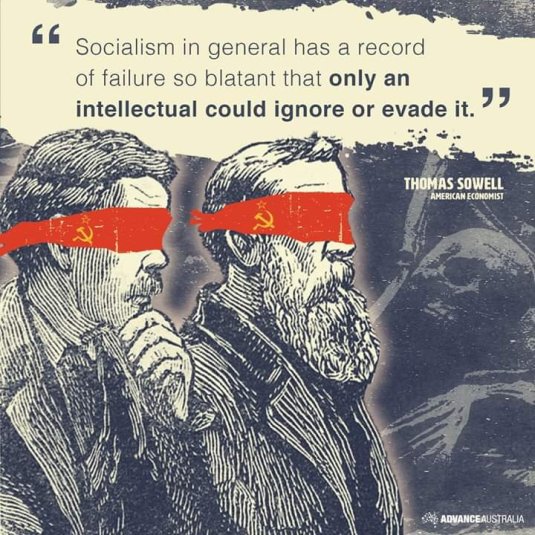
in applied price theory, comparative institutional analysis, constitutional political economy, development economics, economic history, economics of bureaucracy, economics of crime, economics of regulation, growth disasters, human capital, income redistribution, industrial organisation, labour economics, labour supply, law and economics, Marxist economics, poverty and inequality, property rights, Public Choice, rentseeking, survivor principle, Thomas Sowell Tags: fall of communism, offsetting behaviour, rational irrationality, regressive left, The fatal conceit, unintended consequences
30 May 2020 Leave a comment
‘The time and energy and thought which we are all giving to the Brave New World is wildly disproportionate to what is being given to the Cruel New World.’ (British economist J.M. Keynes, quoted page 40)
The full title of this book is The Audit of War: The Illusion and Reality of Britain as a Great Nation, which very accurately states its aim and its Manichaean structure. It is not your average leisurely, rather reassuring history book but a fierce and forcefully argued polemic which, if you’re British, is intellectually and emotionally devastating.
The basic premise is this: When Barnett wrote the book, received opinion tended to think that Britain fell behind its industrial competitors (America, Germany and Japan) and prey to the so-called ‘British disease’ of abysmal industrial performance, in the decades after the end of the Second World War. During the war itself, the nation had pulled together…
View original post 4,132 more words
30 May 2020 Leave a comment
During the exclusion crisis Charles sided with the Tories, and, following the discovery of the Rye House Plot to murder Charles and James in 1683, some Whig leaders were executed or forced into exile. Charles dissolved the English Parliament in 1681, and for the remainder of his reign, Charles ruled without Parliament.
Charles II (May 29, 1630 – February 6, 1685) was king of England, Scotland, and Ireland. He was king of Scotland from 1649 until his deposition in 1651, and king of England, Scotland and Ireland from the 1660 Restoration of the monarchy until his death in 1685.
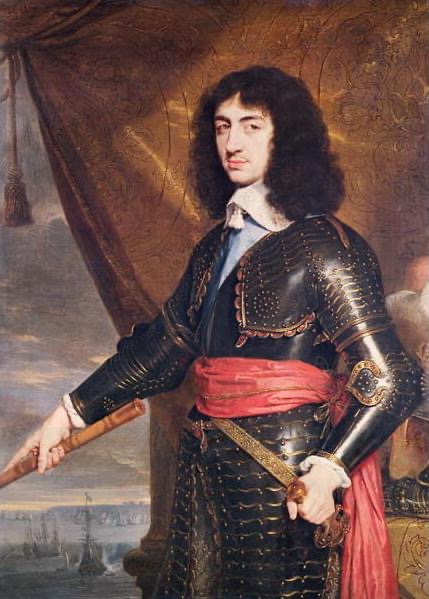
Charles II was the eldest surviving child of Charles I of England, Scotland and Ireland and Henrietta-Maria de Bourbon of France, daughter of King Henri IV of France and Navarre and his second wife, Marie de Medici. After Charles I’s execution at Whitehall on January 30, 1649, at the climax of the English Civil War, the Parliament of Scotland proclaimed Charles II king of Scotland on February 5, 1649.
However, England entered the period known as the English Interregnum or the English Commonwealth, and the country was a de facto republic led by Oliver Cromwell. Cromwell defeated Charles II at the Battle of Worcester…
View original post 929 more words
30 May 2020 Leave a comment
That’s the title of a new book, published this month, by veteran economist and commentator Brian Easton. The title is borrowed from a collection of poems, published in 1939, by New Zealand poet Allen Curnow, but presumably also keys off the author’s previous book published in 1997, In Stormy Seas: The Post-War New Zealand Economy.
The full title of the new book, published by Victoria University Press, is Not in Narrow Seas: The Economic History of Aotearoa New Zealand. It is a curious title in a number of respects. First, there is that reference to the place – so beloved of public servants and the Wellington liberals – that is no place: New Zealand is the name of the modern country, and there was – so far as we know – no collective name for what went before. Then there is the definite article…
View original post 2,380 more words
30 May 2020 Leave a comment

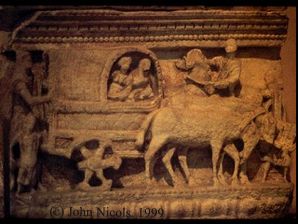
The Romans’ success in conquering and maintaining their enormous empire lay partly in their military culture, their weapons and their training. Rome’s ability to provision large armies at long distances was, however, equally as, or more important to its success. The military history of Rome is not one of continuous victory: indeed the Romans often won wars because, after losing battles—and sometimes entire armies and fleets—they could keep replacing them until the enemy was defeated. Polybius, a keen observer of the Roman military at its height, remarked that “the advantages of the Romans lay in inexhaustible supplies of provisions and men.”
A sophisticated logistical system allowed the Romans to exploit their military resources effectively. The Romans recognized the importance of supply and used it both as a strategic and a tactical weapon and the necessities of military supply influenced and often determined the decisions of the Roman commanders at war…
View original post 2,056 more words
Celebrating humanity's flourishing through the spread of capitalism and the rule of law
Celebrating humanity's flourishing through the spread of capitalism and the rule of law
Celebrating humanity's flourishing through the spread of capitalism and the rule of law
Celebrating humanity's flourishing through the spread of capitalism and the rule of law
Celebrating humanity's flourishing through the spread of capitalism and the rule of law
Celebrating humanity's flourishing through the spread of capitalism and the rule of law
Celebrating humanity's flourishing through the spread of capitalism and the rule of law
A History of the Alt-Right
Econ Prof at George Mason University, Economic Historian, Québécois
Celebrating humanity's flourishing through the spread of capitalism and the rule of law
Scholarly commentary on law, economics, and more
Beatrice Cherrier's blog
Celebrating humanity's flourishing through the spread of capitalism and the rule of law
Celebrating humanity's flourishing through the spread of capitalism and the rule of law
Celebrating humanity's flourishing through the spread of capitalism and the rule of law
Why Evolution is True is a blog written by Jerry Coyne, centered on evolution and biology but also dealing with diverse topics like politics, culture, and cats.
Celebrating humanity's flourishing through the spread of capitalism and the rule of law
A rural perspective with a blue tint by Ele Ludemann
DPF's Kiwiblog - Fomenting Happy Mischief since 2003
Celebrating humanity's flourishing through the spread of capitalism and the rule of law
The world's most viewed site on global warming and climate change
Tim Harding's writings on rationality, informal logic and skepticism
A window into Doc Freiberger's library
Let's examine hard decisions!
Commentary on monetary policy in the spirit of R. G. Hawtrey
Thoughts on public policy and the media
Celebrating humanity's flourishing through the spread of capitalism and the rule of law
Politics and the economy
A blog (primarily) on Canadian and Commonwealth political history and institutions
Reading between the lines, and underneath the hype.
Economics, and such stuff as dreams are made on
"The British constitution has always been puzzling, and always will be." --Queen Elizabeth II
Celebrating humanity's flourishing through the spread of capitalism and the rule of law
Celebrating humanity's flourishing through the spread of capitalism and the rule of law
WORLD WAR II, MUSIC, HISTORY, HOLOCAUST
Undisciplined scholar, recovering academic
Celebrating humanity's flourishing through the spread of capitalism and the rule of law
Res ipsa loquitur - The thing itself speaks
In Hume’s spirit, I will attempt to serve as an ambassador from my world of economics, and help in “finding topics of conversation fit for the entertainment of rational creatures.”
Researching the House of Commons, 1832-1868
Articles and research from the History of Parliament Trust
Reflections on books and art
Posts on the History of Law, Crime, and Justice
Celebrating humanity's flourishing through the spread of capitalism and the rule of law
Exploring the Monarchs of Europe
Cutting edge science you can dice with



Recent Comments