Nobel Laureate Ronald Coase once quipped that he left antitrust because “When prices go up, its monopolization, when prices fall it’s predation, and when they stay the same it’s collusion.” As if to illustrate this idea, the FTC’s Chair is reversing herself to bring a case against Amazon. On one hand, booksellers argue that Amazon…
When life imitates comedy: FTC’s Amazon Flip Flop
When life imitates comedy: FTC’s Amazon Flip Flop
26 Jun 2024 Leave a comment
in applied price theory, entrepreneurship, history of economic thought, industrial organisation, law and economics, Ronald Coase Tags: competition law
Do not stifle supply and then subsidize demand
25 Jun 2024 Leave a comment
in applied price theory, applied welfare economics, comparative institutional analysis, income redistribution, law and economics, politics - USA, Public Choice, rentseeking Tags: offsetting behavior, unintended consequences
That phrasing comes from Arnold Kling, right? It is also the topic of my latest Bloomberg column. Here is one bit: Unfortunately, the US already was setting a bad example for the British. Recent plans from the Biden administration called for a broadly similar approach to housing policy, namely subsidizing demand. Earlier this year, Biden called for […]
Do not stifle supply and then subsidize demand
Guest Post: Funding Infrastructure
24 Jun 2024 Leave a comment
in applied price theory, comparative institutional analysis, economics of bureaucracy, politics - New Zealand, Public Choice, transport economics, urban economics
A guest post by Gary Lindsay responding to the speech by Infrastructure Minister Chris Bishop: Chris Bishop’s speech regarding infrastructure has been a long time coming. It’s great that a government is finally serious about the massive infrastructure deficit that has been building since the major (necessary) cuts in 1984. Correcting a 40 year infrastructure […]
Guest Post: Funding Infrastructure
Health and Safety laws
23 Jun 2024 Leave a comment
in applied price theory, applied welfare economics, economics of regulation, health and safety, labour economics, labour supply, law and economics, occupational choice, politics - New Zealand
Peter Dunne writes – In 2016 New Zealand instituted comprehensive new health and safety laws for workplaces and other areas of activity. The expectation was that the new regime the legislation introduced would dramatically improve the culture and practice around safety in the workplace, reduce the numbers of accidents and save lives. However, the most […]
Health and Safety laws
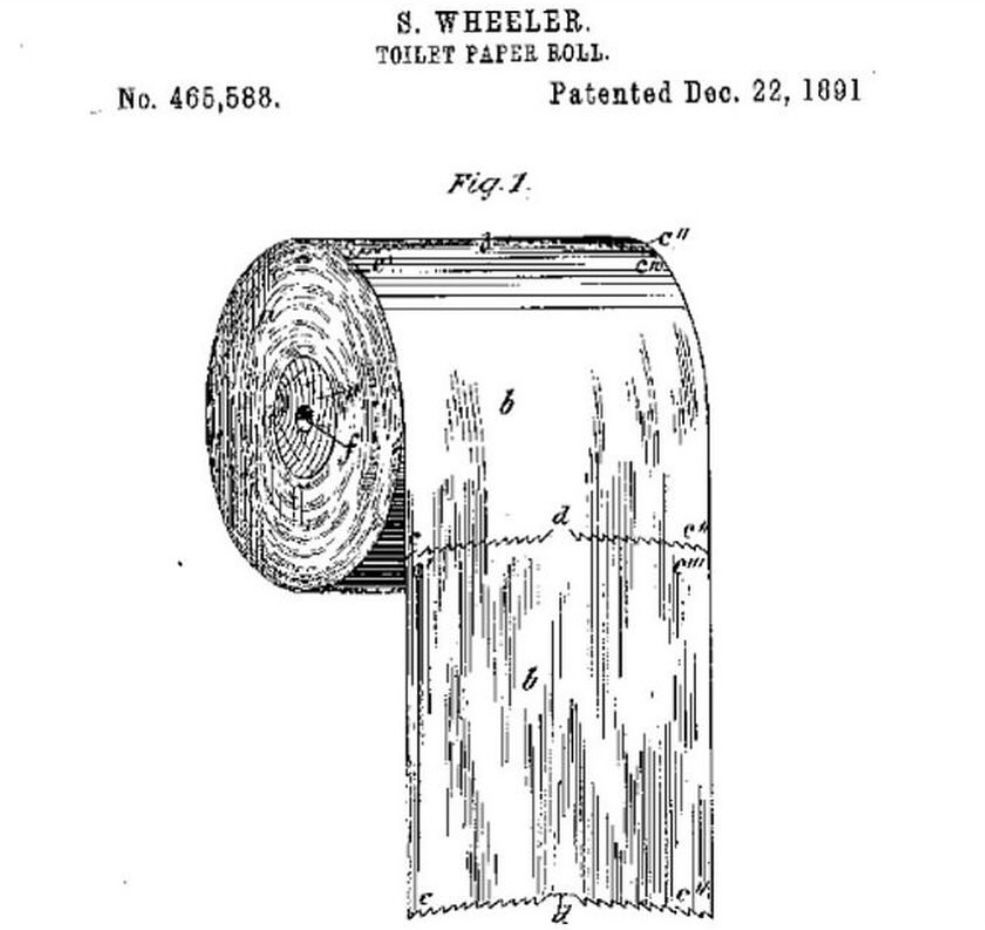
The original patent from 1891 for a toilet paper roll shows the correct rolling direction, in case you ever doubted.
22 Jun 2024 Leave a comment
Murphy’s Law of Economic Policy
21 Jun 2024 Leave a comment
in applied price theory, applied welfare economics, comparative institutional analysis, economics of bureaucracy, economics of regulation, history of economic thought, Public Choice, public economics

Economists have the least influence on policy where they know the most and are most agreed; they have the most influence on policy where they know the least and disagree most vehemently.” I’d never heard of it before and it’s quoted in this review of a book called “Free Lunch Thinking – How Economics Ruins […]
Murphy’s Law of Economic Policy
The Danish Mortgage System Avoids Lock-In
20 Jun 2024 Leave a comment
in applied price theory, financial economics, law and economics, property rights, urban economics Tags: Denmark
Tyler and I have been promoting the Danish mortgage system for years. Recall that in the Danish system each mortgage is backed by a matching bond. As a consequence, mortgage holders have two ways to pay a mortgage: 1) hold the mortgage and pay the monthly payments or 2) buy the matching bond and, in […]
The Danish Mortgage System Avoids Lock-In
Extraordinary Labor Market Developments and the 2022-23 Disinflation
19 Jun 2024 Leave a comment
in applied price theory, labour economics, labour supply, market efficiency, occupational choice, personnel economics Tags: working from home
From a new NBER working paper by Steven J. Davis: Two extraordinary U.S. labor market developments facilitated the sharp disinflation in 2022-23 without raising the unemployment rate. First, pandemic-driven infection worries and social distancing intentions caused a sizable drag on labor force participation that began to reverse in the first quarter of 2022, and perhaps […]
Extraordinary Labor Market Developments and the 2022-23 Disinflation
Price controls deter voluntary, wealth-creating transactions: CA minimum wages increase to $20/hour
17 Jun 2024 Leave a comment
in applied price theory, labour economics, minimum wage, unemployment
When staking out a position, it is rare for a politician to acknowledge any tradeoffs. For example, a politician in favor of a minimum wage increase will praise the increased wages for workers, but won’t acknowledge that businesses will shut down or fire workers. That job is left to those on the other wide of…
Price controls deter voluntary, wealth-creating transactions: CA minimum wages increase to $20/hour
International Comparisons with a PPP Metric
13 Jun 2024 Leave a comment
in applied price theory, development economics, economic growth, economic history, growth miracles, macroeconomics Tags: China, India

If you are someone from a high-income country, or even just a high-income city, and you travel to other places, you are familiar with finding that, at least sometimes, many items are considerably cheaper in the low-income country: food and meals, entertainment and even health care. As a result, $100 of buying power in the…
International Comparisons with a PPP Metric
Caught out! The NZ Initiative’s Article in the Herald Blaming the RBNZ for our Rip-Off Big Banks is Contradicted by its Own Expert Witness. (Willis Beware).
12 Jun 2024 Leave a comment
in applied price theory, applied welfare economics, business cycles, economic history, economics of bureaucracy, financial economics, macroeconomics, monetary economics, politics - New Zealand, Public Choice
When it comes to the question of how best to avoid a banking collapse and multi-billion dollar bailout that can drag a whole nation into depression, the best solution, according to Chicago-Stanford economist, John Cochrane, is to require banks to set aside a fraction of their own funds as reserves to cover losses they may…
Caught out! The NZ Initiative’s Article in the Herald Blaming the RBNZ for our Rip-Off Big Banks is Contradicted by its Own Expert Witness. (Willis Beware).
Three Strikes might have kept this victim alive
12 Jun 2024 Leave a comment
in applied price theory, economics of crime, law and economics, politics - New Zealand Tags: crime and punishment, criminal deterrence, law and order
The Herald reports: A recidivist offender who shot a small-time Auckland drug dealer while robbing him of his stash and recent gaming machine jackpot had been on electronically monitored post-prison release conditions at the time of the murder – but had cut off his tracking device. That factor of Benjamin “Dekoy” Mcintosh’s murder in June 2022 was highlighted for the […]
Three Strikes might have kept this victim alive
Expert advice
11 Jun 2024 Leave a comment
in applied price theory, applied welfare economics, energy economics, environmental economics, global warming Tags: carbon trading
There are a few things you’d hope would be common knowledge about the Emissions Trading Scheme.For example, the scheme caps net emissions. If emissions go down in one sector, another sector’s emitters can buy the slightly-cheaper NZUs and use them. The only thing that reduces net emissions in the covered sector is government auctioning or…
Expert advice
More impatient people are more likely to commit crime
09 Jun 2024 Leave a comment
in applied price theory, econometerics, economics of crime, economics of education, labour economics, law and economics, occupational choice Tags: cognitive psychology, crime and punishment, criminal deterrence, law and order
Gary Becker’s famous model of rational crime suggests that criminals weigh up the costs and benefits of crime (and engage in a criminal act if the benefits outweigh the costs). Time preferences matter in this model, because the benefits of a criminal act are usually realised immediately, whereas the greatest costs (including the penalties of…
More impatient people are more likely to commit crime
Drug Shortages in America Reach a Record High
06 Jun 2024 Leave a comment
in applied price theory, health economics, industrial organisation
Among the hundreds of medicines now in short supply are popular drugs used for weight loss such as OzempicBy Liz Essley Whyte and Peter Loftus of The WSJ. I liked that this article mentions that price increases are part of the solution, something that usually does get mentioned. A shortage means that current price is below…
Drug Shortages in America Reach a Record High
 Utopia, you are standing in it!
Recent Comments