Christina Romer advocates monetary stimulus in research and fiscal stimulus in policy

Amol Agrawal's avatarMostly Economics

 I am still reading this much discussed research by Christina Romer and Jared Bernstein where they estimate the impact of Obama plan (Econbrowser has a nice graph which explains the impact in a nutshell). Both head Council of Economic Advisors of President elect Obama, so it is a must read. Another thing to read is CBO’s estimate of the US economy (I will try and do a comparison later on; for insights read Krugman’sblog).

Coming back to Romer/Bernstein estimation, NYTpoints:

Christina Romer, whom Mr. Obama has designated to be his chief economist, concluded in research she helped write in 1994 that interest-rate policy is the most powerful force in economic recoveries and that fiscal stimulus generally acts too slowly to be of much help in pulling the economy out of recessions, though associates said she now supports a big stimulus package if policy…

View original post 483 more words

Will this crisis change economic policies as it happened in Great Depression?

Amol Agrawal's avatarMostly Economics

I came across this paper by Lee Ohanian of Minneapolis Fed , who has done some great work on  Great Depression. The paper is a review of this book – The Defining Moment (free to download chapetrwise)-  written on Great Depression by various economists and edited by Michael D. Bordo, Claudia Goldin, and Eugene N. White.

The abstract of the paper is quite interesting and apt for today’s times:

This paper reviews The Defining Moment, edited by Michael D. Bordo, Claudia Goldin, and Eugene N. White. The volume studies how the Great Depression changed government policies, including changes in monetary policy, fiscal policy, banking policy, agricultural policy, social insurance, and international economic policy.

I argue that a theory of policy evolution is required to answer how the Great Depression affected these policies. In the absence of this theory, the contributors provide insight into the question by showing how policies changed sharply…

View original post 282 more words

Did France cause the Great Depression?

Amol Agrawal's avatarMostly Economics

There is an intriguing paper by Douglas Irvin on the topic. Voxeu has a nice summary (one of the best things to have happened on web for economics students- voxeu. Most economists use it to summarise key papers/thoughts/ideas etc)).

He says:

View original post 896 more words

South Korea 2020

msshugart's avatarFruits and Votes

South Korea had its assembly election on 15 April, with various covid-19 precautions in place. The Democratic Party of President Moon Jae-in (elected in 2017) won a majority of seats.

As discussed previously at F&V, the electoral system was changed from mixed-member majoritarian (MMM) to, at least partially, mixed-member proportional (MMP) prior to this election. It is only partially MMP not mainly because the number of compensatory list seats is so small (30 out of 300 total), but because there remain 17 seats that are, apparently, allocated in parallel (i.e., as if it were MMM).

There was some discussion in various media accounts (and in the previous thread) of the major parties setting up “satellite” parties to “game” the MMP aspect of the system. Under such a situation, a big party will contest the nominal tier seats and use a separate list to attract list votes and seats. By not…

View original post 192 more words

How large a GDP loss under “Level 4”?

Michael Reddell's avatarcroaking cassandra

I’ve mentioned in posts over the last few days The Treasury’s estimate that the current “Level 4” restrictions will have reduced GDP by about 40 per cent relative to normal levels and the Reserve Bank’s estimate of a 35 per cent reduction.    Both estimates seem a lot more realistic than some of the private sector estimates that were still doing the rounds early in the week.  But I still reckon the Reserve Bank estimate, in particular, is almost certainly too low –  especially if we are concerned, as we should be, with the “true” reduction in the volume of economic activity, not with what SNZ may initially report (accurate measurement is going to be a challenge).

What makes me sceptical?  Well, there is the fact that our partial lockdown seems to be more restrictive, particularly (but not exclusively) on economic dimensions, than those in many other countries.  Thus ANZ…

View original post 1,221 more words

Anti-fascists, the British left and the David Irving libel trial

hatfulofhistory's avatarNew Historical Express

Screen Shot 2020-04-12 at 5.58.48 pm Coverage in Searchlight (May 2000)

On 11 April 2000, Mr Justice Gray found in favour of Penguin Books, who had been sued for libel by David Irving after the publication of Deborah Lipstadt’s Denying the Holocaust, which stated:

Irving is one of the most dangerous spokespersons for Holocaust denial. Familiar with historical evidence, he bends it until it conforms with his ideological leanings and political agenda. A man who is convinced that Britain’s great decline was accelerated by its decision to go to war with Germany, he is most facile at taking accurate information and shaping it to confirm his conclusions. A review of his recent book, Churchill’s War, which appeared in New York Review of Books, accurately analysed his practice of applying a double standard to evidence. He demands “absolute documentary proof” when it comes to proving the Germans guilty, but he relies on highly circumstantial evidence to…

View original post 1,725 more words

Almost half of UK’s carbon footprint down to ‘invisible’ emissions abroad

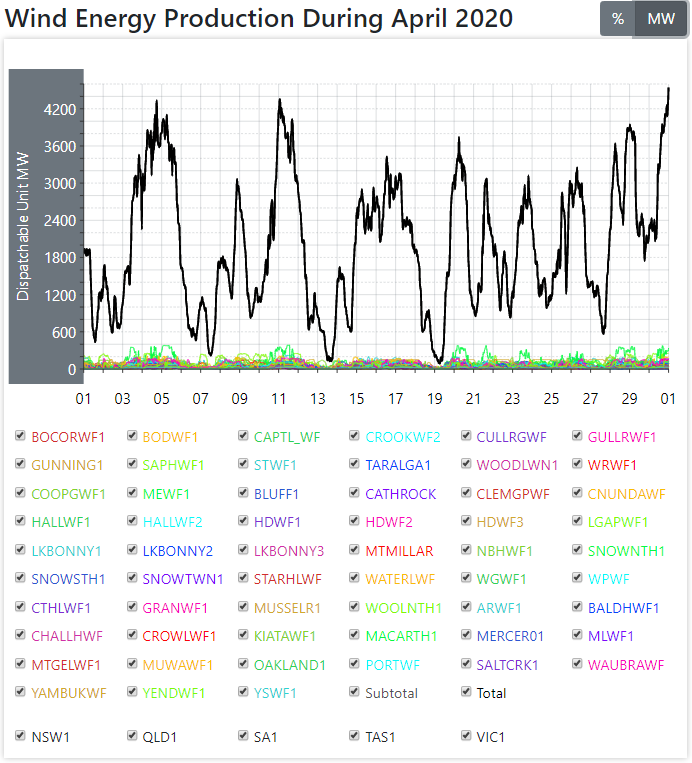
Renewable Energy Rip-off: Wind & Solar Consistently Fail to Deliver the Goods

stopthesethings's avatarSTOP THESE THINGS

Adding wind and solar capacity is a bit like pushing on string; the outcome never matches the effort applied.

Across the globe, it’s true to say that there has been a massive expansion in wind and solar power capacity. However, as Rafe Champion points out below, there’s a yawning gulf between the notional capacity of the world’s wind and solar plants and what they actually deliver.

And, of course, where output from the former depends upon ‘just right breezes’ and output from the latter’s determined by the time of day (eg, there’s never much happening at midnight) predicting just when that capacity might be delivered makes betting the house on roulette seem like a canny investment.

Windpower advocates lying with statistics
Catallaxy Files
Rafe Champion
9 April 2020

Windpower Roundup reports.

Roughly 176GW of new renewable energy capacity was added last year, accounting for 72% of global power growth.

View original post 264 more words

What can economic history teach us about the lockdown?

julianhjessop's avatarPlain-speaking Economics

The coronavirus pandemic is, of course, first and foremost a social crisis. It is testing the limits of the NHS, bringing out the best in our doctors, nurses and carers, and many others on whom we all rely. But it is also a huge challenge for policymakers who are trying to protect businesses, jobs and incomes, so that the economy can quickly reboot once the lockdown is lifted. And while the saving of lives is rightly the priority, the extent and duration of the economic disruption could also have significant impacts on our health.

Fortunately, history does provide a few pointers. Perhaps the least surprising conclusion is that vicious diseases cannot be allowed to run unchecked. One particularly grim study of the longer-term economic consequences of 15 pandemics, all the way back to the Black Death in the 14th century, found that the fallout persisted for as long as 40…

View original post 513 more words

Researchers discover a six-planet system with near 3:2 resonance

oldbrew's avatarTallbloke's Talkshop


With orbit periods ranging from only 2-12 days, this must be one of the most compact multi-planet systems found so far.

Almost visible to the naked eye in the Draco constellation, the star HD 158259 has been observed for the last seven years by astronomers using the SOPHIE spectrograph, reports Phys.org.

This instrument, installed at the Haute-Provence Observatory in the South of France, acquired 300 measurements of the star.

The analysis of the data which was done by an international team led by researchers from the University of Geneva (UNIGE), has resulted in the discovery that HD 158259 has six planetary companions: a “super-Earth” and five “mini-Neptunes.”

These planets display an exceptionally regular spacing, which hints at how the system may have formed.

View original post 566 more words

theory of conflict by Thomas C Schelling 2016

Tawney Lecture 2019: Slavery and Anglo-American Capitalism Revisited

ehs1926's avatarThe Long Run

by Gavin Wright (Stanford University)

This research was presented as the Tawney Lecture at the EHS Annual Conference in 2019.

It will also appear in the Economic History Review later this year.

WrightCotton Coloured lithograph of slaves picking cotton. Fort Sumter Museum Charleston. Available at Flickr.

My Tawney lecture reassessed the relationship between slavery and industrial capitalism in both Britain and the United States.  The thesis expounded by Eric Williams held that slavery and the slave trade were vital for the expansion of British industry and commerce during the 18th century but were no longer needed by the 19th.  My lecture confirmed both parts of the Williams thesis:  the 18th-century Atlantic economy was dominated by sugar, which required slave labor; but after 1815, British manufactured goods found diverse new international markets that did not need captive colonial buyers, naval protection, or slavery.  Long-distance trade became…

View original post 727 more words

The gender division of labour in early modern England: why study women’s work?

ehs1926's avatarThe Long Run

by Jane Whittle (University of Exeter) and Mark Hailwood (University of Bristol)

This article is published by The Economic History Review, and it is available on the EHS website.


Here are ten reasons to know more about women’s work and read our article on ‘The gender division of labour in early modern England’. We have collected evidence about work tasks in order to quantify the differences between women’s and men’s work in the period from 1500-1700. This research allows us to dispel some common misconceptions.


  1. Men did most of the work didn’t they? This is unlikely, when both paid and unpaid work are counted, modern time-use studies show that women do the majority of work – 55% of rural areas of developing countries and 51% in modern industrial countries (UN Human Development report 1995). There is no reason why the pattern would have been markedly different in…

View original post 669 more words

Alfred Marshall on state ownership

from VOX – Men

ehs1926's avatarThe Long Run

by Victoria Baranov (University of Melbourne), Ralph De Haas (EBRD, CEPR, and Tilburg University) and Pauline Grosjean (University of New South Wales). More information on the authors below.

The content of this article was originally published on VOX and has been published here with the authors’ consent.


NSW1834 Mitchell, T 1834, To the Right Honorable Edward Geoffrey Smith Stanley this map of the Colony of New South Wales, ca. 1:540 000, National Library of Australia. Available here.

Why are men three times as likely than women to die from suicide? And why do many unemployed men refuse to apply for jobs that are typically done by women? This column argues that a better understanding of masculinity norms – the rules and standards that guide and constrain men’s behavior in society – can help answer important questions like these. We present evidence from Australia on how historical circumstances have instilled strong…

View original post 1,905 more words

Previous Older Entries Next Newer Entries

Thoughts from the North

Celebrating humanity's flourishing through the spread of capitalism and the rule of law

Fardels Bear

A History of the Alt-Right

Vincent Geloso

Econ Prof at George Mason University, Economic Historian, Québécois

Bassett, Brash & Hide

Celebrating humanity's flourishing through the spread of capitalism and the rule of law

Truth on the Market

Scholarly commentary on law, economics, and more

The Undercover Historian

Beatrice Cherrier's blog

Matua Kahurangi

Celebrating humanity's flourishing through the spread of capitalism and the rule of law

Temple of Sociology

Celebrating humanity's flourishing through the spread of capitalism and the rule of law

Velvet Glove, Iron Fist

Celebrating humanity's flourishing through the spread of capitalism and the rule of law

Why Evolution Is True

Why Evolution is True is a blog written by Jerry Coyne, centered on evolution and biology but also dealing with diverse topics like politics, culture, and cats.

Down to Earth Kiwi

Celebrating humanity's flourishing through the spread of capitalism and the rule of law

NoTricksZone

Celebrating humanity's flourishing through the spread of capitalism and the rule of law

Homepaddock

A rural perspective with a blue tint by Ele Ludemann

Kiwiblog

DPF's Kiwiblog - Fomenting Happy Mischief since 2003

The Dangerous Economist

Celebrating humanity's flourishing through the spread of capitalism and the rule of law

Watts Up With That?

The world's most viewed site on global warming and climate change

The Logical Place

Tim Harding's writings on rationality, informal logic and skepticism

Doc's Books

A window into Doc Freiberger's library

The Risk-Monger

Let's examine hard decisions!

Uneasy Money

Commentary on monetary policy in the spirit of R. G. Hawtrey

Barrie Saunders

Thoughts on public policy and the media

Liberty Scott

Celebrating humanity's flourishing through the spread of capitalism and the rule of law

Point of Order

Politics and the economy

James Bowden's Blog

A blog (primarily) on Canadian and Commonwealth political history and institutions

Science Matters

Reading between the lines, and underneath the hype.

Peter Winsley

Economics, and such stuff as dreams are made on

A Venerable Puzzle

"The British constitution has always been puzzling, and always will be." --Queen Elizabeth II

The Antiplanner

Celebrating humanity's flourishing through the spread of capitalism and the rule of law

Bet On It

Celebrating humanity's flourishing through the spread of capitalism and the rule of law

History of Sorts

WORLD WAR II, MUSIC, HISTORY, HOLOCAUST

Roger Pielke Jr.

Undisciplined scholar, recovering academic

Offsetting Behaviour

Celebrating humanity's flourishing through the spread of capitalism and the rule of law

JONATHAN TURLEY

Res ipsa loquitur - The thing itself speaks

Conversable Economist

In Hume’s spirit, I will attempt to serve as an ambassador from my world of economics, and help in “finding topics of conversation fit for the entertainment of rational creatures.”

The Victorian Commons

Researching the House of Commons, 1832-1868

The History of Parliament

Articles and research from the History of Parliament Trust

Books & Boots

Reflections on books and art

Legal History Miscellany

Posts on the History of Law, Crime, and Justice

Sex, Drugs and Economics

Celebrating humanity's flourishing through the spread of capitalism and the rule of law

European Royal History

Exploring the Monarchs of Europe

Tallbloke's Talkshop

Cutting edge science you can dice with

Marginal REVOLUTION

Small Steps Toward A Much Better World

NOT A LOT OF PEOPLE KNOW THAT

“We do not believe any group of men adequate enough or wise enough to operate without scrutiny or without criticism. We know that the only way to avoid error is to detect it, that the only way to detect it is to be free to inquire. We know that in secrecy error undetected will flourish and subvert”. - J Robert Oppenheimer.

STOP THESE THINGS

The truth about the great wind power fraud - we're not here to debate the wind industry, we're here to destroy it.

Lindsay Mitchell

Celebrating humanity's flourishing through the spread of capitalism and the rule of law