


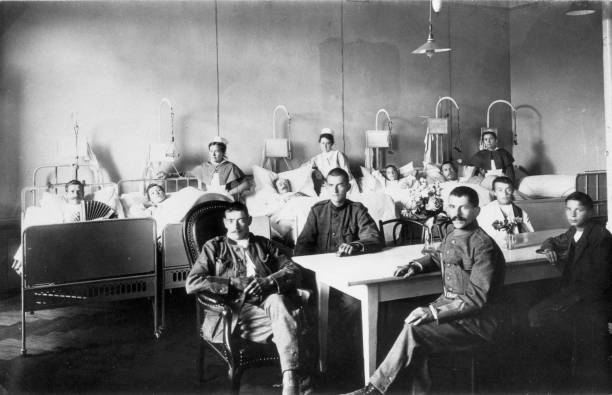
(1918 Spanish Flu Epidemic)
Celebrating humanity's flourishing through the spread of capitalism and the rule of law
27 Apr 2020 Leave a comment
in applied price theory, economics of education, history of economic thought
26 Apr 2020 Leave a comment
 Andrew Cuomo: when one disaster is barely enough.
With the coronavirus pandemic laying them to waste, New Yorkers have plenty to worry about. Now their power supply is under threat, thanks to their wind and solar obsessed Governor, Andrew Cuomo.
At Indian Point (situated north of New York City) nuclear power plants have been providing safe, reliable and affordable electricity 24 x7 to New Yorkers since 1962.
In an astonishing move, Cuomo has determined to progressively shutdown both of the plants, with a combined capacity of 2,069 MW, on the delusional premise that he can replace what he destroys with wind and solar backed up by gas ‘peakers’ – highly inefficient open cycle gas turbines, which are basically jet engines strapped to generators.
The wind cult and renewable energy rent seekers are, of course, delighted with the outcome. However, as Robert Bryce points out, New Yorkers can look forward to…
View original post 1,065 more words
26 Apr 2020 Leave a comment
Earthquake hit regions would be a better example because it captures the avoidance behaviour to after-shocks as a proxy for the collapse of international tourism and international education
In 2005, Hurricane Katrina hit New Orleans in the US state of Louisiana. The hurricane caused enormous material destruction and about 2,000 people perished.
While Katrina obviously cannot be compared to Covid19 in terms material devastation and death it nonetheless is comparable in terms of the sudden the “shutdown” of the economy.
Katrina was a very clear case of a supply shock. Production facilities were simply shut down. And in the same way as today, it happened from one day to the next.
But nothing really had happened to the fundamentals of the economy – this to a large extent is also the case in terms of the Covid19 around the world.
Katrina was a huge, but very short-lived economic shock
If we look at how things were going for Louisiana’s economy in 2005-6, then you will see that in economic terms, it was a huge negative shock, but the…
View original post 1,497 more words
26 Apr 2020 Leave a comment
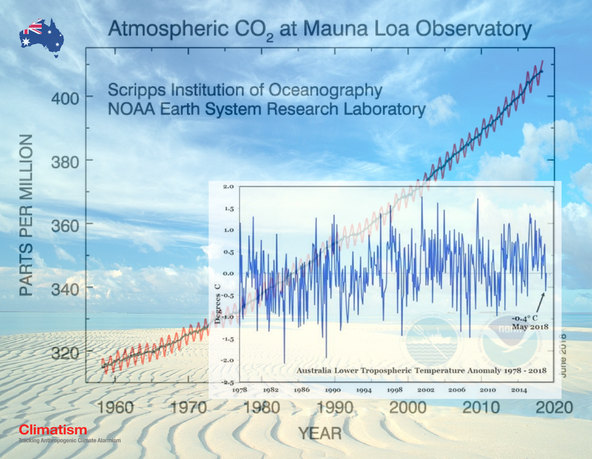
NASA’s MSU satellite measurement systems, generate the RSS and UAH datasets, which measure the average temperature of every cubic inch of the lower atmosphere (0-10 kms), which happens to be the exact place where anthropogenic global warming is meant to occur, according to anthropogenic global warming theory.
UAH temperature anomaly for May was almost half a degree centigrade (-0.4C) below the 4o year average!
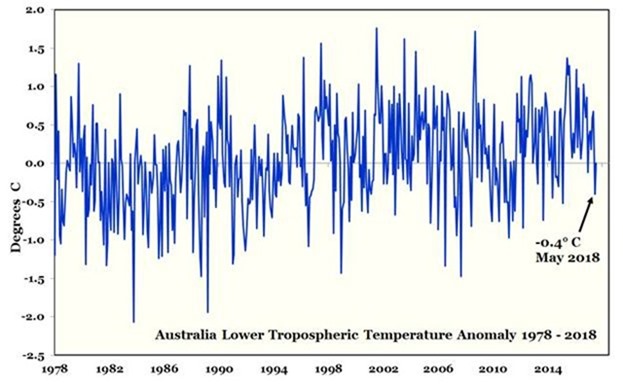 AUSTRALIA Lower Troposheric Temperature Anomaly 1978-2018
SATELLITES have the obvious benefit of measuring only the atmosphere and the effect that carbon dioxide emissions may be having on the atmosphere. Satellite data is not polluted by UHI (Urban Heat Island effect) – artificial heat generated from city infrastructure; asphalt carparks, airpots, highways, AC vents etc.
TONY Heller did a survey of the ten oldest stations in New South Wales And Victoria, circled below. Three rural…
View original post 1,502 more words
26 Apr 2020 2 Comments
This excellent article was contributed by New Zealand journalist Peter Drew who is clearly concerned & wants the word out. Please do share it far & wide. EWR
NOTE: the article has had over 10K views since posting … & 2.5K FB shares. It’s pleasing to see that many Kiwis are awake to what is going down.
By Peter Drew
Jacinda Adern
Prime Minister – New Zealand
Dear Jacinda,
I write this letter as a patriotic Kiwi with best intentions for my country and for the future health and welfare of my fellow Kiwis. You have a very difficult job at this moment in time. There can be no doubt about that.
There is a famous saying. “The first casualty of war is the truth”. Well, from what we are seeing around the world, the first casualty of a pandemic is not only the truth, but also rational thinking. That…
View original post 2,579 more words
26 Apr 2020 Leave a comment
It’s time for libertarian wonkery! My friend Jeremy posted a link to libertarian philosopher Robert Nozick’s Tale of the Slave on Facebook and I guess most of his Facebook friends are not libertarians as it stirred up a bunch of controversy.
If you haven’t read it I’d recommend doing so. It’s only about a two minute read. But nonetheless I will summarize it here.
Nozick starts by describing a typical case of slavery and then in subsequent steps modifies the terms of the slavery to be slightly less bad than the previous step. After a handful of modifications he ends up at representative democracy and asks “At which step did this become no longer a tale of a slave?”.
The intuitive response you’re supposed to have is that it never really stopped being a tale of a slave. The only difference is a matter of degree. This is reminiscent of…
View original post 1,050 more words
26 Apr 2020 Leave a comment
As I sit at my desk and examine the latest Covid-19 statistics and fantasize about what might have occurred had the Trump administration carried out its constitutional duties to care for American citizens instead of fomenting a civil war against democratic governors and denying their role in the current pandemic I am appalled and overwhelmed. At this moment there are 927,000 cases of people testing positive for the virus in the United States out of 2,790,000 worldwide. The death rate is 52,400 in the U.S. out of 196,000 worldwide, and each day we add thousands to the total. Words like mitigation, social distancing, ventilators, and numerous others have entered our everyday vocabulary. The questions that pervade the news are when we will “open up” the country? what happens if we do it too fast? and what will happen if each state goes its own way? Writer…
View original post 1,617 more words
26 Apr 2020 Leave a comment
in applied price theory, applied welfare economics, comparative institutional analysis, economic history, Gary Becker
26 Apr 2020 Leave a comment
in applied price theory, applied welfare economics, comparative institutional analysis, economics of information, industrial organisation, law and economics, Richard Epstein, survivor principle, theory of the firm
26 Apr 2020 Leave a comment
When I put forth the “The Case for Social Security Personal Accounts” in early 2011, I pointed out that the program’s long-run fiscal shortfall was more than $27 trillion.
We should be so lucky to have that problem today.
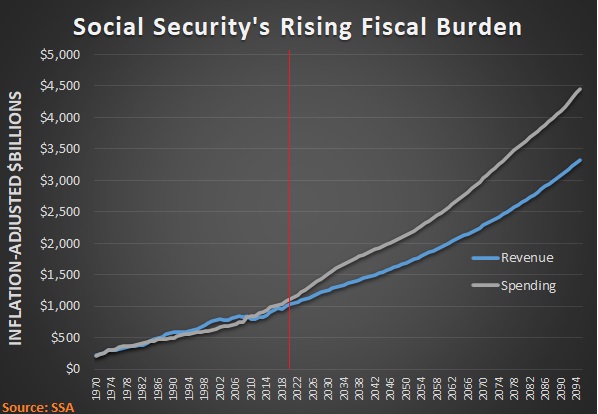
The Social Security Administration just released the annual report on the program’s finances, so I went to to Table VI.G9 of the “Supplemental Single-Year Tables” to peruse the yearly projections for future revenue and spending (which are adjusted for inflation so we have a more accurate method for comparisons).
The bad news is that an ever-increasing amount of our income is going to be grabbed by payroll taxes. The worse news is that Social Security’s spending burden will climb at an even-faster rate (historical data to the left of the red line, future projections to the right of the red line).
For those who focus on
View original post 601 more words
26 Apr 2020 Leave a comment
Edward II (April 25, 1284 – September 21, 1327), also called Edward of Carnarvon, was King of England and Lord of Ireland from 1307 until he was deposed in January 1327.
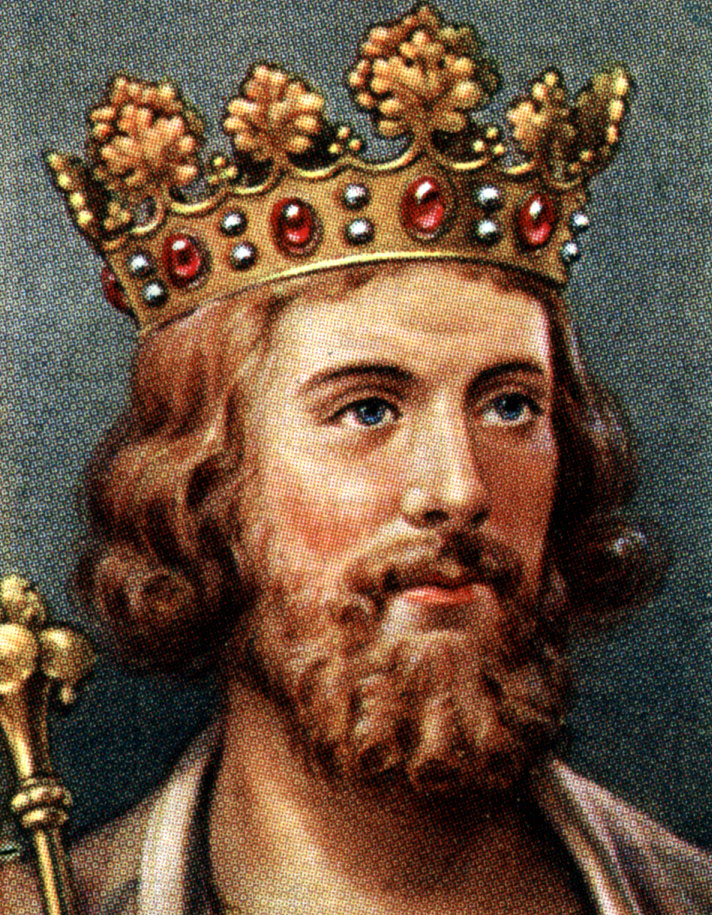
Edward II was the fourth son of Edward I, King of England, Lord of Ireland, and Infanta Eleanor of Castile, Countess of Ponthieu in northern France.
Infanta Eleanor of Castile, Countess of Ponthieu was born in Burgos, daughter of King Fernando III of Castile and Joan, Countess of Ponthieu. Her Castilian name, Leonor, became Alienor or Alianor in England, and Eleanor in modern English. She was named after her paternal great-grandmother, Eleanor of England.
By his first wife Eleanor of Castile, King Edward I of England had at least fourteen children, perhaps as many as sixteen. Of these, five daughters survived into adulthood, but only one son, and last child, outlived his father, King Edward II (1307–1327).
Here are the…
View original post 1,101 more words
25 Apr 2020 Leave a comment
There are few economists that have had a bigger influence on my thinking about monetary matters than former Richmond Fed economist Robert Hetzel.
Bob is not only one of my biggest intellectual heroes, but also a very a good friend and I am therefore extremely happy that he has allowed to publish some of this insights and thoughts on Fed’s 50bp ’emergency’ rate cut today.
Lars Christensen
Fed and Covid19
By Robert Hetzel
Cutting the funds rate just before an FOMC meeting sends a strong but not necessarily appropriate message. The fact that the cut came without the discussion from the regional Bank presidents of their respective regions that would come routinely at an FOMC meeting suggests that the FOMC was responding to the decline in the stock market.
That turned out badly for the Fed in October 1987 when the market fell 20% and the FOMC cut the funds…
View original post 598 more words
25 Apr 2020 Leave a comment
As an economist I am not happy about going into having strong views on the causes of why people die from Covid19, but at least I can have a look at correlations.
It has been very clear for some time that very few people younger than 50 years old die from Covid19.
In fact the average of people dying with Covid19 have been around 80 years in most countries and men are more likely to die than women.
These simple facts made me think – how much of this can explain the different mortality rates we observe across countries?
Why has so many people died in Italy and Spain, while mortality rates have been much lower in for example Scandinavia? Similarly why are mortality rates so low in most developing countries?
Can the age composition explain this? The graph below give us the answer.
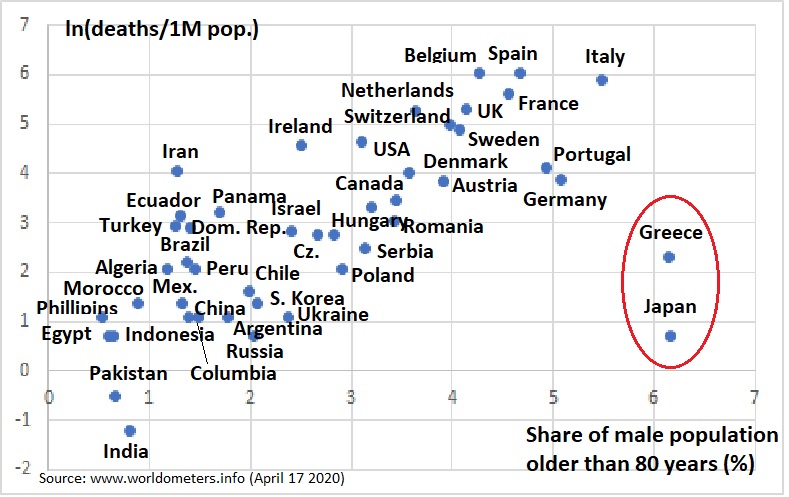
In the graph I have plotted…
View original post 613 more words
25 Apr 2020 Leave a comment
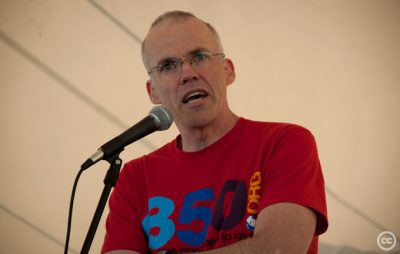 Not the only lunatic making $millions by lying to the masses.
Apoplexy is the order of the day among ‘green’ energy zealots following the release of Mike Moore’s ‘Planet of The Humans’.
In the military they call it “blue on blue”, although when the hard left are pulling the trigger it’s more aptly described as “green on green”.
But the documentary backed by Moore isn’t so much ‘friendly fire’, as an all-out assault on the billionaire hypocrites who whipped up fear and frenzy over changes in the weather and then, as if by magic, produced the notional ‘solution’ to the calamity in the form of heavily subsidised wind, solar and biomass. A ‘’solution’ which, of course, they all heavily invested in.
The film – produced by Moore and made by Jeff Gibbs – has been uploaded to YouTube to allow all and sundry to get the message: renewable energy is…
View original post 1,907 more words
Celebrating humanity's flourishing through the spread of capitalism and the rule of law
Celebrating humanity's flourishing through the spread of capitalism and the rule of law
Celebrating humanity's flourishing through the spread of capitalism and the rule of law
Celebrating humanity's flourishing through the spread of capitalism and the rule of law
Celebrating humanity's flourishing through the spread of capitalism and the rule of law
Celebrating humanity's flourishing through the spread of capitalism and the rule of law
Celebrating humanity's flourishing through the spread of capitalism and the rule of law
A History of the Alt-Right
Econ Prof at George Mason University, Economic Historian, Québécois
Celebrating humanity's flourishing through the spread of capitalism and the rule of law
Scholarly commentary on law, economics, and more
Beatrice Cherrier's blog
Celebrating humanity's flourishing through the spread of capitalism and the rule of law
Celebrating humanity's flourishing through the spread of capitalism and the rule of law
Celebrating humanity's flourishing through the spread of capitalism and the rule of law
Why Evolution is True is a blog written by Jerry Coyne, centered on evolution and biology but also dealing with diverse topics like politics, culture, and cats.
Celebrating humanity's flourishing through the spread of capitalism and the rule of law
A rural perspective with a blue tint by Ele Ludemann
DPF's Kiwiblog - Fomenting Happy Mischief since 2003
Celebrating humanity's flourishing through the spread of capitalism and the rule of law
The world's most viewed site on global warming and climate change
Tim Harding's writings on rationality, informal logic and skepticism
A window into Doc Freiberger's library
Let's examine hard decisions!
Commentary on monetary policy in the spirit of R. G. Hawtrey
Thoughts on public policy and the media
Celebrating humanity's flourishing through the spread of capitalism and the rule of law
Politics and the economy
A blog (primarily) on Canadian and Commonwealth political history and institutions
Reading between the lines, and underneath the hype.
Economics, and such stuff as dreams are made on
"The British constitution has always been puzzling, and always will be." --Queen Elizabeth II
Celebrating humanity's flourishing through the spread of capitalism and the rule of law
Celebrating humanity's flourishing through the spread of capitalism and the rule of law
WORLD WAR II, MUSIC, HISTORY, HOLOCAUST
Undisciplined scholar, recovering academic
Celebrating humanity's flourishing through the spread of capitalism and the rule of law
Res ipsa loquitur - The thing itself speaks
In Hume’s spirit, I will attempt to serve as an ambassador from my world of economics, and help in “finding topics of conversation fit for the entertainment of rational creatures.”
Researching the House of Commons, 1832-1868
Articles and research from the History of Parliament Trust
Reflections on books and art
Posts on the History of Law, Crime, and Justice
Celebrating humanity's flourishing through the spread of capitalism and the rule of law
Exploring the Monarchs of Europe
Cutting edge science you can dice with


Recent Comments