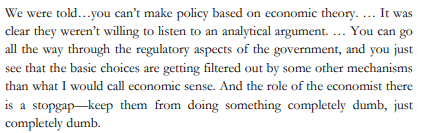
From https://econjwatch.org/File+download/451/Allen1977ReprintSept2010.pdf?mimetype=pdf
Celebrating humanity's flourishing through the spread of capitalism and the rule of law
25 Apr 2020 Leave a comment
in applied price theory, economics of bureaucracy, Public Choice
25 Apr 2020 Leave a comment
Today we hear from Dr Andrew Barclay, senior research fellow for our Commons 1640-1660 project. He explores the accuracy of the naming of the so-called Convention Parliament of 1660…
Prior to dissolving itself on 16 March 1660, the Long Parliament had agreed that a new Parliament should meet on 25 April. The elections held over the next six weeks used the old franchises revived for the 1659 Parliament. Unlike then, the new Parliament did not include MPs from Scotland and Ireland. The other obvious difference from 1659 was that it included the traditional House of Lords, not the Cromwellian ‘Other House’. The new assembly was consciously intended as the Long Parliament’s successor, although, crucially, one with a fresh electoral mandate.
But was this a ‘Parliament’? Modern historians have usually said that at this stage it was instead a ‘Convention’, on the basis that it had not been…
View original post 872 more words
25 Apr 2020 Leave a comment

Things not looking too good right now? Let’s take a nostalgic trip back to the world of April 1975. This month, the Vietnam War ended after around 1.35 million people had been killed; a further two million Vietnamese would subsequently flee the communist regime. In neighbouring Cambodia, the Khymer Rouge emerged as victors in the civil war; genocide would follow, with up to two million deaths – a quarter of the population – in the next five years. Meanwhile, civil war broke out in Lebanon; by the time it finished in 1990, an estimated 150,000 had been killed. Oh, and there was a military coup in Chad.
And this was the top 10 in Britain for the week ending 26 April 1975.
When this was first released in 1968, it reached #2 in the British…
View original post 2,375 more words
25 Apr 2020 Leave a comment
The Bride
Mary I, Queen of Scotland (December 8, 1542 – February 8, 1587), reigned over Scotland from 14 December 1542 to 24 July 1567.
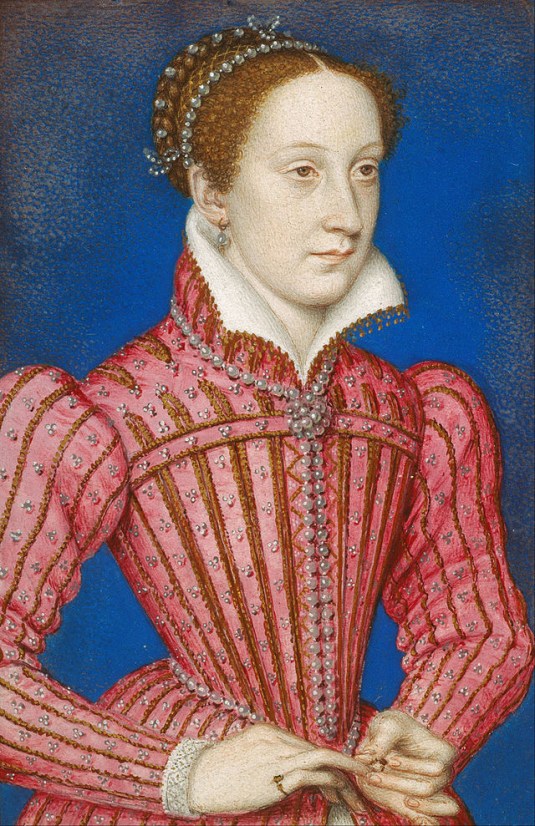
Mary I, Queen of Scotland
Mary was born on December 8, 1542 at Linlithgow Palace, Scotland, to King James V of Scotland and his French second wife, Mary of Guise. She was said to have been born prematurely and was the only legitimate child of James to survive him. She was the great-niece of King Henry VIII of England, as her paternal grandmother, Princess Margaret of England, was Henry VIII’s sister. Besides being the queen of Scotland, Mary was a granddaughter of Claude, Duke of Guise, a very influential figure at the court of France.
On December 14, 1542, six days after her birth, she became Queen of Scotland when her father died, following the Battle of Solway Moss after drinking contaminated water while on…
View original post 752 more words
25 Apr 2020 Leave a comment
Michael Moore has put his latest movie, “Planet of the Humans” free on YouTube. It’s directed and narrated by Jeff Gibbs (Moore is the executive producer) and is 1 hour and 40 minutes long: just right for quarantine watching. I have to admit that I haven’t yet seen it, but I surely will. (I regard watching videos, or television, as luxuries that induce in me a sense of guilt.) But what I gather is that—as with all Moore’s films—it’s Manichaean, and two of the villains here are the mainstream environmental movement and “green energy”. The lesson seems to be that we’re doomed unless we practice stringent population control.
Here are the YouTube notes:
Michael Moore presents Planet of the Humans, a documentary that dares to say what no one else will this Earth Day — that we are losing the battle to stop climate change on planet earth…
View original post 912 more words
24 Apr 2020 Leave a comment


Patton: A Genius For War
by Carlo D’Este
977 pages
HarperCollins
Published: November 1995
“Patton: A Genius For War” was published in 1995 and is the biography for which Carlo D’Este is best known. He is an author, military historian and a retired lieutenant colonel in the U.S. Army. Three years ago I read and reviewed his 2002 biography of Dwight Eisenhower as part of my journey through the best presidential biographies.
There are few better pairings in the world of biography than George S. Patton – a wickedly complicated, imperious and colorful military mind – and Carlo D’Este. With 820 pages of text and a treasure trove of uncommonly illuminating notes and bibliography this book is comprehensive, balanced, unfailingly attentive and the product of meticulous research. What it is not, however, is efficient.
Published 50 years after Patton’s death, this book features an excellent prologue and…
View original post 343 more words
24 Apr 2020 Leave a comment
in applied price theory, development economics, economics of religion, growth disasters, law and economics, property rights
24 Apr 2020 Leave a comment

So-called ‘green’ jobs are a case of easy come, easy go. The wind and solar ‘industries’ that gave birth to those jobs simply can’t survive without massive and endless subsidies, which means their days are numbered.
With the axe being taken to subsidies across the globe, their ultimate demise is a matter of when, not if.
The German wind industry is in free-fall: new construction is at a standstill, in no small part due to the fact that rural Germans are in full-scale revolt against the wind industry.
In 2019 less than 200 turbines were erected onshore and a trifling 160 are planned for 2020, so far.
Tens of thousands of those groovy ‘green’ jobs that the wind industry promised would last forever, have disappeared, almost overnight.
Seeking to cash in on America’s response to the coronavirus crisis its wind and solar power outfits tried to snare $billions out of…
View original post 587 more words
24 Apr 2020 Leave a comment
One distressing characteristic of the Left, at least as far as science is concerned, is to let our ideology trump scientific data; that is, some of us ignore biological data when it’s inimical to our political preferences. This plays out in several ways: the insistence that race doesn’t exist (and before you accuse me of saying that races do exist, read about what I’ve written here before: the issue is complex), that there are no evolutionarily-based innate (e.g., genetically based) behavioral or psychological differences between ethnic groups, and that there are no such differences, either, between males and females within humans.
These claims are based not on biological data, but on ideological fears of the Left: if we admit of such differences, it could foster racism and sexism. Thus. any group differences we do observe, whether they reside in psychology, physiology, or morphology, are to be explained on first principle as resulting from culture rather…
View original post 1,567 more words
24 Apr 2020 Leave a comment
Reports have been circulating in Wellington of sampling by pollsters which show support for Labour climbing into the 49-51% range and for National slumping to the low 30’s.
To those enraptured by the “kindness” of the Prime Minister and impressed by the government’s performance during the Covid-19 pandemic, a result like that would be no surprise. Many New Zealanders rejoice in the plaudits which overseas media heap on Jacinda Ardern as a “world leader” who is outperforming her peers in other countries.
An influential American magazine, The Atlantic, described Ardern as maybe the most effective leader on the planet.
In contrast, there is consistent criticism of Opposition Leader Simon Bridges from some media figures. Left-wing blogs come alive with speculation of a coup any day within the National caucus.
So is the forthcoming election one that an Opposition party might want to lose?
View original post 923 more words
24 Apr 2020 Leave a comment
For a while now I’ve written the occasional post about claims that there are no evolved and genetically based differences between male and female behaviors, brains, or hormones. This claim is based not on science but on ideology, stemming from the fear that if you show differences between men and women in these respects, you will somehow justify a biologically based sexism: that women are inferior to men in some ways and thus can be treated as subordinates.
This “blank-slateism” has also been applied to differences between ethnic groups and is often used to dismiss the entire field of evolutionary psychology—for the same reasons. The ideological denialism of differences between any groups rests on the premise that difference equals inferiority and justifies unequal treatment and bigotry.
Well, leaving aside the possibility that genetically based trait differences may reveal better rather than worse performance of marginalized groups, the ideological dismissal of…
View original post 1,575 more words
24 Apr 2020 Leave a comment
The Guardian has a review out of Cordelia Fine’s new book, Testosterone Rex: Myths of Sex, Science, and Society, which continues her critique of innate differences between male and female brains and behaviors. The Amazon summary includes this:
In Testosterone Rex, psychologist Cordelia Fine wittily explains why past and present sex roles are only serving suggestions for the future, revealing a much more dynamic situation through an entertaining and well-documented exploration of the latest research that draws on evolutionary science, psychology, neuroscience, endocrinology, and philosophy. She uses stories from daily life, scientific research, and common sense to break through the din of cultural assumptions. Testosterone, for instance, is not the potent hormonal essence of masculinity; the presumed, built-in preferences of each sex, from toys to financial risk taking, are turned on their heads.
Moving beyond the old “nature versus nurture” debates, Testosterone Rex disproves ingrained myths and calls…
View original post 1,455 more words
24 Apr 2020 Leave a comment
Æthelred II (c. 966 – 23 April 1016), was King of the English from 978 to 1013 and again from 1014 until his death.
Æthelred was the son of King Edgar and Queen Ælfthryth. He came to the throne at about the age of 12, following the assassination of his older half-brother, Eadweard the Martyr. His brother’s murder was carried out by supporters of his own claim to the throne, although he was too young to have any personal involvement.

Æthelred II the Unready, King of the English
Name
Æthelred’s first name, composed of the elements æðele, “noble”, and ræd, “counsel, advice”, is typical of the compound names of those who belonged to the royal House of Wessex, and it characteristically alliterates with the names of his ancestors, like Æthelwulf (“noble-wolf”), Ælfred (“elf-counsel”), Eadweard (“rich-protection”), and Eadgar (“rich-spear”).
Æthelred’s notorious nickname, Old English Unræd, is commonly translated into present-day English as “The…
View original post 998 more words
24 Apr 2020 Leave a comment
in applied price theory, applied welfare economics, Austrian economics, comparative institutional analysis, constitutional political economy, development economics, economic history, economics of bureaucracy, economics of regulation, growth disasters, income redistribution, industrial organisation, labour economics, labour supply, law and economics, liberalism, libertarianism, Marxist economics, privatisation, property rights, Public Choice, rentseeking, survivor principle Tags: economics of central planning, fall of communism, regressive left, The fatal conceit
Celebrating humanity's flourishing through the spread of capitalism and the rule of law
Celebrating humanity's flourishing through the spread of capitalism and the rule of law
Celebrating humanity's flourishing through the spread of capitalism and the rule of law
Celebrating humanity's flourishing through the spread of capitalism and the rule of law
Celebrating humanity's flourishing through the spread of capitalism and the rule of law
Celebrating humanity's flourishing through the spread of capitalism and the rule of law
Celebrating humanity's flourishing through the spread of capitalism and the rule of law
A History of the Alt-Right
Econ Prof at George Mason University, Economic Historian, Québécois
Celebrating humanity's flourishing through the spread of capitalism and the rule of law
Scholarly commentary on law, economics, and more
Beatrice Cherrier's blog
Celebrating humanity's flourishing through the spread of capitalism and the rule of law
Celebrating humanity's flourishing through the spread of capitalism and the rule of law
Celebrating humanity's flourishing through the spread of capitalism and the rule of law
Why Evolution is True is a blog written by Jerry Coyne, centered on evolution and biology but also dealing with diverse topics like politics, culture, and cats.
Celebrating humanity's flourishing through the spread of capitalism and the rule of law
A rural perspective with a blue tint by Ele Ludemann
DPF's Kiwiblog - Fomenting Happy Mischief since 2003
Celebrating humanity's flourishing through the spread of capitalism and the rule of law
The world's most viewed site on global warming and climate change
Tim Harding's writings on rationality, informal logic and skepticism
A window into Doc Freiberger's library
Let's examine hard decisions!
Commentary on monetary policy in the spirit of R. G. Hawtrey
Thoughts on public policy and the media
Celebrating humanity's flourishing through the spread of capitalism and the rule of law
Politics and the economy
A blog (primarily) on Canadian and Commonwealth political history and institutions
Reading between the lines, and underneath the hype.
Economics, and such stuff as dreams are made on
"The British constitution has always been puzzling, and always will be." --Queen Elizabeth II
Celebrating humanity's flourishing through the spread of capitalism and the rule of law
Celebrating humanity's flourishing through the spread of capitalism and the rule of law
WORLD WAR II, MUSIC, HISTORY, HOLOCAUST
Undisciplined scholar, recovering academic
Celebrating humanity's flourishing through the spread of capitalism and the rule of law
Res ipsa loquitur - The thing itself speaks
In Hume’s spirit, I will attempt to serve as an ambassador from my world of economics, and help in “finding topics of conversation fit for the entertainment of rational creatures.”
Researching the House of Commons, 1832-1868
Articles and research from the History of Parliament Trust
Reflections on books and art
Posts on the History of Law, Crime, and Justice
Celebrating humanity's flourishing through the spread of capitalism and the rule of law
Exploring the Monarchs of Europe
Cutting edge science you can dice with


Recent Comments