theory of conflict by Thomas C Schelling 2016
17 Apr 2020 Leave a comment
in applied price theory, behavioural economics, comparative institutional analysis, defence economics, economics of crime, economics of education, economics of information, labour economics, law and economics, property rights, Public Choice Tags: game theory, Thomas Schelling
Tawney Lecture 2019: Slavery and Anglo-American Capitalism Revisited
17 Apr 2020 Leave a comment

by Gavin Wright (Stanford University)
This research was presented as the Tawney Lecture at the EHS Annual Conference in 2019.
It will also appear in the Economic History Review later this year.
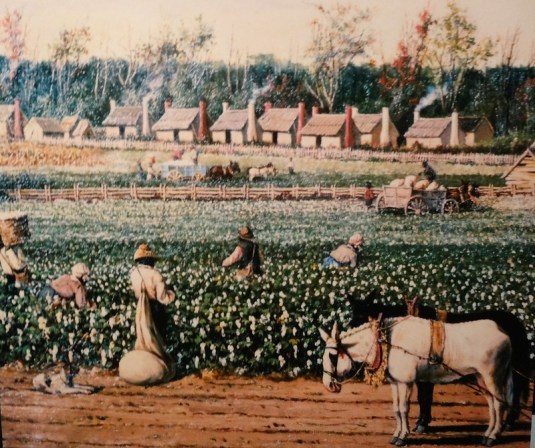 Coloured lithograph of slaves picking cotton. Fort Sumter Museum Charleston. Available at Flickr.
My Tawney lecture reassessed the relationship between slavery and industrial capitalism in both Britain and the United States. The thesis expounded by Eric Williams held that slavery and the slave trade were vital for the expansion of British industry and commerce during the 18th century but were no longer needed by the 19th. My lecture confirmed both parts of the Williams thesis: the 18th-century Atlantic economy was dominated by sugar, which required slave labor; but after 1815, British manufactured goods found diverse new international markets that did not need captive colonial buyers, naval protection, or slavery. Long-distance trade became…
View original post 727 more words
The gender division of labour in early modern England: why study women’s work?
17 Apr 2020 Leave a comment
by Jane Whittle (University of Exeter) and Mark Hailwood (University of Bristol)
This article is published by The Economic History Review, and it is available on the EHS website.
Here are ten reasons to know more about women’s work and read our article on ‘The gender division of labour in early modern England’. We have collected evidence about work tasks in order to quantify the differences between women’s and men’s work in the period from 1500-1700. This research allows us to dispel some common misconceptions.
- Men did most of the work didn’t they? This is unlikely, when both paid and unpaid work are counted, modern time-use studies show that women do the majority of work – 55% of rural areas of developing countries and 51% in modern industrial countries (UN Human Development report 1995). There is no reason why the pattern would have been markedly different in…
View original post 669 more words
Alfred Marshall on state ownership
17 Apr 2020 Leave a comment
in Alfred Marshall, applied price theory, comparative institutional analysis, economics of bureaucracy, history of economic thought, industrial organisation, law and economics, managerial economics, market efficiency, organisational economics, personnel economics, privatisation, property rights, Public Choice, public economics, survivor principle Tags: offsetting behaviour, state ownership, The fatal conceit, unintended consequences

from VOX – Men
17 Apr 2020 Leave a comment
by Victoria Baranov (University of Melbourne), Ralph De Haas (EBRD, CEPR, and Tilburg University) and Pauline Grosjean (University of New South Wales). More information on the authors below.
The content of this article was originally published on VOX and has been published here with the authors’ consent.
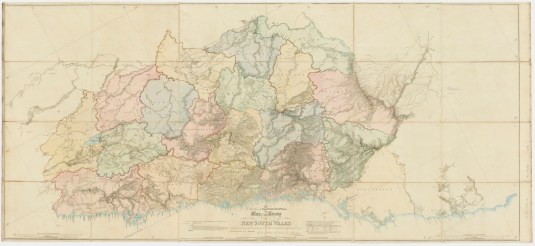 Mitchell, T 1834, To the Right Honorable Edward Geoffrey Smith Stanley this map of the Colony of New South Wales, ca. 1:540 000, National Library of Australia. Available here.
Why are men three times as likely than women to die from suicide? And why do many unemployed men refuse to apply for jobs that are typically done by women? This column argues that a better understanding of masculinity norms – the rules and standards that guide and constrain men’s behavior in society – can help answer important questions like these. We present evidence from Australia on how historical circumstances have instilled strong…
View original post 1,905 more words
Oxford University’s Mandatory Retirement Age: A Justified Experiment to Promote Equality or Unlawful Age Discrimination? – by Stuart Goosey
16 Apr 2020 Leave a comment

UK age discrimination laws prohibit age-based policies, including mandatory retirement ages, unless the treatment supports a ‘legitimate aim’ and is a ‘proportionate means’ of achieving that aim. Rather than risk facing legal action, most employers have abandoned mandatory retirement ages and sought other ways of planning the departure of staff. However, Oxford University continue to operate a mandatory retirement age for its academics. The has led to two Employment Tribunal (‘ET’) judgments: Pitcher v University of Oxford, which held that the policy was proportionate and therefore lawful age-based treatment; and Ewart v University of Oxford, which held that the policy was unjustified and therefore unlawful age discrimination. At the time the applicants in these cases were forced to retire, the mandatory retirement age was 67 but since 2017 the mandatory retirement age has increased to 68. Oxford University have indicated they will appeal the Ewart decision, and, in…
View original post 2,698 more words
Tom Hickman: Eight ways to reinforce and revise the lockdown law.
16 Apr 2020 Leave a comment

 The Health Protection (Coronavirus, Restrictions) (England) Regulations 2020 and the counterpart regulations in Wales, Northern Ireland and Scotland, impose the most drastic restrictions on liberty ever seen in the United Kingdom. On 16 April 2020 they reach their first review point and it is a clear that they will be continued, probably initially for a further period of three weeks and thereafter quite likely for a much longer period either in their current form or in modified form.
There can be no doubt that the core measures imposed remain justified. It is therefore imperative, especially given the length of time that they are likely to govern life in this country, that the measures meet certain minimum standards. It is helpful to identify three such standards. First, it is vital that the measures are clear so that people know what the law requires of them and so that enforcement…
View original post 2,496 more words
From Great Depression to Global Financial Crisis to Great Lockdown
16 Apr 2020 Leave a comment

IMF’s World Economic Outlook- Apr 2020 has named this crisis as Great Lockdown.
The world has changed dramatically in the three months since our last update of the World Economic Outlook in January. A rare disaster, a coronavirus pandemic, has resulted in a tragically large number of human lives being lost.
View original post 254 more words
The lags on fiscal policy infrastructure spending are even longer
16 Apr 2020 Leave a comment
in applied price theory, business cycles, economics of bureaucracy, economics of information, fiscal policy, macroeconomics, monetary economics, Public Choice
The Post-COVID-19 Blueprint (Part 2.1): The Docilian Decline
16 Apr 2020 Leave a comment

How did we let this happen? Once the COVID-19 coronavirus crisis passes, we will need to make a serious reassessment of our risk management tools and capacities. This pandemic has shown how woefully ill-equipped the authorities of most Western democracies were in the art of managing risks and protecting the most vulnerable in society. This three-part series aims to establish a blueprint for a future risk management world equipped to handle the challenges of the 21st century. Part 1 looked at how the precautionary principle failed as a risk management policy tool. Part 2 will be divided into three parts: first looking at the docilian decline: how individuals and policymakers had become receptive and docile in their attitude toward risk. The second section looks at the four factors giving rise to this risk-averse “docilian mindset” over the last two decades and how it unravelled with the COVID-19 coronavirus. In the…
View original post 1,334 more words
Promising gas find is reported without much hoopla – Taranaki will welcome the boost but the Greens are coy
16 Apr 2020 Leave a comment

In another era, it would have been the lead story on every news channel. But in a country brainwashed into believing it’s apocalypse now, either from global warming or Covid-19 (and possibly both), news of a “significant” oil and gas discovery offshore in Taranaki barely registered in the mainstream media, although the New Zealand Herald did record it in the business pages.
There has not been a major energy find in NZ since 2006, and given New Zealand has only 11 years of gas reserves left, the discovery could be an exciting outcome at a crucial phase for the NZ economy.
Austrian giant OMV reported the Toutouwai-1 wildcat, drilled to a total depth of 4,317m some 50 km off the Taranaki coast in 130m of water, encountered several hydrocarbon-charged reservoir zones during drilling.
View original post 968 more words
Coronavirus economics and policy: from the mailbox
16 Apr 2020 Leave a comment

But first an update of the chart showing numbers of new announced coronavirus cases for New Zealand and Australia (the latter divided by five to produce a comparable per capita number).

A few days on from the last time I ran the chart and New Zealand is still finding about twice as many new cases per capita as Australia. At the margin, we seem to do be doing a few more tests per capita each day than Australia is – in both countries the number of tests being done has fallen back from the peak. But despite our more restrictive regime, we don’t seem to be producing better (lower new cases) results than Australia. Who knows why, although those left-wing academics from Otago, professors Baker and Wilson, while lavishing praise on the Prime Minister in the Guardian
One critical success factor that is, unfortunately, harder to guarantee is high-quality…
View original post 3,903 more words
THE COMING ECONOMIC CRISIS and its POLITICAL CONSEQUENCES
15 Apr 2020 Leave a comment

Have an election today and the government would bolt in, primarily because of Jacinda’s star power induced by the media’s obsession with her. But the election is six months away and then, I’m picking a change of government.
View original post 2,719 more words
Water Wise: Time To Kill Off Snowy 2.0 Pumped Hydro White Elephant
15 Apr 2020 Leave a comment

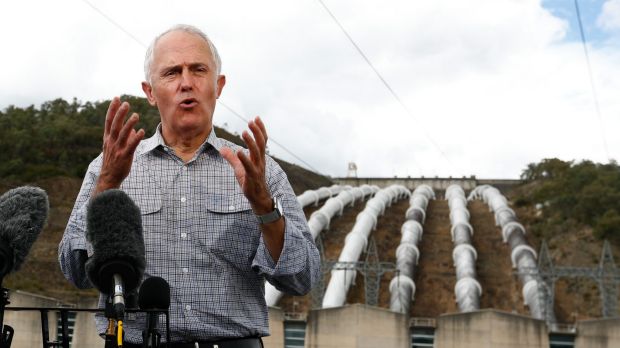
Wind and large-scale solar are doomed, but the saviour is said to be pumped hydro; paid for, of course, with other people’s money.
Touted by ex-PM Malcom Turnbull and his hapless sidekick, Josh Frydenberg as the Nation’s mega-battery, the heavily-hyped Snowy 2.0 pumped hydro scheme (shelved in the 1970s because it was uneconomic then) has been heralded as the saviour for the Australian wind industry.
The line goes something like this: if we use 3 MWh of wind power to pump water through 27 km of tunnels, over an elevation of 900m, later, when power consumers actually need it, Snowy Hydro could return 2 MWh to the grid.
Never mind squandering 1/4 to 1/3 of the electricity originally generated; never mind that with the inclusion of the $85 per MWh REC the cost of the wind power involved exceeds $110 per MWh; never mind that the owners of Snowy 2.0…
View original post 1,630 more words
The reign of Queen Mary II of England, Scotland and Ireland (1689-1694)
15 Apr 2020 Leave a comment

From the Emperor’s Desk: A few days ago I compared the joint rule of Mary I of England and Felipe II of Spain with that of William III and Mary II. Today I’d like to examine the reign of Mary II as co-sovereign with her husband.
Mary II (April 30, 1662 – December 28, 1694) was Queen of England, Scotland, and Ireland, co-reigning with her husband, King William III-II, from 1689 until her death. Popular histories usually refer to their joint reign as that of William and Mary.
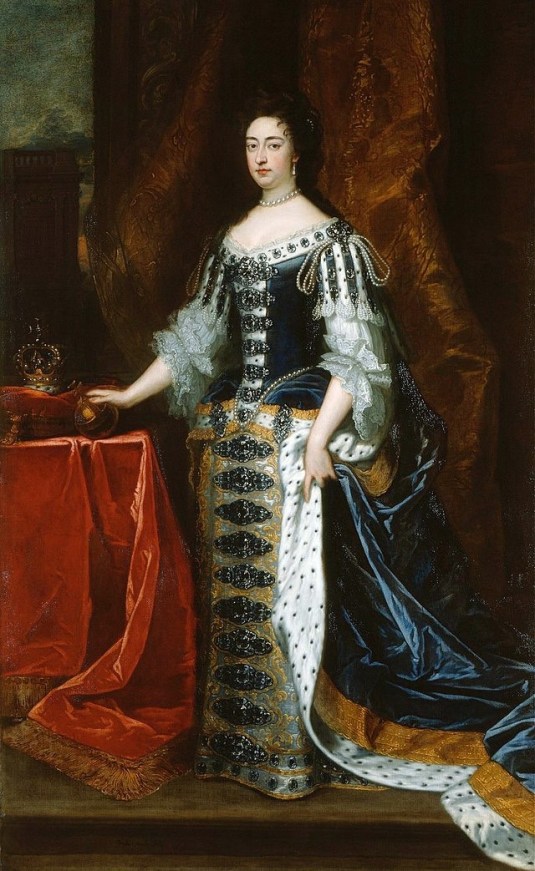
Queen Mary II of England, Scotland and Ireland.
Although their father James, Duke of York, was Roman Catholic, Mary and her younger sister Anne were raised as Anglicans at the wishes of their uncle, King Charles II. Charles lacked legitimate children, making Mary second in the line of succession.
William and Mary were first cousins. Her father, James, Duke of York…
View original post 902 more words


Recent Comments