Blasphemy in the Muslim World: A Research Essay
01 Feb 2020 Leave a comment

Introduction
In 2009, a Christian mother of five, Aasiya Noreen (AKA Asia Bibi), was arrested and charged with blasphemy under S. 295C of Pakistan’s Penal Code.[1] In 2010, Aasiya was sentenced to death for “insulting the Prophet”.[2] Aasiya’s case has garnered international attention,[3] and owing not only to the unconvincing case against her[4] but also the assassinations of two politicians associated with her case – Punjab governor Salman Taseer and Christian minorities minister Shabhaz Bhatti –[5] Pakistan’s anti-blasphemy law (hereon ‘blasphemy law’) has been placed under an increasingly intense spotlight.[6] In 1986, Pakistan’s blasphemy law, which is a legislative colonial relic of pre-partitioned India,[7] was amended under the military governance of General Zia-ul Haq to include the death penalty.[8] In 1991, the Federal Shariat Court of Pakistan struck down the option for life imprisonment, prescribing death and a heavy fine as obligatory punishments under S 295 C,[9] which reads:
‘
View original post 13,509 more words
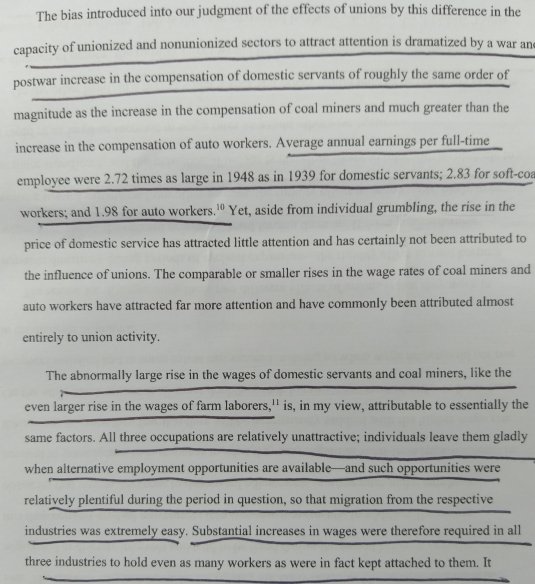
James Heckman on affirmative action
01 Feb 2020 Leave a comment
in applied price theory, applied welfare economics, comparative institutional analysis, constitutional political economy, discrimination, econometerics, economic history, economics of bureaucracy, economics of education, economics of information, economics of regulation, human capital, income redistribution, labour economics, labour supply, law and economics, occupational choice, occupational regulation, politics - USA, population economics, poverty and inequality, Public Choice, public economics, urban economics Tags: affirmative action, child poverty, family poverty, racial discrimination, The fatal conceit
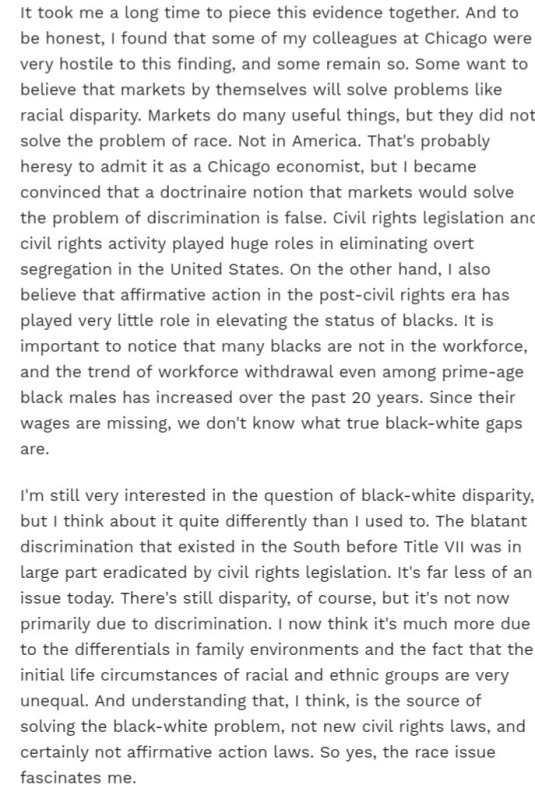
Affirmative Action and Its Mythology by Roland G. Fryer Jr. and Glenn C. Loury
01 Feb 2020 Leave a comment
in applied price theory, applied welfare economics, comparative institutional analysis, discrimination, econometerics, economic history, economics of bureaucracy, economics of education, economics of information, economics of regulation, gender, human capital, income redistribution, labour economics, labour supply, law and economics, occupational choice, politics - USA, poverty and inequality, Public Choice, public economics, rentseeking Tags: affirmative action
Retro-Power: Australia’s Wind & Solar Obsession Delivers Third World Power Supply
01 Feb 2020 1 Comment


Australia’s obsession with intermittent wind and solar is delivering a power supply you’d expect to find in the darkest corners of the Third World.
Yet again, peak power demand in summer has renewable energy zealots berating consumers for having the temerity to turn on air-conditioners, dishwashers and appliances.
Yet again, the same zealots waffle on about “smart grids” and “mega-batteries” being the solution to wind and solar power’s insoluble intermittency.
Yet again, the delusional assert that Australia’s “ageing” coal-fired power plants are at fault because they’re “unreliable” and that it’s “dangerous” to depend on them.
STT has dealt with that kind of nonsense a couple of times recently:
Ever-Dependable: Coal-Fired Power Keeps On Keeping On During Australia’s Bushfire Battle
Deranged & Delusional: Victorian Government Claims Wind & Solar More Reliable Than Fossil Fuels
What was mildly amusing about the story from The Australian below was not just the fact that STT has…
View original post 1,223 more words
Unraveling the Mysteries of Money – Cochrane and Uhlig
01 Feb 2020 Leave a comment
in applied price theory, budget deficits, business cycles, economic growth, economic history, economics of information, Euro crisis, financial economics, fiscal policy, global financial crisis (GFC), great recession, macroeconomics, monetary economics, Public Choice Tags: fiscal stimulus, monetary policy
Eugene Fama: “Too Big To Fail” Perverts Activities and Incentives
01 Feb 2020 Leave a comment

By Simon Johnson, co-author of 13 Bankers
In our continuing financial debate, one of the central myths – put about by big banks and also not seriously disputed by the administration – is that reining in “too big to fail” banks is in some sense an “anti-market” approach.
Speaking on CNBC at the end last week, Gene Fama – probably one of the most pro-market economists left standing – pointed out that this view is nonsense. (The clip is here, and also on Greg Mankiw’s blog; TBTF is the focus from about the 5:50 minute mark.)
Having banks that are Too Big To Fail, according to Fama, is “perverting activities and incentives” in financial markets – giving big financial firms,
“a license to increase risk; where the taxpayers will bear the downside and firms will bear the upside.”
View original post 399 more words
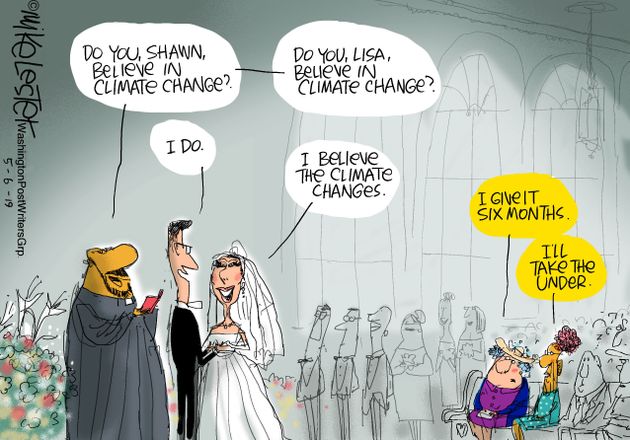
The Ever Changing Climate
01 Feb 2020 Leave a comment

 Update: January 31, 2020
This is an update to a post Simple Science 2: World of Climate Change with two new slides and a revised sequence. Context below is from the previous with the new content.
Raymond of RiC-Communications studio commented on a recent post and made an offer to share here some graphics on CO2 for improving public awareness. He has produced 12 interesting slides which are presented in the post Here’s Looking at You, CO2. This post presents the three initial charts he has so far created on a second theme The World of Climate Change. I find them straightforward and useful, and appreciate his excellent work on this. Project title is link to RiC-Communications. (For some reason I had problems getting my Opera browser to load the revised links, but Edge worked fine.
This project is The World of Climate Change
Infographics can be helpful, in…
View original post 250 more words
Another defeat for the First Amendment: Supreme Court rules that the “Bladensburg cross” is not a religious symbol
01 Feb 2020 Leave a comment

The strategy of American courts in their desire to continue allowing religious incursion into the government—be it “In God We Trust” on our money or religious symbols on public land—has been to pretend that religious symbols and mottos morph into nonreligious, historical and secular icons over time. This is patently bogus, an offense to anybody with two neurons to rub together.
And so, in an important decision about the First Amendment, the U.S. Supreme court ruled today that a giant cross on public land in Maryland, commemorating war dead, was constitutional. And the vote of the Roberts court, though opinions were fractured, was 7-2 (only Ginsburg and Sotomayor dissented; where was Kagan?). Read the Washington Post‘s take by clicking on the screenshot below. The full range of opinions can be found in a pdf here.


As usual, the pretense is that the cross is no longer a wholly…
View original post 624 more words
Happy Brexit Day
01 Feb 2020 Leave a comment

Today is Brexit Day. As of 6:00 P.M. EST (Midnight in Brussels), the United Kingdom no longer will be a member of the European Union.
This is definitely good news in the long run since the U.K. will now be somewhat insulated from inevitable economic crises 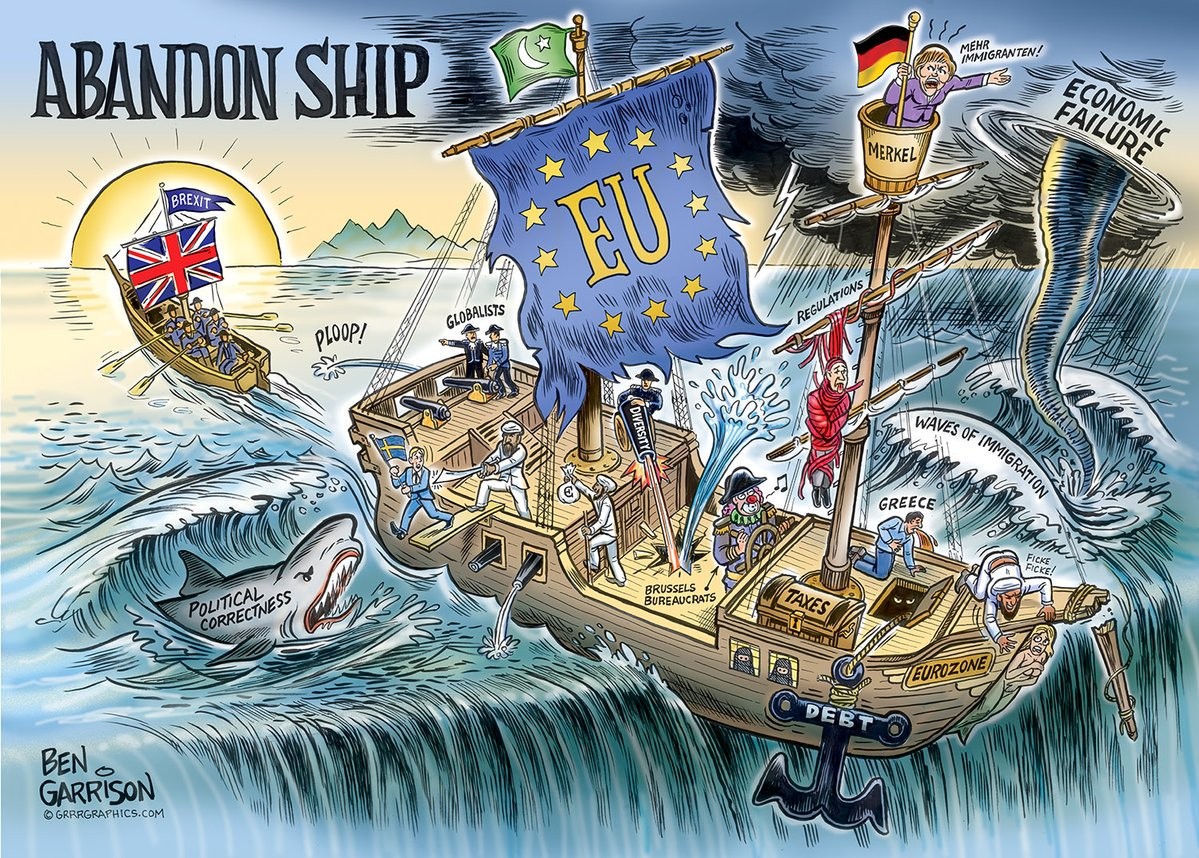 caused by the European’s Union’s dirigiste economic model and grim demographic outlook.
Whether it’s also good news in the short run depends mostly on decisions in London, such as whether Prime Minister Boris Johnson and his Tory government expand economic freedom (which should be the case, but there are worrisome signs that the spending burden will increase).
But Washington and Brussels also will play a role since the U.K. wants to sign free-trade agreements. This could be a problem since the E.U. will be tempted to behave in a spiteful manner and Trump and his trade team are protectionists.
But…
View original post 474 more words
Analysis of a carbon forecast gone wrong: the case of the IPCC FAR
01 Feb 2020 Leave a comment

by Alberto Zaragoza Comendador
The IPCC’s First Assessment Report (FAR) made forecasts or projections of future concentrations of carbon dioxide that turned out to be too high.
View original post 5,216 more words
Nassim Taleb on IQ
01 Feb 2020 Leave a comment

Nassim Taleb has published an attack on intelligence research that is getting a lot of attention and so I thought I would respond to it.
As summarized in this useful chart from Strenze (2015), meta-analyses of hundreds of studies have demonstrated that IQ is predictive of life success across many domains.
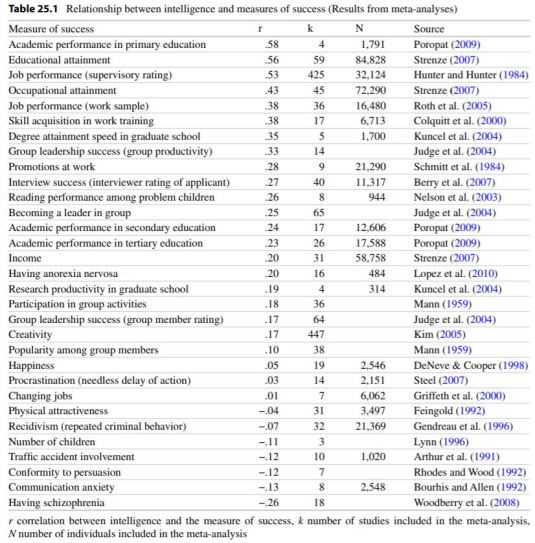
This is the basic validating fact when it comes to IQ: the use of IQ tests can help us predict things we want to predict and to explain things we want to explain.
Does IQ Linearly Predict Success?
Some people wonder if IQ’s relationship with success weakens above a certain threshold such that it is better described by a curvilinear trend rather than a simple linear one. Taleb brings this up and displays this graph:
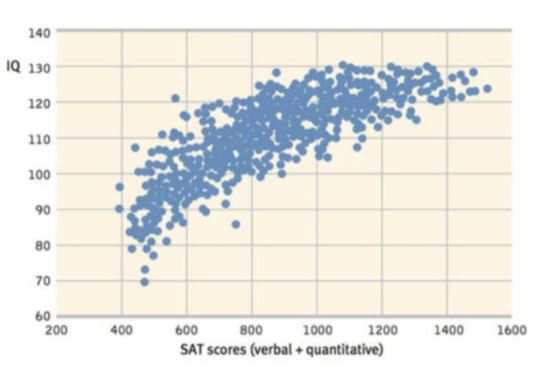
This graph does show a decrement in IQ’s predictive validity as we move up the IQ scale. But there is still a positive…
View original post 3,567 more words
Celebrating Waitangi Day
01 Feb 2020 Leave a comment

Next Thursday we have a public holiday to “celebrate” 180 years since the signing of the Treaty of Waitangi. Unlike the USA which every July 4 celebrates the Declaration of Independence without reservation, Kiwis have mixed feelings about the meaning of our national day.
Some Maori believe they still haven’t got justice. Many non-Maori feel threatened by Maori claims for what is seen as “extra rights”. They are not prepared to say what they think because they fear being demonised like the Hobson Pledge group, which quite rightly is concerned about undermining the integrity of our democratic fabric.
This is a pity because it was a remarkable event – a powerful colonial power elects to negotiate a treaty with the chiefs of the indigenous population, instead of simply declaring it a colony and establishing direct rule. This contrasts with Australia where the indigenous Aboriginals were treated as virtually irrelevant.
View original post 627 more words


Recent Comments