People Who Are Most Fearful Of Genetically Modified Foods Think They Know The Most About Them, But Actually Know The Least
01 Feb 2020 Leave a comment
Psychology’s favourite tool for measuring implicit bias is still mired in controversy
01 Feb 2020 Leave a comment
A New Study Supports Evolutionary Psychology’s Explanation For Why Men And Women Want Different Attributes In Partners
01 Feb 2020 Leave a comment
gender equality gives women room to pursue their true romantic and sexual preferences, which aren’t all that far off from mens’.
Climate change: no consensus on consensus
31 Jan 2020 1 Comment

by Judith Curry
The manufactured consensus of the IPCC has had the unintended consequences of distorting the science, elevating the voices of scientists that dispute the consensus, and motivating actions by the consensus scientists and their supporters that have diminished the public’s trust in the IPCC.
View original post 2,480 more words
The 97% ‘consensus’
31 Jan 2020 1 Comment
by Judith Curry
Isn’t everyone in the 97%? I am. – Andrew Montford
View original post 1,486 more words
New paper : News Driven Business Cycles: Insights and Challenges
31 Jan 2020 Leave a comment

 I posted on my “current work” page a new paper with Paul Beaudry “News Driven Business Cycles: Insights and Challenges“. As written in the abstract,
There is a widespread belief that changes in expectations may be an important independent driver of economic fluctuations. The news view of business cycles offers a formalization of this perspective. In this paper we discuss mechanisms by which changes in agents’ information, due to the arrival of news, can cause business cycle fluctuations driven by expectational change, and we review the empirical evidence aimed at evaluating its relevance. In particular, we highlight how the literature on news and business cycles offers a coherent way of thinking about aggregate fluctuations, while at the same time we emphasize the many challenges that must be addressed before a proper assessment of its role in business cycles can be established.
Key Words are “News”, “Business…
View original post 10 more words
Straw Men in the Religious Discrimination debate
31 Jan 2020 1 Comment

An article in the Sydney Morning Herald (“Religious discrimination bill gives Australians ‘right to be a bigot'”, J Ireland, SMH 30 Jan 2020) sets up a number of “straw man” arguments so that it can knock them down and claim that the proposed Religious Discrimination Bill is harmful. I disagree.
View original post 1,381 more words
Inadequately presented interviewees and an anonymous quote in BBC One Guerin report
31 Jan 2020 Leave a comment

Following on from Jeremy Bowen’s report on the US administration’s “Peace to Prosperity” plan, viewers of BBC One’s ‘News at Ten’ on January 28th were presented with a report by Orla Guerin which was introduced by presenter Huw Edwards as follows:
Edwards: “At least ten Palestinians have been injured in clashes with Israeli forces amid protests against the plan that’s been unveiled in Washington. The demonstrations in the Israeli occupied West Bank came as the Palestinian leader Mahmoud Abbas said that his response to the Trump deal was ‘a thousand times no’. Our international correspondent Orla Guerin has spent the day in the West Bank gauging Palestinian opinions on the plan.”
Edwards did not bother to clarify that those opinions were given – and formed – before the details of the plan had even been made public. Guerin began her report at a crossing between Palestinian Authority controlled…
View original post 577 more words
The Retirement Commissioner and “ethical investment”
31 Jan 2020 Leave a comment

Presumably someone pointed the Retirement Commissioner to my post yesterday ,as I gather the online version of the triennial report now has a “Foreword”, rather than the “Forward” that appeared until yesterday. We all make mistakes, typos, and literals, but you’d suppose that well-funded government agencies would have prominent parts of high-profile documents proofread. Anyway, enough of that (perhaps rather petty) point.
One other aspect of the Commissioner’s report that caught my eye was the bit about “ethical investment”. This was prompted by the government, which had asked the Commissioner to report on
Information about the public’s perception and understanding of ethical investments
in KiwiSaver, including:
a) The kinds of investments that New Zealanders may want to see excluded
by KiwiSaver providers; and
b) The range of KiwiSaver funds with an ethical investment mandate.
As I noted yesterday, there is a make-work element to the Commissioner’s role (and…
View original post 1,741 more words
My Paper “Hayek, Hicks, Radner and Four Equilibrium Concepts” Is Now Available Online.
31 Jan 2020 Leave a comment

The paper, forthcoming in The Review of Austrian Economics, can be read online.
Here is the abstract:
Hayek was among the first to realize that for intertemporal equilibrium to obtain all agents must have correct expectations of future prices. Before comparing four categories of intertemporal, the paper explains Hayek’s distinction between correct expectations and perfect foresight. The four equilibrium concepts considered are: (1) Perfect foresight equilibrium of which the Arrow-Debreu-McKenzie (ADM) model of equilibrium with complete markets is an alternative version, (2) Radner’s sequential equilibrium with incomplete markets, (3) Hicks’s temporary equilibrium, as extended by Bliss; (4) the Muth rational-expectations equilibrium as extended by Lucas into macroeconomics. While Hayek’s understanding closely resembles Radner’s sequential equilibrium, described by Radner as an equilibrium of plans, prices, and price expectations, Hicks’s temporary equilibrium seems to have been the natural extension of Hayek’s approach. The now dominant Lucas rational-expectations equilibrium misconceives intertemporal…
View original post 128 more words
4 meaningless words: toxin, natural, organic, and GMO
31 Jan 2020 Leave a comment

News articles and blog posts are often full of buzzwords that are heavy on emotional impact but light on substance, and for scientific topics such as nutrition, health, medicine, and agriculture, four of the most common buzzwords are “toxins,” “natural,” “organic,” and “GMO.” These words are used prolifically and are typically stated with clear implications (“toxin” and “GMO” = bad; “natural” and “organic” = good). The problem is that these words are poorly defined and constantly misused. Their definitions are so arbitrary and amorphous that they are functionally meaningless. In other words, they do not add anything useful to a discussion without first attaching a list of qualifiers to them. They are often used in a way that shifts them into the category of what are referred to as “weasel words,” meaning that their use gives the impression that the author said something concrete and meaningful, when in fact the…
View original post 3,547 more words
DNA is DNA: The anti-GMO movement ignores basic genetics
31 Jan 2020 Leave a comment
Genetic engineering (GE) is one of the most misunderstood technological marvels we have invented. The internet is full of articles and videos denouncing the supposed evils of genetically modified organisms (GMOs) with one of the most common arguments claiming that GMOs are inherently dangerous because they alter organisms’ genetic codes. It certainly is true the GE works by altering genomes, but what this argument ignores is the undeniable fact that all of our breeding methods work by altering organisms’ genomes. We’ve been genetically modifying organisms for thousands of years, GE simply lets us do it faster and more precisely.
At this point, I can already hear people screaming at their screens, “SELECTIVE BREEDING AND GENETIC ENGINEERING AREN’T THE SAME THING!!!!!!” This is the response I get every time, often accompanied by statements about the horrors of moving genes from one organism to another. If you are tempted to have this…
View original post 3,143 more words
January 30, 1649: Execution of Charles I, King of England, Scotland and Ireland.
31 Jan 2020 Leave a comment

Charles’s beheading was scheduled for Tuesday, January 30, 1649. Two of his children remained in England under the control of the Parliamentarians: Elizabeth and Henry. They were permitted to visit him on January 29, and he bade them a tearful farewell. The following morning, he called for two shirts to prevent the cold weather causing any noticeable shivers that the crowd could have mistaken for fear: “the season is so sharp as probably may make me shake, which some observers may imagine proceeds from fear. I would have no such imputation.”
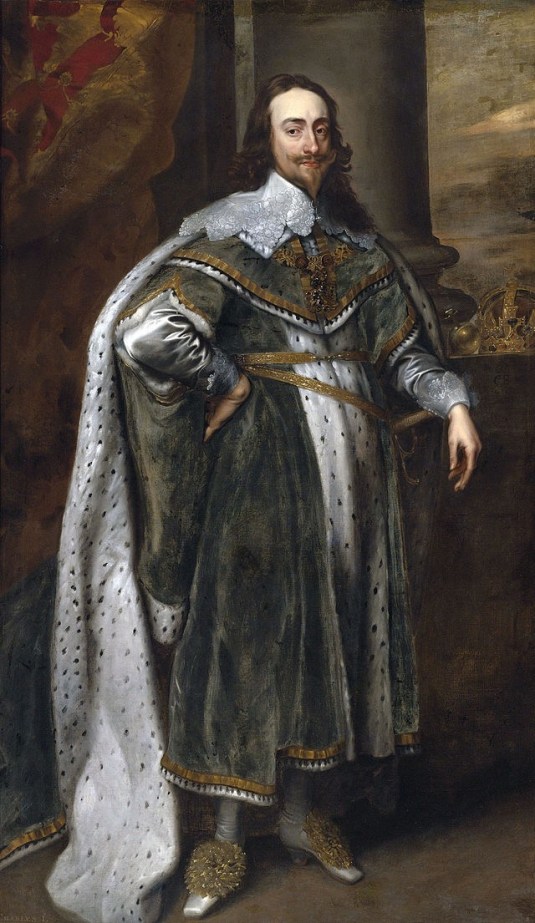
He walked under guard from St James’s Palace, where he had been confined, to the Palace of Whitehall, where an execution scaffold had been erected in front of the Banqueting House. Charles was separated from spectators by large ranks of soldiers, and his last speech reached only those with him on the scaffold. He blamed his fate on his…
View original post 613 more words
Execution of Charles I – ‘King-killer’: the Making of a Regicide
30 Jan 2020 Leave a comment

In the fourth in our series on the tumultuous events of the winter of 1648-9, and following on from the trial of Charles I, we turn now to the consequence of a guilty verdict. Dr Patrick Little of the House of Commons 1640-1660 considers the process whereby one MP became a signatory to the death warrant for Charles I, executed at Whitehall on this day 370 years ago, 30 January 1649…
King Charles I’s death warrant was signed on 29 January 1649 by 59 men; no doubt there were 59 individual reasons for doing so. One might mention the army radicals, such as Oliver Cromwell, committed republicans, including Henry Marten, or religious zealots, like Sir John Bourchier, or Edmund Ludlowe, whose rationale for ‘Delivering justice’ was quoted in the previous post in this series. But rather than attempt to provide a group portrait, this post concentrates on the experience of…
View original post 1,256 more words


Recent Comments