Looking back to the deposit guarantee

Michael Reddell's avatarcroaking cassandra

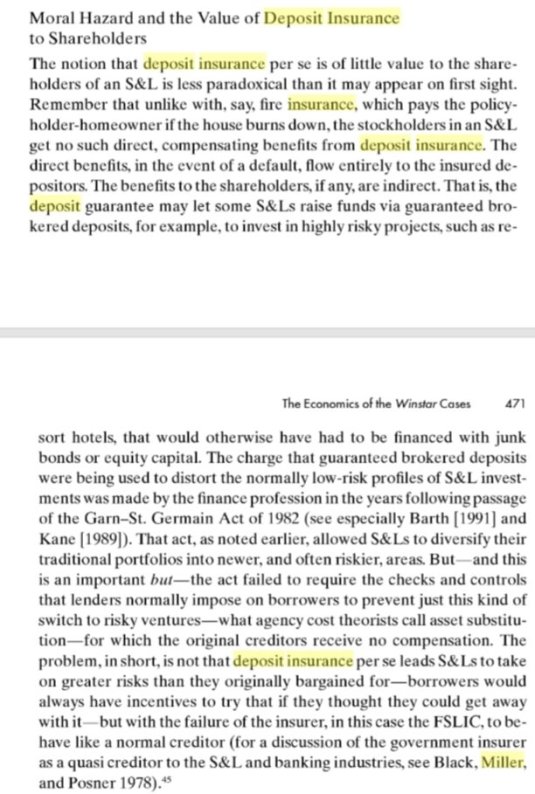
12 October 2008 was a frantic day.  It was a Sunday, and I never work Sundays (well, two financial crises, one in Zambia, one in New Zealand, in 30+ years).  There was a call in the middle of our church service summoning all hands to the pump, to put in place a retail deposit guarantee scheme that day.   We did it.  My diary later that night records that we’d “delivered a brand spanking new not very good deposit guarantee scheme”, announced a few hours earlier.   It was a joint effort of the Reserve Bank and The Treasury.

I had recently taken up a secondment at The Treasury.  I’d been becoming increasingly uneasy about the New Zealand financial situation for some months (flicking through my copy of Alan Bollard’s book on the crisis I found wedged inside a copy of an email exchange he and I had had a month…

View original post 2,637 more words

A happy ten-year anniversary to the case people love to hate

A hard groups of people of any size to do anything without ending up in some sort of incorporated form or an incorporated society or non-profit these days.

Ethan Blevins's avatarNotes On Liberty

This month marks the ten-year anniversary of one of the most despised and misunderstood Supreme Court cases: Citizens United v. Federal Election Commission.

I love Citizens United. It stands as perhaps the most important First Amendment decision of the last decade. Yet it’s come to symbolize the illicit marriage between money and power, while what actually happened in the case is largely an afterthought. I remember encountering an enraged signature-gatherer outside a Trader Joe’s a few years ago who was engaged in one of the many campaigns to amend the Constitution to put an end to Citizens United. I thought he might have a coronary when I told him that it was one of my favorite Supreme Court decisions. I deeply regret not asking him if he could rehearse for me the facts of the case. Maybe he would’ve surprised me.

So what did Citizens United actually…

View original post 301 more words

Review of “Master of the Senate: The Years of Lyndon Johnson (Vol 3)” by Robert Caro

Review of “Means of Ascent: The Years of Lyndon Johnson (Vol 2)” by Robert Caro

A new interview with Steve Pinker

whyevolutionistrue's avatarWhy Evolution Is True

I’ve often been a defender of Steve Pinker, and it’s because I agree with most of what he says and because I think he’s been unfairly maligned—perhaps the most unfairly maligned public intellectual in the U.S.. But today I’m going to praise and criticize his views, largely praising his views on identity politics but criticizing his views on free will. Both are laid out in an absorbing new interview by Pelle Axelsson on the site IntellectInterviews. (I’m pretty sure Steve would hate the title below!). Click on the screenshot to read it.

There’s a lot of material in this interview: stuff about the evolution of language, the effects of social media, climate change and denialiam, Pinker’s own reading habits, and, as I said, identity politics and free will. I’ll deal only with the last two.

Identity politics (“IP”). I think this is Steve’s most explicit critique of identity politics…

View original post 1,879 more words

The Devine Miranda

Iain Hall's avatarIain Hall's SANDPIT

Got a busy day today so not much by way of posting here, but please check out the piece I quote below by Miranda Divine she very nicely points out that the newly found support by Greenies for hazard reduction burning is actually far from being backed up by their action and advocacy in the past.

Miranda Divine

On the other side of the country, one Peter Robertson, the West Australian co-ordinator of the Wilderness Society, was singing from a different song sheet.

His letter last week to The West Australian stated: “Experience and risk analysis show that repeatedly burning tens of thousands of hectares of remote bushland and forest will do little to address the threat of bushfires to human communities … It would be a huge mistake if the community was led to believe that a massive, expensive and environmentally destructive prescribed burning program was going to protect them when…

View original post 119 more words

Land supply restrictions in two states slowed US growth big time

Image

Barro on Fiscal Multipliers and Krugman

Amol Agrawal's avatarMostly Economics

Robert Barro, a noted Growth Economist had written an article in WSJ on the fiscal multipliers. His main idea is that tax cuts are better than government spending and a fiscal stimulus should focus on the former. The government spending works but only in war times.

Why tax-cuts are more stimulative?

I don’t think it is really confusing at all, because when you cut taxes there are two different effects. One is that you cut tax rates, and therefore give people incentives to do things like work and produce more and pay more — maybe, depending on what kind of taxes. And then you also maybe give people more income. This income effect is the one that’s related to this Keynesian multiplier argument, where it’s usually argued that government spending should have a bigger effect. So that’s the income effect. But the tax-rate effect, inducing people to do things…

View original post 557 more words

Guns, Germs and Steel by Jared Diamond (1997)

Eurasians had lived for millennia among the livestock who are vectors for diseases – chickens, pigs and rats – and been decimated by wave after wave of smallpox, plague and the rest until the survivors had built up sturdy resistance. Non-Eurasians had no defences and no medicines, and so died in hundreds of thousands. In the centuries to come far more native peoples died of the scourge of smallpox than any other cause. And – an important point – the diseases spread faster than the conquerors. All it took was one contact on a beach and a native to return to his tribe which included foraging parties or raiders or traders and Old World diseases could travel like wildfire inland – with the result that the conquerors often encountered cultures and societies which were already fatally weakened by disease before they even arrived.

Simon's avatarBooks & Boots

We can rephrase the question about the world’s inequalities as follows: why did human development proceed at such different rates on different continents? (p.16)

The 1990s saw an explosion in popular science books and this one won prizes (the Pulitzer Prize, over a million copies sold) for its skilful interweaving of a wide range of specialisms – biogeography, archaeology, anthropology, molecular genetics, linguistics and more – to answer an apparently ‘simple’ question. In his introduction Diamond calls it ‘Yali’s Question’, after a New Guinea native he knows (Diamond has spent a lifetime studying the birds of New Guinea) and who once asked him: ‘Why did you white people develop so much “cargo” and bring it to New Guinea and we black people have so little “cargo” of our own?’ where ‘cargo’ stands for the full range of marvellous inventions the white man brought with him.

The jokey sub-title of the book…

View original post 2,743 more words

The Diversity of Life by E.O. Wilson (1992)

wherever prehistoric man spread – in North America 8,000 years ago, in Australia 30,000 years ago, in the Pacific islands between 2,000 and 500 years ago – they exterminated all the large animals.

Simon's avatarBooks & Boots

It is a failing of our species that we ignore and even despise the creatures whose lives sustain our own. (p.294)

Edward Osborne Wilson was born in 1929 and pursued a long career in biology, specialising in myrmecology, the study of ants, about which he came to be considered the world’s leading expert, and about which he published a massive textbook as well as countless research papers.

As well as his specialist scientific writing, Wilson has also published a series of (sometimes controversial) books about human nature, on collaborative species of animal (which led him to conceive the controversial theory of sociobiology), and about ecology and the environment.

(They’re controversial because he considers humans as just another complex life form, whose behaviour is dictated almost entirely by genetics and environment, discounting our ability to learn or change: beliefs which are opposed by liberals and progressives who believe humans can…

View original post 2,794 more words

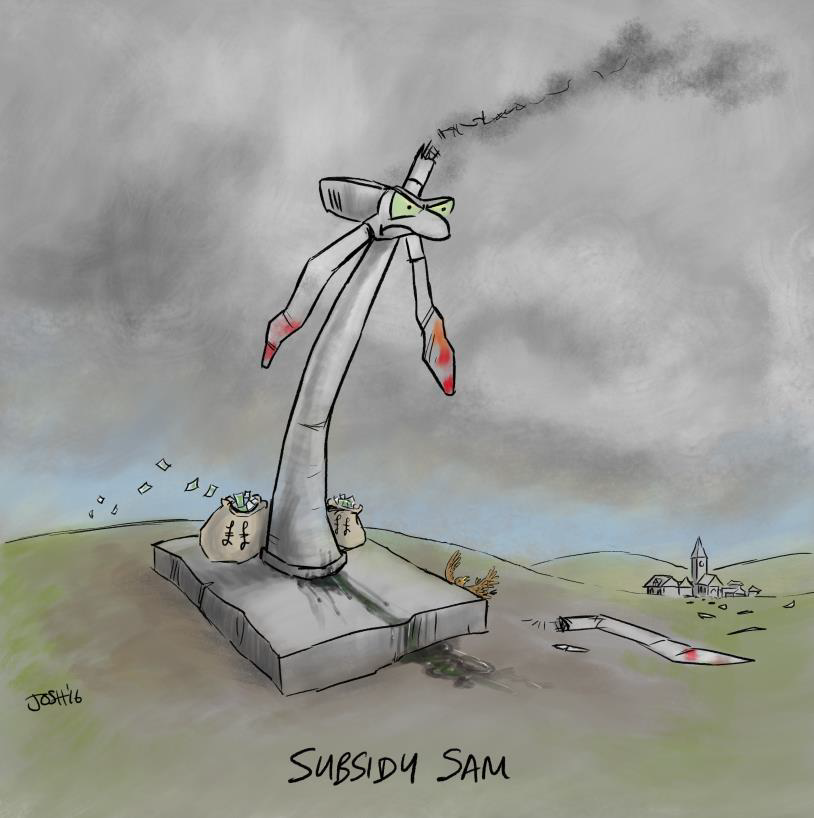
Vindicated: Supreme Court Slams Developer For Ignoring Wind Turbine Noise Effects on Neighbours

stopthesethings's avatarSTOP THESE THINGS

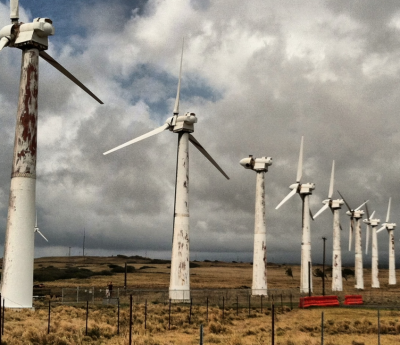
Call it the ‘luck of the Irish’. Over the last few months locals have racked up a string of victories against wind power outfits for all manner of sins, crimes and misdemeanours.

In November the Irish government was slammed with a €5 million fine for failing to apply its very own environmental standards at a wind farm in County Galway, which turned into an environmental disaster: Irish Government Slammed with €5m Fine Over Wind Farm’s Environmental Disaster

Following that rather embarrassing setback, a wind power outfit in Waterford was brought to heel for pushing the envelope over the size of its turbines: Busted: Irish Wind Project Slammed For Breaching EU Environmental Directives

Now, in an effort to avoid the grinding, thumping cacophony these things generate, a couple of horticulturalists, Klaus Balz and Hanna Heubach have taken a wind power outfit all the way to the Supreme Court. And they’ve won!

Central to…

View original post 840 more words

No one knew?!

Why money

Image

Dipole Down Under

Ron Clutz's avatarScience Matters

Vijay Jayaraj explains how weather is created around the Indian Ocean in this article Record Heat and Cold Expose Climate Alarmists’ Bias. Excerpts in italics with my bolds and images.

Australia was literally on fire in December. Record heat made headlines in global media. So did the extreme rainfall in east Africa.

You and everybody else on earth can guess what climate alarmists blamed for both: man-made global warming, a.k.a. climate change.

But record cold in northern India at the same time didn’t make headlines in any major media in the United States or the United Kingdom.

Why? Because it didn’t fit expectations.

It’s a perfect example of climate alarmists’ obvious bias that’s seldom brought to light.

In December, east Africa received extremely heavy rainfall, causing widespread floods in Kenya and Djibouti. The floods impacted more than one million people and killed scores already challenged by extreme poverty.

View original post 517 more words

Coordinated Work Schedules and the Gender Wage Gap @women_nz

From https://www.nber.org/papers/w26548

Previous Older Entries Next Newer Entries

Thoughts from the North

Celebrating humanity's flourishing through the spread of capitalism and the rule of law

Fardels Bear

A History of the Alt-Right

Vincent Geloso

Econ Prof at George Mason University, Economic Historian, Québécois

Bassett, Brash & Hide

Celebrating humanity's flourishing through the spread of capitalism and the rule of law

Truth on the Market

Scholarly commentary on law, economics, and more

The Undercover Historian

Beatrice Cherrier's blog

Matua Kahurangi

Celebrating humanity's flourishing through the spread of capitalism and the rule of law

Temple of Sociology

Celebrating humanity's flourishing through the spread of capitalism and the rule of law

Velvet Glove, Iron Fist

Celebrating humanity's flourishing through the spread of capitalism and the rule of law

Why Evolution Is True

Why Evolution is True is a blog written by Jerry Coyne, centered on evolution and biology but also dealing with diverse topics like politics, culture, and cats.

NoTricksZone

Celebrating humanity's flourishing through the spread of capitalism and the rule of law

Homepaddock

A rural perspective with a blue tint by Ele Ludemann

Kiwiblog

DPF's Kiwiblog - Fomenting Happy Mischief since 2003

The Dangerous Economist

Celebrating humanity's flourishing through the spread of capitalism and the rule of law

Watts Up With That?

The world's most viewed site on global warming and climate change

The Logical Place

Tim Harding's writings on rationality, informal logic and skepticism

Doc's Books

A window into Doc Freiberger's library

The Risk-Monger

Let's examine hard decisions!

Uneasy Money

Commentary on monetary policy in the spirit of R. G. Hawtrey

Barrie Saunders

Thoughts on public policy and the media

Liberty Scott

Celebrating humanity's flourishing through the spread of capitalism and the rule of law

Point of Order

Politics and the economy

James Bowden's Blog

A blog (primarily) on Canadian and Commonwealth political history and institutions

Science Matters

Reading between the lines, and underneath the hype.

Peter Winsley

Economics, and such stuff as dreams are made on

A Venerable Puzzle

"The British constitution has always been puzzling, and always will be." --Queen Elizabeth II

The Antiplanner

Celebrating humanity's flourishing through the spread of capitalism and the rule of law

Bet On It

Celebrating humanity's flourishing through the spread of capitalism and the rule of law

History of Sorts

WORLD WAR II, MUSIC, HISTORY, HOLOCAUST

Roger Pielke Jr.

Undisciplined scholar, recovering academic

Offsetting Behaviour

Celebrating humanity's flourishing through the spread of capitalism and the rule of law

JONATHAN TURLEY

Res ipsa loquitur - The thing itself speaks

Conversable Economist

In Hume’s spirit, I will attempt to serve as an ambassador from my world of economics, and help in “finding topics of conversation fit for the entertainment of rational creatures.”

The Victorian Commons

Researching the House of Commons, 1832-1868

The History of Parliament

Articles and research from the History of Parliament Trust

Books & Boots

Reflections on books and art

Legal History Miscellany

Posts on the History of Law, Crime, and Justice

Sex, Drugs and Economics

Celebrating humanity's flourishing through the spread of capitalism and the rule of law

European Royal History

Exploring the Monarchs of Europe

Tallbloke's Talkshop

Cutting edge science you can dice with

Marginal REVOLUTION

Small Steps Toward A Much Better World

NOT A LOT OF PEOPLE KNOW THAT

“We do not believe any group of men adequate enough or wise enough to operate without scrutiny or without criticism. We know that the only way to avoid error is to detect it, that the only way to detect it is to be free to inquire. We know that in secrecy error undetected will flourish and subvert”. - J Robert Oppenheimer.

STOP THESE THINGS

The truth about the great wind power fraud - we're not here to debate the wind industry, we're here to destroy it.

Lindsay Mitchell

Celebrating humanity's flourishing through the spread of capitalism and the rule of law

Alt-M

Celebrating humanity's flourishing through the spread of capitalism and the rule of law