
Samuelson picking on Marx
15 Dec 2019 Leave a comment
in applied price theory, economic history, history of economic thought, Marxist economics
The toxic rhetoric of climate change
15 Dec 2019 Leave a comment

by Judith Curry
“I genuinely have the fear that climate change is going to kill me and all my family, I’m not even kidding it’s all I have thought about for the last 9 months every second of the day. It’s making my sick to my stomach, I’m not eating or sleeping and I’m getting panic attacks daily. It’s currently 1 am and I can’t sleep as I’m petrified.” – Young adult in the UK
View original post 2,106 more words
Stoking Big Climate Business
15 Dec 2019 Leave a comment


Rupert Darwall writes from Madrid to Real Clear Energy The Business of Climate Change. Excerpts in italics with my bolds.
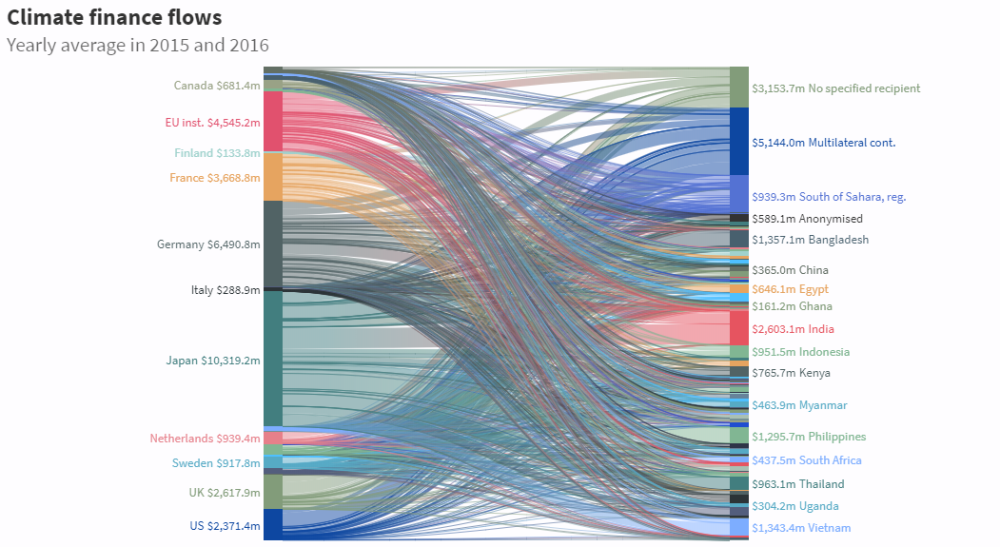 Open image in new tab to enlarge. Details at Follow the money.
Saving the planet takes money, and lots of it. Money is both the theme and the subtext of the latest round of UN climate talks being held here—a vast river of cash flows through the UN climate process. Formally, the meeting is about nailing down one of the more obscure provisions of the Paris Agreement: Article 6, which provides for market-based instruments so that countries can trade their way out of their decarbonization commitments. Billions of cross-border dollars and transaction fees hang on the outcome.
With the negotiations concerning mind-paralyzing definitions of interest only to the most intrepid climate geeks, business and finance leaders could wind up taking center stage. When they first started…
View original post 2,040 more words
How to tell a Serf from a Slave in Medieval England
14 Dec 2019 Leave a comment

By Sara M. Butler; posted 15 August 2019.
About six months ago, I stumbled across an intriguing 2011 article by Stephen Alsford on the subject of medieval serfdom and the myth that “town air makes free” – that is, escape to a town for the period of a year and a day earned a fugitive serf his freedom in medieval England.[1] The subject aside, what surprised me most about the article is the fact that it appeared in the journal Slavery & Abolition. Equating serfs with slaves is a bold move, and something that we emphatically do not do in medieval historical circles. The medieval unfree were undoubtedly the descendants of the Roman Empire’s chattel slaves; but, as the medieval history textbooks pronounce, their status was wholly different. Admittedly, after that strong stance the explanation in the textbooks tends to get a bit hazy, and for good reason…
View original post 3,190 more words
More on Orr
14 Dec 2019 Leave a comment

It can be hard to know quite what to make of the Governor of the Reserve Bank, even setting aside the substance of his policy choices and formal policy communications.
I’ve been puzzled almost from the start. When his appointment was announced two years ago this week, my post began with several positive aspects I saw in the appointment. His communications skills were always both a potential plus but also quite a risk.
What of his communications skills? He can be hugely entertaining, and quite remarkably vulgar (an astonishingly crude analogy involving toothbrushes springs to mind). Just the thing – perhaps – in an old-fashioned market economist. Not, perhaps, the sort of thing we might hope for from a Reserve Bank Governor. …..No doubt he will rein in his tongue most of the time – and perhaps he has calmed down a bit with age – but it…
View original post 2,638 more words
Stalemate at UN climate talks as splits re-appear
14 Dec 2019 Leave a comment


Another COP flop seems likely. After the usual fig leaf of the closing declaration, they’ll kick the panic can down the road to the next bloated gab-fest in Glasgow 2020. And so the bickering circus goes on, and on…
UN climate talks in Madrid enter their final scheduled day with divisions emerging between major emitting countries and small island states, reports BBC News.
Negotiators are attempting to agree a deal in the Spanish capital that would see countries commit to make new climate pledges by the end of 2020.
But serious disagreements have emerged over how much carbon-cutting the major emitters should undertake.
View original post 87 more words
Public libertarian intellectuals
13 Dec 2019 Leave a comment

Consider the post-Hayek/Rothbard/Friedman era of libertarianism.
Who has stepped up to fill their shoes? It’s hard to say, but 4 academics who stand out are Tyler Cowen, Mike Munger, Robert Higgs, and Bryan Caplan. Their scholarly output is comparable to our own Jacques Delacroix, and their influence within the libertarian quadrant is – or was at some point in time – much greater than Jacques’.
All four of these scholars cut their teeth blogging. The blog is how they teach. The blog is how they vent. The blog is how they share news and knowledge. The blog is how they went from well-respected to essential. All four write opinion pieces for professional outlets, but that’s not how they became essential to libertarians across the globe. Sharing their day-to-day thoughts about the world, to the world (and not just their walled-off social media accounts), is how they…
View original post 108 more words
Fact Check: Why Intermittent Wind & Solar Will Never Replace Fossil Fuels
13 Dec 2019 1 Comment

The wind and solar ‘industries’ were built on lies and run on subsidies. As to the former, for more than 20 years a phalanx of propagandists has worked overtime to literally turn night into day.
Lines like the ‘wind is always blowing somewhere’, ‘sunset’s not a problem’, this ‘wind farm will power XXX hundred thousand homes’ and (in answer to perpetual problem of their chaotic intermittency) ‘mega-batteries will fix it’, sit comfortably with old chestnuts like ‘I’ll pay you next week’ and ‘the cheque’s in the mail’.
As Norman Rogers details below, the propagandists may have become more sophisticated – and now include some clever little darlings from Deloitte, but their message is just as vacuous as ever.
Green Energy Studies: Consulting, or Advertising?
American Thinker
Norman Rogers
27 November 2019
Wind and solar aren’t remotely competitive with traditional fossil fuels and cannot replace them. They would scarcely exist if…
View original post 1,201 more words
Abdication: Two Days that shook the British Monarchy. Addendum December 12, 1936.
13 Dec 2019 Leave a comment

On December 12, 1936, at the accession meeting of the Privy Council of the United Kingdom, the new king, George VI, announced he was to create his brother the “Duke of Windsor” with the style of Royal Highness. He wanted this to be the first act of his reign, although the formal documents were not signed until March 8, 1937 that following year. During the interim, Edward was universally known as the Duke of Windsor. George VI’s decision to create Edward a royal duke ensured that he could neither stand for election to the House of Commons nor speak on political subjects in the House of Lords.
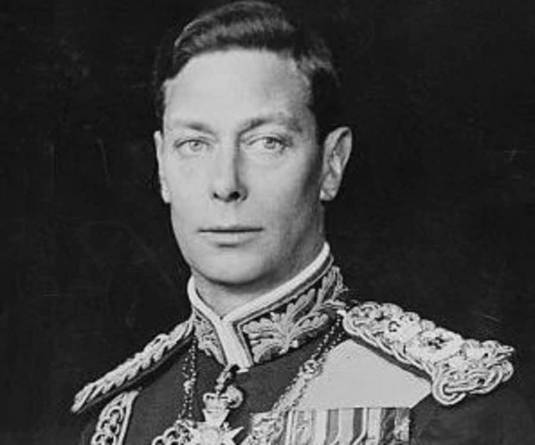
King George VI of the United Kingdom of Great Britain and Northern Ireland, Emperor of India.
Letters Patent dated May 27, 1937 re-conferred the “title, style, or attribute of Royal Highness” upon the Duke of Windsor, but specifically stated that “his wife and…
View original post 347 more words
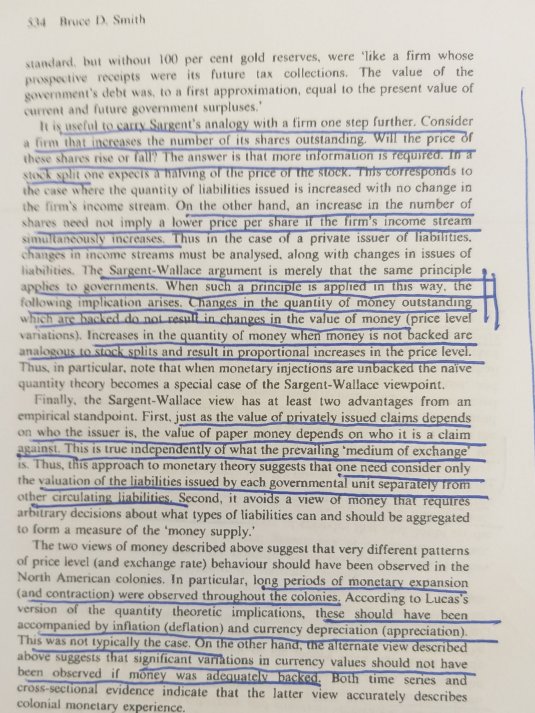
How monetary arithmetic undermines the quantity theory of money
13 Dec 2019 Leave a comment
in applied price theory, budget deficits, econometerics, economic history, economics of education, fiscal policy, macroeconomics, Milton Friedman, monetarism, monetary economics, Robert E. Lucas Tags: monetary policy
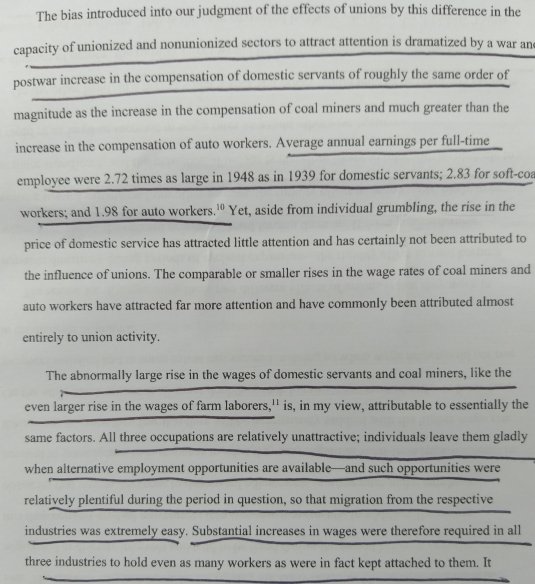
Milton Friedman (1951) on union power is over-rated
13 Dec 2019 Leave a comment
in applied price theory, economic history, labour economics, labour supply, Milton Friedman, unions Tags: union power, union wage premium
Getting a new parliament up and running: what happens after the election?
12 Dec 2019 Leave a comment


 We may not yet know the result of the election, but we do know that we will have a new parliament. David Natzler and David Beamish explain what will happen when the new parliament commences next week. No matter the outcome of today’s vote, certain processes will need to be followed: parliament will need to be officially opened, MPs will need to be sworn in, and committees will need to be re-established — and their members and chairs must be elected.
The dates
The first days of a new parliament follow a well-trodden path, and the surest guide to what will happen is usually to look up what happened last time, in June 2017. However, much depends on the political context. And we will not know that context until the early hours of Friday 13 December at the earliest. All we know for sure is that the new parliament will…
View original post 2,114 more words


Recent Comments