Paul Craig: Prorogation: Constitutional Principle and Law, Fact and Causation

Constitutional Law Group's avatarUK Constitutional Law Association

The Prime Minister’s recent announcement that Parliament would be prorogued, thereby severely curtailing the opportunity for parliamentary debate, raises important issues of constitutional principle and law, and also issues concerning fact and causation. They are examined in turn.

Constitutional Principle and Law

We begin with constitutional principle and law. We seek to decide whether the courts should intervene via judicial review, in order to prevent Parliament from being prorogued. We do not, however, begin with a clean slate. We look to case law where the courts have intervened to curtail prerogative power, discern the underlying principles, and then decide whether those are applicable to the case at hand.

Consider then the principal case law concerning constraints on prerogative power dating back to the seventeenth century. The constraints on prerogative power embodied in Proclamations, De Keyser and Miller all protect parliamentary sovereignty. Parliament is the legitimate legislator within the UK and…

View original post 1,323 more words

A Great Film for a Labor Day Weekend

Rogue Prorogations? Suspending Parliament in the Later Middle Ages

Hannes Kleineke's avatarThe History of Parliament

In addition to Dr Vivienne Larminie’s blog about averting the prorogation of Parliament in May 1641, here’s Dr Hannes Kleineke of our House of Commons 1422-1504 project on the origins of the practice of prorogation and examples thereof in the later Middle Ages…

Until recent days, prorogations of Parliament have generally been regarded as an arcane piece of parliamentary theatre, of limited concern to anyone except those interested in the historic procedures and ceremonial of the British legislature. Certainly, the procedure of proroguing Parliament, that is, suspending the meetings of the Lords and Commons until a set future date is of venerable antiquity. The earliest English Parliaments generally met for only a few days, and there was thus no call for these assemblies to be interrupted and resumed. The earliest examples of what was formally styled a ‘prorogation’ thus served to allow for a change of originally…

View original post 886 more words

Here Is a Wonderful Edition of Uncommon Knowledge from the Hoover Institution

The Elephant's Child's avatarAmerican Elephants

Here’s a remarkable video of Uncommon Knowledge with Peter Robinson from the Hoover Institution, featuring former Secretary of State George Schultz, John Cogan, Terry Anderson and Lee Ohanian. Four economists to talk about the major improvements that happened in the United States between 1919 and 2019. There were momentous improvements affecting all of our lives and our prosperity, inventions, the Great Depression, the Holocaust, World War II, the underlying institutions. prosperity, private property, the rule of law, free markets and what they mean. The role of immigration, the role of government, and attracting talent. You’ll learn a lot of History and a lot of Economics.

This was just published on August 26, 2019. It’s long, but worth every minute. You will learn a lot. Leadership, the uses of government, Socialism illustrated, American institutions, the Great Depression, economic history, a hugely rewarding discussion. You will learn about incentives, taxes, policies and…

View original post 31 more words

How far can we go after the gas light turns on?

sammonfort3's avatarVisualize This

Ever wondered how long you could actually drive after your gas light turns on? Well, Justin Davis at http://www.tankonempty.com might have an answer for you. Justin has been collecting reports from daredevil drivers about how long they’ve driven post-gas light, and he was kind enough to give me his data.

Test “Listen to me! When that car rolls into the dealership and that tank is bone dry, I want you to be there with me, when everyone says: ‘Kramer and that other guy, oooh they went farther to the left of the slash than anyone ever dreamed!'”

The dataset is pretty extensive, with records for every make and model imaginable—some that I’ve never even heard of! Ever seen a Vauxhall Vectra? It looks pretty unremarkable actually. They go about 32 miles after their light turns on.

Most of the data comes from cars made between 2005-2010, but records stretch back as far as the 70s. Most of the data comes from cars made between 2005-2010, but records stretch back as far…

View original post 596 more words

The Recycling Folly

Dan Mitchell's avatarInternational Liberty

While it’s very good to have a clean environment, many environmentalists don’t understand cost-benefit analysis. As such, they make our lives less pleasant –inferior light bulbs,substandard toilets,inadequate washing machines,crummy dishwashers, dribbling showers, and dysfunctional gas cans – for little if any benefit.

We can add recycling to that list.

To be sure, all the hassle and time of sorting our garbage might be an acceptable cost if something was being achieved.

Unfortunately, as Jeff Jacoby has explained, that’s not the case. Not even close.

Let’s explore the issue.

In an article for the American Institute for Economic Research, Professor Michael Munger explains that most recycling actually is a net negative for the environment.

…I was invited to a conference called Australia Recycles! …Everyone there, everyone, represented either a municipal or provincial government, or a nonprofit recycling advocacy group, or a…

View original post 1,390 more words

(Almost) Nothing is Truly ‘Natural’ – Part 4

Gallery

The fatal conceit

Image

Towards the Flame: Empire, War and the End of Tsarist Russia (2) by Dominic Lieven (2015)

Simon's avatarBooks & Boots

Lieven concludes his rather exhausting history of the diplomatic build-up to the First World War as seen from Russia, with some Big Ideas.

Big ideas

– The First and Second World Wars were essentially wars fought between Russia and Germany for control of Europe. The first war ended in stalemate; Russia won the second one.

– This explains why both the world wars started in eastern Europe, in the badlands between the two empires – with the Austrian attack on Serbia in 1914, and the Nazi attack on Poland in 1939.

– The collapse of the Austro-Hungarian Empire in 1918 led to a vacuum. It led to the creation of a host of smaller nations (Poland, Czechoslovakia, Hungary, alongside the existing weak powers of Bulgaria and Romania), none of which was strong enough by itself to stand up to either Germany or Russia, making the second war, if not…

View original post 1,274 more words

The Lost Victory: British Dreams and British Realities 1945-50 by Correlli Barnett (1995)

Simon's avatarBooks & Boots

What a devastating indictment of British character, government and industry! What an unforgiving expose of our failings as a nation, an economy, a political class and a culture!

Nine years separated publication of Barnett’s ferocious assault on Britain’s self-satisfied myth about its glorious efforts in the Second World War, The Audit of War (1986) and this sequel describing how the Attlee government threw away a once-in-a-lifetime opportunity to modernise Britain’s creaking infrastructure and industry – The Lost Victory: British Dreams and British Realities, 1945-50.

I imagine Barnett and the publishers assumed most readers would have forgotten the detail of the earlier book and that this explains why some sections of this volume repeat The Audit of War’s argument pretty much word for word, down to the same phrases and jokes.

And these set the tone and aim which is to extend the brutal dissection of Britain’s wartime industrial failings…

View original post 4,668 more words

Artificial vs Natural Peach

Pointless Destruction: The Appalling Environmental Cost of Wind Power

stopthesethings's avatarSTOP THESE THINGS

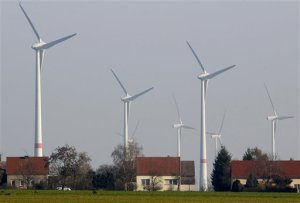
One issue that annoys RE zealots, like a burr under a frisky pony’s saddle blanket, is the wind industry’s rampant bird and bat slaughter. It’s an inconvenient truth to be sure. But, as with everything that the wind industry does, if you can’t keep a straight face while lying about it any more, then pull out all stops and cover it up.

The wholesale slaughter of millions of birds and bats – includes rare, endangered and majestic species, like America’s iconic bald and golden eagles. The default response from the wind industry is to lie like fury and – when the corpses can no longer be hidden and the lying fails – to issue court proceedings to literally bury those facts (see our post here).

The hackneyed retort from the wind cult is that cars, cats and tall buildings kill more birds than their beloveds.

Attempting to compare an…

View original post 473 more words

How Stephen Cheung pushed the boundaries of economics

A balanced sample of views on the minimum wage

Averting the prorogation of Parliament, May 1641

Vivienne Larminie's avatarThe History of Parliament

In light of the attempt of the current government to prorogue Parliament, we thought it would be appropriate to offer examples of prorogation or the aversion thereof in Parliament’s past. Today, Dr Vivienne Larminie, Assistant Editor of our House of Commons 1640-1660 project explains how prorogation was narrowly avoided in 1641 during a crisis in the early months of the Long Parliament. In an earlier blog, Vivienne has also explored how, a few months later in January 1642, the king deployed an alternative tactic to gain control over Parliament when he attempted to ‘decapitate’ Parliament by seeking to arrest prominent adversarial MPs.

Sir Thomas Wentworth, 1st Earl of Strafford

In early May 1641, six months in to what became the Long Parliament, Members sensed that a crisis point had been reached.On the one hand it had become clear that enormous sums had to be found to pay for…

View original post 729 more words

Previous Older Entries Next Newer Entries

Thoughts from the North

Celebrating humanity's flourishing through the spread of capitalism and the rule of law

Fardels Bear

A History of the Alt-Right

Vincent Geloso

Econ Prof at George Mason University, Economic Historian, Québécois

Bassett, Brash & Hide

Celebrating humanity's flourishing through the spread of capitalism and the rule of law

Truth on the Market

Scholarly commentary on law, economics, and more

The Undercover Historian

Beatrice Cherrier's blog

Matua Kahurangi

Celebrating humanity's flourishing through the spread of capitalism and the rule of law

Temple of Sociology

Celebrating humanity's flourishing through the spread of capitalism and the rule of law

Velvet Glove, Iron Fist

Celebrating humanity's flourishing through the spread of capitalism and the rule of law

Why Evolution Is True

Why Evolution is True is a blog written by Jerry Coyne, centered on evolution and biology but also dealing with diverse topics like politics, culture, and cats.

Down to Earth Kiwi

Celebrating humanity's flourishing through the spread of capitalism and the rule of law

NoTricksZone

Celebrating humanity's flourishing through the spread of capitalism and the rule of law

Homepaddock

A rural perspective with a blue tint by Ele Ludemann

Kiwiblog

DPF's Kiwiblog - Fomenting Happy Mischief since 2003

The Dangerous Economist

Celebrating humanity's flourishing through the spread of capitalism and the rule of law

Watts Up With That?

The world's most viewed site on global warming and climate change

The Logical Place

Tim Harding's writings on rationality, informal logic and skepticism

Doc's Books

A window into Doc Freiberger's library

The Risk-Monger

Let's examine hard decisions!

Uneasy Money

Commentary on monetary policy in the spirit of R. G. Hawtrey

Barrie Saunders

Thoughts on public policy and the media

Liberty Scott

Celebrating humanity's flourishing through the spread of capitalism and the rule of law

Point of Order

Politics and the economy

James Bowden's Blog

A blog (primarily) on Canadian and Commonwealth political history and institutions

Science Matters

Reading between the lines, and underneath the hype.

Peter Winsley

Economics, and such stuff as dreams are made on

A Venerable Puzzle

"The British constitution has always been puzzling, and always will be." --Queen Elizabeth II

The Antiplanner

Celebrating humanity's flourishing through the spread of capitalism and the rule of law

Bet On It

Celebrating humanity's flourishing through the spread of capitalism and the rule of law

History of Sorts

WORLD WAR II, MUSIC, HISTORY, HOLOCAUST

Roger Pielke Jr.

Undisciplined scholar, recovering academic

Offsetting Behaviour

Celebrating humanity's flourishing through the spread of capitalism and the rule of law

JONATHAN TURLEY

Res ipsa loquitur - The thing itself speaks

Conversable Economist

In Hume’s spirit, I will attempt to serve as an ambassador from my world of economics, and help in “finding topics of conversation fit for the entertainment of rational creatures.”

The Victorian Commons

Researching the House of Commons, 1832-1868

The History of Parliament

Articles and research from the History of Parliament Trust

Books & Boots

Reflections on books and art

Legal History Miscellany

Posts on the History of Law, Crime, and Justice

Sex, Drugs and Economics

Celebrating humanity's flourishing through the spread of capitalism and the rule of law

European Royal History

Exploring the Monarchs of Europe

Tallbloke's Talkshop

Cutting edge science you can dice with

Marginal REVOLUTION

Small Steps Toward A Much Better World

NOT A LOT OF PEOPLE KNOW THAT

“We do not believe any group of men adequate enough or wise enough to operate without scrutiny or without criticism. We know that the only way to avoid error is to detect it, that the only way to detect it is to be free to inquire. We know that in secrecy error undetected will flourish and subvert”. - J Robert Oppenheimer.

STOP THESE THINGS

The truth about the great wind power fraud - we're not here to debate the wind industry, we're here to destroy it.

Lindsay Mitchell

Celebrating humanity's flourishing through the spread of capitalism and the rule of law