
@NZPrivacy has just increased statistical discrimination by landlords @NZHumanRights
20 Aug 2019 Leave a comment
in applied price theory, discrimination, entrepreneurship, industrial organisation, law and economics, managerial economics, organisational economics, politics - New Zealand, property rights, survivor principle Tags: offsetting behaviour, racial discrimination, statistical discrimination, The fatal conceit, unintended consequences
Intellectuals and Race
19 Aug 2019 Leave a comment

An Article from Townhall.com
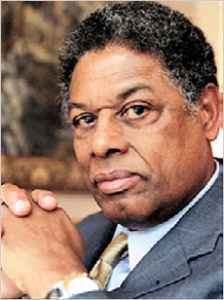
by Thomas Sowell
http://townhall.com/columnists/thomassowell/2013/03/12/intellectuals-and-race-n1531068/page/full/
There are so many fallacies about race that it would be hard to say which is the most ridiculous. However, one fallacy behind many other fallacies is the notion that there is something unusual about different races being unequally represented in various institutions, careers or at different income or achievement levels.
A hundred years ago, the fact that people from different racial backgrounds had very different rates of success in education, in the economy and in other endeavors, was taken as proof that some races were genetically superior to others.
Some races were considered to be so genetically inferior that eugenics was proposed to reduce their reproduction, and Francis Galton urged “the gradual extinction of an inferior race.”
It was not a bunch of fringe cranks who said things like this. Many held Ph.D.s from the leading universities, taught at the leading…
View original post 302 more words
BBC Radio 4’s uncritical amplification of Ilhan Omar’s falsehood
19 Aug 2019 9 Comments

Listeners to BBC Radio 4’s ‘The World Tonight’ are promised “in depth reporting, intelligent analysis and breaking news from a global perspective”. Here is what those listeners heard (from 03:39 here) in the news bulletin which opened the programme’s August 15th edition. [emphasis in bold added]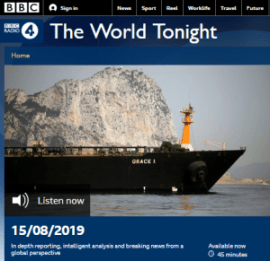
Newsreader: “Israel has banned two US Democrat Congresswomen from entering the country because they’ve been critical of its policies towards the Palestinians. Rashida Tlaib and Ilhan Omar had been expected to begin a tour of the Palestinian territories later this week. Ms Omar has accused the Israelis of implementing President Trump’s ban on Muslims. Tom Bateman reports from Jerusalem.”
Bateman: “The Congresswomen – Ilhan Omar, who was born in Somalia and grew up in the US, and Rashida Tlaib, who is of Palestinian descent – have both supported the movement to boycott Israel. They were due to visit the occupied West…
View original post 399 more words
King John by Marc Morris (2015)
18 Aug 2019 Leave a comment

I loved Marc Morris’s History of the Norman Conquest because it gave such a thorough explanation of the background, build-up, events and consequences of the most famous moment in English history, so I was looking forward to reading this book and it is certainly good – but not as good as the Conquest one, and I spent some time, as I read it, trying to figure out why.
1. The long historical build-up to John’s reign
I think the main reason is that the central feature of King John’s reign (1199 to 1216) is the complete collapse of the huge and elaborate ’empire’ created by his predecessors – Henry I (his grandfather), the great Henry II (his father) and King Richard, his swashbuckling brother.
The pressures John faced trying to hang on to the south (Aquitaine), the middle (Anjou) and the north (Normandy) of France, along with the large and…
View original post 5,618 more words
King Leopold’s Ghost by Adam Hochschild (1999)
18 Aug 2019 Leave a comment
I can’t remember the last time a book made me feel this physically sick. About half way through another description of the murders, rapes, dismemberments, garrotings, hangings, torture and shootings carried out by members of the Force Publique which policed the forced labour system set up by King Leopold II in his colony in the Congo (1885 to 1909), I thought I might throw up.
Leopold II, king of the Belgians, and his genocide
If you like historical horror stories, you’ll love this book. It intertwines a biography of lonely unloved Leopold – aloof, shy king of the Belgians, ignored by his parents, separated from his wife – who conceived a great ambition to own a chunk of the dark continent, Africa, during the 1880s when it was being carved up by the the European powers.
Hochschild describes how, once he’d decided on the Congo to be his slice of…
View original post 2,145 more words
Bury the Chains: The British Struggle to Abolish Slavery by Adam Hochschild (2005)
18 Aug 2019 Leave a comment
In the 1780s, when the abolition movement got going, not just African slaves but maybe as many as three quarters of the world’s population was unfree.The abolition movement was the first mass civil society movement, not the product of a particular class or particular special interest group or trade – it joined all classes, all genders, all ages and all occupations across all the regions of Britain (‘Something new and subversive was making its first appearance: the systematic mobilisation of public opinion across the class spectrum.’ p.138)It was the first such campaign in human history that was not motivated by self-interest; none of the campaigners stood to gain anything and they, and the British population as a whole, stood to lose out economically – but nonetheless the righteousness of the cause outweighed self-interest.The abolition movement invented, or brought to perfection, a whole range of campaigning tactics which are still used around the world.
In all of human experience there was no precedent for such a campaign. (p.97)
Executive summary
Abolition of slavery took place in two parts: abolishing the slave trade (1807) and abolishing slavery itself (1834).
1. Abolishing the slave trade
After a whole century when anybody suggesting that African slavery be banned would have been considered a mad eccentric, the issue suddenly exploded into public consciousness in the years 1788 to 1793 when there was an extraordinary eruption of pamphlets, articles, petitions from every town and city in Britain, plays and polemics and debates in parliament, calling for the abolition of the slave trade.
It suddenly became the topic of the day and Hochschild is able to quote diarists and letter writers saying how heartily sick they are of every single dinner party or coffee house conversation being about nothing but abolitionism.
And then, just is the cause of abolition had…
View original post 4,388 more words
Slavery and Cartwright’s Case before Somerset
18 Aug 2019 Leave a comment

Posted by Krista J. Kesselring, 10 October 2018.
The case of James Somerset in 1772 is one of the most celebrated episodes in the history of English law. Despite the uncertainties about what, precisely, Justice Mansfield said, his decision in Somerset v Stewart was widely taken to mean that slavery would not exist in England. Even if Mansfield had only declared the illegality of the coerced removal of a slave from England, many people—including some enslaved people, in England, Scotland, and elsewhere—thought the decision affirmed that whatever the laws of other nations, whatever the laws of Britain’s own colonies, slavery had no place in England itself.[1] The 1772 decision turned, in part, on invocations by James Somerset’s counsel of Cartwright’s case, a purported decision in 1569 which declared the air of England too pure for slaves to breathe.[2]
The early case is frequently mentioned in the voluminous literature…
View original post 2,687 more words
US Navy’s Guide to Commanding Negroes (1945)
18 Aug 2019 Leave a comment

In recognition of the challenges in dealing with Negroes, the US Navy developed a pamphlet titled Guide To Command of Negro Naval Personnel (NAVPERS – 15092) in 1945.
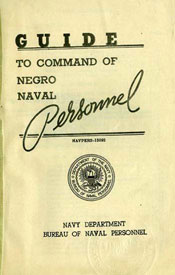
The Guide notes the following:
The mission of the Naval Establishment is the protection of our country, its possessions and its interests. It includes neither social reform nor support of the personal social preferences of its personnel. In the accomplishment of this mission it is mandatory that the training and ability of all Naval personnel be utilized to the fullest.
It must be recognized that problems of race relations do exist and that they must be taken into account in plans for the prosecution of the war. In the Naval Establishment they should be viewed however solely as matters of efficient personnel utilization.
In general, the same methods of discipline, training and leadership that have long proven successful in the Naval Establishment…
View original post 253 more words
Was Slavery a Cause of the Revolutionary War? Yes. (Book Review of SLAVE NATION)
18 Aug 2019 Leave a comment
Reasons for the Revolutionary War, as typically taught in American schools:
• The American people were fiercely independent. They wanted to do things for themselves. They didn’t want the British government, which was an ocean away, telling them how to live their lives.
• A combination of harsh taxes and the lack of an American voice in the British Parliament gave rise to the famous phrase “taxation without representation.”
• Americans started stockpiling guns and ammunition in violation of British laws. Their defense of such a stockpile led to the shots fired at Lexington and Concord and the beginning of the Revolutionary War.
***
On June 22, 1772, nearly a century before the slaves were freed in America, a British judge, with a single decision, brought about the conditions that would end slavery in England. His decision would have monumental consequences in the American colonies, leading up to the American Revolution, the…
View original post 1,375 more words
Protestant Profiles # 19: Granville Sharp [and the British abolitionists]
18 Aug 2019 Leave a comment

Granville Sharp (1735 – 1813)
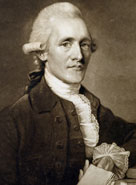 Born: Durham, England
Role: Champion of human rights and the abolition of slavery in the British Empire; Classical grammarian (and contender for Christ’s divinity against heretics in that capacity)
Emphases: The Divinity of Christ; the human dignity of slaves
Protested against: Slavery; Socinianism; Catholic influence in Church and State
Most of this profile is adapted from a biographical sermon on Sharp’s life, in relation to Titus 2:11-14. As a result, it is longer and more detailed than some of the recent installments.
When it comes to selecting a representative from the notable Christian figures involved in the British Abolition movement, there are a handful that possess a kind of “X Factor” that makes them noteworthy in the timeless sense. William Wilberforce is the most famous and pushed the relevant legislation through the British Parliament after years of setbacks and defeats. Hannah…
View original post 2,405 more words
William Wilberforce
18 Aug 2019 Leave a comment

Residence of William Wilberforce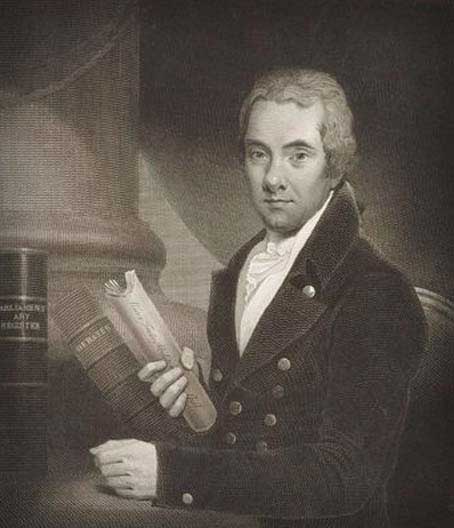
110 Broomwood Road, Battersea, SW11 – Tube: Clapham South (Northern Line)
Place of Worship by William Wilberforce
Holy Trinity Church, Clapham Common North Side – Tube: Clapham Common (Northern Line)
Tomb of William Wilberforce
Westminster Abbey, London – Tube: Westminster (Circle, District and Jubilee)
Wilberforce remains today perhaps the most popular and well known abolitionist in British history, otherwise known as ‘The Voice of Abolition’ Wilberforce is more commonly associated with Kingston upon Hull, from where he was MP and it is there where you will find statues, buildings and even a museum dedicated to him. There are however locations scattered across London where Wilberforce is remembered and commemorated.
Born in Hull into a rich merchant family Wilberforce was initially a small and sickly child who suffered with numerous bouts of bad health, particularly that of his poor eyesight. At the age of…
View original post 413 more words
Granville Sharp
18 Aug 2019 Leave a comment
All Saints Church, Fulham & Poets Corner Westminster Abbey
Granville Sharp, also known as ‘The Father of the Cause’ was one of the oldest and longest running abolitionist campaigners during the late 18th through to the early 19th century.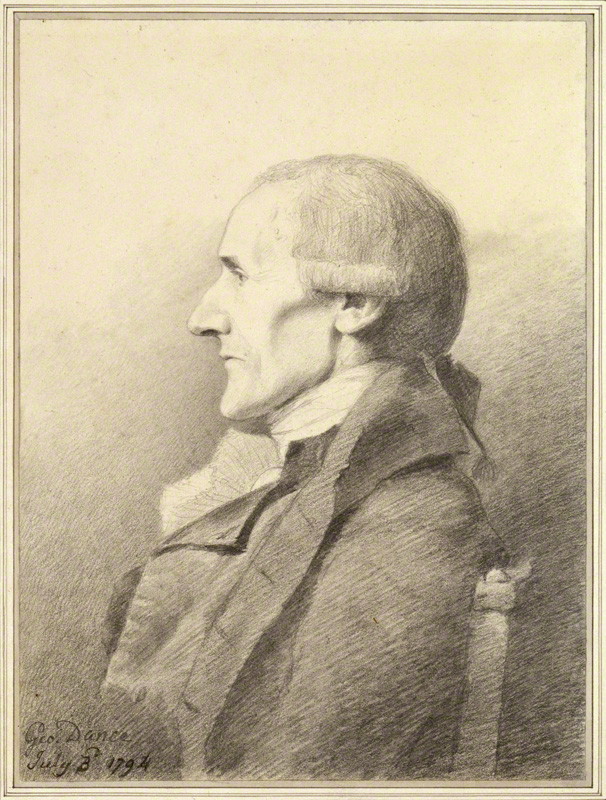
Sharp as one of the founding members of the Society for Effecting the Abolition of the Slave Trade was made the first chairman of the committee when it was set up in 1787, this was down to both his previous involvement with the issues of slave welfare. Not being Quaker, like 9 of the other founding members, Granville Sharp also had greater political influence in parliament as a result. Unlike a lot of other co-founding members in the society, Sharp did not just believe in abolishing the slave trade however, he felt the whole act of slavery in itself was ‘evil’ however Sharp’s contemporaries outvoted Sharp on the matter…
View original post 438 more words
The Vietnam War and Communist Aggression
18 Aug 2019 Leave a comment

This is a cross post. It was originally published on Harry’s Place on April 30th 2015, 4:34 pm
Today marks the fortieth anniversary of the Fall of Saigon, the end of the Vietnam War and the day that South Vietnam came under tyrannical Communist rule. That event precipitated hundreds of thousands of Vietnamese to flee the country, often on rickety boats. According to United Nations estimates (Associated Press: June 23, 1979 and July 6, 1979), between 200,000 and 400,000 boat people died at sea. It is not true that those who left did so purely for economic reasons. Many were expelled from the country as undesirables or encouraged to leave as they were deemed to belong to the wrong social group. Others fled fearing for their lives as a result of communist massacres as reprisals for the Vietnam War. “Revolutionary violence” was used by the Communists to unify the country.
When…
View original post 247 more words


Recent Comments