New Brunswick’s Lieutenant Governor Has Died In Office

Without a Lieutenant Governor, the Legislature of New Brunswick (which consists of the Legislative Assembly and the Lieutenant Governor) can pass no laws, and the Government of New Brunswick can promulgate no Orders-in-Council in the name of the Lieutenant Governor-in-Council and no proclamations in the name of the Lieutenant Governor. Administrators who can act in place of Lieutenant Governors also lose their functions upon the resignation or death of the Lieutenant Governor whom they serve.


J.W.J. Bowden's avatarJames Bowden's Blog

Jocelyne Roy-Vienneau, the Lieutenant Governor of New Brunswick, has just died of cancer after having revealed the diagnosis in the fall of 2018 around the time of the last change of government from Gallant to Higgs. CBC News reports that the province’s Protocol Office will make more announcements in the coming days. Canada has lost two Lieutenant Governors to cancer in as many months, after W. Thomas Molloy, the Lieutenant Governor of Saskatchewan, died in office on 2 July.

View original post 613 more words

Weekend long read

Hadar Sela's avatarBBC Watch

1) At ‘Lawfare’, Matthew J. Aiesi presents a legal view of the incendiary attacks launched from the Gaza Strip.

“…Israel has also been subjected to frequent attacks by incendiary balloons. By early June of this year, these attacks had destroyed approximately 4,300 acres of land, and more has been destroyed since then. Yet news reports on the incendiary balloons often fail to identify the balloons for what they are—a war crime. […]

As Hamas has been using them, these incendiary balloon attacks violate numerous rules and customs of warfare—principally concerning the targeting of civilians and the use of indiscriminate weapons. The attacks also likely violate the prohibition on the use of incendiary weapons in this context.”

2) MEMRI reportson views of the PA’s handling of an incident earlier this year.

“On April 26, 2019, an urgent appeal by the largely Christian residents of the Palestinian village of Jifna, in the Ramallah and Al-Bireh district…

View original post 441 more words

@PaulKrugman explains #TPPANoWay

From https://nyti.ms/1GlFJXO

NEWSPAPERS- CAN THEY SURVIVE?

Sir Bob Jones's avatarNo Punches Pulled

The latest Pew Research American statistics at first light make grim reading. It appears that over the last decade in all traditional news outlets, that is newspapers, radio, television and cable, total employee numbers dropped by 25%.

But analysis shows the employee numbers in radio, television and cable in fact pretty much stayed the same and the drop was almost entirely attributable to newspapers which lost 47% of their staff in the past ten years. For those of us interested in quality and substance in their news consumption, which television and radio cannot provide, this is alarming.

View original post 321 more words

WHY SHOULD TODAY’S POOR SUBSIDISE TOMORROW’S RICH?

Iowa Climate Science Education's avatarIowa Climate Science Education

Sanjeev Sabhlok: Why Should We Subsidise Tomorrow’s Rich In The Name Of The Climate?
The Times of India, 28 July 2019

 
As a liberal party, our default position is to reject any government intervention in the lives of people unless it is thoroughly justified. In particular, we reject the wishy-washy precautionary principle. Real harm must be proven before even the thought of government intervention is entertained.

It is a matter of concern to us that Indian governments have been dumping scarce taxpayer resources into renewable energy and other inefficient technologies in the name of “climate change”. Instead of acting as the voice of reason, governments world-wide are having a picnic, feasting on our panic. When people are scared, it is much easier to raid their pockets. 
 
We are the only party in India (and possibly in the world) that stands for reason. We believe that everything must be…

View original post 796 more words

MPC appointments: prioritising sex over expertise

Michael Reddell's avatarcroaking cassandra

The lawlessness of the Board of the Reserve Bank of New Zealand never ceases to amaze me,  Just in recent years, there was clear evidence that the Board simply ignores the requirements of the Public Records Act.   There was their facilitation of what was almost certainly an unlawful appointment of an “acting Governor” in the run up to the election (decent outcome in the abstract, but unlawful nonetheless).   And, of course, they play fast and loose with the Official Information Act, apparently confident that the Ombudsman is largely toothless.  It is all the more extraordinary in that since 2013 the Bank’s Board has had a senior lawyer as a member.  I’d not paid much attention to him, not knowing anything about him, but when I finally met him last week –  where he told us he “trains judges” – it reignited my interest in just how a…

View original post 3,037 more words

Forthcoming: Why Consider the Lighthouse a Public Good?

Vincent Geloso's avatarVincent Geloso

Last week, I received news that the International Review of Law and Economics accepted my paper (co-authored with Rosolino Candela) titled “Why Consider the Lighthouse a Public Good?”. The abstract is below and I will update this blog post to add the link to the article once it is online:

Was the lighthouse ever a public good? The lighthouse is presented as the quintessential public good as it was inherently non-excludable and non-rivalrous. Since the work of Ronald Coase (1974) on the lighthouse, economists have used debated the extent to which the private provision of public goods is possible. In this work, we highlight recent findings in the history of lighting services (especially private provision of said services) in order to argue that it may be incorrect to consider the lighthouse as a public good. First, we argue that lighthouses are probably better seen as a complement to other maritime…

View original post 60 more words

Scott Freeman and Bruce Champ on what difference do central banks make

Image

British Invasions

decolonialatlas's avatarThe Decolonial Atlas

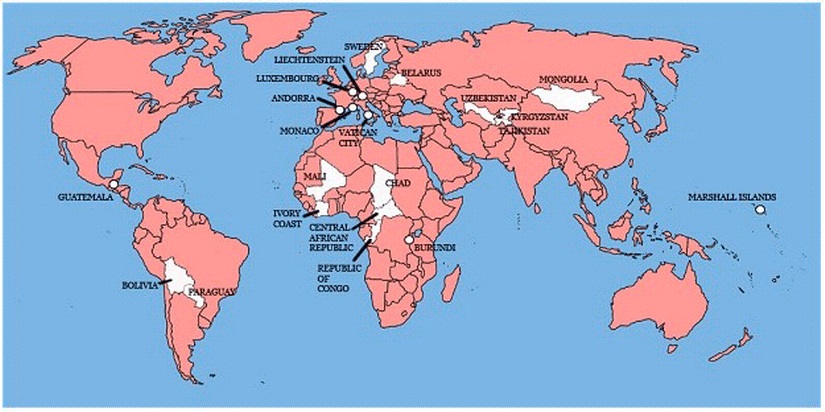
States which have not been invaded by the British States which have not been invaded by the British (white)

At some point in it’s history, Britain has invaded about 90% of the countries of the world. While most of these states were not a part of the British Empire, all the countries in red sustained some kind of British military presence or government sanctioned incursion. The list of 22 non-invaded countries, which includes São Tomé and Príncipe (though not pictured on the map), was put together by Stuart Laycock in his 2012 book, All the Countries We’ve Ever Invaded: And the Few We Never Got Round To.

View original post

Milton Friedman on Crony Capitalism in the US Oil Industry

Iowa Climate Science Education's avatarIowa Climate Science Education

“Few U.S. industries sing the praises of free enterprise more loudly than the oil industry. Yet few industries rely so heavily on special governmental favors.” (Milton Friedman, 1967)

In honor of his 107th birthday, MasterResource reprints a 1967 essay by Milton Friedman, “Oil and the Middle East,” which nicely summarized the political power and cronyism of the domestic oil industry at the time. [1] Far from just historical, the animus created by pro-crony policies over a half century came home to roost in the 1970s when Northeast politicians and others imposed price controls and new taxes on the industry. That animus exists today under the hubris of climate policy.

Background

From the 1920s through the early 1970s, the political power of the domestic oil industry (primarily independent oil producers versus the integrated majors) succeeded in having the major oil states (excepting California) artificially restrict (‘prorate’) production to ‘market…

View original post 909 more words

Fake Environmentalists: Love Industrial Wind Turbines – Hate Humans & Nature

stopthesethings's avatarSTOP THESE THINGS

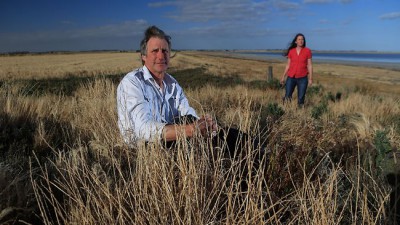
The Cummings: what real environmentalists look like.

The faux environmentalist is easy to spot: he loves industrial wind power and couldn’t care less about the environmental destruction it causes. Faced with the rampant slaughter of birds and bats, he initially denies the evidence and then pushes the moral equivalence button, claiming that more birds are killed by cats, cars and skyscrapers. Ignoring the fact that cats, cars and tall buildings don’t kill apex predators like Eagles, Hawks and Kites. And also ignoring the fact that cars and skyscrapers deliver benefits in the form of transport and accommodation that make modern, civil societies possible. Whereas, heavily subsidised wind power delivers nothing but chaotically intermittent electricity and rocketing power prices, as a result.

In Tasmania its rare and endangered Wedge-Tailed Eagle is already being sliced and diced by wind turbines and, with more on the way, it faces a rapid extinction…

View original post 2,524 more words

Thoughtful analysis of productivity from the Opposition

Michael Reddell's avatarcroaking cassandra

The Opposition in the Australian Federal Parliament that is.

In my post yesterday, I noted  that Simon Bridges’s latest speech continued the pattern in which our Opposition pretends there is no real structural problem in the New Zealand economy: no decades of productivity underperformance, no near-complete absence of any productivity growth in the last several years (whether under National or Labour).

And so it was some mix of refreshing and depressing (would that it were so in our country) to yesterday read a new paper by the Australian Shadow Assistant Minister for Treaasury on “tackling Australia’s productivity crisis”.  No doubt it helps that the Shadow Assistant Minister was previously a professor of economics at the Australian National University (I wrote about a paper he gave in New Zealand last year here).   And perhaps the political context is different: it is now six years since the ALP was in…

View original post 1,696 more words

Friedman and Schwartz, Eichengreen and Temin, Hawtrey and Cassel

David Glasner's avatarUneasy Money

Barry Eichengreen and Peter Temin are two of the great economic historians of our time, writing, in the splendid tradition of Charles Kindleberger, profound and economically acute studies of the economic and financial history of the nineteenth and early twentieth centuries. Most notably they have focused on periods of panic, crisis and depression, of which by far the best-known and most important episode is the Great Depression that started late in 1929, bottomed out early in 1933, but lingered on for most of the 1930s, and they are rightly acclaimed for having emphasized and highlighted the critical role of the gold standard in the Great Depression, a role largely overlooked in the early Keynesian accounts of the Great Depression. Those accounts identified a variety of specific shocks, amplified by the volatile entrepreneurial expectations and animal spirits that drive, or dampen, business investment, and further exacerbated by inherent instabilities in market…

View original post 4,331 more words

Amidst howls of “racism”, protesters demand an agency boss’s resignation because – begorrah – she is Irish

poonzteam5443's avatarPoint of Order

The Hands Off Our Tamariki Network has an admirable ring to its name. Here’s hoping everybody gets the message because if whanau members kept their hands off their tamaraki … well, there would be no need for a state agency to intervene and get its hands on the victims of domestic violence.

The reasons why the Oranga Tamariki agency becomes involved in caring for children has been somewhat downplayed by speakers at protest meetings who demand the state leave their mokopuna alone and insist Māori be the ones caring for their children.

Yet while they call for the state to stay away when Maori children are involved, paradoxically they want the government to do something:

View original post 738 more words

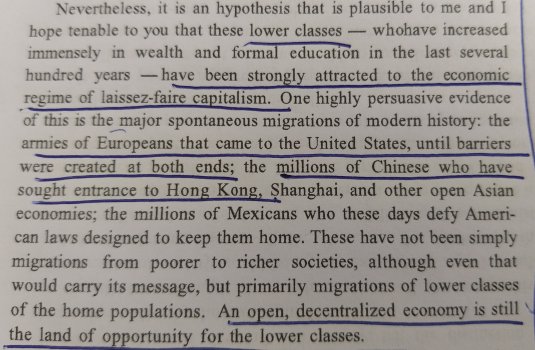
George Stigler on workers of the world uniting and voting with their feet

Image

Previous Older Entries Next Newer Entries

Coordination Problem

Celebrating humanity's flourishing through the spread of capitalism and the rule of law

Libertarian Land

Celebrating humanity's flourishing through the spread of capitalism and the rule of law

Arin’s Substack

Celebrating humanity's flourishing through the spread of capitalism and the rule of law

David Andolfatto

Celebrating humanity's flourishing through the spread of capitalism and the rule of law

Monetary Non-Neutrality

Celebrating humanity's flourishing through the spread of capitalism and the rule of law

Reason Magazine

Celebrating humanity's flourishing through the spread of capitalism and the rule of law

Coyote Blog

Celebrating humanity's flourishing through the spread of capitalism and the rule of law

Thoughts from the North

Celebrating humanity's flourishing through the spread of capitalism and the rule of law

Fardels Bear

A History of the Alt-Right

Vincent Geloso

Econ Prof at George Mason University, Economic Historian, Québécois

Bassett, Brash & Hide

Celebrating humanity's flourishing through the spread of capitalism and the rule of law

Truth on the Market

Scholarly commentary on law, economics, and more

The Undercover Historian

Beatrice Cherrier's blog

Matua Kahurangi

Celebrating humanity's flourishing through the spread of capitalism and the rule of law

Temple of Sociology

Celebrating humanity's flourishing through the spread of capitalism and the rule of law

Velvet Glove, Iron Fist

Celebrating humanity's flourishing through the spread of capitalism and the rule of law

Why Evolution Is True

Why Evolution is True is a blog written by Jerry Coyne, centered on evolution and biology but also dealing with diverse topics like politics, culture, and cats.

NoTricksZone

Celebrating humanity's flourishing through the spread of capitalism and the rule of law

Homepaddock

A rural perspective with a blue tint by Ele Ludemann

Kiwiblog

DPF's Kiwiblog - Fomenting Happy Mischief since 2003

The Dangerous Economist

Celebrating humanity's flourishing through the spread of capitalism and the rule of law

Watts Up With That?

The world's most viewed site on global warming and climate change

The Logical Place

Tim Harding's writings on rationality, informal logic and skepticism

Doc's Books

A window into Doc Freiberger's library

The Risk-Monger

Let's examine hard decisions!

Uneasy Money

Commentary on monetary policy in the spirit of R. G. Hawtrey

Barrie Saunders

Thoughts on public policy and the media

Liberty Scott

Celebrating humanity's flourishing through the spread of capitalism and the rule of law

Point of Order

Politics and the economy

James Bowden's Blog

A blog (primarily) on Canadian and Commonwealth political history and institutions

Science Matters

Reading between the lines, and underneath the hype.

Peter Winsley

Economics, and such stuff as dreams are made on

A Venerable Puzzle

"The British constitution has always been puzzling, and always will be." --Queen Elizabeth II

The Antiplanner

Celebrating humanity's flourishing through the spread of capitalism and the rule of law

Bet On It

Celebrating humanity's flourishing through the spread of capitalism and the rule of law

History of Sorts

WORLD WAR II, MUSIC, HISTORY, HOLOCAUST

Roger Pielke Jr.

Undisciplined scholar, recovering academic

Offsetting Behaviour

Celebrating humanity's flourishing through the spread of capitalism and the rule of law

JONATHAN TURLEY

Res ipsa loquitur - The thing itself speaks

Conversable Economist

In Hume’s spirit, I will attempt to serve as an ambassador from my world of economics, and help in “finding topics of conversation fit for the entertainment of rational creatures.”

The Victorian Commons

Researching the House of Commons, 1832-1868

The History of Parliament

Articles and research from the History of Parliament Trust

Books & Boots

Reflections on books and art

Legal History Miscellany

Posts on the History of Law, Crime, and Justice

Sex, Drugs and Economics

Celebrating humanity's flourishing through the spread of capitalism and the rule of law

European Royal History

Exploring the Monarchs of Europe