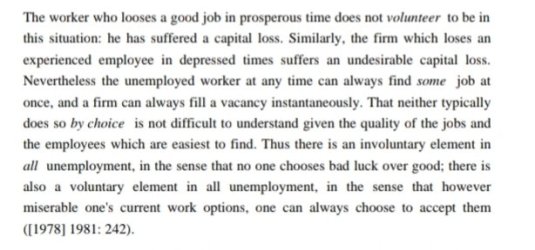
Robert Lucas on unemployment
30 Jun 2019 Leave a comment
in applied price theory, business cycles, labour economics, labour supply, macroeconomics, monetary economics, Robert E. Lucas, unemployment Tags: search and matching
Six constitutional questions raised by the election of the new Conservative leader
30 Jun 2019 Leave a comment


 In less than one month, Conservative Party members will elect a new leader from a two-man shortlist. Under normal circumstances, what happens next would be obvious – Theresa May would resign and the winner would be called on by the Queen to form a government and take office as Prime Minister. However, with the Conservatives lacking a parliamentary majority and normal party loyalties skewed by Brexit, the current scenario is far from normal. Robert Hazell and Meg Russell identify six key constitutional questions that the Conservative leadership election raises for the winner, his party, the Palace and parliament.
With the Conservative Party leadership contest in full swing, the expectation is that Britain will soon have a new Prime Minister. But the process has opened up some significant constitutional controversies. This is the first time that party members will potentially directly elect a new Prime Minister, and this innovation is happening…
View original post 3,008 more words
Warmists Make Bad Investors
30 Jun 2019 Leave a comment

Terence Corcoran explains at the Financial Post: The world needs more of what Exxon is selling (and will for decades). Excerpts in italics with my bolds.
World demand for Exxon’s products, fossil fuels, is expected to increase and remain steady over the coming decade
It’s the kind of story that lights up headlines: one of Britain’s biggest fund managers started selling shares in Exxon Mobil Corp. because the global oil giant wasn’t doing enough to address climate change.
The investment fund manager, Legal & General Investment Management (LGIM), oversees $1.3 trillion, making it the 11th largest money manager in the world. Legal and General (as it is called) is also one of scores of investment management firms, activists and hand-wringing organizations that are part of the burgeoning global sustainable and environmental social finance and governance effort to promote collaborative engagement and foster responsible investment and divestment. The…
View original post 848 more words
Kudos to RNZ on how the government is ‘wasting our money’ aka how Ardern’s regime is spending their time – (1)
30 Jun 2019 Leave a comment

Earlier I posted ‘the dog ate my homework’ regarding the failure of several Ministers to reveal their diaries
Jacinda Ardern and Grant Robertson are leading from the front as the country’s busiest ministers, according to new data released by the government.
But the same data shows Winston Peters holding just a third as many meetings as the Prime Minister.
The Labour-led coalition has opened its ministers’ diaries to public scrutiny for the first time, revealing just how the people running the country spend their days.
While five ministers missed the deadline, RNZ has analysed the 85 percent of data available – more than 31,000diary entries. The diary entries reveal the Prime Minister unsurprisingly has the most appointments of anyone in cabinet, with 2512 and counting between the formation of the coalition government and the end of April.

Peters, the Deputy Prime Minister and leader of…
View original post 223 more words
Thomas J. Sargent – Keynote Address on effects of open borders
30 Jun 2019 Leave a comment
in applied price theory, applied welfare economics, comparative institutional analysis, development economics, economic history, history of economic thought, industrial organisation, international economics, macroeconomics Tags: free trade
UNEQUIVOCAL Evidence Of Industrial Wind Farms’ Horrific Toll On Wildlife
30 Jun 2019 Leave a comment


“REMEMBER when we paved the world with electronic waste
that chopped eagles and condors and made bats extinct
because we thought wind was natural and uranium evil?
– man that was a dark age!”
– Michael Shellenberger
“THE wind is free, but everything else costs money [and lives].”
“IT will be interesting to see whether more research will be carried out into just how many birds are being killed by the Irish Sea wind farms. My hunch is that many people would rather keep that information under their hats. So much money invested in offshore wind means that bad publicity would be very unwelcome and it is common for critics of the industry to be ridiculed.” – Jason Endfield
***
H/t @ClimateRealists
AS a cohesive and sensible society, what price are…
View original post 2,911 more words
David Brooks on the Dems
29 Jun 2019 Leave a comment

Read this op-ed by David Brooks in today’s New York Times (click on screenshot) and see if you disagree with it. His fear, which is also is mine, is that the Dems, by moving ever further left in an effort to out-woke each other, will improve the prospects of Trump:
An excerpt (Brooks is a centrist):
According to a recent Gallup poll, 35 percent of Americans call themselves conservative, 35 percent call themselves moderate and 26 percent call themselves liberal. The candidates at the debates this week fall mostly within the 26 percent. The party seems to think it can win without any of the 35 percent of us in the moderate camp, the ones who actually delivered the 2018 midterm win. . .
The party is moving toward all sorts of positions that drive away moderates and make it more likely the nominee will be unelectable. And it’s…
View original post 469 more words
Stephen Williamson on the flimsy foundations of Keynesian macroeconomics
29 Jun 2019 Leave a comment
in applied price theory, business cycles, economics of information, labour economics, labour supply, macroeconomics, monetary economics Tags: Keynesian macroeconomics

June 28, 1914. Assassination of Archduke Franz Ferdinand of Austria Hungary.
29 Jun 2019 Leave a comment
Assassin got lucky on his second attempt because the archduke’s car stalled outside the cafe where he had lunch after his failed first attempt earlier that day!”

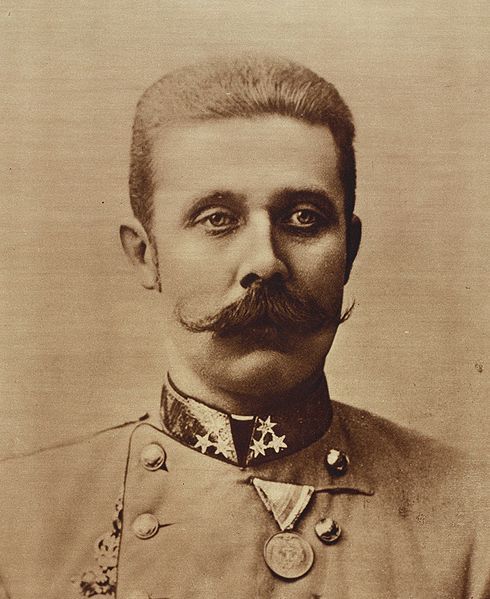
98 years ago today came the assassination of Archduke Franz Ferdinand of Austria-Hungary an act which precipitated the first World War. I cannot do justice in this blog to all the complexities that lead to the start of World War I. I don’t view the assassination of Archduke Franz Ferdinand as the cause of World War I but merely the spark that set off a ticking time bomb. The roots of the war go back a long way in European history. Throughout the 19th century a weakened Ottoman Empire began losing its European territories. As territories were lost they were gobbled up by the larger European powers which often disregarded the ethnic and nationalistic make up of the population. This happened when Austria-Hungary annexed the Bosnian region which had a large population of Serbian nationals.
What also was a large factor was the alliance system that reached its peak during…
View original post 565 more words
Political Crises We Have Known (1): 1931 and all that, part three
29 Jun 2019 Leave a comment

 In retrospect, the fall of MacDonald’s second Labour government, the creation of the national government, the 1931 general election and its aftermath mark, in many ways, the end of that period of remarkable political reconfiguration either side of the Great War and the coming of democracy. We can now see that the ‘thirties saw the restoration of two party politics: the two parties which would, after the Second World War, dominate British politics. However, I’m not sure it looked quite like that at time.
In 1931, it was possible to envisage the collapse of Labour. Remember, it had only been the second party of British politics for a decade. Its greatest figure, Ramsay MacDonald, now headed a national government (seen above with Baldwin, right, and the Liberal leader Sir Herbert Samuel).
Nor did the party help itself. More than once, in the aftermath of defeat, the Labour Party has had…
View original post 2,975 more words
Political Crises We Have Known (2): Home Rule, the Northern Irish Full Stop and the Conservative Party’s Ulster Question
29 Jun 2019 Leave a comment
 If there has been a staple of modern British history, one would surely be the Irish Question, which has recently returned to bite the Westminster backside once more.
It is tempting to rehearse a list of the manifold occasions that Irish politics has served to destabilise Westminster. For now, though, I want to focus on what was, potentially, the most serious one of lot, which convulsed British politics in the years before the Great War: what is usually referred to as the home rule crisis. It was a crisis that threatened the peace, the United Kingdom, and constitutional politics itself.
Back then, Ireland was part of the United Kingdom. It had been since 1800. In reaction to the rebellion of 1798, Pitt the Younger forced through the Act of Union. Ireland’s parliament was abolished, and Ireland sent MPs to Westminster. In some ways, Pitt was emulating the 1707 Act…
View original post 2,410 more words

Foundations of Immigration Reform with Edward P. Lazear: Perspectives on Policy
29 Jun 2019 Leave a comment
in applied price theory, applied welfare economics, comparative institutional analysis, economic history, economics of education, economics of regulation, international economic law, international economics, labour economics, labour supply, public economics Tags: economics of immigration
The Unfulfilled Promise of the Anti-Discrimination Laws
28 Jun 2019 Leave a comment
in applied price theory, comparative institutional analysis, constitutional political economy, discrimination, economic history, entrepreneurship, industrial organisation, labour supply, law and economics, politics - USA, Richard Epstein, survivor principle Tags: racial discrimination, sex discrimination, The fatal conceit, The pretence to knowledge
Hearing on climate change and natural disasters: Today
28 Jun 2019 Leave a comment

by Judith Curry
The House Oversight and Reform Environmental Subcommittee in a Hearing on Recovery, Resilience and Readiness – Contending with Natural Disasters in the Wake of Climate Change begins at 2 pm EDT.
View original post 744 more words


Recent Comments