In a post from July 2021, I discussed housing affordability and “zoning taxes” — in other words, how land use restrictions such as zoning were driving up the cost of housing in some US cities. San Francisco, Los Angeles, Seattle, and New York stood out as the clear outliers, with “zoning taxes” adding several multiples […]
Five things to know about WA proposal to limit rent hikes | The Seattle Times Isn’t rent control one of the most studied economic experiments? And hasn’t it been shown to be, over the long term, a disaster for everyone involved? What does economic evidence tell us about the effects of rent control? | Brookings […]
Question: Do you understand how the child poverty statistics are derived? Clearly some people do not. Last week the latest child poverty statistics were all over the media. But there are a number of misunderstandings that need addressing. Like this one from NewstalkZB’s John MacDonald who wrote: “Living in households that get-by on less than…
In an earlier post, Soda Prices are Too Low for the FTC, the Biden Administration seems to be trying to turn back the clock to a time when price discrimination was viewed as bad. Lest we repeat the mistakes of the past, it is worthwhile to remember its lessons. See this 2003 talk by some middling FTC…
A lot of readers and heterodox colleagues have sent me this link to Bari Weiss’s interview with Harvard economics professor Roland G. Fryer, Jr., often accompanied by big encomiums. Despite my unwillingness to watch long videos, I did watch all 77 minutes of it. Unfortunately, I wasn’t mesmerized, or even much interested. There are interesting […]
My piece for the Saturday papers weekend before last, and now ungated here, went back to a theme that Richard Harman had noticed in the Waitangi speeches. Minister Shane Jones argued fuller debate on the meaning of Tino Rangatiratanga is inevitable, saying, “There is a deep, committed view from Pita Tipene and others that article two…
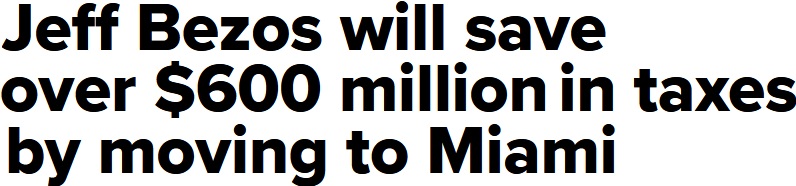
Inflation is having an effect on everything, even policy analysis. Back in 2013, I wrote that Phil Mickelson was “California’s One-Man Laffer Curve” because he wanted to escape the Golden State to save about $1.2 million per year in taxes. But now, when a goose that lays golden eggs wants to escape, the numbers are […]
TweetThis piece by Rapoza also features a discussion of the U.S. trade deficit in “goods” – any mention of which is a sure sign that the writer is a poor economist. A trade deficit in tangible things is no more economically meaningful than is a trade deficit in yellow things or things that start with…
Lindsay Mitchell writes- When National became government in 2008, Finance Minister Bill English’s determination to understand the extent of benefit-dependency led them to commission Taylor Fry to produce annual actuarial reports. These were duly published at the MSD website every year but ceased when the government changed in 2017. Now however, an Official Information request […]
TweetWriting in the Wall Street Journal, David Henderson and Charley Hooper explain why we should be thankful for high drug prices. Two slices: For Americans, paying for the discovery and development of new drugs rests on our shoulders. If we pay, we get new lifesaving medicines. If we don’t, we don’t. Almost all new drugs…
Douglas Belkin, who has an admirably adversarial publication record on higher ed, spotlights my The Case Against Education in his latest piece in The Wall Street Journal:One result of this transactional attitude has been a sharp increase in cheating. College is one of the few products whose consumers try to get as little out of…
Why Evolution is True is a blog written by Jerry Coyne, centered on evolution and biology but also dealing with diverse topics like politics, culture, and cats.
In Hume’s spirit, I will attempt to serve as an ambassador from my world of economics, and help in “finding topics of conversation fit for the entertainment of rational creatures.”
“We do not believe any group of men adequate enough or wise enough to operate without scrutiny or without criticism. We know that the only way to avoid error is to detect it, that the only way to detect it is to be free to inquire. We know that in secrecy error undetected will flourish and subvert”. - J Robert Oppenheimer.




Recent Comments