
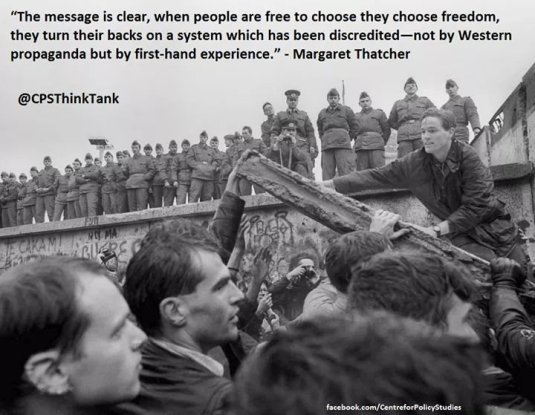
As socialist countries go, East Germany was easily the most efficient
07 Nov 2018 Leave a comment
in applied price theory, Austrian economics, economic history, Marxist economics Tags: fall of communism
Taxing Carbon is Bad Economics
07 Nov 2018 2 Comments

/cdn.vox-cdn.com/uploads/chorus_image/image/60431081/shutterstock_586114652.0.jpg)
At Institute of Economic Affairs, IEA’s Director of Research Dr Jamie Whyte explains (here) why taxing carbon is a bad economic idea. Excerpts in italics with my bolds.
The emission of greenhouse gases – CO2 from burning fossil fuels and methane from flatulent livestock – is warming the global climate. Let’s not quibble about this scientific consensus, even if there are grounds for scepticism. The question for economists is the proper policy response.
The standard view is that greenhouse emissions are a classic negative externality, and that a Pigouvian tax should be applied. For example, farmers should pay a “fart tax” for each cow they own. This would internalise the external cost of the farts, and cows would be farmed only when the total benefits of doing so exceeded the total cost.
This is preferable to a cap-and-trade system, because the cap is arbitrary. If the…
View original post 738 more words
Kid’s Climate Lawsuit Update Nov. 5
07 Nov 2018 Leave a comment
Suit wants a court to order Congress to pass a carbon tax and the president to not veto the bill.
As predicted in the previous post (reprinted below), US lawyers are following the Supreme’s lead by again asking the Ninth Circuit Court of Appeals to dismiss the case. At the same time, one motion filed at the Oregon District Court asks for a stay of proceedings there pending a ruling by the Appeals Court. Another motion asks the Oregon court to again consider narrowing the scope of the lawsuit. The documents can be accessed at Columbia’s climate litigation website for Juliana vs. United States Some excerpts in italics with my bolds, followed by the Nov. 2 post.
From Petition to Court of Appeals:
If the district court grants certification and stays all proceedings, as the Supreme Court has signaled that it should, it will obviate the need for this Court’s intervention by way of mandamus. If, however, the district court declines to grant certification (despite the Supreme Court’s clear guidance to…
View original post 4,995 more words
The binary nature of sex: a column by Deborah Soh
07 Nov 2018 Leave a comment

I’ve maintained in several posts that biological sex is not an arbitrary social construct, but an objective phenomenon into which the vast majority of humans (and most animal species) fall into the clearly delineated categories of “male” and “female”. The frequency of exceptions for sex is about 1%, or less if you omit transgender individuals who are “male” and “female” defined by chromosome constitution, genitalia, and form of gametes. Sex is largely bimodal, with most individuals falling into the two sharp “male” and “female” peaks and a deep valley of exceptional individuals between the peaks. For most purposes, we can regard sex in humans as a biological binary.
Gender, on the hand, doesn’t divide so nearly if you see it as an individual’s self-identification. Much of gender is, of course, biologically based, as when someone in a purely female body has a strong psychological (and hence biological) predilection to…
View original post 1,355 more words
Yossi Nehushtan and Stella Coyle: Ashers Baking (Part 2): Do Homophobes and Racists have a Right Not to Manifest Liberal Messages?
06 Nov 2018 Leave a comment

 At the heart of the recent Supreme Court’s decision in Ashers Baking lies the ruling that nobody should be forced to express a view in which they do not believe. The unfortunate implications of this content-neutral reasoning go far beyond the circumstances of this case. This reasoning will result in vindicating behaviours that are founded on anti-liberal values, thus undermining core liberal values.
If courts follow this reasoning they will have to rule that a bakery, for example, does not have to provide customers cakes with icing that says either ‘homosexuality is a sin’ or ‘support gay marriage’ if these views run against the deeply held belief of the bakery’s owners.
In many aspects, the statement ‘homosexuality is a sin’ is not different from ‘support gay marriage’. Both statements are legal; both contradict deeply held beliefs of others; and both reflect deeply held beliefs – religious or others. And yet…
View original post 1,372 more words
is the democratic party the graveyard of social movements?
06 Nov 2018 Leave a comment

The main theoretical argument of Party in the Street is that when movements and parties overlap, the movement will collapse if the party moves on to other issues. We saw it in the antiwar movement and now we might see it again post-2018.
After Trump’s election, we saw the rise of two movements tied with the Democratic party. One is the broadly titled “#Resistance” movement and then you have more focused ones like the March on Science or the Women’s March. What do they have in common? An overwhelming majority of participants are Democrats. What about March for Science? Dana Fisher’s work shows a very high proportion of Democrats. The March for Science people aren’t just Democrats, they are overwhelmingly Clinton Democrat (e.g., 84% had voted for Hillary Clinton).
So we now have a test. If the Democrats win the House in 2018 and the Presidency in 2020…
View original post 240 more words
Catholic peers and the Gunpowder Plot
06 Nov 2018 Leave a comment

Remember, remember the fifth of November… Today we hear from Dr Ben Coates of the House of Lords 1604-29 Section about the warning of Catholic Peers before the Gunpowder Plot…
 Lord Monteagle by John De Critz
On 26 October 1605 the Catholic nobleman William Parker, 5th Lord Monteagle, received an anonymous letter urging him to absent himself from the forthcoming session of Parliament, due to open on 5th November. This missive, the first significant hint of the Gunpowder Plot, warned mysteriously that those attending ‘shall receive a terrible blow … and yet they shall not see who hurts them’. Monteagle took the letter to Court, where he showed it to the secretary of state, Robert Cecil, 1st earl of Salisbury. The earl was initially sceptical of the letter, in part because he thought it ‘very improbable that only one nobleman should be warned and no more’ (Winwood’s Memorials ed…
View original post 752 more words
Why Bernie Sanders’ Medicare for All is a Bad Idea
06 Nov 2018 Leave a comment
in applied price theory, health economics, politics - USA Tags: health insurance
Fiscal Externalities and Meddlesome Preferences
05 Nov 2018 Leave a comment

I’ll continue some discussion from the comments at TVHE here because it’s getting significantly off the topic of the original post.
I said:
I’ve come across quite a few people advocating breeding licenses in casual conversation, it doesn’t seem that much more repugnant to add a genetic element.
Some parents are bad, therefore we should stop them being parents. The unstated premise is that we have a wise and benevolent government capable of doing this. I don’t think eugenic thought is as anachronistic as you suggest. I’m guessing most people think eugenics was largely confined to Nazi Germany, and are unaware of the nastiness that happened in the States and elsewhere under liberal democratic governments. We’re not racist like those Nazis: we have nothing to worry about.
Eric Crampton replied:
Brad, I think we’ve got another example here of fiscal externalities generating meddlesome preferences – here of some of the…
View original post 357 more words
Bootleggers and Baptists: Animal Cruelty Edition [updated]
05 Nov 2018 Leave a comment
Unsurprisingly, pig farmers are using recent controversy in New Zealand over sow crates to argue for protection against international competition:
Blame imported pork for keeping sows in cramped stalls, say three Taranaki pig farmers.
The intensive farming practice of keeping breeding sows in stalls has been in the spotlight since TV1’s current affairs programme Sunday showed scenes filmed inside a Levin piggery.
But three of Taranaki’s 25 pig farmers say sow stalls are only one part of a very complex issue.
Taranaki District Pig Committee chairman Ted Gane said it was cheap imported pork, grown using sow stalls, that forced local farmers to use the same system to remain competitive.
“Currently 40 per cent of our meat comes from overseas and I can say that 100 per cent of that would come from sow stalls.” (…)
[Free-range Inglewood pig farmer Helen Foreman] believed without a duty or tax on imported pork…
View original post 117 more words
Bootleggers and Baptists
05 Nov 2018 Leave a comment
Bruce Yandle’s excellent paper Bootleggers and Baptists: The Education of a Regulatory Economist is required reading for anyone interested in politics. It’s also a fun read.
Indeed, the pages of history are full of episodes best explained by a theory of regulation I call “bootleggers and Baptists.” Bootleggers, you will remember, support Sunday closing laws that shut down all the local bars and liquor stores. Baptists support the same laws and lobby vigorously for them. Both parties gain, while the regulators are content because the law is easy to administer. Of course, this theory is not new. In a democratic society, economic forces will always play through the political mechanism in ways determined by the voting mechanism employed. Politicians need resources in order to get elected. Selected members of the public can gain resources through the political process, and highly organized groups can do that quite handily. The most successful ventures of this sort occur where there is an overarching public concern to be addressed (like the problem…
View original post 331 more words
Scott Freeman explains monetary neutrality
05 Nov 2018 Leave a comment
in applied price theory, business cycles, economic growth, macroeconomics, monetary economics Tags: monetary policy

Stern Review on the Economics of Climate Change:William Nordhaus’ critique of discount rates
04 Nov 2018 Leave a comment
in applied price theory, applied welfare economics, development economics, economics of bureaucracy, economics of education, economics of natural disasters, energy economics, environmental economics, global warming, politics - USA, Public Choice, public economics Tags: climate alarmism


Recent Comments