The Current Financial Crisis and the Great Depressions of the 20th Century” by Prof. Timothy J. Kehoe
23 Oct 2018 Leave a comment
in applied price theory, business cycles, great depression, labour economics, labour supply, macroeconomics

 Hmmmmm…
  My brain hurts
 IPCC Freakonomics
22 Oct 2018 Leave a comment


The latest unguided missile IPCC report came out of a South Korea meeting, and surprisingly the first media response was silence. Could it be some of them actually considered that these new claims and demands are so over the top that their audiences will guffaw and break with their media masters once and for all?
 The graph illustrates the problem very clearly. Since 1992, the UN Framework Convention on Climate Change has met 23 times. These UNFCCC discussions have utterly failed to reduce CO2 emissions. Yet from 2020, emissions have to drop dramatically, if we are to stand a chance of keeping global warming below 1.5°C.

According to IPCC SR15 this will require an annual average investment of around US$2.4 trillion (at 2010 prices) between 2016 and 2035, representing approximately 2.5% of global gross domestic product (GDP). The cost of inaction and delay, however, will be many times greater. (sic). …
View original post 1,172 more words
PC culture on the wane?
22 Oct 2018 Leave a comment

Well, I don’t know if it’s really on the wane, but it seems to be a lot less pervasive than most people think. According to a new article in The Atlantic by Yascha Mounk (screenshot below), based on a new study by an organization called More In Common (click on green screenshot below, and see pdf here), fully 80% of Americans think that “political correctness is a problem in our country.” First, though a bit about the author and the study, both of whom seem to be on the liberal side.
Yascha Mounk is described on his own website as “one of the world’s leading experts on the crisis of liberal democracy and the rise of populism. The author of three books, he is a Lecturer on Government at Harvard University, a Senior Fellow at New America, a columnist at Slate, and the host of The Good Fight podcast.”
View original post 1,892 more words
Distributional Effects of Monetary Policy: An Opportunity for Austrian Economics
22 Oct 2018 Leave a comment

For a long time, Austrian macro had a unique selling point in what might be called the ‘money matters’ view: referring to the notion that changes in the money supply by their very nature can never be said to be neutral. Yeager (1997) and Horwitz (2000) describe the Austrian stance as a “fluttering veil”. On the one hand, it incorporates the belief that prosperity cannot be generated through an expansion of the money supply in the long-run (long-run neutrality of money). On the other hand, changes in the money supply have real effects (short-run non-neutrality).
This proposition can be traced back to the works of classical economists such as Hume (1970), Mill (1909), Cairnes (1873), and Cantillon (1755).[i] In his essay on economic theory, Cantillon (1755) points out that an expansion of the money supply necessarily entails distributional effects as first receivers of the newly…
View original post 1,083 more words
Missing Growth from Creative Destruction Philippe Aghion
21 Oct 2018 Leave a comment
in applied price theory, economic growth, macroeconomics Tags: creative destruction
Supreme Justice Grants Stay of Kids Lawsuit
21 Oct 2018 Leave a comment
Nice summary
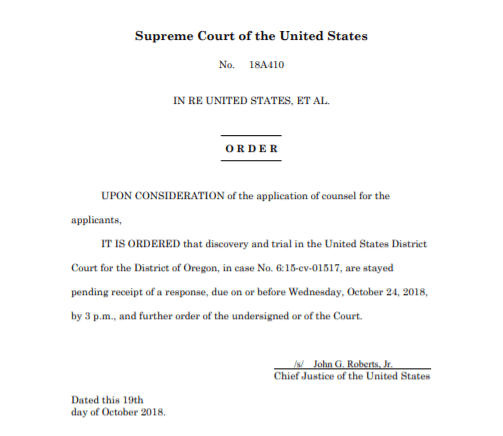
On Friday, Chief Justice Roberts stayed the discovery and trial of Juliana vs. US, pending responses from the plaintiffs to issues raised by the defense. Report from The News Review in italics with my bolds.
The U.S. Supreme Court on Friday granted a stay in the climate trial, Juliana v. United States, pending a response from the plaintiffs.
The Department of Justice asked the Supreme Court on Tuesday to dismiss the case brought by 21 young plaintiffs Thursday.
In a news release issued Friday afternoon, Meg Ward with Our Children’s Trust said the plaintiff’s legal team is working on its response, which it will file Monday.
The Supreme Court order states a response is due by Oct. 24.
Julia Olson, one of the lawyers representing the young plaintiffs, said the prosecution is confident that once the court receives the response the trial will proceed.
“As the Supreme Court has recognized…
View original post 3,495 more words
The Amazon-Whole Foods merger: Natural and organic competition in the evolving grocery industry
20 Oct 2018 Leave a comment
Rent control explained
20 Oct 2018 Leave a comment
in applied price theory, economics of regulation, urban economics

.@thinkprogress explains why @jamespeshaw doesn’t want to know the cost of #globalwarming as % of NZ GDP
20 Oct 2018 Leave a comment
in applied price theory, applied welfare economics, environmental economics, global warming, politics - New Zealand Tags: climate alarmists

Fourteenth Annual Hayek Lecture – Deirdre McCloskey: Hayekian liberalism enriches us all
20 Oct 2018 Leave a comment
in applied price theory, Austrian economics, development economics, economic history, growth disasters, growth miracles Tags: The Great Enrichment
Matt Ridley: The mysterious cycles of ice ages
20 Oct 2018 Leave a comment

 US winter storm 2018 [image credit: NASA]
A sort of review of leading ice age theories. A paper by Ralph Ellis that was featured at the Talkshop gets a mention. A point not mentioned: the carbon cycle dictates that cooling leads to the oceans absorbing more CO2, while warming leads to more outgassing of it to the atmosphere.
Record cold in America has brought temperatures as low as minus 44C in North Dakota, frozen sharks in Massachusetts and iguanas falling from trees in Florida, writes Matt Ridley.
Al Gore blames global warming, citing one scientist to the effect that this is “exactly what we should expect from the climate crisis”. Others beg to differ: Kevin Trenberth, of America’s National Centre for Atmospheric Research, insists that “winter storms are a manifestation of winter, not climate change”.
Forty-five years ago a run of cold winters caused a “global cooling” scare.
View original post 465 more words
Why the Little Ice Age ended in the middle of the 19th century
20 Oct 2018 Leave a comment
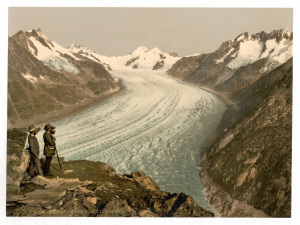 Grand Aletsch Glacier, Switzerland [Image credit: Wikipedia]
It’s not the conclusion some might be expecting…
Analysis of ice cores delivers continuous data for the first time on industrial soot from 1740 to today, reports HeritageDaily.
In the first half of the 19th century, a series of large volcanic eruptions in the tropics led to a temporary global cooling of Earth’s climate.
It was a natural process that caused Alpine glaciers to grow and subsequently recede again during the final phase of the so-called Little Ice Age.
This has now been proven by PSI researchers, on the basis of ice cores.
View original post 283 more words


Recent Comments