Climate Tipping Points Quiz

Ron Clutz's avatarScience Matters

This post is a reblog of the Manhattan Contrarian Quiz — Climate Tipping Points Edition
October 11, 2018/ by Francis Menton. Text in italics with my bolds.

On Monday the UN IPCC came out with its latest Special Report, this one supposedly addressed specifically to the allegedly dire consequences of allowing world temperatures to increase by more than an arbitrarily-selected threshold. Here is a copy of the “Summary for Policymakers,” and here is a copy of the accompanying press release. But I urge you not to peek at those until you have taken today’s very important Manhattan Contrarian Climate Tipping Points Quiz.

Many have noted that this latest Report seems to step up the level of hysteria and shrieking about the threat of climate change to a whole new level. The gist is, we are doomed, doomed, doomed unless mankind takes immediate drastic action to reduce and then eliminate carbon…

View original post 1,722 more words

How We Create and Destroy Growth: A Nobel for Romer and Nordhaus

afinetheorem's avatarA Fine Theorem

Occasionally, the Nobel Committee gives a prize which is unexpected, surprising, yet deft in how it points out underappreciated research. This year, they did no such thing. Both William Nordhaus and Paul Romer have been running favorites for years in my Nobel betting pool with friends at the Federal Reserve. The surprise, if anything, is that the prize went to both men together: Nordhaus is best known for his environmental economics, and Romer for his theory of “endogenous” growth.

On reflection, the connection between their work is obvious. But it is the connection that makes clear how inaccurate many of today’s headlines – “an economic prize for climate change” – really is. Because it is not the climate that both winners build on, but rather a more fundamental economic question: economic growth. Why are some places and times rich and others poor? And what is the impact of these differences?…

View original post 3,487 more words

Indian feminism and the role of the environment: Why the Google memo is still right

Artir's avatarNintil

In my previous post here I explained why the Google memo is fundamentally right in its factual claims about the broad population, which in turn explains the proportion of women in Google itself. Here I discuss some arguments against what has already been explained.

View original post 4,326 more words

Going for the 2°C (a Stern approach) could be twice as costly ($67.3tr) as doing nothing

.@EconomicPolicy How does this become an argument for rather than against doubling the minimum wage to $15?

The essence of Josh Wright’s FTC tenure was to ensure that benefits outweigh costs; the rest is commentary

More direct democracy or a more directed democracy in populist-run Italy?

The Constitution Unit's avatarThe Constitution Unit Blog

downloadFor the first time since its inception, the Five Star Movement finds itself in government, with the stated intention of increasing the use of direct democracy by increasing the circumstances in which a national referendum can be held. Carlo Fusaro examines the proposals and their potential impact on Italian democracy. 

This post intends to report on the most recent initiatives concerning referendums by the new populist majority in Italy, as represented in the government formed by the Five Star Movement (M5S) and by the League (formerly known as the Northern League), following the 4 March 2018 elections.

The proposals

While the two vice-premiers Matteo Salvini and Luigi di Maio have been making headlines in other areas, Riccardo Fraccaro, a University of Trento graduate in international environmental law who serves as the minister for relations with parliament and direct democracy, has recently announced the constitutional reform strategy of the Cabinet.

Since…

View original post 1,469 more words

Critical Junctures and Path Dependency in “Why Nations Fail”: Implications for U.S. Foreign Aid Policy

Why nations fail is a great book and a great read but reviewers like David Levine were quite good in pointing out its many flaws.

Michael Adamson's avatarNotes On Liberty

Greeted with wide acclaim, Why Nations Fail: The Origins of Power, Prosperity, and Poverty, should put to bed all debate on using foreign aid to promote economic development on a national level.

Authors Daron Acemoglu and James A. Robinson effectively deploy path dependency to explain the trajectories of the political institutions that form the core of their argument: Nations with “inclusive” political institutions succeed economically whereas those saddled with extractive” political institutions fail. Citing cases from myriad times and places, the authors demonstrate the relationship between political institutions and economic development. The authors tether their argument to Schumpeter’s idea of creative destruction in the marketplace: No creative destruction, no long-term development. Nations encumbered by extractive political institutions typically privilege monopoly. And so, over time, their economies atrophy.

So far, so good. In deploying path dependency to explain why institutions, once in place, tend to persist, authors add a solid…

View original post 638 more words

Jason Brennan on why capitalism is a better utopia than socialism

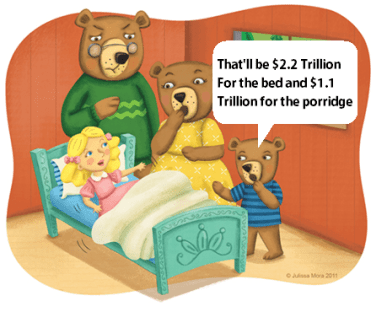
IPCC SR15 Report lacks cost/benefit analysis of ‘Goldilocks thinking’

tallbloke's avatarTallbloke's Talkshop

goldilocksThe UN climate report known as SR15 calls for high carbon taxes from $135 to $5,500/ton while a Wall Street Journal op-ed by Bjorn Lomborg of Oct. 9, 2018 says the costs of proposed CO2 cuts are not worth it, leading the Friends of Science Society to slam the UN report as Goldilocks thinking without any rational cost-benefit analysis or practical plan.

Friends of Science says the WSJ paragraph in which Lomborg describes the economic impact on Europe of cutting emissions 80% by 2050 should be front page news in every newspaper in Europe and North America. Lomborg notes that, with a well designed and coordinated climate policy (i.e. the opposite of what European and North American governments have now), the annual costs will reach U.S. $3.3 trillion, “more than twice what EU governments spend today on health, education, recreation, housing, environment, police and defense combined”.

“The policy will make…

View original post 470 more words

Ever-extending regulation

Michael Reddell's avatarcroaking cassandra

In the rush to regulate –  that seems to characterise all our governments these days – it was announced yesterday that government plans to legislate to give the force of statute law (complete with penalties) to “do not knock” signs on someone’s front door.       What next?  Statutory penalties for, say, people who dawdle down Lambton Quay at lunchtime trying to text as they walk, or any of the many other minor social irritants?

But the initiative that particularly caught my eye was a proposal to legislate to fix the maximum cost of “high cost” credit at no more than 100 per cent of the value of the loan.  Borrow $500 and the total interest and fees you will ever pay will be capped at $500.   Apparently (judging from the high level material the minister published) regardless of how long the term of the loan is.  That…

View original post 803 more words

Minnesota Valve Turners Case Dismissed Without Necessity Defense

Ron Clutz's avatarScience Matters

“Stunning”: State Court Silences Climate Experts Set to Testify in Valve Turners’ Necessity Defense Trial  “Four days before trial, for no apparent reason, the court eviscerated our defense, and essentially overruled itself.” Excerpts below in italics with my bolds.

Minneapolis October 8, 2018 In an eleventh hour decision, a Minnesota court “eviscerated” the defense of three activists—whose landmark trial began Monday for their 2016 multi-state #ShutItDown action that temporarily disabled tar sands pipelines crossing the U.S.-Canada border—by barring experts from testifying that their civil disobedience was necessary because fossil fuels are driving the global climate crisis.

While all charges against Steve Liptay, who filmed the Minnesota action, have been dropped, valve turners Emily Nesbitt Johnston and Annette Klapstein, along with their support person, Benjamin Joldersma, are still facing felony charges under Minnesota state law. Their legal team will now have to present their “necessity defense” without the slate…

View original post 1,105 more words

Image

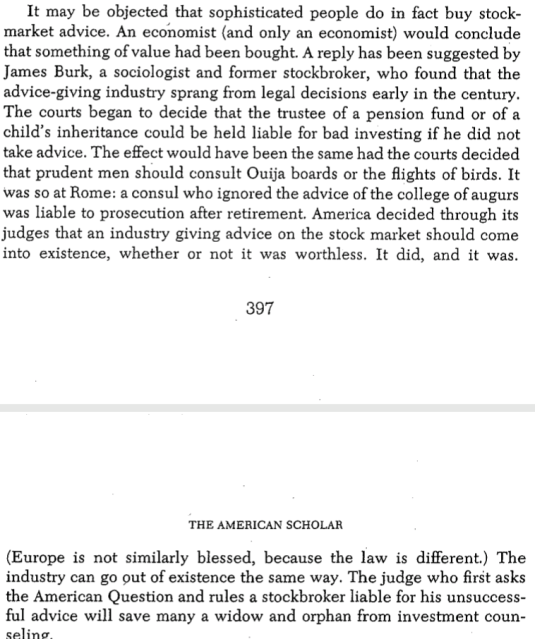
Deirdre McCloskey explains the origin of consultants

Laissez-Faire Rides Again

rothbarddotcom's avatarRothbard.com

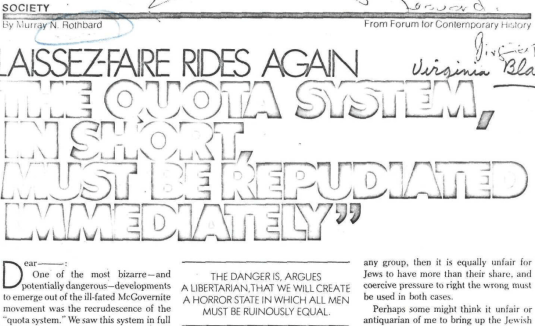
Simon Franek brings us another piece of buried treasure from the FEE archive. This time it is Murray Rothbard’s article “Laissez-Faire Rides Again” from the February 1973 edition of Intellectual Discourse. Click the image below for the PDF.

lfra

View original post 25 more words

Paul Romer: the view from Economic History

npalma's avatarEconomic Growth in History

In this post I write about the connections between Paul Romer’s work, which is essentially applied theory, and the empirical work on long-run economic growth done by economic historians. How was Romer influenced by the work of economic historians? has he influenced economic history? and have his theories been confirmed by the recent work of economic historians? (preview: I will argue that the answer is no).

Addendum shortly after publishing: my point above is not that Romer is wrong in general; in fact some of his ideas *about ideas* are fundamental for us to think about growth in the past. (Read on if this isn’t clear yet.)

Paul Romer’s was a well-deserved and long-anticipated prize. Many predicted he would eventually win, including myself in my very first academic article, written when I was a undergradute and published in 2008. (alternatively, click here for an ungated version). I now…

View original post 1,340 more words

Previous Older Entries Next Newer Entries

Coordination Problem

Celebrating humanity's flourishing through the spread of capitalism and the rule of law

Libertarian Land

Celebrating humanity's flourishing through the spread of capitalism and the rule of law

Arin’s Substack

Celebrating humanity's flourishing through the spread of capitalism and the rule of law

David Andolfatto

Celebrating humanity's flourishing through the spread of capitalism and the rule of law

Monetary Non-Neutrality

Celebrating humanity's flourishing through the spread of capitalism and the rule of law

Reason Magazine

Celebrating humanity's flourishing through the spread of capitalism and the rule of law

Coyote Blog

Celebrating humanity's flourishing through the spread of capitalism and the rule of law

Thoughts from the North

Celebrating humanity's flourishing through the spread of capitalism and the rule of law

Fardels Bear

A History of the Alt-Right

Vincent Geloso

Econ Prof at George Mason University, Economic Historian, Québécois

Bassett, Brash & Hide

Celebrating humanity's flourishing through the spread of capitalism and the rule of law

Truth on the Market

Scholarly commentary on law, economics, and more

The Undercover Historian

Beatrice Cherrier's blog

Matua Kahurangi

Celebrating humanity's flourishing through the spread of capitalism and the rule of law

Temple of Sociology

Celebrating humanity's flourishing through the spread of capitalism and the rule of law

Velvet Glove, Iron Fist

Celebrating humanity's flourishing through the spread of capitalism and the rule of law

Why Evolution Is True

Why Evolution is True is a blog written by Jerry Coyne, centered on evolution and biology but also dealing with diverse topics like politics, culture, and cats.

NoTricksZone

Celebrating humanity's flourishing through the spread of capitalism and the rule of law

Homepaddock

A rural perspective with a blue tint by Ele Ludemann

Kiwiblog

DPF's Kiwiblog - Fomenting Happy Mischief since 2003

The Dangerous Economist

Celebrating humanity's flourishing through the spread of capitalism and the rule of law

Watts Up With That?

The world's most viewed site on global warming and climate change

The Logical Place

Tim Harding's writings on rationality, informal logic and skepticism

Doc's Books

A window into Doc Freiberger's library

The Risk-Monger

Let's examine hard decisions!

Uneasy Money

Commentary on monetary policy in the spirit of R. G. Hawtrey

Barrie Saunders

Thoughts on public policy and the media

Liberty Scott

Celebrating humanity's flourishing through the spread of capitalism and the rule of law

Point of Order

Politics and the economy

James Bowden's Blog

A blog (primarily) on Canadian and Commonwealth political history and institutions

Science Matters

Reading between the lines, and underneath the hype.

Peter Winsley

Economics, and such stuff as dreams are made on

A Venerable Puzzle

"The British constitution has always been puzzling, and always will be." --Queen Elizabeth II

The Antiplanner

Celebrating humanity's flourishing through the spread of capitalism and the rule of law

Bet On It

Celebrating humanity's flourishing through the spread of capitalism and the rule of law

History of Sorts

WORLD WAR II, MUSIC, HISTORY, HOLOCAUST

Roger Pielke Jr.

Undisciplined scholar, recovering academic

Offsetting Behaviour

Celebrating humanity's flourishing through the spread of capitalism and the rule of law

JONATHAN TURLEY

Res ipsa loquitur - The thing itself speaks

Conversable Economist

In Hume’s spirit, I will attempt to serve as an ambassador from my world of economics, and help in “finding topics of conversation fit for the entertainment of rational creatures.”

The Victorian Commons

Researching the House of Commons, 1832-1868

The History of Parliament

Articles and research from the History of Parliament Trust

Books & Boots

Reflections on books and art

Legal History Miscellany

Posts on the History of Law, Crime, and Justice

Sex, Drugs and Economics

Celebrating humanity's flourishing through the spread of capitalism and the rule of law

European Royal History

Exploring the Monarchs of Europe