

Capitalism and Millennials: The 2018 James Q. Wilson Lecture
23 Sep 2018 Leave a comment
in applied price theory, development economics, entrepreneurship Tags: anti-foreign bias, anti-market bias, pessimism bias, The Great Enrichment
Why the Lights Are Still Off in Puerto Rico
23 Sep 2018 Leave a comment
in applied price theory, development economics, economic history, economics of natural disasters, energy economics, industrial organisation, international economics, politics - USA
Free To Choose 1980 – The Tyranny of Control – Hand Looms
23 Sep 2018 Leave a comment
in applied price theory, development economics, economic growth, economics of bureaucracy, economics of regulation, growth disasters, industrial organisation, market efficiency, Milton Friedman, Public Choice, rentseeking, survivor principle, television Tags: India, industry policy, picking winners
Interview: Eugene F. Fama, 2013 Prize in Economic Sciences
23 Sep 2018 Leave a comment
in applied price theory, economics of information, entrepreneurship, financial economics Tags: Eugene Fama
Energy efficiency doesn’t actually pay
23 Sep 2018 Leave a comment
in applied price theory, applied welfare economics, energy economics, environmental economics Tags: energy efficiency, green paradox
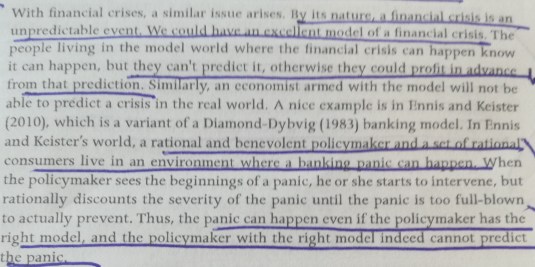
Stephen Williamson on how good economic models of financial crises can’t predict them
22 Sep 2018 Leave a comment
in applied price theory, business cycles, economics of information, economics of regulation, global financial crisis (GFC), great recession, macroeconomics, monetary economics Tags: banking panics
Andrew Sullivan on tribalism
22 Sep 2018 Leave a comment

I’ve watched with approbation as Andrew Sullivan, with whom I’ve often disagreed, seems to have mellowed, becoming at least a centrist instead of a conservative, and remaining mum about his mystifying Catholicism. Sullivan’s nice new column in New York Magazine, on tribalism, starts with Jon Haidt and Greg Lukianoff’s new book, The Coddling of the American Mind, and then goes into the bitter and acerbic polarization of the American electorate, as exemplified by the fracas around Brett Kavanaugh’s nomination (I still am unable to automatically equate accusations with fact) and the firing of the New York Review of Books editor Ian Buruma simply because he published a piece by an accused sexual assailant (Jian Ghomeshi) who was acquitted. Sometimes I feel the world has gone mad, and I no longer know where I fit in. I can’t align with the extreme Left, whose actions often seem fascistic…
View original post 854 more words
Say, CJR: Never hurts to check your archives
21 Sep 2018 Leave a comment

It may seem picky to dispute claims that the Watergate reporting of Bob Woodward and Carl Bernstein “exposed the coverup” the Nixon administration put in place to deflect investigators’ attention from the scandal’s signal crime, the break-in at Democratic National Headquarters in June 1972.
But, really, it isn’t picky, because to credit Woodward and Bernstein with unraveling the coverup is to distort and exaggerate their marginal overall contributions to uncovering Watergate.
Thus, this post, which calls attention to such a claim in Columbia Journalism Review’s takeout about Woodward’s new book, the latest to describe a chaotic Trump administration.
The journalism review article says that Woodward and Bernstein, in their reporting for the Washington Post, “used the most famous anonymous source in American history — FBI Associate Director Mark Felt a.k.a. ‘Deep Throat’ — to expose the cover-up behind the…
View original post 608 more words
German Animal Lovers Boycott Wind Power: Vegans Incensed by Bloody Bird & Bat Slaughter
21 Sep 2018 Leave a comment


German vegans have mounted a boycott against wind power, incensed by the pointless and bloody slaughter of millions of birds and bats.
Irony comes in many sizes and shapes, but the idea of one group of moralising zealots taking on another group of moralising zealots, is simply delicious (so to speak).
The concept of carnivorous wind and sun worshippers going toe to toe with tofu and mung bean munching Germans throws up the opportunity for a new form of blood-sport, a bit like bear-baiting, in the Deutschland of old.
At least one electricity retailer has decided to deliver up the kind of electricity that might just satisfy the ethically fussy palates of German vegans. The cleverly named ‘Vegawatt’ promises to deliver electricity to satisfy all animal lovers, including hard-core vegos.
Although, STT is not quite sure how Vegawatt proposes separating its morally sound megawatts from the unethical stuff, enabling it…
View original post 605 more words
The Pox of Liberty – dixit the Political Economy of Public Health
21 Sep 2018 Leave a comment


A few weeks ago, I finished reading the Pox of Liberty authored by Werner Troesken. Although I know some of his co-authors personally (notably the always helpful Nicola Tynan whose work on water economics needs to be read by everyone serious in the field of economic history – see her work on London here), I never met Troesken. Nonetheless, I am what you could call a “big fan” in the sense that I get a tingling feeling in my brain when I start reading his stuff. This is because Troesken’s work is always original. For example, his work on the economic history of public utilities (gas and electricity) in the United States is probably one of the most straightforward application of industrial organization to historical questions and, in the process, it kills many historical myths regarding public utilities. The Pox of Liberty is no exception and it…
View original post 721 more words
Carbon Credits Backfire
21 Sep 2018 1 Comment


One of the favorite climate policy prescriptions is to apply carbon pricing either by a direct tax or by requiring purchase of carbon credits or offsets. Now comes a report of unintended consequences, namely that rising prices for carbon credits have increased the demand for coal, the most disliked of all fossil fuels.
From Bloomberg Why Higher Pollution Costs Aren’t Denting Coal Demand in EU Excerpts in italics with my bolds.
If you thought the surging price of fossil-fuel emissions in Europe would hurt coal demand, think again.
The highest prices for carbon credits in a decade have also lifted natural gas, discouraging power stations from making the switch away from coal. As a result, demand remains strong for the dirtiest fossil fuel in the continent that’s doing the most to clean up its economy. Coal prices as a result reached their highest in five years on Tuesday.
Gas futures…
View original post 1,171 more words
A Conversation With David Friedman – part 7: Keynesianism, Chicago & Austrian Schools, & AnCap
21 Sep 2018 Leave a comment
in applied price theory, Austrian economics, comparative institutional analysis, constitutional political economy, David Friedman, economics of crime, law and economics
David Friedman at Libertopia 2010
21 Sep 2018 Leave a comment
in applied price theory, applied welfare economics, David Friedman, economics of crime, economics of information, economics of media and culture, economics of regulation, entrepreneurship, industrial organisation, law and economics, property rights Tags: creative destruction


Recent Comments