Towards the Flame: Empire, War and the End of Tsarist Russia by Dominic Lieven (2015)
16 Sep 2018 Leave a comment

Towards the Flame is a diplomatic history of imperial Russia in the years 1905 to 1920. By diplomatic history, I mean a detailed, a really detailed, account of the men who ran Russia’s Foreign Ministry and its embassies (with sometimes a nod to the heads of the army, navy or other government ministers), their policies, debates and disagreements. We are given pen portraits of Russia’s premiers, foreign and finance ministers, and key ambassadors to London, Paris, Berlin, Vienna and beyond.
And the guts of the book is a history of their diplomacy – the papers and memos they wrote laying out Russia’s strategies – the information they gathered about rival nations’ aims and goals – the assessments each nations’ military attaches made about their rivals’ readiness for war. (Position papers like the brilliantly prescient memorandum former head of secret police Petr Durnovo gave Tsar Nicholas in February 1914 which said…
View original post 6,128 more words
Storm of Steel by Ernst Jünger (1920)
16 Sep 2018 Leave a comment
A figure stripped to the waist, with ripped-open back, leaned against the parapet. Another, with a triangular flap hanging off the back of his skull, emitted short, high-pitched screams. This was the home of the great god Pain, and for the first time I looked through a devilish chink into the depths of his realm. (p.31)
Ernst Jünger (1895-1998) fought for the German army in the First World War. Wikipedia details his war career.
Most other memoirs and fictions about the war took years to surface, while the authors struggled with their memories and to find words to describe the experience. No such hesitation for Jünger, who converted the 16 diaries he’d kept during his three-year service into a narrative – titled In Stahlgewittern – which he had privately printed in 1920 in an edition of 2,000.
 Ernst Jünger in 1919 – looking miraculously untouched…
View original post 6,402 more words
World Bank Study Confirms that Free Markets Encourage Development in Poor Nations
16 Sep 2018 1 Comment

I periodically explain that pro-market policies are the best way of helping poor people.
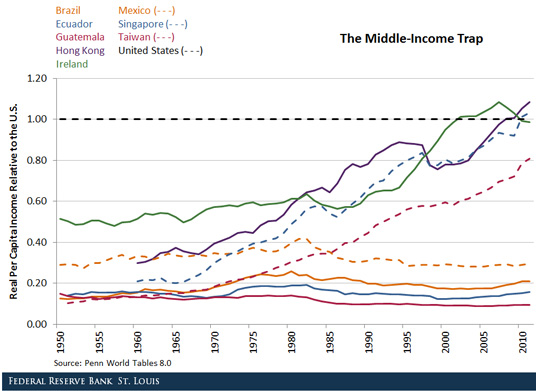 The reason rich countries are rich is because they had lengthy periods of limited government, free markets, and the rule of law.
And the convergence literature shows that the same thing is true for developing nations.
Today, let’s look at some new research from the World Bank on how good policy plays a role in generating wealth from natural resources. The authors start by explaining the issue they want to investigate.
The literature on economic development often assumes that natural resource endowments are exogenous. …the resource economics literature has emphasized that the resource base is endogenous to investment in exploration
and extraction. That literature has, however, overlooked the role that market orientation and institutions play in driving investments in the resource sector. Our aim is to bridge the gap between these two literatures and explore the…
View original post 691 more words
What’s next in history of economics? A wish list
16 Sep 2018 Leave a comment

I just defended my habilitation, a rite de passage meant to evaluate an academic’s ability to develop a research program, to mentor graduate students and to hold a professorship. It’s a long process which begins with writing a thesis and ends up with answering two hours of questions from a peer jury. Part of the discussion looks like an unbounded meditation on the intellectual challenges ahead, with questions on methodology and future topics, yet the other is about navigating the financial and institutional constraints besetting the field, and they are especially critical in history of economics. The whole thing involves a deal of reflexivity and an insane amount of red tape.
Below is the list of topics I wrote down when preparing the defense, those I wish to see historians of recent economics research in the years to come. It is more a wish list than an actual research program…
View original post 1,000 more words
Recycled rubbish
15 Sep 2018 Leave a comment

That’s the title of my former colleague Ian Harrison’s response to the government’s consultative document on getting rid of (some types of) plastic bags. The consultation itself closed yesterday, but nobody supposes the consultation itself was remotely serious – the irrational ban is going to happen anyway. Having dug fairly deeply into the material used to support/underpin the consultative document, Ian illustrates just how little substance there is to the case.
Here are his key conclusions
Supermarket checkout bags do not materially contribute to littering. Common sense and overseas evidence tells us that supermarket checkout bags are not littered frequently. There is more littering of very small bags, but mostly they will not be caught by a ban. Supermarket bags possibly contribute only around 0.1-0.2 percent of littered rubbish by weight. The Ministry has neglected to conduct a survey on the actual extent of supermarket bag littering.
Supermarket checkout…
View original post 1,112 more words
Can the Free Market End Global Poverty? Nobel Laureate Joseph Stiglitz vs. NYU’s William Easterly
15 Sep 2018 1 Comment
in applied price theory, comparative institutional analysis, development economics, economic history, growth disasters, growth miracles, history of economic thought Tags: The Great Enrichment, William easterly
BBC’s Hardtalk presenter claims Israel ‘slaughters civilian protesters’
15 Sep 2018 Leave a comment

The September 5th edition of the BBC programme ‘Hardtalk‘ was devoted to an interview with Israel’s ambassador at the UN, Danny Danon.
“In the turbulent recent history of the Middle East, has there ever been a time when Israel has seemed more powerful – militarily, diplomatically and economically? Israel has the fulsome support of the Trump Administration and also has common strategic interests with Saudi Arabia and Arab nations preoccupied with perceived threats from Iran. HARDtalk’s Stephen Sackur speaks to Israel’s ambassador to the UN, Danny Danon. Is Israel making wise choices from its position of strength?”
The interview – which was aired on the BBC World News channel, the BBC News channel and on BBC World Service radio, with a clip also posted on the BBC News website – followed the usual format employed by presenter Stephen Sackur in which he lays out pre-prepared lists…
View original post 833 more words
News from New Zealand
14 Sep 2018 Leave a comment

Spartacus does not know who Jim Rose is, but this is what he wrote for the New Zealand Herald. And don’t expect this to be published in the mainstream media on the big island:
Read the whole thing, but here are the bookends – emphases are Spartacus’:
Asylum seekers in the Australian camps on Manus Island in PNG and on Nauru are said to be living in chambers of horrors. In fact they are not just safe from the persecution they fled back home, they have gone from being just another asylum seeker in a UN refugee camp in Southeast Asia or the Middle East, to having the entire resources of the Australian Government seeking to place them in a third nation.
Nauru and Manus Island asylum seekers receive free room and board, healthcare and an army of activist lawyers…
View original post 112 more words
If true, prices would be tumbling now as some sell in anticipation of no-deal Brexit housing price crash of 1/3rd?
14 Sep 2018 Leave a comment
in applied price theory, international economics

My Paper “The Fisher Effect and the Financial Crisis of 2008” Is Now Available
13 Sep 2018 Leave a comment

Back in 2009 or 2010, I became intrigued by what seemed to me to be a consistent correlation between the tendency of the stock market to rise on news of monetary easing and potentially inflationary news. I suspected that there might be such a correlation because of my work on the Great Depression inspired by Earl Thompson, from whom I first learned about a monetary theory of the Great Depression very different from Friedman’s monetary theory expounded in his Monetary History of the United States. Thompson’s theory focused on disturbances in the gold market associated with the demonetization of gold during World War I and the attempt to restore the gold standard in the 1920s, which, by increasing the world demand for gold, was the direct cause of the deflation that led to the Great Depression.
I later came to discover that Ralph Hawtrey had already propounded Thompson’s theory…
View original post 799 more words
German Wind Power Fails Again: Coal-Fired Power Prevents Return to Dark Ages
13 Sep 2018 Leave a comment


When it comes to wind and solar, no country went harder or faster than Germany. As they say though, act in haste, repent at your leisure.
A grid on the brink of collapse and rocketing power prices is all that Germans have to show for their obsession about powering themselves with daily sunshine and occasional breezes.
Once again, nature’s wonder fuels have left German power consumers in the lurch. And, once again, its ‘dirty’ old coal-fired power plants prevented a return to the Dark Ages.
How Coal Saved Germany’s Summer
The Global Warming Policy Forum
Andreas Mihm
31 August 2018
Where does the electricity come from when the last coal-fired power plant is shut down?
How safe is the electricity flow after leaving nuclear and coal power? The government relies on imports, the energy industry considers this very risky.
In mid-August, the Federal Environment Agency rejoiced that electricity generation from…
View original post 835 more words
BBC WS airbrushes terror out of a story about Palestinian prisoners
13 Sep 2018 Leave a comment
The September 7th edition of the BBC World Service radio programme ‘The Fifth Floor’ included an item described in its synopsis as follows:
“Radio messages for prisoners
Around 6,000 Palestinians are currently detained in Israeli jails, and one of the ways they get news from home is through Palestinian radio. Tala Halawa of BBC Monitoring is based in Ramallah and has been listening in.”
The introduction by presenter David Amanor (from 17:31 here) likewise did not bother to inform listeners why those people are serving time in prison or that over 2,000 of them are directly responsible for the murders of Israelis.
Amanor: “Tala Halawa of BBC Monitoring tells me, by the way, the number of Palestinian radio stations in the West Bank has been steadily increasing over the years and so has the variety of programmes aimed at prisoners – yes, prisoners. Around six thousand are currently…
View original post 1,183 more words


Recent Comments