The Economics of Foreign & Military Intervention with Chris Coyne
04 Apr 2014 Leave a comment
in applied welfare economics, constitutional political economy, development economics, law and economics, liberalism, Public Choice
The Household Demand for Low Carbon Public Policies
04 Apr 2014 Leave a comment
in applied welfare economics, environmental economics, environmentalism, politics - USA, Public Choice Tags: Matthew Kahn

Managerial Econ: Thwarting Innovation in Sunscreen
03 Apr 2014 1 Comment
in applied welfare economics, economics of regulation, law and economics, organisational economics
One consequence of strict FDA rules on drug approvals is that it is really expensive to improve sunscreen.
The Washington Post has a new story titled “FDA review of new sunscreen ingredients has languished for years, frustrating advocates.”
Since 10,000 Americans die of melanoma every year, this delay has real consequences for consumers. How many people did the FDA kill this year?
Let the climate science be settled! Only the economics matter
03 Apr 2014 2 Comments
in applied welfare economics, development economics, environmental economics, politics, Public Choice Tags: global warming
The great tactical victory of environmentalists is keeping the debate on the science going because even if the science is right, the economic costs are small.
Richard Tol on the scientific consensus about human-caused global warming skepticalscience.com/graphics.php?g… http://t.co/OpdRtsY1tx—
John Cook (@skepticscience) March 24, 2015
Let the climate science be settled. How much will global warming cost is the correct question for policy debate.
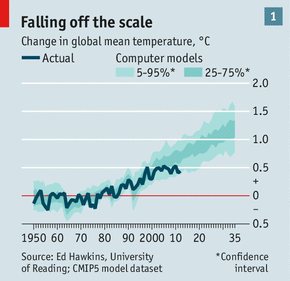
Global warming, although real, is not apt to be severe. It will lower the level of GDP by maybe 2%. The loss of one year’s income growth! Courtesy of David Friedman’s reading of the report, this is what the IPCC said this week:
With these recognized limitations, the incomplete estimates of global annual economic losses for additional temperature increases of ~2°C are between 0.2 and 2.0% of income (±1 standard deviation around the mean)
Many of the consequences of global warming will be beneficial – warmer in some places, colder in others; wetter in some places and drier in others. The sea level rises will mean local problems, not a planetary crisis.
New Zealand will have a more reliable power supply because of increased winter rainfall as well as warmer winters. Most of New Zealand’s power supply is from lakes that rely on the Spring melting of the winter snow rather than winter rainfall.
The chances of India, China and the rest of the Third World agreeing to forego or even slow their economic development to fight global warming is zero even before you consider the international collective action, verification and free rider problems.
Climate changes have a greater impact in the most under-developed countries that are yet to embrace capitalism. Agriculture provides the livelihoods of 30 per cent or more of their populations, many of whom still practice subsistence agriculture.
Yet the trend in developing countries is to be much less dependent on agriculture as a source of employment and family incomes. If per capita income in the poor countries grows in the next forty years as rapidly as it has in the forty years just past, their vulnerability to climate change should diminish.
Adaptation and richer is safer are the only games in town for both the developed and the developing worlds.
The only case for even a token carbon tax is to avoid green tariffs in the EU and USA on exports. We may as well collect the revenue for ourselves rather than let the EU and USA pocket it.
p.s The report of the IPCC yesterday was a one-day media wonder in the country where I live. I could not find a single story today in the Dominion Post, which is the paper for the political capital for New Zealand.
One of the greatest moments in TV – The Wire – Major Colvins speech: A paper bag for drugs
02 Apr 2014 Leave a comment
the best single case made for ending the war on drugs from the greatest TV show of them all. A bit over 3 minutes long.
Years ago, I remember reading a short news note about a Rand study of occupational hazards facing drug gangs in Washington, DC in the 1970s.
In a typical career of a few years, the annual risks were these:
- The chances of being caught by the police was 22% – usually 18 months in prison;
- the chances of serious injury 7%;
- The chances of being murdered by a business associate or market rival was 1.4%;
- the pay for street dealers is rather poor and not much better than their next best job opening.
Gave up on the war on drugs right there and then. Death and injury are the main occupational hazards of a drug dealer.
Murder was the leading cause of death of young black Americans.
Another paper pointed out that one reason the death penalty did no work so well was because people spent so long on death row due to appeals that taking them out of the drug trade increased their life expectancy.
The execution rate on death row is about twice the death rate from accidents and violence for all American men, and only slightly greater than the rate of accidental and violent death for all black males aged 15 to 34.
Bad prison conditions—well known, pervasive and immediate—have a more significant deterrent role against crime. Death row is a rather safe place to be?
The incentives to research the economics of global warming – the minimum wage edition
02 Apr 2014 Leave a comment
in applied welfare economics, economics of natural disasters, environmental economics, personnel economics, Public Choice Tags: David Card, global warming, IPCC, Richard Tol
David Card’s research suggested that small rises in the minimum wage do not reduce employment by much.
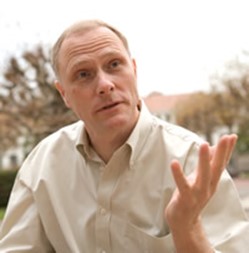
He said that he did not do much further research in the area because people were so personally unpleasant for him:
I haven’t really done much since the mid-’90s on this topic. There are a number of reasons for that that we can go into.
I think my research is mischaracterized both by people who propose raising the minimum wage and by people who are opposed to it.
… it cost me a lot of friends. People that I had known for many years, for instance, some of the ones I met at my first job at the University of Chicago, became very angry or disappointed.
They thought that in publishing our work we were being traitors to the cause of economics as a whole.
I also thought it was a good idea to move on and let others pursue the work in this area. You don’t want to get stuck in a position where you’re essentially defending your old research.
You need a thick hide and academic tenure to do research into the minimum wage these days. There are plenty of research topics that do not cost you friends.
Richard Tol has pointed out that maybe 20 or so academic economists work on climate change on a regular basis. Many of the key survey papers are written by the same few people, including him.

The reasons were that inter-disciplinary works is looked down on in the economics profession and government agencies do not like what economic research says about the costs and benefits of global warming so they pre-emptively do not fund it.
Richard Tol quit as the lead author of an economics chapter of the most recent of the IPCC report after a dispute about research techniques. Tol had been invited to help in the drafting in a team of 70 and was also the coordinating lead author of a sub-chapter about economics.
When he dissented about the quality and alarmist nature of the economics of the IPCC reports, they smeared him so badly as a fringe figure that you wonder why they hired him in the first place.
The co-chair of the IPCC working group that produced the report, said Richard Tol was outside the mainstream scientific community and was upset because his research had not been better represented in the summary:
“When the IPCC does a report, what you get is the community’s position. Richard Tol is a wonderful scientist but he’s not at the centre of the thinking. He’s kind of out on the fringe,” Professor Field said before the report’s release.
You cannot, on the one hand, say that you have hired the best and the brightest to work on “the greatest moral, economic and social challenge of our time” and then say that a dissenting member is a fringe figure. If that was true, rather than a smear, he would never have been hired in the first instance.
Nor would Richard Tol have been asked to write a 2009 survey of the economics of climate change for the leading surveys journal in all of economics – The Journal of Economic Perspectives. This fringe figure said in that survey in 2009 that:
Only 14 estimates of the total damage cost of climate change have been published, a research effort that is in sharp contrast to the urgency of the public debate and the proposed expenditure on greenhouse gas emission reduction.
These estimates show that climate change initially improves economic welfare. However, these benefits are sunk.
Impacts would be predominantly negative later in the century.
Global average impacts would be comparable to the welfare loss of a few percent of income, but substantially higher in poor countries.
Still, the impact of climate change over a century is comparable to economic growth over a few years.
The IPCC hired Tol because their economics of global warming chapters would have lacked credibility if he had not been on the team. LBJ said that it is better to have someone inside the tent pissing out than outside pissing in.
Richard Tol even has an academic stalker:
Bob Ward, has reached a new level of trolling. He seems to have taking it on himself to write to every editor of every journal I have ever published in, complaining about imaginary errors even if I had previously explained to him that these alleged mistakes in fact reflect his misunderstanding and lack of education. Unfortunately, academic duty implies that every accusation is followed by an audit. Sometimes an error is found, although rarely by Mr Ward.
Richard Tol blogs at http://richardtol.blogspot.co.nz/
David Friedman on Bits From the Latest IPCC Report
02 Apr 2014 Leave a comment
in applied welfare economics, David Friedman, economics of natural disasters, environmental economics
I have not yet gotten into the full report but, judging from accounts I have seen, 2°C of additional warming is about what it suggests we can expect by 2100 if we don’t do much to prevent it. So if policies to prevent warming reduce the annual growth rate of world income from (say) 2% to 1.98%, the resulting loss will just about cancel the gain. Not a compelling argument for switching from fossil fuels to solar power.
via Ideas: Bits From the Latest IPCC Report.

Opportunity for all: How to think about income inequality – AEI
02 Apr 2014 Leave a comment
in applied welfare economics, labour economics, public economics
… The conventional wisdom on inequality is built on three assumptions: (1) Income inequality is inherently unjust; (2) it is bad for the economy; and (3) government redistribution is the best way to remedy it. According to this narrative, narrowing the gap between what wealthy and working-class Americans earn should be our top political priority, and policies such as raising taxes or increasing the minimum wage are the answer.
This conventional wisdom is incorrect. A free enterprise society is not a zero-sum game in which citizens fight over resources. It should be a shared journey that empowers everyone to improve their station and earn their own success. Income differences are inevitable, and they are not inherently problematic as long as the opportunity to rise is available to everyone. Survey data show that the American people agree: narrowing the income gap is an afterthought for people who believe everyone has a shot at success, but it ranks as a top priority among those who feel the game is rigged.
While fixating on the distribution of income per se is misguided, the free enterprise movement must not neglect the reason for the debate. Mobility and opportunity are indeed falling in low-income America. And as the policy failures of the past half-decade have made painfully clear, outdated policies actually exacerbate the problematic trends they are intended to reverse.
Fighting to lift up vulnerable people is a mission with universal resonance. It is time for advocates of free enterprise to join the conversation, explain the truth about inequality and redistribution, and articulate the principles that will restore opportunity for all.
—Arthur C. Brooks, AEI President
Read the full compilation.
via Opportunity for all: How to think about income inequality – Economics – AEI.
Contents
INTRODUCTION 1
Arthur Brooks
CONSUMPTION AND THE MYTHS OF INEQUALITY 3
Kevin A. Hassett and Aparna Mathur
IF YOU REALLY CARE ABOUT ENDING POVERTY, STOP TALKING ABOUT INEQUALITY 7
W. Bradford Wilcox
THE INEQUALITY ILLUSION 12
Aparna Mathur
DEFINE INCOME INEQUALITY 18
Jonah Goldberg
MORE THAN THE MINIMUM WAGE 21
Michael R. Strain
2014’S REAL ECONOMIC CHALLENGE 24
James Pethokoukis
INCOME INEQUALITY IN THE UNITED STATES 27
Aparna Mathur
A NEW MEASURE OF CONSUMPTION INEQUALITY 45
Kevin A. Hassett and Aparna Mathur
SHOULD THE TOP MARGINAL INCOME TAX RATE BE 73 PERCENT? 82
Aparna Mathur, Sita Slavov, and Michael R. Strain


Recent Comments