During the first great Earth Week in 1970 there was panic.
The public’s outlook for the planet was unrelievedly gloomy.
The doom saying environmentalists – of whom the dominant figure was Paul Ehrlich – raised the alarm: The oceans and the Great Lakes were dying; impending great famines would be seen on television starting in 1975; the death rate would quickly increase due to pollution; and rising prices of increasingly-scarce raw materials would lead to a reversal in the past centuries’ progress in the standard of living.
… On average, people throughout the world have been living longer and eating better than ever before.
Fewer people die of famine nowadays than in earlier centuries.
The real prices of food and of every other raw material are lower now than in earlier decades and centuries, indicating a trend of increased natural-resource availability rather than increased scarcity.
The major air and water pollutions in the advanced countries have been lessening rather than worsening.
The web site formally known as People Enjoy Eating Tasty Animals (PEETA) is one of my favourite web sites.
When called PEETA in 1996 or so, this web site was the subject of a pioneering intellectual property court case by PETA.
The web site is a resource for those who enjoy eating meat, wearing fur and leather, hunting, and the fruits of scientific research. More on animal testing later with the help of Penn and Teller.
BTW, why are people not allowed to eat tasty animals, but other animals are allowed to eat each other if they can catch them. Should carnivores be required to become vegans? That would be a death sentence for them.
Mark Perry for Earth Day linked to the classic 1996 New York Times Magazine article “Recycling is Garbage” by New York Times columnist John Tierney. He wrote about those millions who suffer from “garbage guilt,” as Tierney describes the religious components of recycling.
Tierney’s argument was that recycling may be the most wasteful activity in modern America:
Rinsing out tuna cans and tying up newspapers may make you feel virtuous, but it’s a waste of time and money, a waste of human and natural resources.
You can understand why Tierney’s article set the record for the greatest amount of hate mail in New York Times history.
1. People have different motivations: wealth, power, pride, job satisfaction and so on. Incentive structures which suit one set of motives might not work for another.
2. Many things are true but not very significantly so.
3. Power matters: conventional economics under-states this.
4. Luck matters. The R-squareds in Mincer equations are generally low.
5. There is a great deal of ruin in a nation, and in an organization.
6. Individual rationality sometimes produces outcomes which are socially optimal as in Adam Smith’s invisible hand, and sometimes not.
7. Trade-offs between values are more common than politicians pretend, but are not ubiquitous.
8. Cognitive biases are everywhere.
9. Everything matters at the margin, but the margin might not be very extensive.
10. The social sciences are all about mechanisms. The question is: which ones work when and where? This means there are few if any universal laws in the social sciences; context matters.
11. Accurate economic forecasting is impossible. But time-varying risk premia might give us a little predictability.
12. Risk comes in many types. Reducing one type of it often means increasing exposure to another type.
In the U.S. and Japan, 15% of workers have their wages determined by unions. In Sweden and France, 90% of workers are covered by union collective agreements.
Social Democrats argue that unions and collective bargaining improve the earnings of the working class relative to the owners of capital.
Neoclassical economic theory predicts that competition among firms for workers ensures that they earn wages equal to the additional revenue that the firm earns by employing them.
Tino Sanandaji at his Super-Economy blog plotted the share of workers who are covered by collective bargaining agreements and the share of national factor costs that goes to labour as wages and other employee compensations:
The way the economy gets divided between capitalists and workers is virtually identical in weak union countries such as the U.S. as it is in countries with powerful unions, such as France and Sweden.
If anything, American workers with weak unions get a bigger share of the cake compared to European workers with strong unions. Due to high labour costs, European workers have to some extent been replaced by machines.
Other people have more information about their abilities, their efforts, and their preferences than you do.
Everyone responds to incentives, including people you want to help. That is why social safety nets don’t always end up working as intended.
There are trade-offs between equality and efficiency.
In an equilibrium of a game or an economy, people are satisfied with their choices. That is why it is difficult for well-meaning outsiders to change things for better or worse.
In the future, you too will respond to incentives. That is why there are some promises that you’d like to make but can’t. No one will believe those promises because they know that later it will not be in your interest to deliver. The lesson here is this: before you make a promise, think about whether you will want to keep it if and when your circumstances change. This is how you earn a reputation.
Governments and voters respond to incentives too. That is why governments sometimes default on loans and other promises that they have made.
It is feasible for one generation to shift costs to subsequent ones. That is what national government debts and the U.S. social security system do (but not the social security system of Singapore).
When a government spends, its citizens eventually pay, either today or tomorrow, either through explicit taxes or implicit ones like inflation.
Most people want other people to pay for public goods and government transfers (especially transfers to themselves).
Because market prices aggregate traders’ information, it is difficult to forecast stock prices and interest rates and exchange rates
The classic in Australia is Kim Beazley in the 1998 federal election:
He was asked by a journalist that if the GST is a mistake, as he claimed, would he repeal the GST if he won office at some later time.
Beazley waffled about you can’t unscramble an egg and so on. He could not admit the truth.
If deregulation was a mistake, campaign for a reintroducing of the two-airline policy, the bank regulation that suppressed competition, high tariffs on cars, electrical goods and clothes, and media regulation that outlawed cable TV. Campaign for a repeal of the GST and for 66% tax rates again on the middle class!
The Left must campaign for a buy back of the Commonwealth Bank, Qantas and Telecom. They will be a good buy. Public ownership is said by them to be as least as efficient as private ownership, and the cost of capital cost for state owned enterprises is allegedly less.
Go for it. It will ensure another 60 years is the wilderness for the Left. The only Left-wing government that held office in Australia since 1949 was the Whitlam Government from 1972 to 1975.
From Alchian’s and William Allen’s 1968 “What Price Zero Tuition?“
Since the fiasco in the Garden of Eden, mankind has suffered from scarcity: there cannot be enough goods and services to satisfy completely all the wants of all the people all the time.
Consequently, man has had to learn the hard way that in order to obtain more of this good he must forego some of that: most goods carry a price, and obtaining them involves the bearing of a cost.
Poets assure us that the best things in life are free. If so, education is a second-best good, for it decidedly is not free. But if education is not free, if a price must be paid, who is to pay it?
By developed instinct, the economist initially presumes it to be appropriate that payment of the price should be made by those who receive the good.
"Those who get should pay" is a strong rule of thumb; the economist will deviate from it only for profoundly compelling reasons.
When you actually experience education, though, it’s hard not to notice that most classes teach no job skills.
The labour market heavily rewards educational credentials even though academic curriculum is seriously disconnected from the jobs people actually do.
The best explanation for this strange fact is that education is a strong signal of pre-existing worker productivity.
Caplan argues with annoying persuasiveness that education signals desirable employee traits such as intelligence, conscientiousness, conformity and a willingness to learn boring things:
Most education is for sending a signal to employers that you can jump through hoops to show off your IQ, work ethic, and conformity.
Schools and universities do not to produce wisdom, information, critical thinking or human capital.
Subsidising education creates an arms race of credentialism as each student attempts to acquire more and more education than their rival job applicants.
His particular focus is the educational psychology literature on the transfer of learning. That literature started long ago with the question did learning Latin give you muscle to learn other subjects. The educational psychology literature has been looked at the transfer of learning for 100 years.
Educational psychologist found that Latin does not help much in studying other languages and other subjects. No significant differences were found in deductive and inductive reasoning or text comprehension among students with 4 years of Latin, 2 years of Latin, and no Latin at all.
The trouble is you do this in a race and many try to win the race by lengthening the race by going to and spending more time at university such as taking honours and master’s degrees etc.
Grades do not signal anything in Japan because everyone graduates with an A. It is the lecturer’s fault if you fail.
Japanese universities and employers make up for this everyone gets a A with strict entrance exams.
Getting into a top university signals intelligence and conscientiousness in preparing for their entrance exam. Few go to graduate school in Japan, preferring to learn more on the job.
Japanese students are lazy because everyone passes and therefore grades signal little in the way of intelligence, conscientiousness, conformity to employers.
I had great trouble getting my Japanese students to come to class. Other lecturers got around this by giving marks for attendance and replacing final exams with a pop quiz at the start of every class.
Nonetheless, something of value is acquired through 4-years at a Japanese university because otherwise why not skip straight from passing a university entrance exam to the employer exams.
The crucial objection to Caplan is that if most education expenditures are primarily about signalling, it should be possible to find other, cheaper ways to signal desirable traits to employers. As Bill Dickens noted:
For one thing I find it very hard to believe that we would waste so many resources on a nearly unproductive enterprise.
There are plenty of entrepreneurs out there trying to make money by selling cheaper, in time and money, versions of education and they aren’t very successful.
Mainstream schools have experimented with programmed learning, lectures on video, self-paced learning, etc. and none of the methods have caught on. Why wouldn’t they if they worked?
The spread of charter schools is an example of the rapid diffusion of an educational innovation valued by parents.
A major driver of the doubling of college tuition fees in the U.S. is demand for greater quality. As Becker and Murphy explain:
Indeed, it appears that the increases in tuition were partly induced by the greater return to college education. Pablo Peña, in a Ph.D. dissertation in progress at the University of Chicago, argues convincingly that tuition rose in part because students want to invest more in the quality of their education, and increased spending per student by colleges is partly financed by higher tuition levels
What specific and general skills are learnt at school and at university matters too, as Bill Dickens explains:
Education isn’t mainly about learning specific subject matter.
Rather education is mainly about practicing the sort of self-discipline that is necessary to be productive in a modern work environment.
High school allows you to practice showing up on time and doing what you are told.
College allows you to practice and work out techniques that work for you that allow you to take on and complete on time complicated multi-part tasks in an environment where you have considerable freedom about how you spend your time.
Some people may be more talented than others at this sort of thing (you come to mind as someone who is particularly talented at self-discipline), but this is also an acquired skill that one can develop with practice, and everyone needs to develop certain work habits that make one more productive at both types of tasks.
The debate really turns on the extent to which it is possible to find easier and cheaper ways to signal conscientiousness and conformity. As Bill Dickens noted as his fall-back position, which is based on comparative institutional analysis:
most of the return to education is due to it signalling desirable characteristics, but that there is no more efficient way to sort the capable from the incapable.
I also think that signalling performs a valuable sorting function that no alternative process can out-compete. But, as Caplan notes, a conventional education benefits from large government and private subsidies as compared to other sorting devices.
Table of Contents – The Case Against Education – Bryan Caplan
Introduction
Chapter 1: The Magic of Education
Chapter 2: Useless Studies with Big Payoffs: The Puzzle Is Real
Chapter 3: Signalling Explained
Chapter 4: Measuring Signalling
Chapter 5: Who Cares If It’s Signalling? The Private, Familial, and Social Returns to Education
Chapter 6: Is Education Good for the Soul?
Chapter 7: We Need Lots Less Education
Chapter 8: We Need More Vocational Education
Conclusion
The Book’s basic plot:
The labor market heavily rewards educational credentials even though academic curriculum is seriously disconnected from the jobs people actually do. The best explanation for this strange fact is that education is a strong signal of pre-existing worker productivity. (chapter 1)
While the return to education is often overstated, it remains high after making various statistical adjustments. Degrees in useless subjects really do substantially raise wages. (chapter 2)
Education signals a package of desirable employee traits: intelligence of course, but also conscientiousness and conformity. Many people dismiss the signalling model on a priori grounds, but educational signalling is at least as plausible as many widely accepted forms of of statistical discrimination. (chapter 3)
Empirically distinguishing signalling from human capital is notoriously difficult. But literatures on the sheepskin effect, employer learning, and the international return to education confirm that signalling is moderately to highly important. (chapter 4)
How much education should you get? The human capital-signalling distinction isn’t important at the individual level, but the policy implications are enormous. (chapter 5)
The non-pecuniary benefits of education are over-rated, and the non-pecuniary costs (especially boredom) are under-rated. There’s a massive selection bias because the kind of people who hate school rarely publicize their complaints. (chapter 6)
The most important implication of the signalling model is that we spend way too much money on education. Education spending at all levels should be drastically reduced, and people should enter the labor force at much younger ages. (chapter 7)
The education we offer should be more vocational. Especially for weaker students, vocational education has a higher private and social return than traditional academic education. (chapter 8)
Caplan has also posted this nice topology below to allow you to select your starting point:
Education may raise productivity by directly teaching job skills, but character formation, acculturation, etc. also count.
Pure Ability Bias
Zero
Zero
“Ability” includes not just pre-existing intelligence, but pre-existing character, acculturation, etc.
Pure Ability Bias is observationally equivalent to a Pure Consumption model of education.
Pure Signalling
WYSIWYG
Zero
Pure educational signalling can consist in (a) learning and retaining useless material, (b) learning but not retaining material regardless of usefulness, (c) simply wasting time in ways that less productive workers find relatively painful, leading to a positive correlation between education and productivity.
1/3 Pure Human Capital,
1/3 Pure Ability Bias,
1/3 Pure Signalling
2/3*WYSIWYG
1/3*WYSIWYG
A good starting position for agnostics.
0.1 Pure Human Capital,
0.5 Pure Ability Bias,
0.4 Pure Signalling
.5*WYSIWYG
.1*WYSIWYG
Caplan’s preferred point estimates. He knows they’re extreme, but his book will explain his reasons and try to win you over.
The economics of illegal goods weighs extremely heavily in favour of legalization and taxation rather than banning and enforcing, as Gary Becker, Kevin Murphy, and Michael Grossman outline in The Economic Theory of Illegal Goods: The Case of Drugs (NBER Working Paper, 1994).
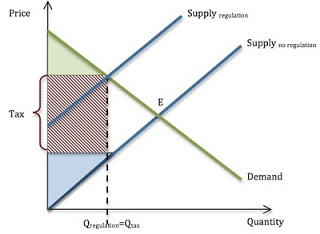
….If the government seeks to regulate the quantity of marijuana consumed, it should choose to do so with a pricing mechanism such as taxation (from which it can earn revenue) rather than a ban (which is costly to enforce). The result is otherwise the same.
Sweden is a common example of a generous welfare state that is compatible with a prosperous society. One interpretation of the UN Development Index is you improve your national ranking by becoming more like Sweden.
Assar Lindbeck has shown time and again in the Journal of Economic Literature and elsewhere that Sweden became a rich country before its highly generous welfare-state arrangements were created
Sweden moved toward a welfare state in the 1960s, when government spending was about equal to that in the United States – less that 30% of GDP.
Sweden could afford this at the end of the era that Lindbeck labelled ‘the period of decentralization and small government’. Sweden was one of the fastest growing countries in the world between 1870 and 1960.
Swedes had the third-highest OECD per capita income, almost equal to the USA in the late 1960s, but higher levels of income inequality than the USA.
By the late 1980s, Swedish government spending had grown from 30% of gross domestic product to more than 60% of GDP. Swedish marginal income tax rates hit 65-75% for most full-time employees as compared to about 40% in 1960.
Swedish economists named the subsequent economic stagnation Swedosclerosis:
Economic growth slowed to a crawl in the 1970s and 1980s.
Sweden dropped from near the top spot in the OECD rankings to 18th by 1998 – a drop from 120% to 90% of the OECD average inside three decades.
65% of the electorate receive (nearly) all their income from the public sector—either as employees of government agencies (excluding government corporations and public utilities) or by living off transfer payments.
No net private sector job creation since the 1950s, by some estimates!
In 1997, Lindbeck suggested that the Swedish Experiment was unravelling.
Sweden is a classic example of Director’s Law of Public Expenditure. Once a country becomes rich because of capitalism, politicians look for ways to redistribute more of this new found wealth.
Studies starting from Sam Peltzman (1980) showed that government grew in line with the growth in the size and homogeneity of the middle class that became organised and politically articulate enough to implement a version of Director’s law. Director’s law augmented by Gary Becker’s 1983 model of competition among pressure groups for political influence explain much of modern public policy.
Government spending grew in many countries in the mid-20th century because of demographic shifts, more efficient taxes, more efficient spending, shifts in the political power from those taxed to those subsidised, shifts in political power among taxed groups, and shifts in political power among subsidised groups.
The Swedish economic reforms from after 1990 economic crisis and depression are an example of a political system converging onto more efficient modes of income redistribution as the deadweight losses of taxes on working and investing and subsidies for not working both grew. Improvements in the efficiency of taxes or spending reduce political pressure to suppress the growth of the welfare state and thus increase or prevent cuts to both total tax revenue and spending.
After the rise of Swedosclerosis, the taxed, regulated and subsidised groups had an increased incentive to converge on new lower cost modes of redistribution. More efficient taxes, more efficient spending, more efficient regulation and a more efficient state sector reduced the burden of taxes on the taxed groups. Most subsidised groups benefited as well because their needs were met in ways that provoked less political opposition.
Reforms ensued led by parties on the Left and Right, with some members of existing political groupings benefiting from joining new political coalitions.
The Nordic median voter was alive to the power of incentives and to not killing the goose that laid the golden egg. The deadweight losses of taxes, transfers and regulation limit inefficient policies and the sustainability of redistribution.
For example, while tax rates are high in Sweden and the rest of Scandinavia, hours worked in Scandinavia are significantly higher than in Continental Europe.
Rogerson considered that differences in the composition of government spending can potentially account for the high rate of labour supply in Sweden and elsewhere in Scandinavia. Specifically, examining the conditions on which how tax revenue is returned to Swedes as income transfers or other conditional payments is central to understanding the labour supply effects of taxes:
If higher taxes fund disability payments which may only be received when not in work, the effect on hours worked is greater relative to a lump-sum transfer with no conditions; and
If higher taxes subsidise day care for individuals who work, then the effect on hours of work will be less than under the lump-sum transfer with no conditions.
A much higher rate of government employment and greater expenditures on child and elderly care explain the high rates of Swedish labour supply.
Swedes are taxed heavily, but key parts of this tax revenue are then given back to them conditionally if they keep working. Policies that significantly cut the total wealth available for redistribution by Swedish governments were avoided relative to the germane counter-factual, which are other even costlier modes of income redistribution.
It is just too comforting to think that those you disagree with are ignorant or steeped in moral turpitude, preferably both.
Milton Friedman argued that people agree on most social objectives, but they differ often on the predicted outcomes of different policies and institutions.
This leads us to Robert and Zeckhauser’s taxonomy of disagreement:
Positive disagreements can be over questions of:
1. Scope: what elements of the world one is trying to understand?
2. Model: what mechanisms explain the behaviour of the world?
3. Estimate: what estimates of the model’s parameters are thought to obtain in particular contexts?
Values disagreements can be over questions of:
1. Standing: who counts?
2. Criteria: what counts?
3. Weights: how much different individuals and criteria count?
Any positive analysis tends to include elements of scope, model, and estimation, though often these elements intertwine; they frequently feature in debates in an implicit or undifferentiated manner.
Likewise, normative analysis will also include elements of standing, criteria, and weights, whether or not these distinctions are recognised.
The origin of political disagreement is a broad church indeed in a liberal democracy. Those you disagree with are not evil, they just disagree with you. As Karl Popper observed:
There are many difficulties impeding the rapid spread of reasonableness. One of the main difficulties is that it always takes two to make a discussion reasonable. Each of the parties must be ready to learn from the other.
A nice case against the notion of the ignorance and moral turpitude of your opponents is the obituary by Brad DeLong for Milton Friedman which was as good as any written saying:
His wits were smart, his perceptions acute, his arguments strong, his reasoning powers clear, coherent, and terrifyingly quick. You tangled with him at your peril. And you left not necessarily convinced, but well aware of the weak points in your own argument
AND
Milton Friedman’s thought is, I believe, best seen as the fusion of two strongly American currents: libertarianism and pragmatism. Friedman was a pragmatic libertarian. He believed that–as an empirical matter–giving individuals freedom and letting them coordinate their actions by buying and selling on markets would produce the best results… For right-of-center American libertarian economists, Milton Friedman was a powerful leader. For left-of-center American liberal economists, Milton Friedman was an enlightened adversary. We are all the stronger for his work. We will miss him.
Why Evolution is True is a blog written by Jerry Coyne, centered on evolution and biology but also dealing with diverse topics like politics, culture, and cats.
In Hume’s spirit, I will attempt to serve as an ambassador from my world of economics, and help in “finding topics of conversation fit for the entertainment of rational creatures.”









Recent Comments