The Most Dangerous Monopoly: When Caution Kills
25 Feb 2018 Leave a comment
in applied price theory, applied welfare economics, comparative institutional analysis, economic history, economics of information, economics of regulation, health economics, law and economics Tags: drug lags
Jordan Peterson: Why is Marxism so Attractive?
29 Jan 2018 Leave a comment
in applied price theory, applied welfare economics, comparative institutional analysis, constitutional political economy, economic history, economics of crime, environmental economics, history of economic thought, law and economics, Marxist economics, Public Choice, war and peace Tags: fall of communism, Nazi Germany
PUBLIC TRANSPORT RECEIVES A FAIR HEARING
28 Jan 2018 1 Comment
in applied welfare economics, politics - New Zealand, transport economics
It is not a case of under-investment denying buses and trains their day in the sun. The overseas evidence is rail cost estimates and passenger forecasts are much more politicised than those for roads because of the political pressures to invest in more public transport no matter what (Flyvbjerg et al. 2006).
There is more organised political support for buses and trains and considerable organised (often NIMBY based) opposition to road building. A major driver of cost blow-outs in the road projects reviewed by the Ministerial Advisory Group on Roading Costs (2006) was scope changes to appease local political pressures to mitigate community and environmental impacts. Community group driven litigation under the Resource Management Act to frustrate NZTA road projects is proliferating. Their High Court loss which prevented the building of the Basin Overpass in Wellington is a recent example.
In contrast, light rail proposals such as a billion-dollar proposal in Wellington City for a few kilometers of track including a $400 million tunnel were entertained for far longer than any sensible benefit cost analysis could justify. Quite fanciful fast-rail proposals costing many hundreds of millions of dollars are floated in by-elections and from time to time by the commentariat and rent seekers.
The proposed upgrade the Auckland to Northland railway line and the rail link to the port was costed by the Taxpayers’ Union (2015) at $198 million. Dreams of fast rail receives a generous hearing despite mind blowing costs and incredulous and sometimes impossible freight and passenger forecasts.
Buses and trains are not the forgotten children of urban transport policy. The Greens are passionate about massive investment in buses and trains at the expense of roads. Labour is also competing for the same urban middle-class votes so it too champions more public transport. In an MMP Parliament, all parties have an incentive respond to political pressures in a fine-tuned way when voting on budgets.
Public transport advocates do well in the scramble for taxpayers’ money. The road with the worst benefit-cost ratio of all in the post implementation reviews was the Auckland Northern Busway, which cost $182 million. It had a cost benefit ratio of a miserable 1.2 at approval and a no better 1.3 after its completion. With a benefit-cost ratio rounding down to one with ease, this bus network upgrade must have had political muscle behind it to dam the taxpayers, full steam ahead.
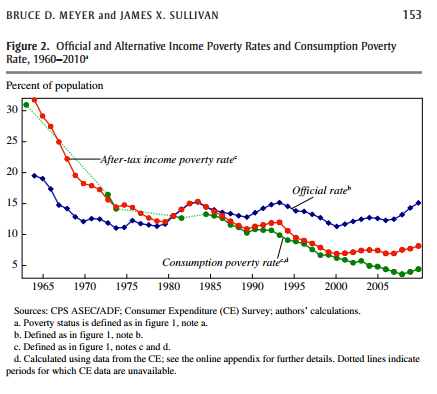
Top 1% drops the ball again alert: immiseration of the proletariat edition – consumption poverty drops to near zero in the US impossibility theorem
27 Jan 2018 Leave a comment
in applied welfare economics, economic history, poverty and inequality
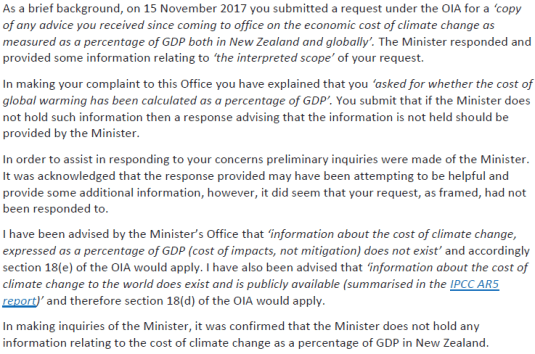
Slippery @jamespeshaw admits he does not know the cost of #globalwarming. Had to go to ombudsman to get him to admit that. Maybe he should ask for those projections and considered ministerial advice on the same
25 Jan 2018 Leave a comment
in applied welfare economics, global warming, politics - New Zealand, Public Choice
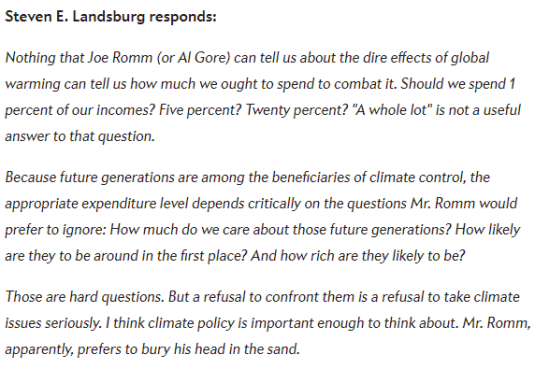
Robert Mendelsohn on global warming
25 Jan 2018 Leave a comment
in applied price theory, applied welfare economics, environmental economics, global warming Tags: carbon tax
. @smalltorquer was Coase wrong in 1972? @EricCrampton
21 Jan 2018 Leave a comment
in applied welfare economics, comparative institutional analysis, history of economic thought, Public Choice
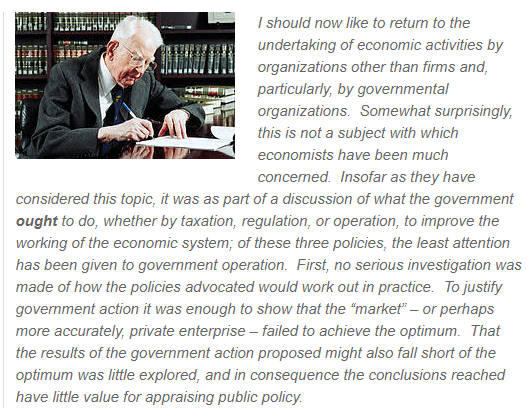
Ht Café Hayek.
Robert Mendelsohn, Cost-Benefit Analysis and The Social Cost of Carbon
19 Jan 2018 Leave a comment
in applied price theory, applied welfare economics, energy economics, environmental economics, global warming, industrial organisation Tags: carbon tax
The “Dutch Disease” – @DavidParkerMP to note on export growth fetish
18 Jan 2018 Leave a comment
in applied price theory, applied welfare economics, industrial organisation, international economics, survivor principle Tags: industry policy
Left still claims some Americans & Canadians are poorer than poor Indians!? China has many more wretchedly poor than India!
25 Dec 2017 Leave a comment
in applied welfare economics, development economics, poverty and inequality

Source: The World Inequality Report 2018.
In the last 25 years, more than 750 million people came out of poverty in China. Truly an amazing achievement:… twitter.com/i/web/status/7…—
Alvaro SantosPereira (@santospereira_a) October 13, 2016
60 years of #poverty reduction in #India: A look at the data @voxeu wrld.bg/105GJ6 https://t.co/iI6I7RxGWR—
World Bank Poverty (@WBG_Poverty) April 06, 2016
There are no externalities from hosting the America’s Cup because externalities arise from incomplete property rights
23 Dec 2017 Leave a comment
in applied price theory, applied welfare economics, politics - New Zealand, rentseeking, sports economics
Externalities arise out of incomplete property rights. The only externalities that arise from an airport expansion proposed in Wellington is from noise.
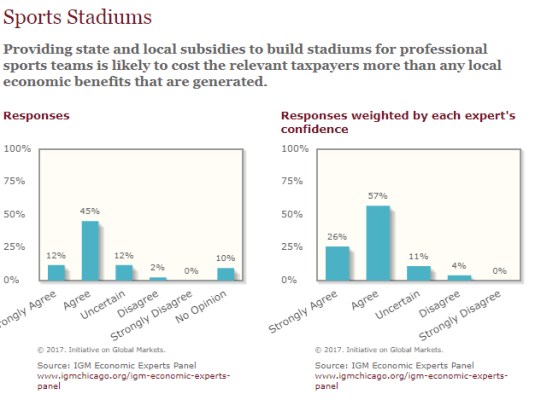
There are no externalities from building sports stadiums or hosting mega sports events because all of the effects are transacted through the market. No inputs are used without the permission of the owner, nothing is produced that is not charged for by the venue or event organisers.
As for the use of benefit cost analysis to strengthen the claim for a government subsidy, you use cost benefit analysis when you are too stupid to charge for the good or service such as a road or you are evaluating regulations because they deal with nonmarket effects, effects that are not mediated through the market process.
Sports stadiums and mega sports events should pass the usual market test. Is it profitable for the entrepreneurs backing the project when they are using their own money.


Recent Comments