Is your gift good value-for-money? Which presents do people most appreciate?
Interesting @WSJecon chart pic.twitter.com/hBzfKSFBip— Paul Kirby (@paul1kirby) January 29, 2016
Some Christmas shopping tips: which of the most efficient gifts to give
18 Dec 2016 Leave a comment
in applied price theory, applied welfare economics Tags: Christmas, gifts
Myth busting @JulieAnneGenter supports light rail because it’s a good investment!
17 Dec 2016 Leave a comment
in applied welfare economics, politics - New Zealand, transport economics, urban economics

Diffusion of consumer durables to poor American households since 1984
13 Dec 2016 Leave a comment
in applied welfare economics, economic history, politics - USA Tags: child poverty, creative destruction, family poverty, technology diffusion, The Great Enrichment
We do not have air-conditioning. Do not know many people who do but New Zealand does have a temperate climate. But if you are down and out in America you still have air-conditioning.
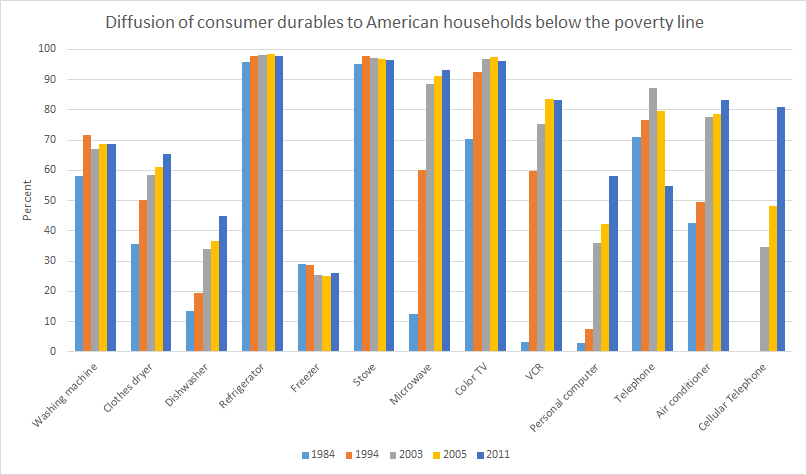
Sources: The Economic Condition of Poor Americans (and the rest of us) Continues to Improve – Coordination Problem and Well-Being – Extended Measures of Well-being: Living Conditions in the United States, 2011 – People and Households – U.S. Census Bureau.
In the 2000s, dishwashers, air conditioning and microwaves were still diffusing rapidly in poor households in addition to the usual digital goods.
To make it even worse, despite the ravages of the 1996 US federal welfare reforms and a top 1% who apparently kept for themselves 90% of all income gains since the 1970s, air-conditioning in poor houses increased by 50% or so between 1994 and 2004.
Imagine how many more poor households would have dishwashers, air-conditioning, microwaves and digital goods but for the top 1%. Not that many actually because most of them already have those consumer durables despite their income not increasing for several decades.
I always puzzle over these who claim that incomes of ordinary families have not increased since the 1970s because that implies you can only buy the same basket of goods and same quality of goods as in the 1970s. That is what no real income growth means. You cannot buy more than before.
Why doesn’t the Left want us to be more like low tax Japan, not high-tax Sweden?
07 Dec 2016 Leave a comment
in applied welfare economics, comparative institutional analysis, population economics, poverty and inequality
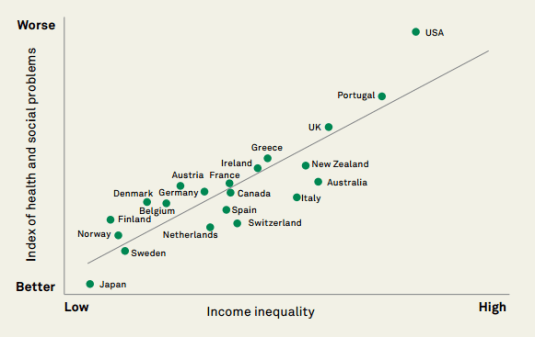
Is inequality just getting worse and worse in #NewZealand?
23 Nov 2016 Leave a comment
in applied welfare economics, economic history, politics - New Zealand, poverty and inequality

Source: New Zealand Treasury Long-Term Fiscal Projections 2016.
How did the industrial revolution impact family planning? | Robert E. Lucas
17 Nov 2016 Leave a comment
in applied welfare economics, development economics, economic history, history of economic thought, labour economics, macroeconomics, Robert E. Lucas Tags: economics of fertility, industrial revolution
Should E-cigarettes be subsidised? An evidence-based health policy litmus test
14 Nov 2016 Leave a comment
in applied price theory, applied welfare economics, economics of information, economics of regulation, health economics
Roland Fryer | Education, Inequality, & Incentives
11 Nov 2016 Leave a comment
in applied price theory, applied welfare economics, economics of education, human capital, labour economics, labour supply, poverty and inequality Tags: child poverty, family poverty
Thomas Sowell – The Real World Effects of Preferential Policies
03 Nov 2016 Leave a comment
in applied price theory, applied welfare economics, development economics, economic history, economics of education, labour economics Tags: affirmative action, racial discrimination, Thomas Sowell
Law and Order: SVU – Black Market Kidneys
22 Oct 2016 Leave a comment
in applied price theory, applied welfare economics, economics, health economics, television Tags: black markets, organ markets
Was the #SpiritLevel discredited (self-refuted?) @JenesaJeram @MaxRashbrooke @nzinitiative
20 Oct 2016 Leave a comment
in applied welfare economics, labour economics
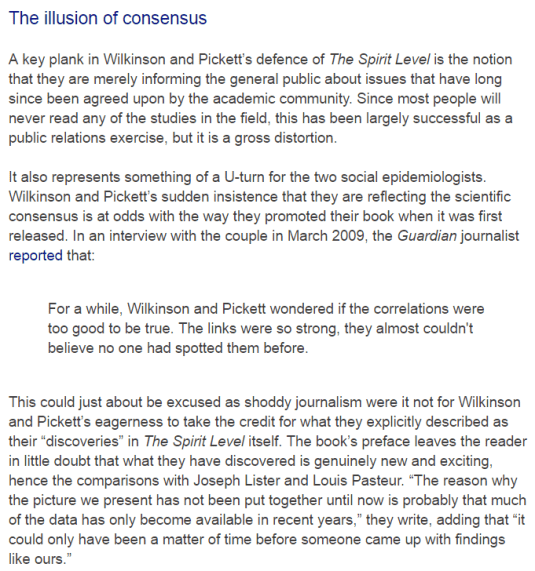
Source: The Spirit Level Delusion.


 Utopia, you are standing in it!
Recent Comments