
It is not enough to say that the status quo is imperfect. It is important to offer alternatives.
04 Apr 2015 Leave a comment

The Great Escape – life expectancy is rising everywhere version
03 Apr 2015 Leave a comment
in applied welfare economics, development economics, growth disasters, growth miracles, health economics Tags: life expectancy, The Great Escape, The Great Fact

Since 1990, my life expectancy has increased by three months for every year I have lived! Not bad odds. What more can capitalism do before people stop complaining.
live. via 26 charts and maps that show the world is getting much, much better – Vox.
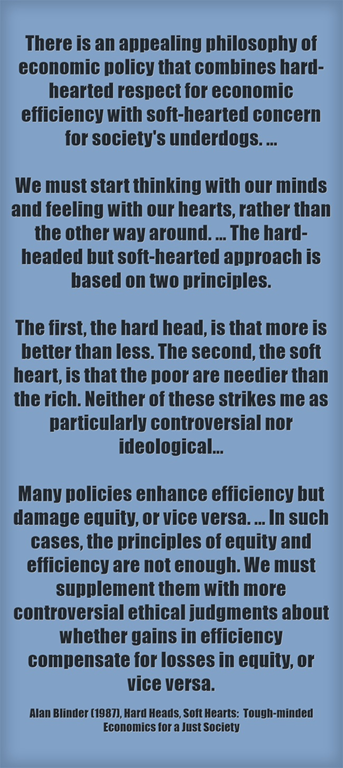
Bryan Caplan on being down and out in America
02 Apr 2015 Leave a comment
in applied welfare economics, politics - USA, poverty and inequality

Via Are We Stuck With the Great Society?, Bryan Caplan | EconLog | Library of Economics and Liberty.
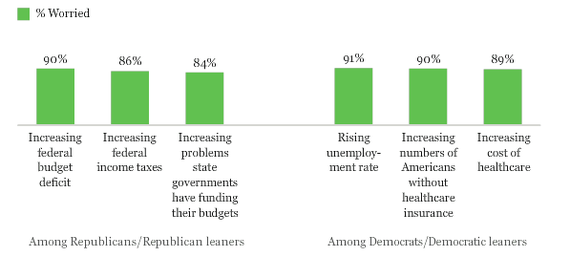
Partisan Politics and the Inequality Gap — Atlantic Mobile
01 Apr 2015 Leave a comment
in applied price theory, applied welfare economics, income redistribution, Public Choice, rentseeking Tags: top 1%
Data plans vary quite a lot in price
30 Mar 2015 Leave a comment
in applied welfare economics, development economics, economics of media and culture, growth miracles, industrial organisation, survivor principle Tags: cell phones
India’s cut-throat mobile market is a boon to consumers, but an auction is shaking things up econ.st/1Celv2O http://t.co/Fqp95eR145—
The Economist (@EconEconomics) March 27, 2015
Earth Hour celebrates ignorance, poverty and backwardness
29 Mar 2015 Leave a comment
in applied welfare economics, comparative institutional analysis, development economics, economics of media and culture, environmentalism, growth disasters, growth miracles, liberalism, Marxist economics, technological progress Tags: Earth Hour
Great Quote on Earth Hour, which Celebrates Ignorance, Poverty and Backwardness #HAH2015 aei.org/publication/ea… http://t.co/775bQhpiBs—
Mark J. Perry (@Mark_J_Perry) March 28, 2015
Should NZ stop issuing international licences for New Zealanders to drive overseas?
28 Mar 2015 Leave a comment
in applied welfare economics, transport economics
A big issue in New Zealand at the moment is tourist drivers having often fatal car accidents. They usually from countries that drive on the other side of the road.
These tourists fly in from the northern hemisphere after a long trip and are suffering jetlag. The accidents often happen soon after they leave the airport or on mountainous road conditions where driver fatigue and jetlag would be a dangerous brew.
Drive on left side of road: blue
Drive on right side of road: reden.wikipedia.org/wiki/Right-_an… http://t.co/JeZM2vjhWV—
Conrad Hackett (@conradhackett) March 27, 2015
The above map is a convenient summary of where New Zealanders would be pretty much the same risk. Long plane trips driving on the wrong side of the road while suffering from jetlag.
There are repeated calls in New Zealand to ban tourist drivers or require them to take some sort of test before being issued with a driving permit. A test would be pretty useless as the main problem is jetlag.
Perhaps New Zealand should lead the way and stop issuing international licences where the New Zealander would drive on the wrong side of the road.

Such a proposal has no chance of ever been adopted because New Zealanders don’t want to give up the right to drive a car when travelling abroad in the northern hemisphere.
That is the brutal calculus. New Zealanders tolerate road accidents in New Zealand as the price of been able to drive on the roads of other countries, often causing more road accidents than the average over there because of jetlag.
No one says this about economists
27 Mar 2015 Leave a comment
in applied price theory, applied welfare economics, Austrian economics, comparative institutional analysis, constitutional political economy, F.A. Hayek, liberalism, Public Choice, rentseeking Tags: evidence-based policy, offsetting behaviour, science and public policy, The fatal conceit, The pretence to knowledge, unintended consequences
Scientists dream about what could be.
Economists remind you of price tags and unintended consequences
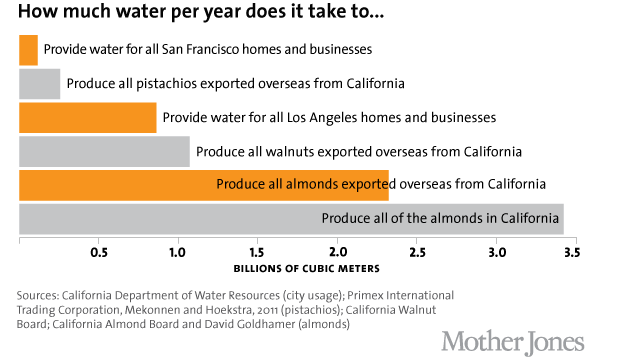
California’s Almonds Suck as Much Water Annually as Los Angeles Uses in Three Years | Mother Jones
27 Mar 2015 Leave a comment
in applied price theory, applied welfare economics, politics - USA Tags: water pricing

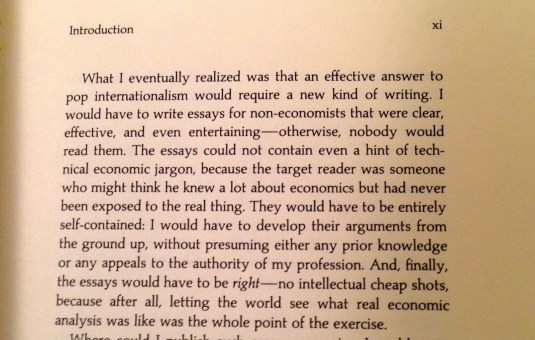
Paul Krugman on the importance of not taking cheap shots in public policy discussions
25 Mar 2015 1 Comment
in applied price theory, applied welfare economics, history of economic thought, industrial organisation, international economics, Public Choice Tags: conjecture and refutation, Paul Krugman, pop internationalism, public intellectual
 Utopia, you are standing in it!
Recent Comments