The war on drugs: Drug induced mortality rates compared
18 Dec 2014 Leave a comment
in applied welfare economics, comparative institutional analysis, economics of regulation, political change, politics - Australia, politics - New Zealand, politics - USA Tags: drug decriminalisation, marijuana decriminalisation, Portugal, war on drugs
Armen Alchian on the inconsistent treatment of the concept of cost in economic theory
17 Dec 2014 Leave a comment

How Sociologists Made Themselves Irrelevant – Part 2
07 Dec 2014 Leave a comment
in comparative institutional analysis, liberalism Tags: sociology

I would like to suggest two “smell tests” for all sociologists, but especially those engaged with the public sphere, when assessing their work.
The first is the Garfinkel rule: Never treat your subjects as cultural dopes.
If you find yourself struggling to explain away your subjects’ own reasoned and widely held account of what they consider important in explaining their condition, you are up to something intellectually fishy.
The second is this: If you end up with findings that have policy implications that you would never dream of advocating for yourself or your loved ones, be wary of them.
A case in point: If you find that neighborhoods have no effects, you should be prepared to do the rational thing and go live in an inner-city neighborhood with its much cheaper real estate, or at least advise your struggling son or daughter searching for an apartment to save by renting there. If the thought offends you, then something stinks.


More on More Efficient Tax Systems Leading to Bigger Government
02 Dec 2014 Leave a comment
in comparative institutional analysis, constitutional political economy, liberalism, Public Choice Tags: Casey Mulligan, Gary Becker, growth in government, public choice
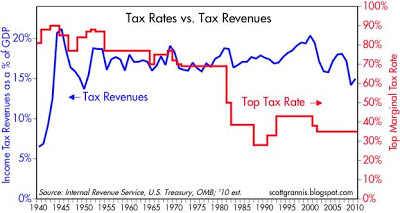
…in Deadweight Costs and the Size of Government (NBER Working Paper Number No. 6789) , [Gary Becker and Casey Mulligan] conclude that flatter and broader taxes also tend to encourage bigger government because taxpayers offer less resistance to increases in flat tax rates than in rates of more onerous and less efficient forms of taxation.
Any decline in the resistance of taxpayers leads to larger government budgets since an endless number of groups agitate for greater government support.
Flat tax rates, such as the VAT and Social Security taxes on earnings, usually start at very low levels but invariably increase over time.
The VAT is now 20 percent and higher in some countries. And payroll taxes began at a modest 2 percent in the 1930s in the United States, but have been increased 21 times to the present 15 percent combined rate on employees and employers.

Million dollar taxi licenses under pressure from Uber at last
28 Nov 2014 Leave a comment
in applied price theory, applied welfare economics, comparative institutional analysis, economics of regulation, industrial organisation Tags: rent seeking, taxi regulation, Uber
Armen Alchian on the difference between market equilibrium and market clearing
28 Nov 2014 Leave a comment


More Efficient Tax Systems Lead to Bigger Government
26 Nov 2014 Leave a comment
in comparative institutional analysis, constitutional political economy, politics - USA, Public Choice Tags: Casey Mulligan, Gary Becker, growth in government, public choice


Institutions and Economic Performance | Timur Kuran speaks with Douglass North
22 Nov 2014 Leave a comment
in applied price theory, comparative institutional analysis, development economics, economic history, history of economic thought, law and economics, Public Choice Tags: Douglass North, Timur Kuran
It’s not just Ed Miliband. Labour’s on the wrong side of history » The Spectator
21 Nov 2014 Leave a comment
in applied price theory, applied welfare economics, comparative institutional analysis, constitutional political economy, election campaigns, liberalism, macroeconomics, Marxist economics, political change, politics - Australia, politics - New Zealand, politics - USA, public economics, technological progress Tags: free trade, globalisation, market augmenting governments

Politicians can’t be heroes any more. Instead, they have to operate within the tightly drawn tramlines of the global economy.
This is true for those on the left and the right, but the pressure that this places on countries to adopt a low-tax, light-regulation regime is something with which the right is far more comfortable.
via It’s not just Ed Miliband. Labour’s on the wrong side of history » The Spectator.


Recent Comments