David A. Price of the Richmond Fed carries out an interview titled “Angus Deaton: On deaths of despair, randomized controlled trials, and winning the Nobel Prize” (Econ Focus: Federal Reserve Bank of Richmond, Fourth Quarter 2023, pp. 18-22). Here are a few of Deaton’s comments that caught my eye: On his shift from “cosmopolitan prioritarianism” to…
Interview with Angus Deaton: Critiques of Cosmopolitan Prioritarianism and Randomized Control Trials
Interview with Angus Deaton: Critiques of Cosmopolitan Prioritarianism and Randomized Control Trials
25 Dec 2023 Leave a comment
in applied price theory, development economics, econometerics, experimental economics, growth disasters, growth miracles, history of economic thought
Argentina Milei reform impressions
23 Dec 2023 Leave a comment
in applied price theory, budget deficits, business cycles, comparative institutional analysis, constitutional political economy, development economics, economic growth, economics of bureaucracy, economics of regulation, fiscal policy, growth disasters, history of economic thought, income redistribution, international economics, labour economics, law and economics, liberalism, libertarianism, macroeconomics, Marxist economics, monetary economics, property rights, Public Choice, public economics, rentseeking, unemployment Tags: Argentina
I didn’t have much time in Argentina, but I can pass along a few impressions about how Milei is doing, noting I hold these with “weak belief”: 1. He is pretty popular with the general population. He is also popular in B.A. in particular. People are fed up with what they have been experiencing. It […]
Argentina Milei reform impressions
FMI Public Speaker Series – Finn Kydland
23 Dec 2023 Leave a comment
in applied price theory, budget deficits, business cycles, comparative institutional analysis, development economics, economic growth, economic history, economics of bureaucracy, fiscal policy, global financial crisis (GFC), great depression, great recession, growth disasters, growth miracles, history of economic thought, human capital, income redistribution, labour economics, labour supply, macroeconomics, Public Choice, public economics, rentseeking
Finn E. Kydland Nobel Lecture at CERGE-EI
22 Dec 2023 Leave a comment
in applied price theory, budget deficits, business cycles, comparative institutional analysis, development economics, economic growth, economic history, economics of regulation, fiscal policy, global financial crisis (GFC), great depression, great recession, growth disasters, growth miracles, history of economic thought, human capital, income redistribution, labour economics, labour supply, macroeconomics, monetary economics, Public Choice, public economics
From Now To 2100 Emission Reduction Policy Costs Greatly Exceed Any Net Benefit from Averted Warming
20 Dec 2023 Leave a comment
in applied price theory, applied welfare economics, development economics, econometerics, economic history, energy economics, environmental economics, global warming, growth disasters, growth miracles Tags: climate alarmism
The benefits of not meeting Paris Accord emissions-reduction targets outweigh the costs associated even with worst-case-scenario global warming throughout the 21st century.
From Now To 2100 Emission Reduction Policy Costs Greatly Exceed Any Net Benefit from Averted Warming
Brendan O’Neill: COP28 and the scourge of eco-imperialism
18 Dec 2023 Leave a comment
in development economics, energy economics, environmental economics, global warming, growth disasters, growth miracles Tags: The Great Enrichment
…but for billions of people such stations are the difference between life and death, light and dark, food and no food.
Brendan O’Neill: COP28 and the scourge of eco-imperialism
Afuera!
13 Dec 2023 Leave a comment
in development economics, growth disasters, liberalism, libertarianism, Marxist economics Tags: Argentina

Unlike a lot of other people I didn’t get too excited about the election of Javier Milei to the presidency of Argentina, anarcho-capitalism and all. I’ve just been to disappointed by too many “Right-Wing” politicians over the decades, especially the ones who talked about cutting spending and more than that, shrinking the size of the State. […]
Afuera!
An Upside-Down Economic History of Argentina
13 Dec 2023 Leave a comment
in budget deficits, business cycles, development economics, economic growth, economic history, economics of bureaucracy, fiscal policy, growth disasters, growth miracles, history of economic thought, income redistribution, labour economics, macroeconomics, Public Choice, public economics, rentseeking, Ronald Coase Tags: Argentina
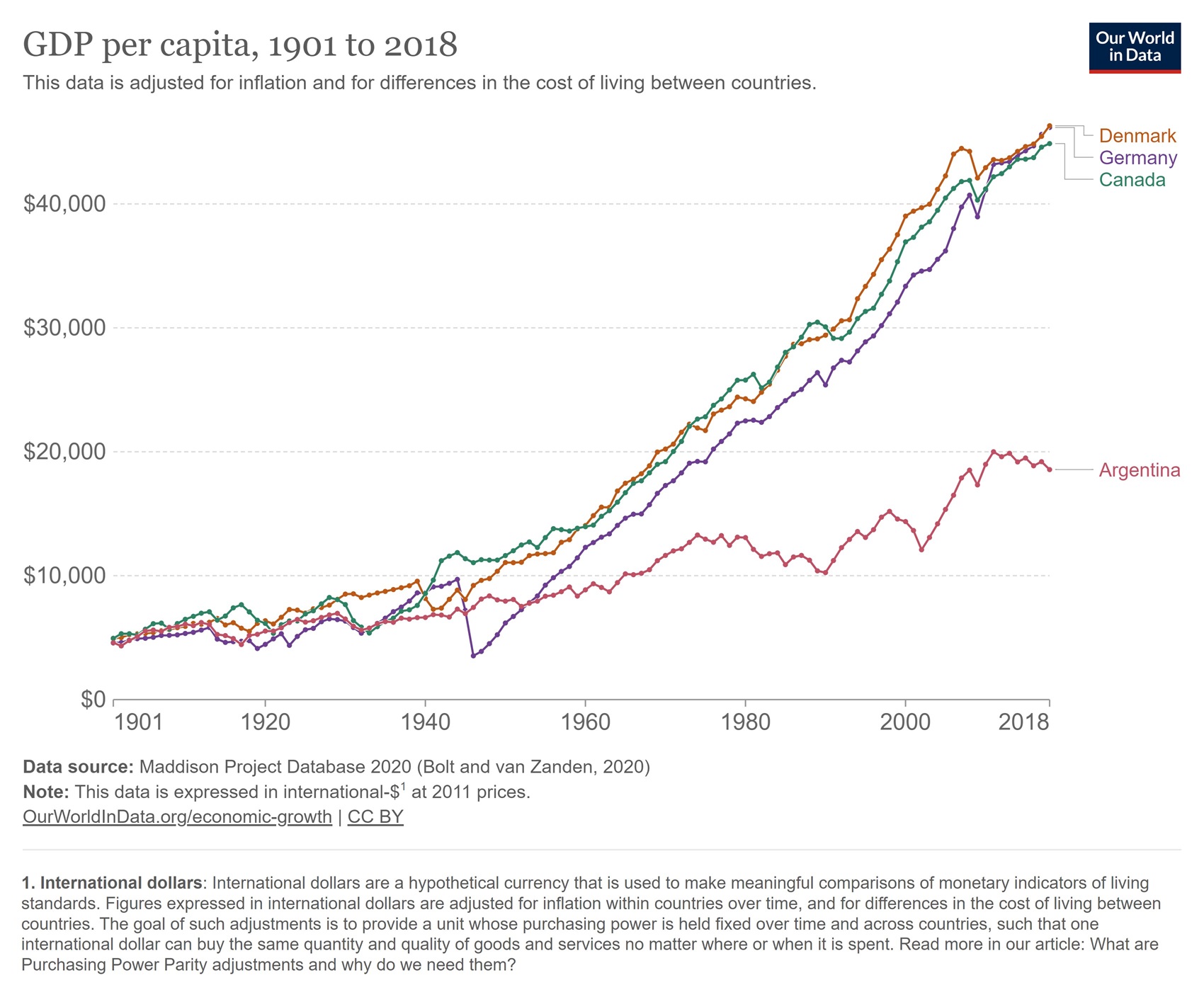
Argentina has a very interesting, but also rather tragic, economic history. During first half of the 20th century, it was one of the world’s richest nations. But thanks to dirigiste economic policies (known locally as Peronism) starting after World War II, Argentina has suffered a dramatic decline in relative living standards. However, something shocking has […]
An Upside-Down Economic History of Argentina
Can Argentina Be Rescued, Part III
12 Dec 2023 Leave a comment
in applied price theory, budget deficits, comparative institutional analysis, development economics, economic growth, economic history, economics of regulation, fiscal policy, growth disasters, income redistribution, international economics, labour economics, liberalism, libertarianism, macroeconomics, Marxist economics, Milton Friedman, monetary economics, Murray Rothbard, Public Choice Tags: Argentina
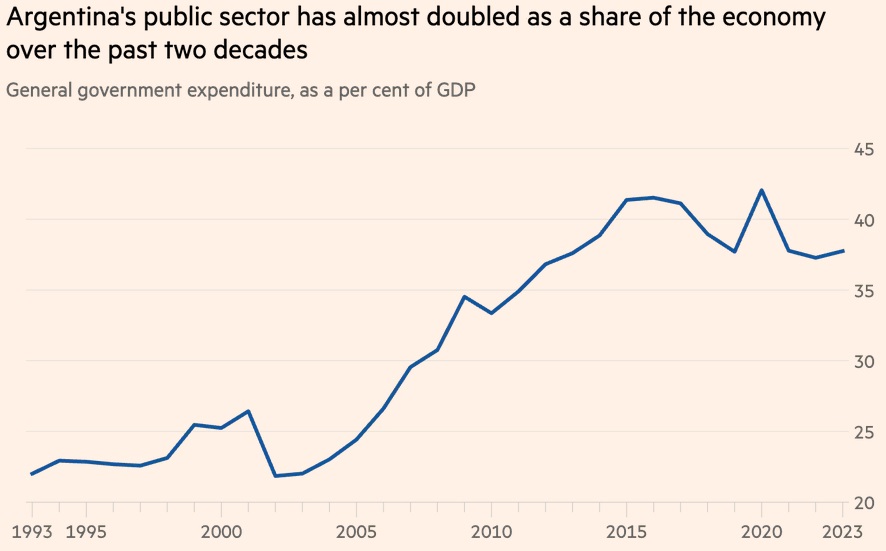
My trip to Argentina last year motivated me to write Part I of this series, which focused on whether things might get better in that tragic country for the simple reason that they couldn’t possibly get any worse. In Part II of this series, I analyzed whether a libertarian candidate’s surprisingly strong performance in Argentina’s […]
Can Argentina Be Rescued, Part III
Lessons from Fighting 100 Inflations Since the 1970s
12 Dec 2023 Leave a comment
in budget deficits, business cycles, development economics, economic growth, economic history, fiscal policy, growth disasters, history of economic thought, inflation targeting, macroeconomics, monetarism, monetary economics, unemployment Tags: monetary policy

Inflation rates have come down since their peak in mid-2022. Does the Federal Reserve need to continue its inflation-fighting ways, keeping interest rates high? Anil Ari, Carlos Mulas-Granados, Victor Mylonas, Lev Ratnovski, and WeiZhao of the IMF look to historical and international experience in “One Hundred Inflation Shocks: Seven Stylized Facts” (September 2023, WP/23/190). As…
Lessons from Fighting 100 Inflations Since the 1970s
Many Countries Don’t Accurately Report Emissions
08 Dec 2023 Leave a comment
in development economics, economic history, energy economics, environmental economics, global warming, growth disasters, growth miracles

By Paul Homewood Electricity generation in China and India, and oil and gas production in the US, have produced the biggest increases in global greenhouse gas emissions since 2015, when the Paris climate agreement was signed, new data has shown. Emissions of methane, a greenhouse gas 80 times more powerful than carbon dioxide, […]
Many Countries Don’t Accurately Report Emissions
Argentina projection of the day
08 Dec 2023 Leave a comment
in development economics, economic growth, economics of regulation, entrepreneurship, financial economics, growth disasters, macroeconomics, monetary economics Tags: Argentina
Milei’s November election win — on a pledge to rapidly overhaul Argentina’s dysfunctional economy — has triggered a burst of market exuberance. The local Merval stock index is up 28 per cent, while prices for Argentina’s closely watched sovereign bonds maturing in 2030 — some of the most liquid — have risen 22 per cent…
Argentina projection of the day
A Pro-Globalization Banquet
05 Dec 2023 Leave a comment
in applied price theory, development economics, economic history, growth disasters, growth miracles, history of economic thought, income redistribution, international economics, liberalism, Marxist economics, Public Choice, rentseeking Tags: Age of Enlightenment, The Great Enrichment, The Great Escape
If you want to drink deeply of unabashedly pro-globalization essays, the Cato Institute has a “Defending Globalization” project underway. The well-written essays are mostly short or mid-length, and clearly aimed at the general public–including undergraduate students. I can’t hope to summarize the essays here, and indeed, more essays are on their way (and you can…
A Pro-Globalization Banquet
Economic Progress and Fossil Fuels: The Elephant in the Room at U.N. Climate Conference
05 Dec 2023 Leave a comment
in development economics, energy economics, environmental economics, global warming, growth disasters, growth miracles Tags: India
The reality of economic imperatives, however, will eventually expose the folly of decarbonization plans.
Economic Progress and Fossil Fuels: The Elephant in the Room at U.N. Climate Conference
Biden Admin Pledges Millions To International ‘Climate Reparations’ Fund
02 Dec 2023 Leave a comment
in development economics, energy economics, environmental economics, global warming, growth disasters, growth miracles Tags: China
The Biden administration has pledged millions of dollars to a de facto international “climate reparations” fund at the United Nations (UN) climate summit in the United Arab Emirates (UAE).
Biden Admin Pledges Millions To International ‘Climate Reparations’ Fund
 Utopia, you are standing in it!
Recent Comments