The Sveriges Riksbank Prize in Economic Sciences in Memory of Alfred Nobel 2024 has been awarded to Daron Acemoglu, Simon Johnson and James Robinson “for studies of how institutions are formed and affect prosperity.” Each year, the Nobel Committee helpfully publishes both a “Popular information” overview of of the award and a “Scientific Background” essay that goes into greater depth.…
A Nobel for Acemoglu, Johnson, and Robinson: Institutions and Prosperity
A Nobel for Acemoglu, Johnson, and Robinson: Institutions and Prosperity
15 Oct 2024 Leave a comment
in applied price theory, comparative institutional analysis, constitutional political economy, development economics, economic history, growth disasters, growth miracles, history of economic thought
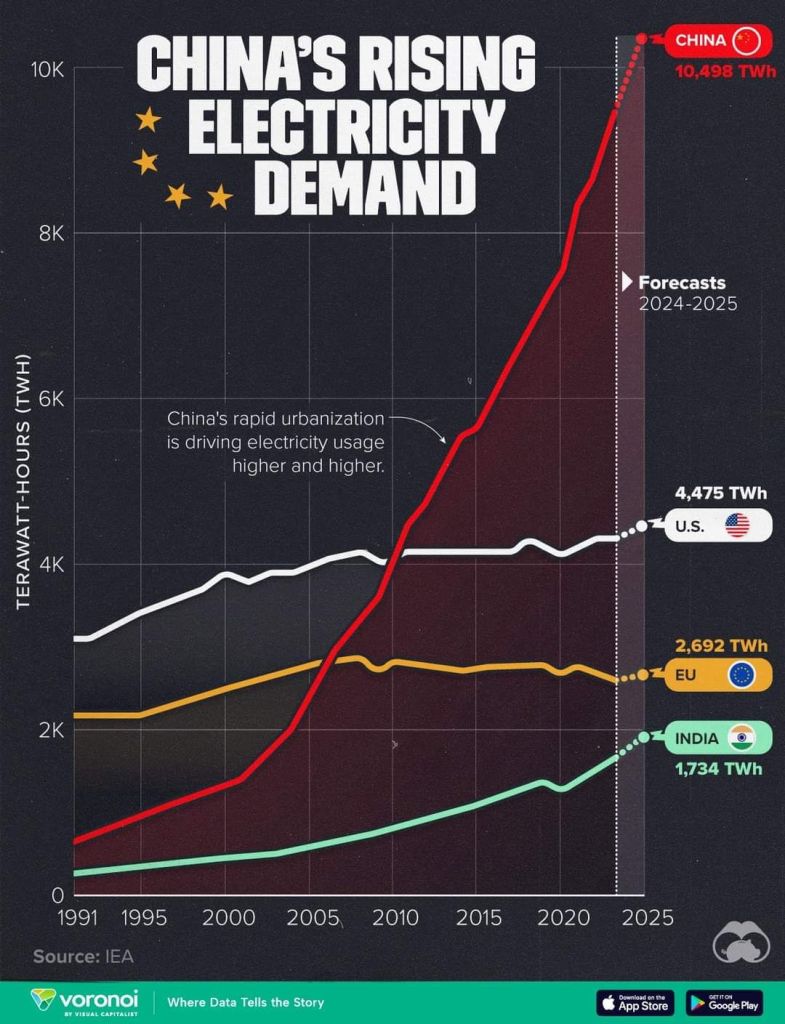
The Great Leap Forward
03 Oct 2024 Leave a comment
in development economics, economic history, energy economics, growth miracles Tags: China
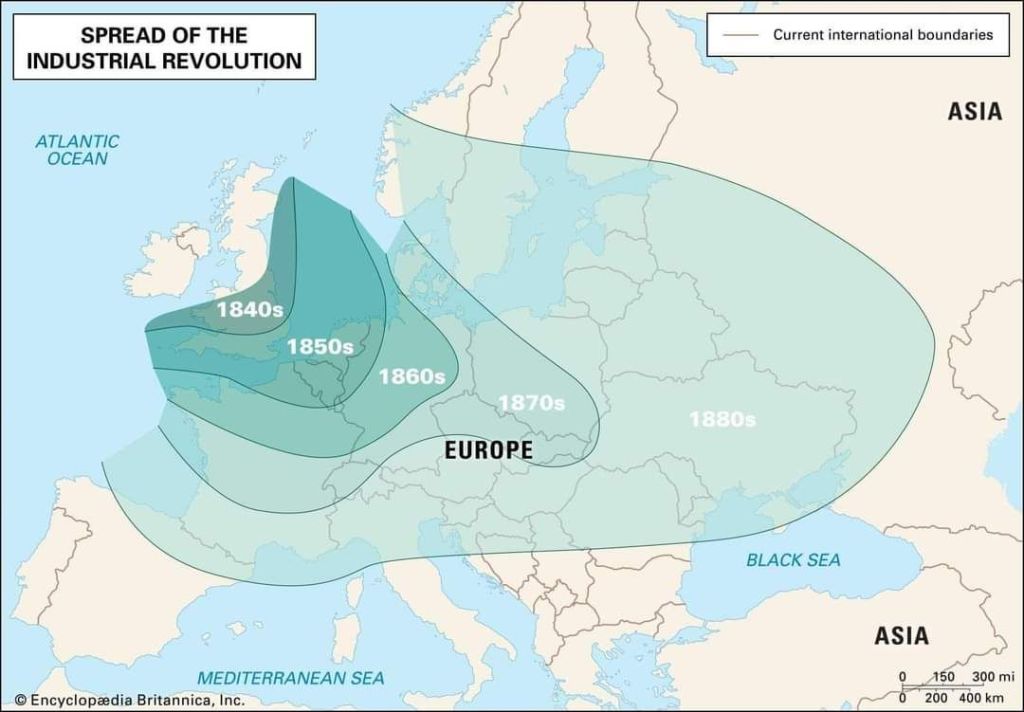
The industrial revolution
01 Oct 2024 Leave a comment
in development economics, economic history, growth miracles Tags: industrial revolution, The Great Enrichment
Friedman vs Stiglitz: Estonia and Poland vs. Argentina and Venezuela
06 Sep 2024 Leave a comment
in applied price theory, comparative institutional analysis, development economics, economic history, economics of bureaucracy, entrepreneurship, growth disasters, growth miracles, history of economic thought, income redistribution, industrial organisation, international economics, labour economics, law and economics, liberalism, Marxist economics, poverty and inequality, property rights, Public Choice, rentseeking, survivor principle Tags: Argentina, Chile, Poland, regressive left, Venezuela
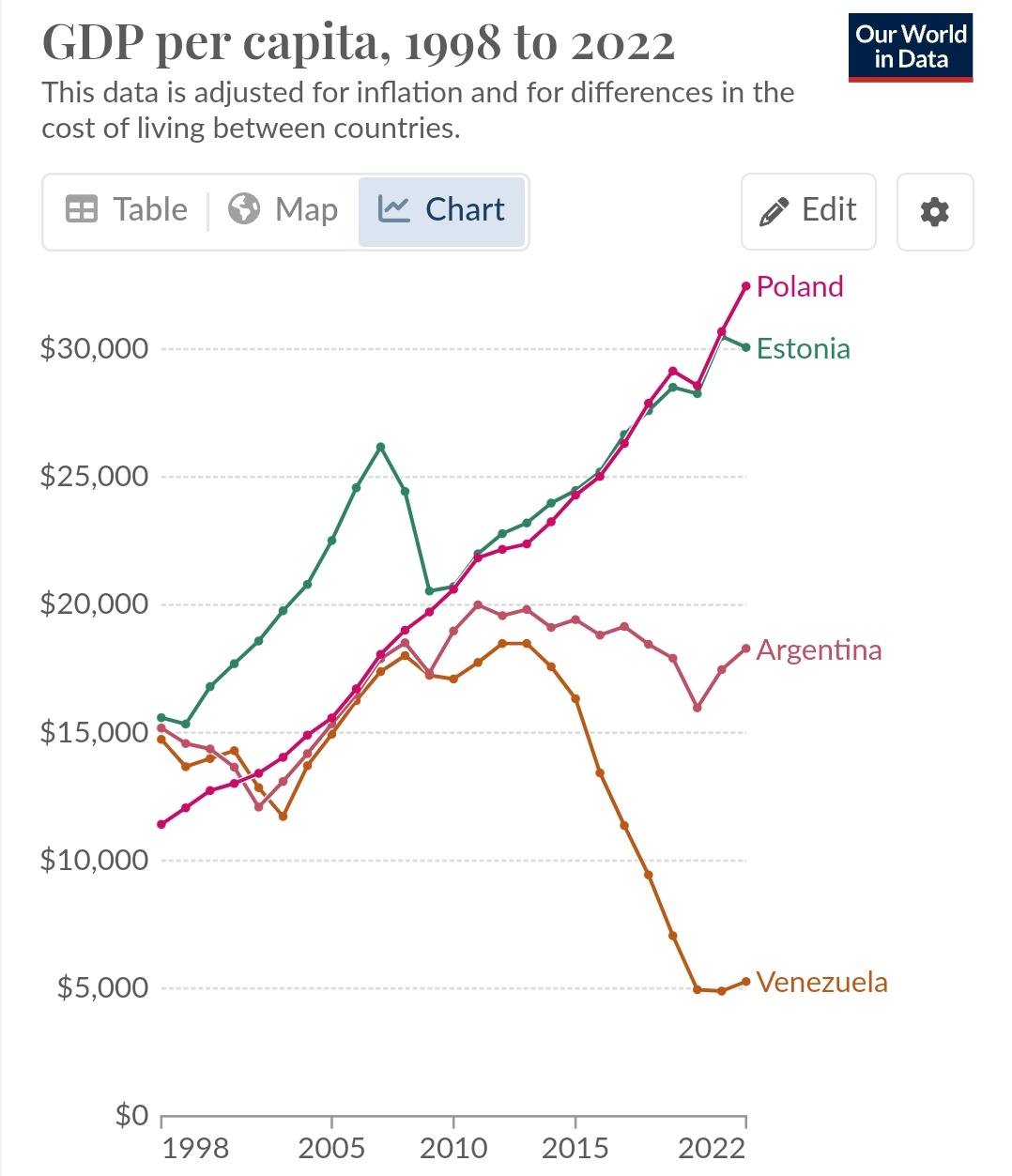
About 10 days ago, i showed that Milton Friedman was a much better economist than Joseph Stiglitz by comparing Chile (which followed Friedman’s ideas) and Venezuela (which followed Stiglitz’s ideas). It was a slam-dunk win for Friedman. Chile started poor and has become relatively prosperous. The opposite happened in Venezuela, which started relatively prosperous and […]
Friedman vs Stiglitz: Estonia and Poland vs. Argentina and Venezuela
Why the @NZGreens are beside the point
31 Aug 2024 Leave a comment
in applied welfare economics, Austrian economics, comparative institutional analysis, constitutional political economy, development economics, economic growth, economic history, entrepreneurship, growth miracles, history of economic thought, human capital, income redistribution, industrial organisation, labour economics, labour supply, law and economics, liberalism, macroeconomics, Marxist economics, politics - New Zealand, poverty and inequality, property rights, Public Choice, rentseeking, technological progress Tags: child poverty, family poverty, The Great Enrichment

Coal To Remain Cornerstone Of India’s Energy
24 Aug 2024 Leave a comment
in development economics, energy economics, environmental economics, global warming, growth disasters, growth miracles Tags: India

By Paul Homewood h/t Dennis Ambler The latest Issue of World Coal contains a feature on India: https://issuu.com/palladianpublications/docs/worldcoal_issue2_2024/11 Unfortunately the report cannot be downloaded, but below are some of the key highlights: “As of April 2023, the Geological Survey of India reported coal reserves amounting to 378 billion tonnes. India’s coal production […]
Coal To Remain Cornerstone Of India’s Energy
Friedman vs Stiglitz, Chile vs Venezuela
16 Aug 2024 Leave a comment
in development economics, economic growth, economic history, economics of regulation, entrepreneurship, growth disasters, growth miracles, history of economic thought, income redistribution, labour economics, law and economics, liberalism, macroeconomics, Marxist economics, Milton Friedman, politics - USA, poverty and inequality, property rights, Public Choice, public economics, rentseeking Tags: Chile, free speech, political correctness, regressive left, The Great Enrichment, Venezuela
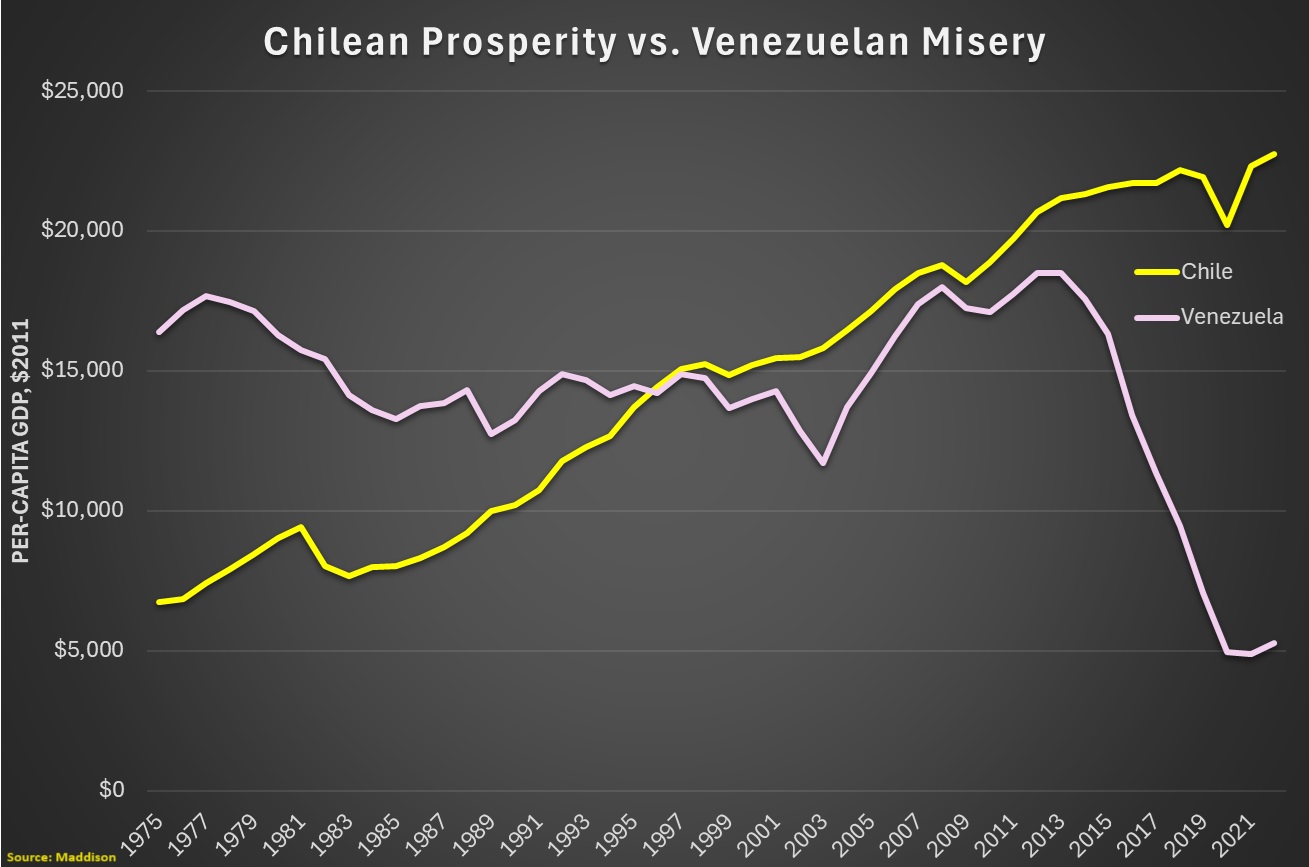
I’ve repeatedly praised Chile’s pro-market reforms (see here, here, and here) and I’ve repeatedly condemned Venezuela’s shift to socialism (see here, here, and here). But if you don’t have time to read all those columns, this chart from the Maddison database tells you everything you need to know. Simply stated, Chile’s reforms have delivered huge […]
Friedman vs Stiglitz, Chile vs Venezuela
The (Non) Mystery of Economic Growth
13 Aug 2024 Leave a comment
in applied price theory, comparative institutional analysis, constitutional political economy, development economics, economic growth, economic history, economics of bureaucracy, growth disasters, growth miracles, income redistribution, law and economics, macroeconomics, property rights, Public Choice, rentseeking Tags: The Great Enrichment

The recipe for economic growth is not complicated. You can put it in very simple terms, as Adam Smith did a few hundred years ago. Or you can develop and utilize data-heavy indexes like the ones published by the Fraser Institute and Heritage Foundation. In either case, the result will be the same. If you […]
The (Non) Mystery of Economic Growth
Utah’s The Independent is Right, Climate Activism Ignores or Harms the World’s Poor
27 Jul 2024 Leave a comment
in development economics, energy economics, environmental economics, global warming, growth disasters, growth miracles Tags: climate alarmism
Sierer’s analysis hits the nail on the head that climate activism is more likely to be harming the world’s poor rather than helping them.
Utah’s The Independent is Right, Climate Activism Ignores or Harms the World’s Poor
Net zero will only make you poorer and China richer-Bjorn Lomborg
26 Jul 2024 Leave a comment
in development economics, energy economics, environmental economics, global warming, growth miracles Tags: China, climate alarmism

By Paul Homewood Starting in the 1990s, climate change has become a fixation for rich country politicians and elites. It emerged as the world had just seen the end of the Cold War. There was relative peace and trust across the world, broad economic growth, and swift progress being made against poverty. In the […]
Net zero will only make you poorer and China richer-Bjorn Lomborg
Chinese Economic Policy, Part I: The Demographic Challenge
17 Jul 2024 Leave a comment
in development economics, economic history, growth disasters, growth miracles, labour economics, labour supply, population economics Tags: China, economics of fertility

I’m in China this week, teaching about fiscal policy, convergence theory, and inequality at Northeastern University in Shenyang. So it’s a good opportunity to write about some pluses and minuses of Chinese economic policy. We’ll start this series by looking at demographics, which almost surely is the biggest long-run challenge for Chinese policymakers. How big […]
Chinese Economic Policy, Part I: The Demographic Challenge
China’s renewable energy surge strains power grid – a warning to ‘net zero’ advocates
16 Jul 2024 Leave a comment
in development economics, energy economics, environmental economics, global warming, growth miracles Tags: China, wind power

The UK equivalent of China’s restrictions on renewable power generation would mean even larger constraint payments than the current £billions, and even bigger increases in costly transmission lines than already happening or planned. But that’s the implication of pushing ever harder for mythical net zero targets, resulting in greater fluctuations between excessive electricity and shortage […]
China’s renewable energy surge strains power grid – a warning to ‘net zero’ advocates
China Still Lagging Way Behind The UK On Renewable Energy
14 Jul 2024 Leave a comment
in development economics, energy economics, environmental economics, global warming, growth miracles Tags: China, solar power, wind power

By Paul Homewood h/t Ian Magness Today’s misinformation from the Guardian: The amount of wind and solar power under construction in China is now nearly twice as much as the rest of the world combined, a report has found. Research published on Thursday by Global Energy Monitor (GEM), an NGO, […]
China Still Lagging Way Behind The UK On Renewable Energy
Rivers in India
14 Jun 2024 Leave a comment
in development economics, growth disasters, growth miracles, health economics Tags: India, water pollution
International Comparisons with a PPP Metric
13 Jun 2024 Leave a comment
in applied price theory, development economics, economic growth, economic history, growth miracles, macroeconomics Tags: China, India

If you are someone from a high-income country, or even just a high-income city, and you travel to other places, you are familiar with finding that, at least sometimes, many items are considerably cheaper in the low-income country: food and meals, entertainment and even health care. As a result, $100 of buying power in the…
International Comparisons with a PPP Metric
 Utopia, you are standing in it!
Recent Comments