Awesome chart by @TheEconomist summarizes Singapore's rise under Lee Kuan Yewpic.twitter.com/NQUFknhjUa
HT: @amolrajan— Erik Brynjolfsson (@erikbryn) March 22, 2015
Third World poverty isn’t what it used to be given mobile phone penetration
22 Mar 2015 Leave a comment
in development economics, economics of media and culture, growth disasters, growth miracles Tags: cell phones, global poverty, mobile phones, The Great Fact

Map: How global access to the internet varies by country pewrsr.ch/1BSAHm6 http://t.co/N1bxCyMzvq—
Pew Research Center (@pewresearch) March 19, 2015
Capitalism has almost abolished extreme poverty
22 Mar 2015 Leave a comment
in development economics, growth disasters, growth miracles Tags: capitalism and freedom, extreme poverty, global poverty, The Great Fact

Filipinos love social networking more than any other country
20 Mar 2015 Leave a comment
in development economics, economics of media and culture, growth miracles Tags: creative destruction, Philippines, technology diffusion

The Green Left versus world hunger
20 Mar 2015 Leave a comment
in development economics, economics of information, economics of media and culture, economics of regulation, environmental economics, growth disasters, growth miracles, health economics Tags: extreme poverty, global poverty, GMOs, Green Left, Leftover Left, world poverty
Who will be the real victims of global warming (and what can they do about it)
19 Mar 2015 2 Comments
in development economics, environmental economics, global warming, growth disasters, growth miracles Tags: climate alarmists, global warming, richer is safer, Tom Schelling, wealthier is healthier

Tom Schelling argues that the best way for underdeveloped countries to defend against the adverse effects of climate change is to develop as rapidly as they can.
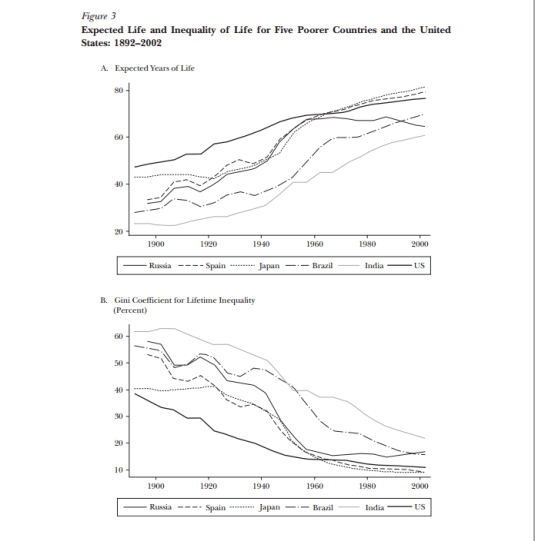
Incredible Decrease in Child Mortality Worldwide in Last 50 Years
18 Mar 2015 Leave a comment
in development economics, growth disasters, growth miracles, health economics, liberalism Tags: child mortality, The Great Escape, The Great Fact
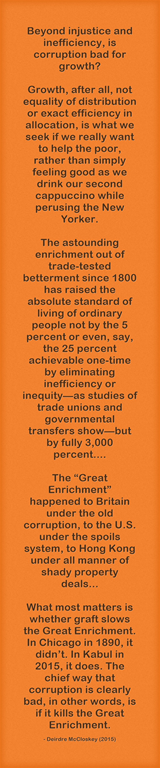
Deirdre McCloskey on corruption and economic development
13 Mar 2015 Leave a comment
in applied price theory, applied welfare economics, comparative institutional analysis, development economics, economic history, economics of crime, growth disasters, growth miracles, law and economics, Public Choice, rentseeking Tags: corruption, Deirdre McCloskey, The Industrial Revolution

Capitalism and the abolition of extreme poverty – mobile phones addition
07 Mar 2015 Leave a comment
Energy use versus pollution levels
06 Mar 2015 Leave a comment
in development economics, economic history, energy economics, environmental economics, growth miracles Tags: air pollution, capitalism and freedom, The Great Escape


Recent Comments