
The Treason Of The Clerisy: Capitalism And The Intellectuals After 1848
02 Feb 2015 Leave a comment
in development economics, economic history, growth disasters, growth miracles, Marxist economics Tags: capitalism and freedom, Deirdre McCloskey, The Great Enrichment, The Great Fact
Deirdre McCloskey is of the view that the “the clerisy” has been, with notable exceptions, hostile to capitalism and downright contemptuous of the morals and attitudes of the middle class that has flourished under capitalism:
The Germans called it the Clerisei or later the Bildungsbürgertum, the cultivated and reading as against the commercial and bettering bourgeoisie. In the eighteenth century the members of the clerisy such as Voltaire and Tom Paine had courageously advocated our liberties.
But in the 1830s and 1840s a much enlarged clerisy, mostly the sons of bourgeois fathers, commenced sneering at the liberties the fathers exercised so vigorously in the market and the factory.
On the right the clerisy under the influence of Romance looked back with nostalgia to an imagined medieval time without markets, in which stasis and hierarchy ruled…
On the left, meanwhile, the clerisy, likewise influenced by Romance, and then by historical materialism, developed the illiberal idea that ideas do not matter.
What matters to progress, they declared, is the unstoppable tide of history, aided (they declared further, contradicting themselves) by protests or strikes or even violent revolutions directed at the thieving bourgeoisie, movements to be led of course by the clerisy.
Later, in European socialism and American progressivism, the left proposed to defeat bourgeois monopoly of markets by gathering under regulation or central planning or ownership of the means of production all the monopolies into one big monopoly of violence called the state.
Yet the commercial bourgeoisie so despised by the clerisy left and right made the Great Enrichment and the modern world.
The Enrichment gigantically improved our lives, showing that both social Darwinism and economic Marxism were mistaken. The genetically inferior races and classes and ethnicities proved not to be so. The exploited proletariat was not immiserised but enriched.
and
Forcing in an illiberal way the French style of equality of outcome, cutting down the tall poppies, treating people as sad children to be engineered by the experts of the clerisy, we have found, has often had a high cost in damaging liberty and slowing betterment. Not always, but often.
On the other hand, introducing the Scottish style of equality of liberty and dignity, as in Hong Kong and Norway and France itself, has regularly led to an astounding betterment and to a real equality of outcome—with even the poor acquiring automobiles and plumbing denied in earlier times even to the rich, and acquiring political rights and social dignity denied in earlier times to everyone except the rich
The first fridge for a family and whole village
31 Jan 2015 Leave a comment
in development economics, growth disasters, growth miracles Tags: capitalism and freedom, global poverty, India, The Great Enrichment, The Great Fact
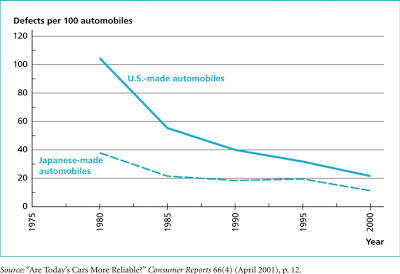
Quality control in Japanese and American car manufacturing compared
31 Jan 2015 Leave a comment
in applied price theory, development economics, economic history, entrepreneurship, growth miracles Tags: creative destruction, Japanese manufacturing, quality control
The world’s poverty – in 50 seconds from BBC
30 Jan 2015 Leave a comment
in development economics, growth disasters, growth miracles Tags: capitalism and freedom, global poverty, The Great Enrichment, The Great Fact
Richest queue in India (world perhaps) and cronyism at its best..
28 Jan 2015 Leave a comment
in growth disasters, growth miracles, politics - USA, Public Choice, rentseeking Tags: cronyism, India, President Obama, rent seeking


This picture is quite an interesting one. It shows India’s richest businessmen queuing to wait to meet US President Barack Obama patiently. It is ironical in many ways to see the rich and mighty queue like school children waiting for their score card or something. In many ways it is a score card of future where the chosen guys would either get to invest in US or be a partner of US money into India.
It clearly shows the power of politics. Those who keep talking of free markets and so on should see how politics dominates the game. At the end of the day, you have to get closer to the politique to see your empire grow.
But this is also an example of cronyism where business and politics get real close. Deals are signed amidst favorites and it is dubbed as competition. Most of cronyism happens behind the scenes and this is all…
View original post 55 more words

Thanks to capitalism the world’s poor are getting richer
26 Jan 2015 Leave a comment
in applied welfare economics, development economics, growth disasters, growth miracles Tags: The Great Fact
Robert Lucas interview in Brazil, 2nd November 2012
24 Jan 2015 Leave a comment
in applied welfare economics, business cycles, comparative institutional analysis, development economics, economic growth, global financial crisis (GFC), great recession, growth disasters, growth miracles, inflation targeting, macroeconomics, monetarism, Robert E. Lucas Tags: Robert E. Lucas
On the role of R&D and boffins in lab coats in the Industrial Revolution
24 Jan 2015 Leave a comment


Eamonn Butler on how economical with the truth Oxfam was on global inequality
22 Jan 2015 Leave a comment
in development economics, growth disasters, growth miracles, income redistribution, liberalism Tags: evidence-based policy, Leftover Left, Oxfam, top 1%
Global Warming Was Worth It
22 Jan 2015 Leave a comment
in applied welfare economics, climate change, development economics, growth disasters, growth miracles, liberalism Tags: modernity, The Great Enrichment, The Great Fact

- Higher incomes that allow people to make livings that afford them more than merely survival or avoiding starvation.
- A low poverty rate.
- High quality and diversity of employment opportunities. Rather than the choice of being a farmer or being a blacksmith, the average citizen should have an array of careers to choose from, and the ability to be industrious and take risks for profit.
- The availability of housing. On an average night in the United States, a country with a population of somewhere around 350 million, fewer than one million people are homeless.
- Consistent GDP growth.
- Access to quality health care.
- The availability of quality education. (I suppose we could quibble over the word “quality,” but certainly there is widespread free education availability.)
- High life expectancy. Worldwide life expectancy has more than doubled from 1750 to 2007.
- Low frequency of deadly disease.
- Affordable goods and services.
- Infrastructure that bolsters economic growth.
- Political stability.
- Air conditioning.
- Freedom from slavery, torture and discrimination.
- Freedom of movement, religion and thought.
- The presumption of innocence under the law.
- Equality under the law regardless of gender or race.
- The right to have a family – as large as one can support. Maybe even larger.
- The right to enjoy the fruits of labor without government – or anyone else – stealing it.
 Utopia, you are standing in it!
Recent Comments