
.
Celebrating humanity's flourishing through the spread of capitalism and the rule of law
24 Jun 2015 Leave a comment
in development economics, human capital, labour economics, P.T. Bauer, population economics Tags: economics of fertility, endogenous growth theory, overpopulation, population bomb
.
09 Jan 2015 Leave a comment

03 Sep 2014 Leave a comment
in constitutional political economy, development economics, economic growth, entrepreneurship, history of economic thought, law and economics, liberalism, P.T. Bauer, politics - USA, property rights, Public Choice, Rawls and Nozick, technological progress Tags: democracies, movies, rule of law, The Great Enrichment
Elysium was on TV. When I saw it on the big screen, no one told me it was a depiction of contemporary capitalism and the class war.

I read it as a contrast between third world countries lacking the rule of law and capitalist democracies.
The ships shooting up to the space station reminded me of Cubans trying to cross into the USA by boat to Florida.
Sorry, but I am just a simple country boy from the back blocks of Tasmania.
16 Jun 2014 Leave a comment
in constitutional political economy, development economics, P.T. Bauer Tags: P.T. Bauer

…the preoccupation with aid, investment, and development planning has served to divert attention from more important factors in development which are influenced by government policy. This same preoccupation has also served somewhat paradoxically to bring about a serious neglect of essential tasks of government.
Governments seem anxious to plan but unable to govern. The neglect extends to such familiar and essential tasks as the maintenance of law and order, the effective management of the monetary and fiscal system, and the provision of basic transport and educational facilities.
14 Jun 2014 Leave a comment
in development economics, growth miracles, P.T. Bauer Tags: development aid, P.T. Bauer, The Great Enrichment, The Great Fact
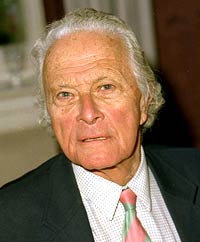
Foreign aid is clearly not a necessary condition of economic development. This fact is obvious from the history of the developed countries, all of which began poor and have invariably progressed without government-to-government aid.
It is clear also from the history of many underdeveloped countries — Hong Kong, Japan, Malaya — which have advanced in recent decades without foreign aid.
30 Mar 2014 Leave a comment
in development economics, P.T. Bauer Tags: political satire
The best of all their clips. P.T.Bauer would have been proud. The British did similar improvements in their colonies.
20 Mar 2014 2 Comments
in development economics, economic growth, growth miracles, liberalism, P.T. Bauer Tags: Animal Farm, colonialism, development disasters, George Orwell, immiseration of the proletariat, inconvenient truths, Renegade liberals
George Orwell, in his proposed preface of Animal Farm, wrote of the “renegade liberal”. Renegade liberals glorify socialist experiments and disdain middle-class life despite their own pleasant circumstances.
Renegade liberals search the globe for outlaw states and revolutionary movements to support, who, of course, would ship their local versions of these renegade liberals straight to the camps as soon as they won power. Iran, Castro and Hugo Chávez are their latest rebels without a clue.
The revolutionary excesses of the new socialist or Anti-American regimes are excused as the misadventures of ‘liberals in a hurry’, who understandably lost patience with the slow pace of democratic reform. It is all in the name of liberating the proletariat from their misery or throwing off the dead hand of colonial rule.
How is the immiseration of the proletariat going these days?
I agree with G.A. Cohen when he argues that there is no group in advanced industrial societies united by:
To avoid the inconvenient truth of modern affluence and the move of so many of the proletariat into the middle class, renegade liberals search endlessly for under-developed countries so they can blame their poverty on capitalism.

When they visit them in solidarity, these renegade liberals should read the visa stamp: ‘people’s republic’ or ‘socialist republic’ is so frequently on it. It is still mandatory for all political parties in India to be committed to socialism.

Nearly all of Asia (where much of the world’s population lives) has undergone rapid and sustained economic and social progress because they became market economies, starting with the Asian Tigers and recently in previously socialist India and communist China. Latin America adopted the inward economic polices of the mid-20th century that renegade liberals praise so much and they became development disasters.
As the world embraced free market policies in the late 20th century, living standards rose sharply; life expectancy, education and democracy improved and absolute poverty declined. Xavier Sala-I-Martin and Maxim Pinkovskiy (2010) found that between 1970 and 2006, poverty fell by 86% in South Asia, 73% in Latin America, 39% in the Middle East and 20% in Africa. The percentage of people living on less than $1 a day (in PPP-adjusted 2000 dollars) fell from 26.8% in 1970 to 5.4% in 2006.
To go further, P.T. Bauer disputed the lack of development in British colonies. Bauer argued that much of British colonial Africa was transformed in the colonial period.

Before British rule, there were no rubber trees in Malaya, no cocoa trees in West Africa, no tea in India:
“…Much of British colonial Africa was transformed during the colonial period. In the Gold Coast there were about 3000 children at school in the early 1900s, whereas in the mid-1950s there were over half a million. In the early 1890s there were in the Gold Coast no railways or roads, but only a few jungle paths…
Before colonialism, Sub-Saharan Africa was a subsistence economy, because of colonialism it became a monetized economy.
Before colonialism, the absence of public security made investment impossible.
After it, investment flowed. So too was scientific agriculture introduced by colonial administrations, or by “foreign private organizations and persons under the comparative security of colonial rule, and usually in the face of formidable obstacles…
In British West Africa public security and health improved out of all recognition… peaceful travel became possible; slavery and slave trading and famine were practically eliminated, and the incidence of the worst diseases reduced..” (P.T. Bauer)
Some colonial powers were better than others. After 500 years of Portuguese rule in East Timor, in 1975, there was one road – to the governor’s house – and the phone number of the Australian consulate was 7! Portugal itself may have not been much better at that time too. Colonial masters are like parents. You must choose them well.
Celebrating humanity's flourishing through the spread of capitalism and the rule of law
Scholarly commentary on law, economics, and more
Beatrice Cherrier's blog
Celebrating humanity's flourishing through the spread of capitalism and the rule of law
Celebrating humanity's flourishing through the spread of capitalism and the rule of law
Celebrating humanity's flourishing through the spread of capitalism and the rule of law
Why Evolution is True is a blog written by Jerry Coyne, centered on evolution and biology but also dealing with diverse topics like politics, culture, and cats.
Celebrating humanity's flourishing through the spread of capitalism and the rule of law
Celebrating humanity's flourishing through the spread of capitalism and the rule of law
A rural perspective with a blue tint by Ele Ludemann
DPF's Kiwiblog - Fomenting Happy Mischief since 2003
Celebrating humanity's flourishing through the spread of capitalism and the rule of law
The world's most viewed site on global warming and climate change
Tim Harding's writings on rationality, informal logic and skepticism
A window into Doc Freiberger's library
Let's examine hard decisions!
Commentary on monetary policy in the spirit of R. G. Hawtrey
Thoughts on public policy and the media
Celebrating humanity's flourishing through the spread of capitalism and the rule of law
Politics and the economy
A blog (primarily) on Canadian and Commonwealth political history and institutions
Reading between the lines, and underneath the hype.
Economics, and such stuff as dreams are made on
"The British constitution has always been puzzling, and always will be." --Queen Elizabeth II
Celebrating humanity's flourishing through the spread of capitalism and the rule of law
Celebrating humanity's flourishing through the spread of capitalism and the rule of law
WORLD WAR II, MUSIC, HISTORY, HOLOCAUST
Undisciplined scholar, recovering academic
Celebrating humanity's flourishing through the spread of capitalism and the rule of law
Res ipsa loquitur - The thing itself speaks
Celebrating humanity's flourishing through the spread of capitalism and the rule of law
Researching the House of Commons, 1832-1868
Articles and research from the History of Parliament Trust
Reflections on books and art
Posts on the History of Law, Crime, and Justice
Celebrating humanity's flourishing through the spread of capitalism and the rule of law
Exploring the Monarchs of Europe
Cutting edge science you can dice with
Small Steps Toward A Much Better World
“We do not believe any group of men adequate enough or wise enough to operate without scrutiny or without criticism. We know that the only way to avoid error is to detect it, that the only way to detect it is to be free to inquire. We know that in secrecy error undetected will flourish and subvert”. - J Robert Oppenheimer.
The truth about the great wind power fraud - we're not here to debate the wind industry, we're here to destroy it.
Celebrating humanity's flourishing through the spread of capitalism and the rule of law
Celebrating humanity's flourishing through the spread of capitalism and the rule of law
Economics, public policy, monetary policy, financial regulation, with a New Zealand perspective
Celebrating humanity's flourishing through the spread of capitalism and the rule of law
Restraining Government in America and Around the World


 Utopia, you are standing in it!
Recent Comments