Michael Bordo – central banking
18 May 2020 Leave a comment
in business cycles, econometerics, economic history, financial economics, inflation targeting, macroeconomics, monetarism, monetary economics Tags: monetary policy
Michael D. Bordo: An Historical Perspective on the Quest for Financial Stability
13 May 2020 Leave a comment
in budget deficits, business cycles, econometerics, economic growth, economic history, financial economics, fiscal policy, global financial crisis (GFC), great depression, great recession, inflation targeting, international economics, job search and matching, macroeconomics, monetarism, monetary economics Tags: new classical macroeconomics
“The Family in the 21st Century,” Valerie Ramey
12 May 2020 Leave a comment
in discrimination, econometerics, economics of education, gender, human capital, labour economics, labour supply, occupational choice, poverty and inequality, unemployment Tags: child poverty, family poverty
Were the #COVID19 Lockdowns a Mistake?
11 May 2020 Leave a comment
in applied welfare economics, econometerics, health economics, politics - USA Tags: economics of pandemics, offsetting behaviour, pessimism bias, The fatal conceit, unintended consequences
Can the Government Spend Us To Prosperity with Valerie Ramey
10 May 2020 Leave a comment
in budget deficits, business cycles, defence economics, econometerics, economic history, fiscal policy, global financial crisis (GFC), great depression, great recession, labour economics, labour supply, macroeconomics, unemployment Tags: Keynesian macroeconomics, New Keynesian macroeconomics
#COVID19: Is the government really ‘following the science’? – BBC Newsnight
08 May 2020 Leave a comment
in econometerics, health economics Tags: economics of pandemics
Edward C. Prescott on monetary policy
28 Apr 2020 Leave a comment
in business cycles, econometerics, economic history, Edward Prescott, financial economics, global financial crisis (GFC), great depression, great recession, inflation targeting, macroeconomics, monetary economics, Robert E. Lucas Tags: monetary policy
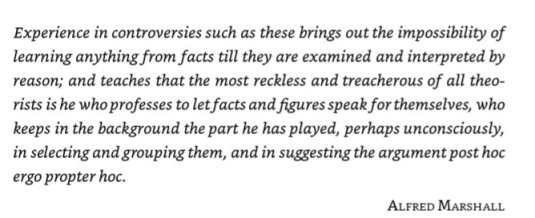
Dr. Ioannidis on Why We Don’t Have Reliable Data Surrounding COVID-19
26 Apr 2020 Leave a comment
in econometerics, economics of bureaucracy, economics of information, health economics, politics - Australia, politics - New Zealand, politics - USA, Public Choice Tags: action bias, economics of pandemics, pessimism bias, The fatal conceit
Johan Giesecke, one of the world’s most senior epidemiologists
20 Apr 2020 Leave a comment
in econometerics, health economics Tags: economics of pandemics, pessimism bias
- UK policy on lockdown and other European countries are not evidence-based
- The correct policy is to protect the old and the frail only
- This will eventually lead to herd immunity as a “by-product”
- The initial UK response, before the “180 degree U-turn”, was better
- The Imperial College paper was “not very good” and he has never seen an unpublished paper have so much policy impact
- The paper was very much too pessimistic
- Any such models are a dubious basis for public policy anyway
- The flattening of the curve is due to the most vulnerable dying first as much as the lockdown
- The results will eventually be similar for all countries
- Covid-19 is a “mild disease” and similar to the flu, and it was the novelty of the disease that scared people.
- The actual fatality rate of Covid-19 is the region of 0.1%
- At least 50% of the population of both the UK and Sweden will be shown to have already had the disease when mass antibody testing becomes available
#COVID19 tradeoffs
18 Apr 2020 Leave a comment
in applied welfare economics, econometerics, economics of information, economics of regulation, health economics, politics - Australia, politics - New Zealand, politics - USA Tags: economics of pandemics
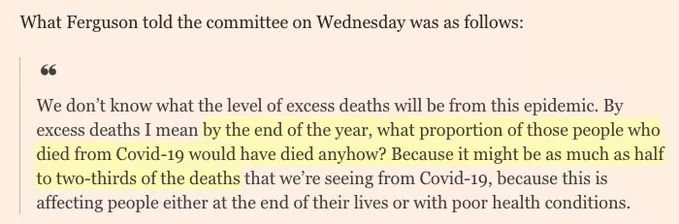
Still more on #marilynwaring and economists ignoring home production @waring_marilyn @women_nz
17 Apr 2020 Leave a comment
in business cycles, development economics, discrimination, econometerics, economic growth, economics of love and marriage, fiscal policy, gender, human capital, labour economics, labour supply, macroeconomics, occupational choice, poverty and inequality Tags: female labour force participation, female labour supply, gender wage gap, marital division of labour, marital labour supply
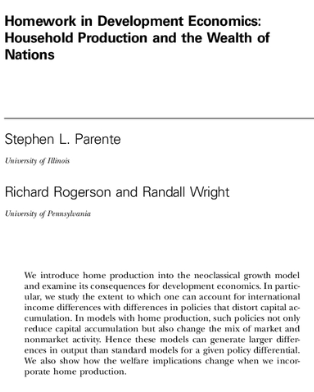
Steve Davis: How has #COVID19 affected businesses?
16 Apr 2020 Leave a comment
in business cycles, econometerics, economic growth, economics of natural disasters, health economics, labour economics, labour supply, macroeconomics, managerial economics, organisational economics, personnel economics Tags: economics of pandemics
More on #marilynwaring and economists ignoring home production @waring_marilyn
12 Apr 2020 Leave a comment
in business cycles, discrimination, econometerics, gender, labour economics, labour supply, macroeconomics, poverty and inequality Tags: gender wage gap
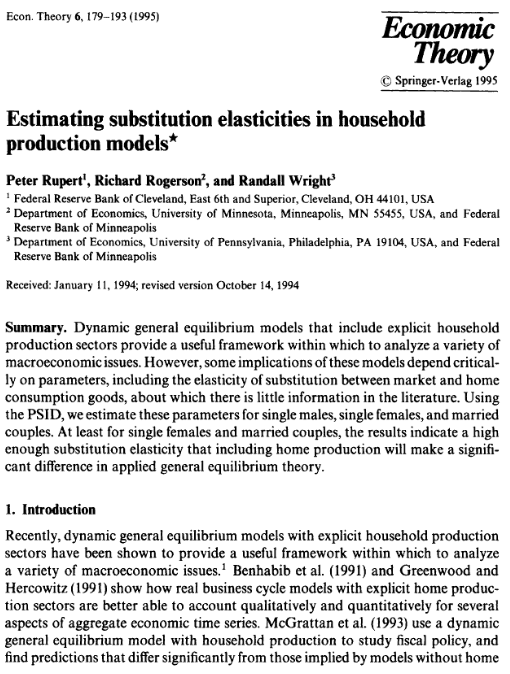
The calendar effect: changing number of public holidays falling in the working week measures the upper bound of the lockdown on GDP?
03 Apr 2020 Leave a comment
in econometerics, economic growth, health economics, labour economics, labour supply, law and economics, macroeconomics Tags: economics of pandemics
 Utopia, you are standing in it!
Recent Comments