John Cochrane recommends the Economist article Aid cannot make poor countries rich. From 2004 to 2014, foreign aid increased by 75%, but it didn’t help: 2004, William Easterly: aid was just as likely to shrink the world’s poorest economies as to help them grow. 2005, World Bank: grants and loans did not move the needle…
The Grumpy Economist on Foreign aid: “send a person a fish every day, and he forgets how to fish.”
20 Mar 2025 Leave a comment
in applied price theory, comparative institutional analysis, development economics, economic history, growth disasters, growth miracles Tags: overseas aid
Quotation of the Day…
19 Mar 2025 Leave a comment
in economic history, labour economics, poverty and inequality Tags: The Great Enrichment
Tweet… is from page 172 of the 2012 revised edition of Steven Landsburg’s great 1993 book, The Armchair Economist: [I]ncome statistics don’t account for everything we value. For one thing, we care about the quantity and quality of our leisure time. Here it’s by and large the poor who have made great strides, while the…
Quotation of the Day…
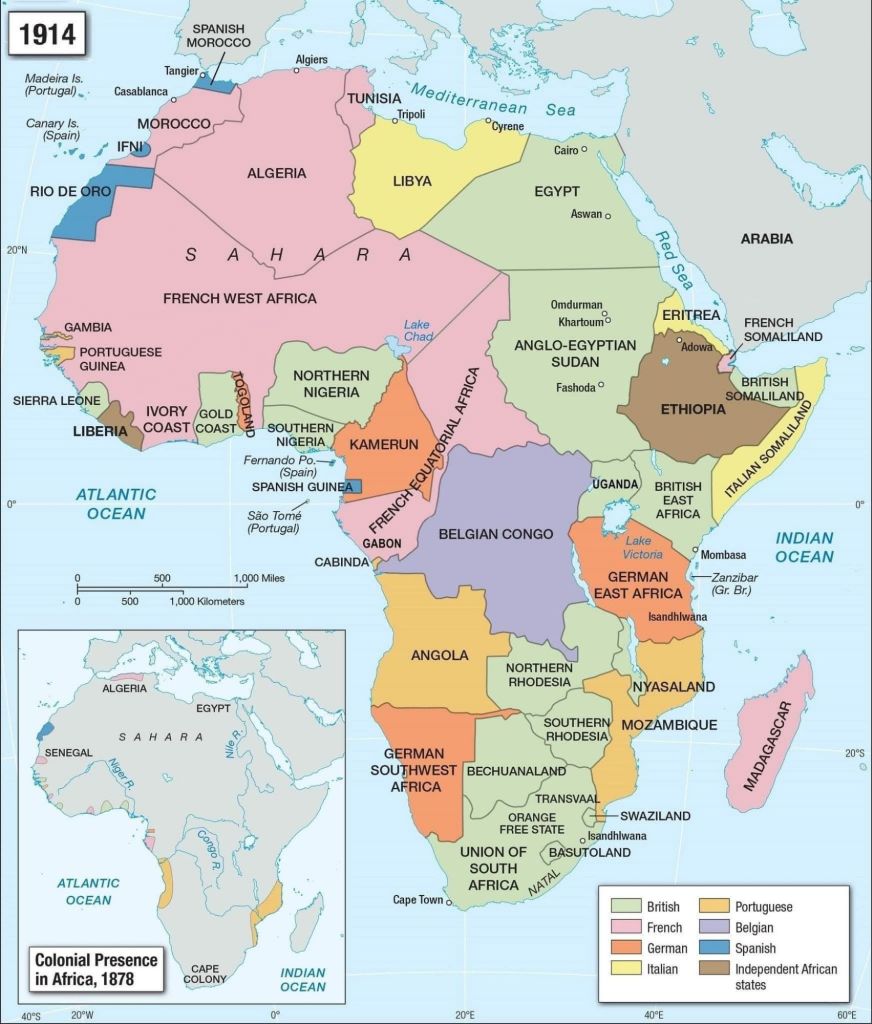
Auckland Uni Law School teacher: we must decolonize the universities and undo the damage of the “colonial project”
18 Mar 2025 Leave a comment
in discrimination, economic history, economics of bureaucracy, law and economics, liberalism, Marxist economics, politics - New Zealand, property rights, Public Choice, rentseeking Tags: Age of Enlightenment, free speech, political correctness, racial discrimination, regressive left

It’s not so surprising that Auckland University harbors a Māori activist like Eru Kapa-Kingi; what is surprising is that Auckland University has publicized his words and activities, amd they seem proud of them! For Kapa-Kingi’s goal is apparently to decolonize not just Auckland University (once the best university in New Zealand, now a hotpot of identity […]
Auckland Uni Law School teacher: we must decolonize the universities and undo the damage of the “colonial project”
Arctic Instincts? The Late Pleistocene Arctic Origins of East Asian Psychology
17 Mar 2025 Leave a comment
in applied price theory, behavioural economics, economic history Tags: cognitive psychology, evolutionary biology, evolutionary psychology
Highly speculative, but I found this of interest: This article explores the hypothesis that modern East Asian populations inherited and maintained extensive psychosocial adaptations to arctic environments from ancestral Ancient Northern East Asian populations, which inhabited arctic and subarctic Northeast Eurasia around the Last Glacial Maximum period of the Late Pleistocene, prior to back migrating southwards into East Asia in […]
Arctic Instincts? The Late Pleistocene Arctic Origins of East Asian Psychology
Must be a lot of them about
15 Mar 2025 Leave a comment
in economic history, economics of media and culture, entrepreneurship, monetary economics Tags: Roman empire

Dawkins and Pinker discuss evolution
14 Mar 2025 Leave a comment
in economic history, economics of education, liberalism, Marxist economics, politics - USA Tags: Age of Enlightenment, evolution, evolutionary biology, evolutionary psychology, free speech, political correctness, regressive left
Here’s Richard Dawkins ostensibly discussing his new book (The Genetic Book of the Dead) with Steve Pinker, but of course you can’t confine a discussion between these two to a single book. Even from the beginning it ranges widely, in which Pinker discusses not only the epiphany that The Selfish Gene gave him, but levels […]
Dawkins and Pinker discuss evolution
*Progressive Myths*: The Kling Club Convo
14 Mar 2025 Leave a comment
in applied price theory, comparative institutional analysis, constitutional political economy, economic history, entrepreneurship, history of economic thought, income redistribution, industrial organisation, labour economics, law and economics, liberalism, Marxist economics, politics - USA, property rights, Public Choice, rentseeking Tags: The Great Enrichment
Long ago, I co-blogged for EconLog with Arnold Kling. Now he’s running a book club for Liberty Fund. Last month, Arnold invited me and philosopher Rachel Ferguson to discuss Mike Huemer’s new Progressive Myths. Enjoy!
*Progressive Myths*: The Kling Club Convo
Did you know the Magna Carta was against tariffs?
13 Mar 2025 Leave a comment
in applied price theory, economic history, history of economic thought, industrial organisation, international economics Tags: 2024 presidential election, constitutional law, tariffs
One clause of the Magna Carta says: All merchants shall have safe and secure exit from England, and entry to England, with the right to tarry there and to move about as well by land as by water, for buying and selling by the ancient and right customs, quit from all evil tolls So tariffs […]
Did you know the Magna Carta was against tariffs?
Inability to understand te reo Māori does not prevent people from asking questions about race relations in New Zealand
12 Mar 2025 Leave a comment
in discrimination, economic history, income redistribution, International law, law and economics, liberalism, Marxist economics, politics - New Zealand, property rights, Public Choice, rentseeking Tags: Age of Enlightenment, constitutional law, free speech, political correctness, racial discrimination, regressive left
Ananish Chaudhuri writes – Dame Anne Salmond recently wrote a column on Newsroom berating people for having views on the Treaty of Waitangi when they cannot even read the Māori version of the treaty. So, what she is saying is that even when customs, laws or treaties impinge on your daily life, you cannot hold any views […]
Inability to understand te reo Māori does not prevent people from asking questions about race relations in New Zealand
SEC Climate Risk Rule is Entrapment
11 Mar 2025 Leave a comment
in economic history, economics of climate change, economics of regulation, environmental economics, environmentalism, financial economics, global warming, law and economics, politics - USA, property rights Tags: climate activists, efficient markets hypothesis

Stone Washington and William Happer explain the nefarious and ill-advised decree in their article SEC’s Climate Risk Disclosure Rule Would Compel Companies to Make Scientifically False and Misleading Disclosures. Excerpts in italics with my bolds and added images. In March last year, the Securities and Exchange Commission issued its climate risk disclosure rule, called “The […]
SEC Climate Risk Rule is Entrapment
The WaPo describes (and distorts) a big “culture war” in New Zealand
10 Mar 2025 Leave a comment
in defence economics, discrimination, economic history, law and economics, politics - New Zealand, property rights, Public Choice Tags: affirmative action, Age of Enlightenment, constitutional law, free speech, media bias, political correctness, racial discrimination, regressive left

ADDENDUM: See added comments and clarifications under “addendum” at bottom. ******************** I’ve written many times about the battle of the indigenous people in New Zealand (the Māori) to get their “way of knowing”—which includes a lot of superstition and unreliable word-of-mouth “knowledge,” as well as legends and morality—adopted as official policy or as a “way […]
The WaPo describes (and distorts) a big “culture war” in New Zealand
My Former Economics MPhil and DPhil Class-Mate for many hard years, Mark Carney, becomes PM of Canada.
10 Mar 2025 Leave a comment
in business cycles, economic history, economics of bureaucracy, economics of education, history of economic thought, human capital, inflation targeting, labour economics, labour supply, macroeconomics, monetary economics, occupational choice, politics - New Zealand, Public Choice Tags: Canada, monetary policy
Congratulations Mark Carney. When I went to the UK to study economics, we started off doing a degree called Master of Philosophy in…
My Former Economics MPhil and DPhil Class-Mate for many hard years, Mark Carney, becomes PM of Canada.
Bill Maher’s New Rule: Guilt by Civilization
09 Mar 2025 Leave a comment
in development economics, discrimination, economic history, economics of crime, economics of education, law and economics, liberalism, Marxist economics, politics - New Zealand, politics - USA, property rights, television, TV shows Tags: Age of Enlightenment, free speech, political correctness, regressive left, The Great Enrichment
For some reason Bill Maher’s latest comedy/news video, “New Rules: Guilt by Civilization”, is age-restricted (it must be the photo of Bianca Censori in her see-through outfit) , but you can see it by clicking either here or on the “Watch on YouTube” line below. The beginning is great, as Maher claims that the Democrats […]
Bill Maher’s New Rule: Guilt by Civilization
Working paper: Why nationalize the production of public goods?
09 Mar 2025 Leave a comment
in applied price theory, comparative institutional analysis, constitutional political economy, economic history, economics of bureaucracy, entrepreneurship, health economics, history of economic thought, Public Choice, public economics, rentseeking
I have a new working paper out. It proposes a price theory-based explanation of why states nationalize the production of “public goods” (i.e., non-excludable and non-rivalrous). This is different than existing explanations as the theory ignores whether private provision is efficient or superior to public provision. I call it the “redistributive engine” theory whereby the […]
Working paper: Why nationalize the production of public goods?
Bernanke on inflation targeting
09 Mar 2025 Leave a comment
in applied price theory, budget deficits, business cycles, economic growth, economic history, financial economics, fiscal policy, history of economic thought, inflation targeting, labour economics, macroeconomics, monetary economics, politics - New Zealand, unemployment Tags: monetary policy

Former chairman of the Federal Reserve Board of Governors (and FOMC), Ben Bernanke, was yesterday the first of two keynote speakers at the Reserve Bank’s conference to mark 35 years of inflation targeting, which first became a formalised thing here in New Zealand. He indicated that he’d be speaking about inflation targeting in general and […]
Bernanke on inflation targeting
Recent Comments