In August of 1833 the British passed legislation abolishing slavery within the British Empire and putting more than 800,000 enslaved Africans on the path to freedom. To make this possible, the British government paid a huge sum, £20 million or about 5% of GDP at the time, to compensate/bribe the slaveowners into accepting the deal. […]
The Taiping Rebellion is arguably the most important event in modern history that even educated Westerners know very little about. It’s also known as the Taiping Civil War and it was one of the largest conflicts in human history (1850–1864), with death toll estimates ranging from 20 to 30 million, far exceeding deaths in the […]
TweetMy emeritus Nobel-laureate colleague, Vernon Smith, sent the following email to me in response to this post. I share Vernon’s note with his kind permission. Don, Trump, like all businesspersons turned political, wants government favors, that is Mercantilism which is as bad today as when Adam Smith railed against such cozy relationships. Same for labor…
The Chinese Communist Party (CCP) has claimed credit in defeating Japan during World War II. However, this claim is a subject of historical debate. Their contribution was significant but also very different in scale and character from that of the Nationalist government under Chiang Kai-shek. Here’s a breakdown: 1. Context: China’s Resistance Against Japan 2. United Front […]
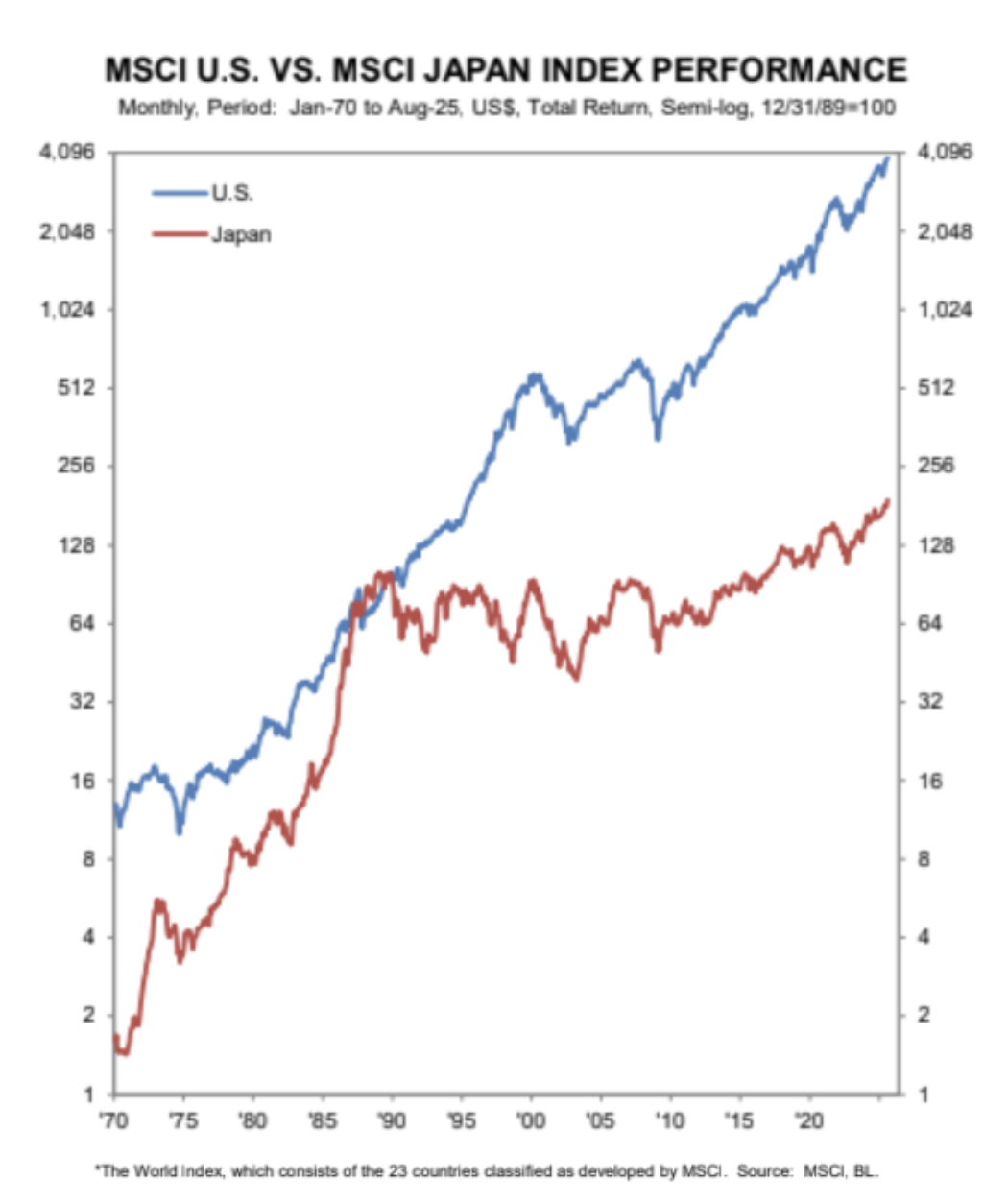
TweetThe folks at Unleash Prosperity share a chart that shows that Japanese industrial policy – which we Americans a few decades ago were warned by oh so very many pundits, professors, and politicians left, right, and center would propel Japan’s economy to great heights and leave America’s in the dust – was a curse to…
…the federal government did something extraordinary: It committed more than $140 billion toward the region’s recovery. Adjusted for inflation, that’s more than was spent on the post-World War II Marshall Plan to rebuild Europe or for the rebuilding of Lower Manhattan after the Sept. 11 attacks. It remains the largest post-disaster domestic recovery effort in […]
The FT’s Krishn Kaushik covers the courts in India: …in one recent example a Delhi court concluded a property dispute after 66 years. Both the original litigants were dead. Still, the lawyer for one of the warring parties cautioned that the conclusion was in fact not the end, as the ruling would be appealed. Three […]
Rewriting History: The truth about slavery and the British Empire Ani O’Brien writes – You’d think from the way some people talk that the British Empire invented slavery, ran it single-handedly, and then quietly slunk away in shame. That’s the cartoon version of history pushed by activists who want every discussion of colonisation to be […]
I’ve written several articles about the failure of Cuban socialism (2024, 2022, 2021, 2019, and 2016). My leftist friends almost always respond by claiming that U.S.-imposed trade restrictions are the primary reason for Cuba’s terrible economy. Since I like free trade, I certainly agree that trade restrictions are bad for growth (a lesson I wish […]
Stats NZ reports: The gender pay gap was 5.2 percent in the June 2025 quarter, down from 8.2 percent in the June 2024 quarter, according to figures released by Stats NZ today. “The June 2025 quarter gender pay gap of 5.2 percent is the lowest since the series began in 1998,” labour market spokesperson Abby […]
See ‘Launching Liberty’ Review: Shipyard Victory The U.S. quickly constructed a fleet of vessels to carry vital war supplies across the oceans. Did the rush to build so fast affect quality? by Marc Levinson. He reviewed the book Launching Liberty: The Epic Race to Build the Ships That Took America to War by Doug Most.The Liberty…
I got home from Papua New Guinea at 1:30 on Saturday morning and by 3:30 yesterday afternoon I’d finished Grant Robertson’s new book, Anything Could Happen, and in between I’d been to two film festival movies, a 60th birthday party, and church. It is that sort of book, a pretty easy read. In some respects, […]
Why Evolution is True is a blog written by Jerry Coyne, centered on evolution and biology but also dealing with diverse topics like politics, culture, and cats.
“We do not believe any group of men adequate enough or wise enough to operate without scrutiny or without criticism. We know that the only way to avoid error is to detect it, that the only way to detect it is to be free to inquire. We know that in secrecy error undetected will flourish and subvert”. - J Robert Oppenheimer.




 Utopia, you are standing in it!
Recent Comments