Bryan Caplan – Poverty: Who Is To Blame
18 Jan 2022 Leave a comment
in applied price theory, applied welfare economics, development economics, economic history, economics of education, growth disasters, growth miracles, history of economic thought, human capital, income redistribution, labour economics, labour supply, poverty and inequality, Public Choice Tags: child poverty, family poverty, The Great Enrichment
Life in Alsace Lorraine
17 Jan 2022 Leave a comment
in defence economics, economic history, International law, war and peace Tags: France, Germany
Your work on the US found that productivity shocks explain most of the cyclical fluctuations the economy has experienced. Does this finding have any bearing on the nature of public policy?
17 Jan 2022 Leave a comment
in business cycles, economic history, economics of regulation, Edward Prescott, growth miracles, labour economics, labour supply, macroeconomics, monetary economics, public economics
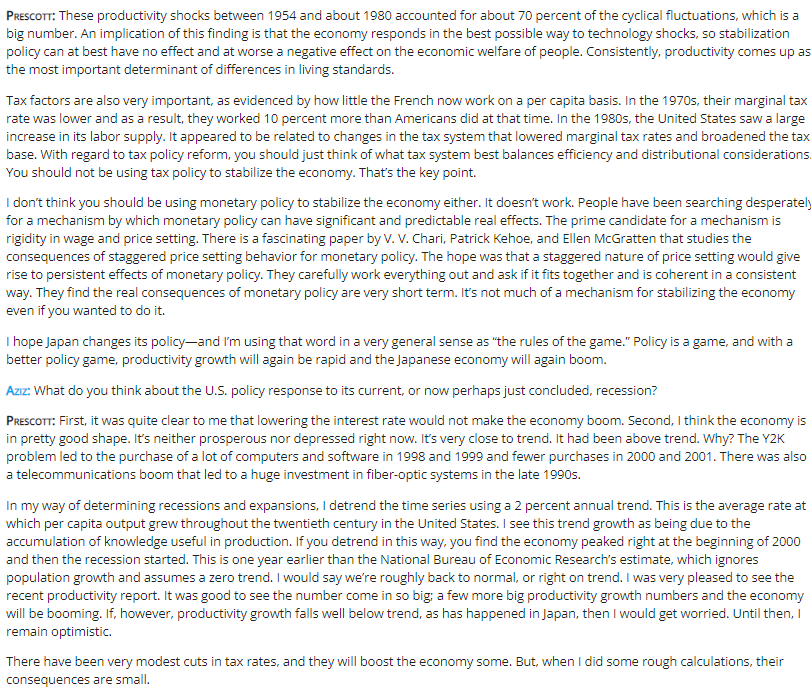
The view that technology shocks, those affecting production opportunities, are the major driving force behind business cycles, accounting for about 70 percent of these fluctuations.
16 Jan 2022 Leave a comment
in business cycles, economic history, Edward Prescott, macroeconomics, monetary economics
Tom Ballard at 2018 Marxism conference
16 Jan 2022 Leave a comment
in applied price theory, comparative institutional analysis, economic history, economics of bureaucracy, income redistribution, law and economics, Marxist economics, property rights, Public Choice, television
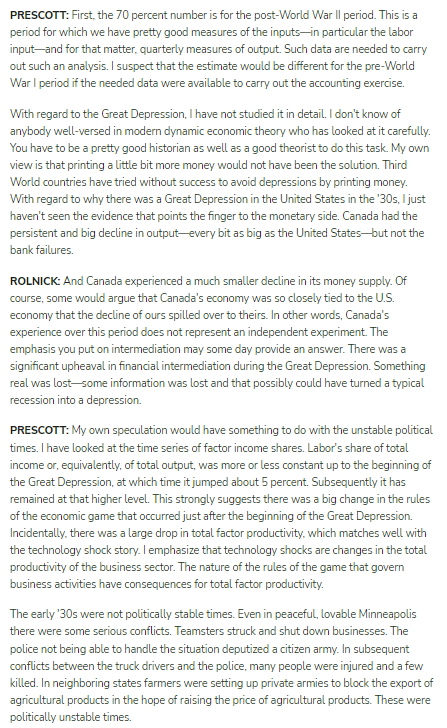
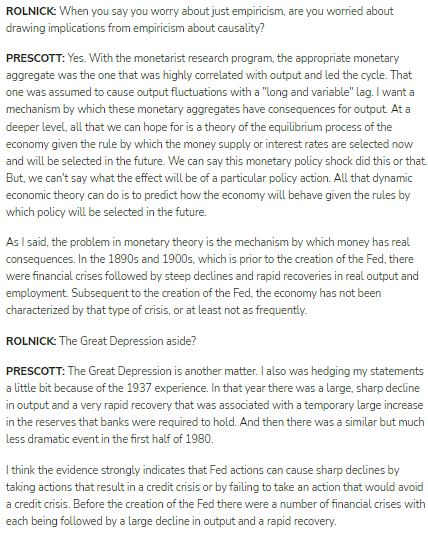
Prescott (1996) on the power of central banks
15 Jan 2022 Leave a comment
in business cycles, econometerics, economic history, Edward Prescott, financial economics, macroeconomics, monetary economics
Money Under Laissez-Faire George Selgin
15 Jan 2022 Leave a comment
in applied price theory, applied welfare economics, Austrian economics, business cycles, economic growth, economic history, financial economics, global financial crisis (GFC), great depression, great recession, history of economic thought, macroeconomics, monetarism, monetary economics Tags: monetary policy
Alan Manning “Monopsony and the wage effects of migration”
12 Jan 2022 Leave a comment
in applied price theory, applied welfare economics, discrimination, econometerics, economic history, human capital, labour economics, labour supply, occupational choice, poverty and inequality Tags: economics of immigration, monopsony
The Fed’s Dismal Record | George A. Selgin
10 Jan 2022 Leave a comment
in applied price theory, applied welfare economics, Austrian economics, business cycles, comparative institutional analysis, economic history, financial economics, global financial crisis (GFC), great depression, great recession, history of economic thought, macroeconomics, monetarism, monetary economics Tags: monetary policy
The Rise and Fall of the TV Dinner – Cheddar Explains
07 Jan 2022 Leave a comment
in defence economics, economic history, entrepreneurship, health economics
The World’s Deadliest Construction Projects
06 Jan 2022 Leave a comment
in economic history, health and safety, labour economics, occupational choice
Ten Minute History – Genghis Khan and the Mongol Empire
05 Jan 2022 Leave a comment
in economic history, economics of media and culture Tags: age of empires
5 Disastrous Math Fails with Surprising Consequences
04 Jan 2022 Leave a comment
in defence economics, economic history, industrial organisation, transport economics
Walter Block on sex Discrimination
04 Jan 2022 Leave a comment
in applied price theory, applied welfare economics, discrimination, econometerics, economic history, economics of information, gender, health and safety, human capital, labour economics, labour supply, managerial economics, market efficiency, occupational choice, organisational economics, personnel economics, poverty and inequality Tags: gender wage gap
 Utopia, you are standing in it!
Recent Comments