Martin Luther King quote not inclusive enough!
27 Jan 2016 Leave a comment
in economics of education, liberalism
The case against free university educations
26 Jan 2016 Leave a comment
in economics of education Tags: graduate premium
@TheDailyBlogNZ’s only good tax cheat is a student loan defaulter?!
23 Jan 2016 Leave a comment
in economics of education, Marxist economics, politics - New Zealand, public economics

Best reason not to major in physics
18 Jan 2016 Leave a comment
in economics of education, economics of media and culture

@garethmorgannz are the poor are just like everyone else except that they have less money?
14 Jan 2016 Leave a comment
in applied welfare economics, economics of education, politics - New Zealand, politics - USA, poverty and inequality, welfare reform
There is a large literature on what money can buy in terms of improved child outcomes. Central to the left-wing view is the poorer are just like everyone else but they have less money. Susan Mayer, a proud registered Democrat all her life, kick-started the literature challenging this with her book in 1997.
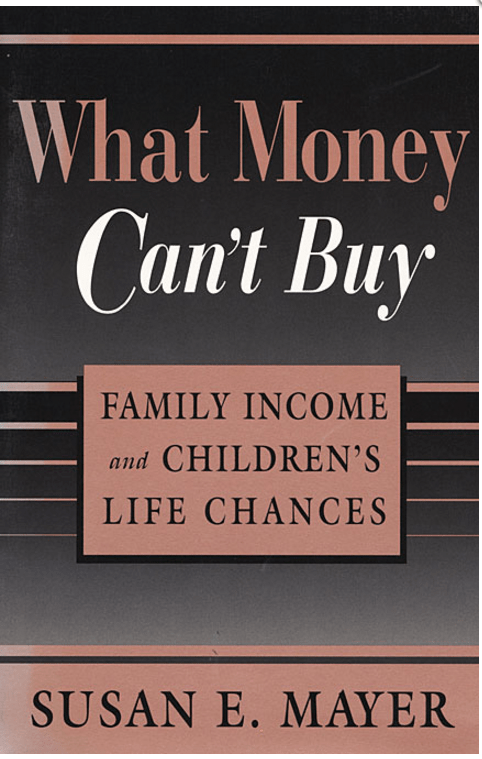
More money does help the children of poor families but the effect is considerably less–and more complicated–than is generally thought because as Mayer says ‘once children’s basic material needs are met, characteristics of their parents become more important to how they turn out than anything additional money can buy.
Doubling the income of poor families would lift most children above the poverty line, it would have virtually no effect on their test scores and only a slight effect on social behaviour. Among her findings, which have largely survive the test of time, are:
- Higher parental income has little impact on reading and mathematics test scores.
- Higher income increases the number of years that children attend school by only one-fifth of a year.
- Higher income does not reduce the amount of time sons are idle as young adults.
- Higher income reduces the probability of daughters growing up to be single mothers by 8 to 20 percent.
Mayer found that as parents have more money to spend, they usually spend the extra money on food, especially food eaten in restaurants; larger homes; and on more automobiles. As a result, children are likely to be better housed and better fed, but not necessarily better educated or better prepared for high-income jobs. Mayer said that her findings do not endorse massive cuts in welfare:
My results do not show that we can cut income support programs with impunity…Indeed, they suggest that income support programs have been relatively successful in maintaining the material living standard of many poor children.
Mayer found that non-monetary factors play a bigger role than previously thought in determining how children overcome disadvantage as she explains. Parent-child interactions appear to be important for children’s success, but the study shows little evidence that a parent’s income has a large influence on parenting practices.
Mayer said that if money alone were responsible for overcoming such problems as unwed pregnancy, low educational achievement and male idleness, states with higher welfare benefits could expect to see reductions in these problems. In reality
once we control all relevant state characteristics, the apparent effect of increasing Aid to Families with Dependent Children benefits is very small.
Social economics has been here before. In the 1960s, the Coleman Report rather than finding that investing in schools improved child outcomes found that most variation between child outcomes depended on family backgrounds. When we talking about schools not matter in too much we are talking about average bad schools and average good school not American inner-city schools into war zones.
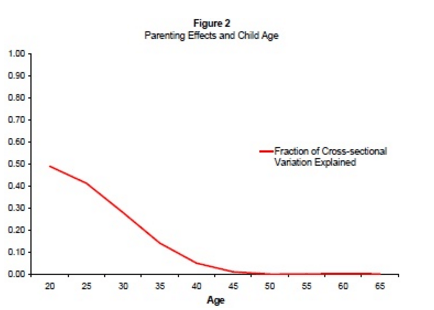
Source: Savings, Genes, and Fade-Out, Bryan Caplan | EconLog | Library of Economics and Liberty.
Behavioural genetics has been a bit of a blow to those that think greater parental investment can raise child outcomes as Bryan Caplan has explained:
Economists like Nobel laureate Gary Becker have been studying the family for decades. Like most modern parents, economists usually take it for granted that “parental investment” has large, lasting effects on adult outcomes.
And yet adoption and twin researchers find surprisingly little evidence for this this assumption(link is external)! With a few notable exceptions, the measured effect of upbringing on adult outcomes is small to zero. Adoptees barely resemble their adopting families, identical twins are much more similar than fraternal twins, and identical twins raised apart are often as similar as identical twins raised together. Almost all traits run in families, but the overarching reason is heredity.
Caplan notes that while it is extremely difficult for parental investments to change the adult outcomes of his children, it is well within his power to give his children a happy childhood.
Non-cognitive skills by socioeconomic quintile
13 Jan 2016 Leave a comment
in economics of education, human capital
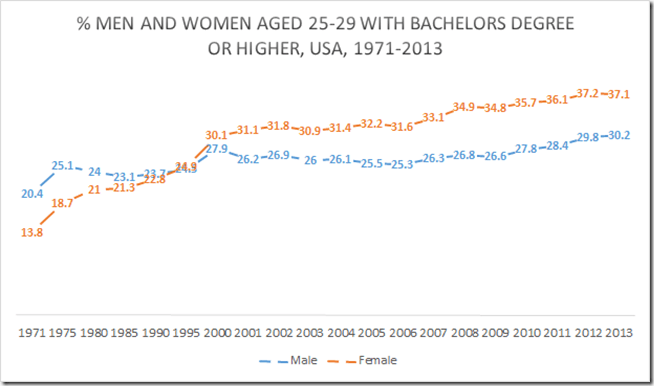
Percentage of American men and women aged 25 to 29 with bachelors degree or higher, 1971 – 2013
13 Jan 2016 1 Comment
in discrimination, economic history, economics of education, gender, human capital, labour economics Tags: College premium, education premium, graduate premium, reversing gender gap
The gender gap in higher education reversed in the year 2000
New study indicates there are 8 Conservative Social Psychologists
11 Jan 2016 Leave a comment
in economics of education, politics - USA, Public Choice
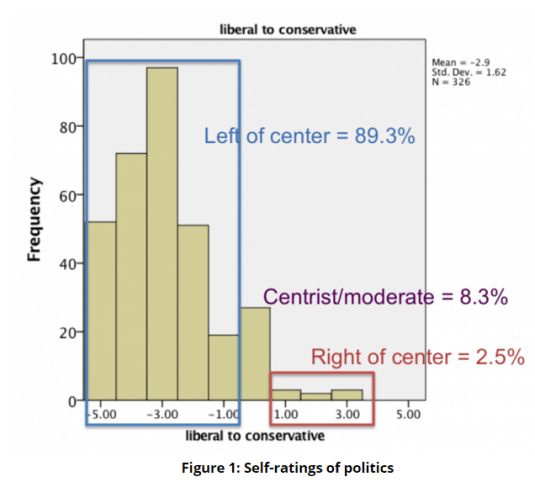
Source: New Study Indicates Existence of Eight Conservative Social Psychologists | HeterodoxAcademy.org.
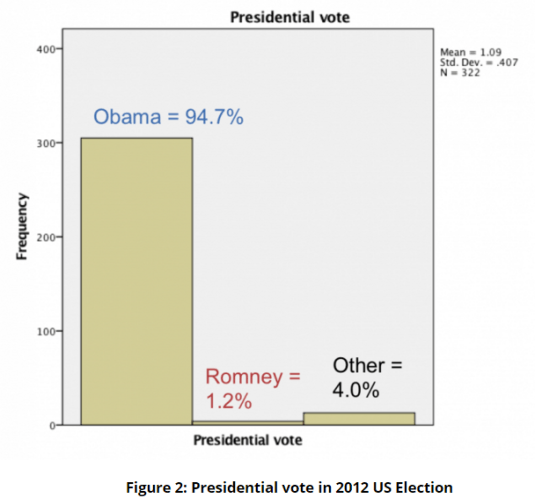
Source: New Study Indicates Existence of Eight Conservative Social Psychologists | HeterodoxAcademy.org.
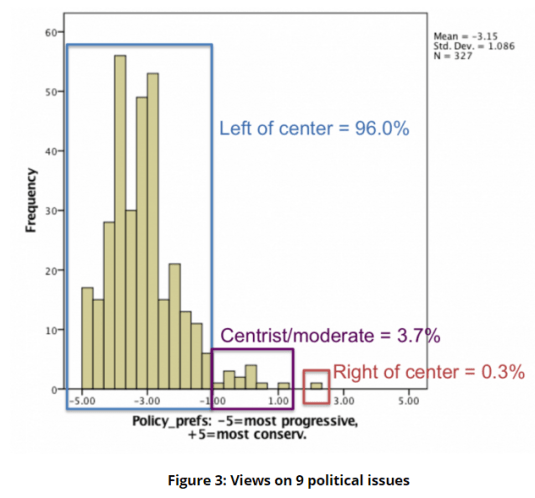
Source: New Study Indicates Existence of Eight Conservative Social Psychologists | HeterodoxAcademy.org.
HT: Rafe Champion
@fightfor15 College unemployment rates doubling to 2% is not a problem
08 Jan 2016 Leave a comment
in economics of education, politics - USA, unemployment
Fight for 15 want to argue that long-term unemployment and unemployment in general is a common problem for the skilled and unskilled. Unemployment and long-term unemployment are principally a problem of the low skilled – get over it.
Unemployment of 1-2% is not a problem, just turnover and job search.
June jobless rate for people 25+ with
B.A. or more 2.5%
High school diploma 5.4%
No H.S. 8.2%
on.wsj.com/1LG1B6z http://t.co/luUUuw9h1V—
Sudeep Reddy (@Reddy) July 02, 2015
What is the success sequence?
08 Jan 2016 Leave a comment
in economics of education, labour economics, labour supply, occupational choice, politics - USA, poverty and inequality, welfare reform Tags: child poverty, family poverty, high school dropouts, marriage and divorce, single parents, success sequence
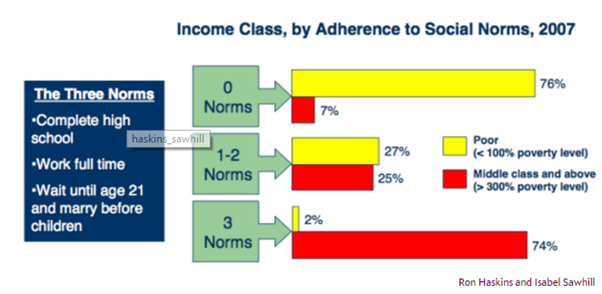
Source: The success sequence: Conservatives think they have a formula for raising people out of poverty.
.
Whose voting base has succumbed to unthinking populists?
31 Dec 2015 Leave a comment
in applied price theory, comparative institutional analysis, constitutional political economy, economics of education, economics of information, economics of media and culture, income redistribution, international economics, Marxist economics, politics - New Zealand, Public Choice, rentseeking Tags: 2016 presidential election
The reverse gender gap in education is worst at the bottom
24 Dec 2015 Leave a comment
in economics of education Tags: lost boys, reverse gender gap
Voter turnout rates among the less educated have collapsed since the 1970s
23 Dec 2015 Leave a comment
in economics of education, economics of media and culture, politics - USA, Public Choice Tags: expressive voting, rational ignorance, voter demographics, voter turnout
Loury and McWhorter tackle the racial mismatch hypothesis and Affirmative Action
23 Dec 2015 Leave a comment
in discrimination, economics of education, human capital, labour economics Tags: affirmative action, racial discrimination
Do they have academic tenure anymore?
23 Dec 2015 Leave a comment
in economics of education, human capital, labour economics, managerial economics, occupational choice, organisational economics, personnel economics Tags: academic tenure, compensating differentials, occupational choice
https://twitter.com/mileskimball/status/541219532032212993/photo/1
Academic Deadlines phdcomics.com/comics.php?f=1… http://t.co/tazByBNUzI—
Jorge Cham (@phdcomics) August 01, 2015
Time spent writing your thesis.
**Need a graduation gift? Visit phdcomics.com/store http://t.co/PJNbG3C7PY—
Jorge Cham (@phdcomics) May 01, 2015
 Utopia, you are standing in it!
Recent Comments