
The Unappreciated Success Of Charter Schools
12 Jan 2015 Leave a comment
in economics of education Tags: chartered schools, school schoice
Here’s what school lunches look like around the world – Vox
10 Jan 2015 Leave a comment
in economics of education, health economics, politics - New Zealand, politics - USA Tags: School lunches

/cdn0.vox-cdn.com/uploads/chorus_asset/file/2915604/SG1.0.jpg)
/cdn0.vox-cdn.com/uploads/chorus_asset/file/2915660/SG7.0.jpg)
/cdn0.vox-cdn.com/uploads/chorus_asset/file/2915614/SG4.0.jpg)
/cdn0.vox-cdn.com/uploads/chorus_asset/file/2915628/SG5.0.jpg)
/cdn0.vox-cdn.com/uploads/chorus_asset/file/2915632/SG8.0.jpg)
/cdn0.vox-cdn.com/uploads/chorus_asset/file/2915640/SG9.0.jpg)
President Obama and his support for charter schools
09 Jan 2015 Leave a comment
in economics of education, politics - New Zealand, politics - USA Tags: charter schools, School choice
Dear Dr Sharples, please help us raise the game for ALL kids
09 Jan 2015 Leave a comment
in economics of education, human capital, poverty and inequality, survivor principle Tags: charter schools, School choice
The claim made in the letter to the Co-leader of the Maori party before the charter schools bill was passed by the New Zealand Parliament was that charter schools is “An unproven experiment is not the answer.”
Experiments are pointless if you already know the answer.
The answer is charter schools – An experiment that has proven to be immensely popular among minority parents in the USA.
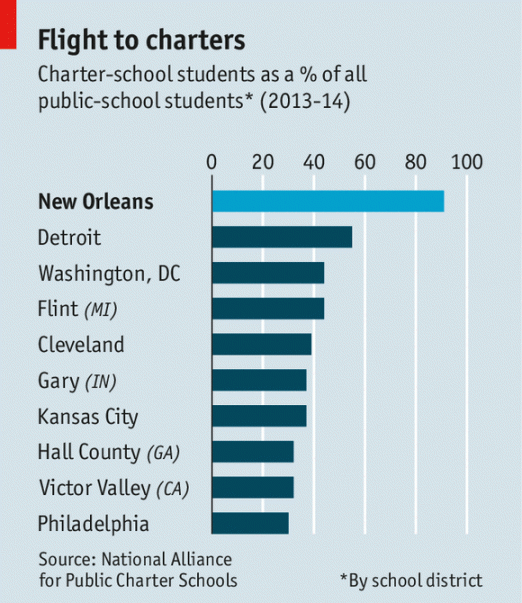
Charter schools are growing fastest in New Orleans, Washington DC and Detroit – all predominately black cities with terrible public school systems.
The predominately black electorates want to experiment with something that might be better than the existing system that has failed them.


Dear Dr Sharples,
Increasing achievement for Maori and Pasifika students is of great importance. The issue is at the forefront of many educators’ and parents’ minds, thanks to the charter schools debate, and for that and that alone I am grateful charters were set before us as an option.
But they are not the answer. Charters have been shown even in the best of countries, such as Sweden, to increase inequality. It is telling that even normally right-leaning bodies such as the Maxim Institute and SNS have spoken out against charters being the answer. SNS are a business think tank and said charters “had increased segregation and may not have improved educational standards at all” in Sweden. In England it is even worse, and worse still in the USA.
It is far more important that we as a country look to improving schools for all children and that we focus very…
View original post 55 more words
Science Doesn’t Need Public Funding
09 Jan 2015 Leave a comment
in applied price theory, applied welfare economics, comparative institutional analysis, economic history, economics of education, entrepreneurship, rentseeking Tags: economics of science, innovation, R&D
Bizarro lefties alert: The Racist History of the Charter School Movement
09 Jan 2015 1 Comment
in discrimination, economics of education, human capital, politics - New Zealand, politics - USA, survivor principle Tags: chartered schools, Leftover Left, School choice
The unthinking opposition to charter schools has reached new depths with SaveOurSchoolsNZ sharing The Racist History of the Charter School Movement.
This article relates the founding of charter schools and school choice to the opposition of the Democratic party to the desegregation of schools in the late 1950s in the southern States of America.
In Prince Edward County, Virginia, one of the five cases decided in Brown v. Board of Education (1954), the Democratic Party government threatened to close the public school system and transfer the assets to private hands to avoid school desegregation.
Naturally, the article, which was supposed to be recounting history was some accuracy and new insight, fails to mention that this racism was in the Democratic Party. That’s one dirty little secret to many. These Democratic party stalwarts were instead labelled segregationist whites.
The threat to close the public school system and transfer it to was never carried. From recollection, closure of the public school system to avoid desegregation may have been carried out in other southern states.
The current racism of the charter school movement is explained in this most bizarre way:
A 2010 report by the UCLA-based Civil Rights Project, “Choice without Equity: Charter School Segregation and the Need for Civil Rights Standards,” uncovers some troublesome facts in this regard. “While segregation for blacks among all public schools has been increasing for nearly two decades, black students in charter schools are far more likely than their traditional public school counterparts to be educated in intensely segregated settings. At the national level, 70 percent of black charter school students attend intensely segregated minority charter schools (which enrol 90-100 percent of students from under-represented minority backgrounds), or twice as many as the share of intensely segregated black students in traditional public schools.”
In the first decade of the 2000s, charter school enrolment nearly tripled; today around 2.5 percent of public school students are enrolled in charters.
Blacks are overrepresented in charter schools (32 percent vs. 16 percent in the entire public-school population), whites are underrepresented (39 percent versus 56 percent), and Latinos, Asians and American Indians are enrolled in roughly equal proportions in charters and traditional public schools. These snapshots mask considerable variation. In the West and some areas of the South, it appears that charter schools “serve as havens for white flight from public schools,” according to the Civil Rights Project.
Black Americans are fleeing the public school system in record numbers for charter schools because the public school system as failed them. The entire New Orleans school district is now chartered schools because the public school system was too slow to recover from Hurricane Katrina.

The three largest charter school movements are in New Orleans, Detroit and Washington DC. All three cities had public school systems that failed their predominantly black communities. The governments of New Orleans, Detroit and Washington DC are dominated by the black vote with black leadership in many leadership positions.
Charter schools must attract their students from the existing Schools. They must compete and compete successfully to survive and avoid closure.
Not one of these black students in a charter school is required to attend them. They enter by choice, often having to compete in lotteries because so many wish to go to chartered school. It is highbrow condescension to suggest that they and their parents don’t know what they’re doing when they attempt two enrol in a chartered school.

Many charter schools tend to target students with educational disadvantages. Not surprisingly, some get into different difficulty while many others succeed.

Chartered schools in New Zealand, known as partnership schools, were initiated by the ACT party but the bill in Parliament required the support of the Maori party to pass.
The Maori Party supported chartered schools in New Zealand because they wanted a better deal from Maori in the education system. Maori Party co-leader Pita Sharples said
“We have to try new things – and if they don’t work, ditch them,” he told reporters yesterday.
“This is about giving charter schools a chance, we have to see how it can work here.”
New Zealand Charter schools will be state funded but run by community, church or business organisations. They will be able to set their own curriculum and term times, and don’t have to hire registered teachers.
Maori Party president Pem Bird appeared before Parliament’s Education and Science select committee when the chartered school bill was in its committee stage as the spokesman for Nga Kura-a-Iwi, a group of 23 Maori immersion-schools.
Mr Bird told MPs the chartered schools bill will free schools from rules and regulations that prevent them from doing a better job for Maori children.
Maori and Pasifika groups are desperate to improve their children’s educational performance and many will want to set up partnership schools, he said.
Maori organisations will come in in big numbers, as will Pasifika. And the reason is simple: they want to be architects of their own futures and destinies … We’ve got to get with the fact that this is desperation for us.
Mr Bird said several Maori-immersion schools wanted to become partnership schools.
Sadly, I must say, the self appointed left-wing representatives of Maori and Pasifika want to keep them in a public school system that fails them for ideological reasons while they educate their own children in nice suburban schools.
The Labour Party in New Zealand had its second worst Party vote ever in the most recent 2014 general election.
The Green Party vote did not increase its vote in the 2014 election, despite the failings of the Labour Party and a hard left campaign by the Greens emphasising education and child poverty.
The Green Party vote was abysmal in working-class electorates and among Maori and Pasifika. Most of the Green’s party vote is from the educated middle-class in rich electorates.
What People Asked the New York Public Library Before Google
08 Jan 2015 Leave a comment
in economics of education, economics of media and culture

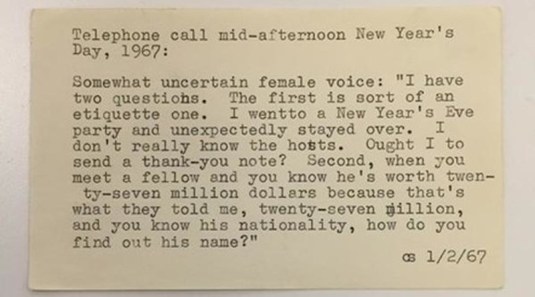
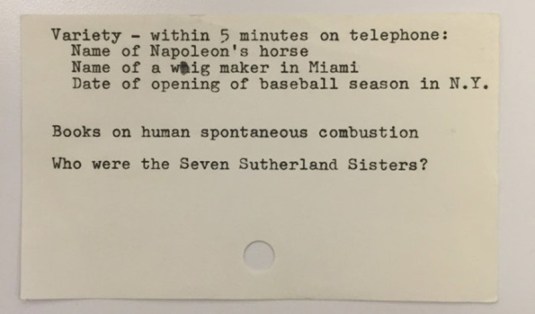
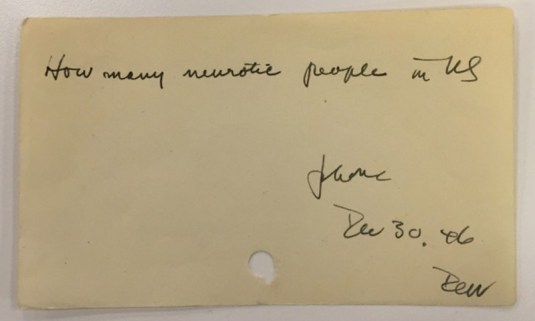
Students analyse mental health of Seinfeld characters
07 Jan 2015 Leave a comment
in economics of education, economics of media and culture, TV shows Tags: Seinfeld
“You have a very diverse group of personality traits that are maladaptive on the individual level,” Tobia told nj.com. “When you get these friends together the dynamic is such that it literally creates a plot: Jerry’s obsessive compulsive traits combined with Kramer’s schizoid traits, with Elaine’s inability to forge meaningful relationships and with George being egocentric.”
Seinfeld’s “neat freak” tendencies are well known. The show’s chief protagonist once refused to a kiss a girl who’d brushed her teeth with a toothbrush that had fallen in the toilet. On another occasion he threw out a belt after it touched a urinal.
Meanwhile, Jerry’s nemesis, the vindictive Newman, is “very sick” according to Tobia.
“Newman’s sense of self, his meaning in life, is to ensure that he frustrates Jerry,
via Students analyse mental health of Seinfeld characters | Stuff.co.nz.
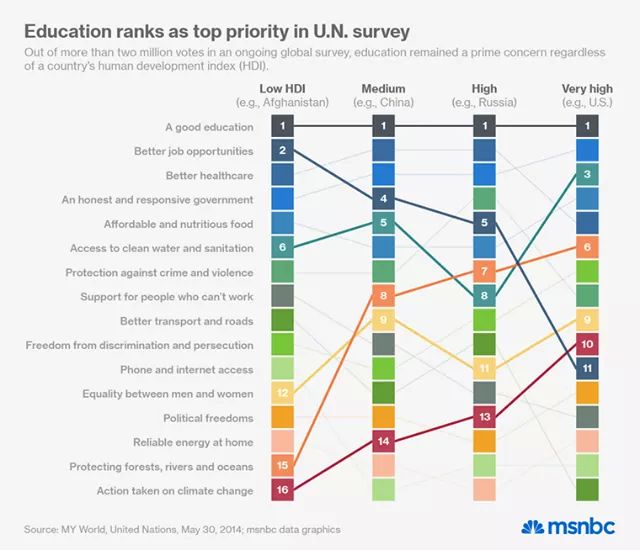
What Are The Hardest Languages To Learn? | Voxy Blog
23 Dec 2014 Leave a comment
in economics of education, economics of media and culture, human capital, labour economics Tags: languages


The top 10% are a bunch of bludgers in New Zealand too
16 Dec 2014 Leave a comment
in economics of education, income redistribution, politics - Australia, politics - New Zealand, politics - USA Tags: education premium, top 1%
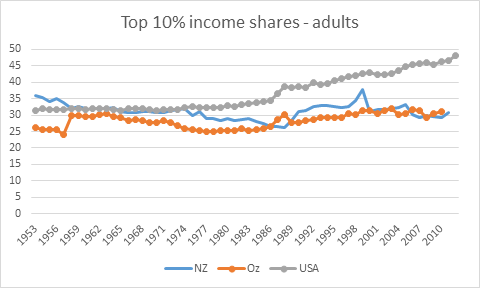
Source: topincomes-parisschoolofeconomics
One reason why the top 10% in New Zealand have been a pretty ordinary lot compared to the USA is New Zealand’s university graduate premium – the college premium as it is known in the USA – is at the very bottom of the OECD ladder at about 18% – rock bottom 32nd out of 32 – the wooden spoon.
The College premium in the USA is about 64%, as shown in the OECD data below from OECD Education at Glance. Naturally, this high College premium in the USA should show up in well educated, highly skilled people earning a lot more than those that don’t go to college and don’t go to graduate school.
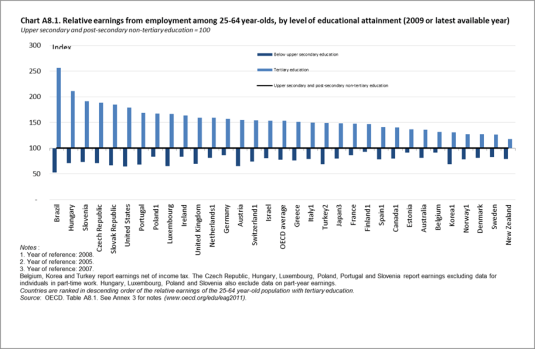
Stats link: http://dx.doi.org/10.1787/888932460515
Little wonder that the USA top 10% are breaking away from the pack. This slow increase in the income share of the top 10% since the early 1970s coincided with large numbers, including many more women in long duration professional degrees, going to university.
Prior to the mid-1970s, the College premium in the USA had been falling for about a decade because of large numbers of people going on to College and many of these two graduate school to get a draft deferment.
People married younger then so by the time people were at the end of College or graduate school, they were usually married with children and got of further draft deferment and aged out of the draft system.
 Utopia, you are standing in it!
Recent Comments