EASYBEATS ” SORRY ” 1966 MOD BEAT
28 May 2016 Leave a comment
in economics of media and culture, Music Tags: The Easybeats
“La Bamba” – Los Lonely Boys & Carlos Santana
28 May 2016 Leave a comment
in economics of media and culture, Music Tags: Santana
One of the rich countries so glum
28 May 2016 Leave a comment
in development economics, economic history, economics, economics of information, economics of media and culture, growth miracles Tags: pessimism bias, The Great Escape, The Great Fact

Elvis Costello & The Attractions – The Only Flame In Town
25 May 2016 Leave a comment
in economics of media and culture, Music Tags: Elvis Costello
More on the top 1% giving women a pass on the great wage stagnation
23 May 2016 Leave a comment
in discrimination, economic history, economics of media and culture, gender, human capital, labour economics, labour supply, occupational choice, poverty and inequality Tags: gender wage gap, middle class stagnation, reversing gender gap, wage stagnation
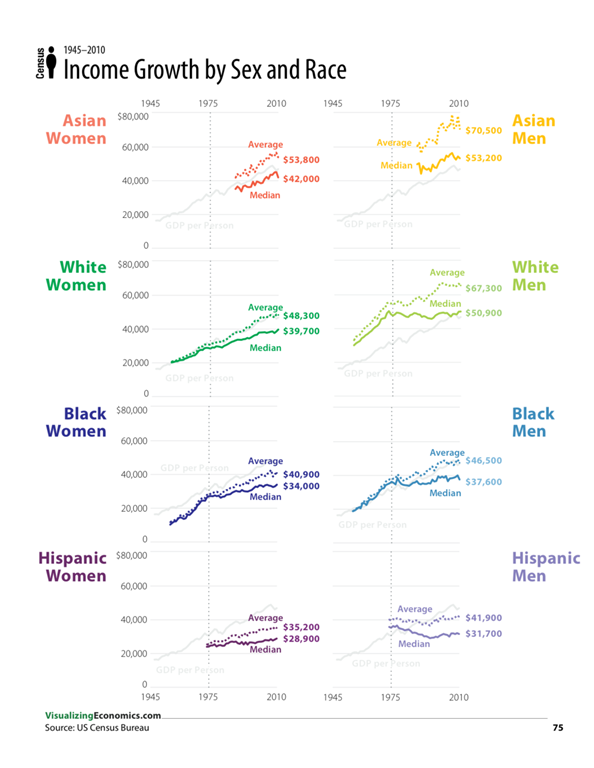
Source: Read Online — Visualizing Economics.
Why were 1970s fashions just so bad, so loud?
23 May 2016 Leave a comment
in economic history, economics of media and culture Tags: fashions, The Great Enrichment
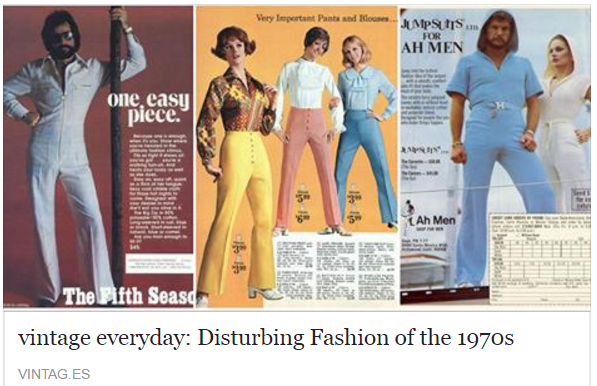 My explanation is the rapid income growth in the 1950s and 60s caught fashion designers short.
Comparing different income growth series 1900-2010 bit.ly/195NbKb http://t.co/9Uazhmayd4—
Catherine Mulbrandon (@VisualEcon) August 18, 2014
Up until the 1970s, and the swinging 60s in London where a tastes of that, clothing design for the masses is very much functional. It took 10 to 15 years for the fashion designers to work out how to respond to this sudden increase in demand for clothing as an expression of individual identity.
By the 1980s and 1990s, people were able to dress with distinction in finely cut clothing without the need to be gauche and loud.
Jeff Spicoli, ‘Fast Times at Ridgemont High’ (1982)
22 May 2016 Leave a comment
in economics of media and culture, movies Tags: marijuana decriminalisation, Sean Penn


Recent Comments