Great Quote on Earth Hour, which Celebrates Ignorance, Poverty and Backwardness #HAH2015 aei.org/publication/ea… http://t.co/775bQhpiBs—
Mark J. Perry (@Mark_J_Perry) March 28, 2015
Earth Hour celebrates ignorance, poverty and backwardness
29 Mar 2015 Leave a comment
in applied welfare economics, comparative institutional analysis, development economics, economics of media and culture, environmentalism, growth disasters, growth miracles, liberalism, Marxist economics, technological progress Tags: Earth Hour
I hope a lot of people lied when they answered this opinion poll
29 Mar 2015 Leave a comment
in economics of media and culture Tags: astrology
Internet searches are becoming less frivolous
27 Mar 2015 Leave a comment
in economics of media and culture Tags: Internet
How 2014's top Google searches compare to 2004's bit.ly/1uUiVJu http://t.co/oRZ8bRLyfo—
Guardian Data (@GuardianData) December 16, 2014
The Campaign To Make You Care About Climate Change Is Failing Miserably
27 Mar 2015 Leave a comment
in economic history, economics of media and culture, environmental economics, global warming, politics - USA, Public Choice Tags: climate alarmism, expressive voting, global warming, rational ignorance, rational irrationality

Since 1989, there’s been no significant change in the public’s concern level over global warming. To put this in perspective, note that the most expensive public-relations campaign in history—one that includes most governmental agencies, a long list of welfare-sucking corporations, the public school system, the universities, an infinite parade of celebrities, think tanks, well-funded environmental groups and an entire major political party—has, over the past 25 years or so, increased the number of Democrats who “worry greatly” about global warming by a mere four percentage points.


via The Campaign To Make You Care About Climate Change Is Failing Miserably, Climate Change Not a Top Worry in U.S., In U.S., Concern About Environmental Threats Eases and The number of people worried about climate change hasn’t changed since 1989 – The Washington Post.
Haven’t blogged on the anti-vaccination movement for a few days
26 Mar 2015 Leave a comment
in economics of information, economics of media and culture, health economics Tags: anti-vaccination movement, conspiracy theories, modernity, vaccination, vaccines
Reduction of Cases and Deaths of Vaccine-Preventable Diseases in the US
26 Mar 2015 Leave a comment
in economics of media and culture, health economics, politics - USA

People have no illusions when they read the tabloids
26 Mar 2015 Leave a comment
Possibly more concerning: the 'trust gap' between upmarket (e.g. Telegraph) and tabloid papers is down from 51 to 30 http://t.co/q9VurKexys—
William Jordan (@williamjordann) February 18, 2015
Apparently there are people who claim they haven’t used the Internet
25 Mar 2015 Leave a comment
in economics of media and culture, industrial organisation Tags: creative destruction, Internet, opinion polls, revealed preference
I left home without my mobile phone this afternoon! The horror, the horror!
25 Mar 2015 Leave a comment
in economics of media and culture
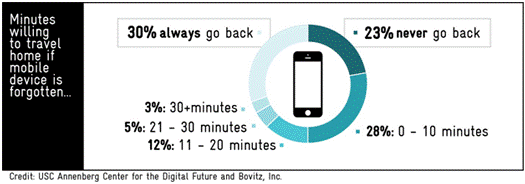
I stayed strong and didn’t go back, partly because I was five minutes drive from home and was going back home in about an hour.

Killer green activists – Greenpeace and golden rice
24 Mar 2015 Leave a comment
in applied welfare economics, development economics, economics of information, economics of media and culture, economics of regulation, growth miracles Tags: golden rice, Greenpeace, killer green activists
In Defence of Negativity in Politics – John G. Geer
24 Mar 2015 Leave a comment
in economics of information, economics of media and culture, politics - Australia, politics - New Zealand, politics - USA, Public Choice Tags: Attack Ads, expressive voting, John G. Geer, political psychology, rational ignorance, rational irrationality
John G. Geer, author of In Defense of Negativity: Attack Ads in Presidential Campaigns, argues that negative ads are positive. They focus on important political issues and give voters critical information about differences between candidates. Attack ads do not degrade, but rather enrich the democratic process. When political candidates attack each other, they raise doubts about each other’s views and qualifications. Voters—and the democratic process—benefit from this clash of opinions.


Recent Comments